The True Cost of Living Well: Beyond the Tropical Fantasy
The True Cost of Living Well: Beyond the Tropical Fantasy
There's a persistent whisper among those weary of the rat race, a siren song promising sun-drenched days and an enviable cost of living. It's the notion that a life of quiet affluence, or even outright luxury, is within reach for a fraction of the price found in London, New York, or Sydney. But is this just another romanticized vision, propagated by Instagram feeds and glossy travel brochures, or does it hold true for those seeking a genuine shift in lifestyle and financial freedom?
I’ve spent the better part of fifteen years navigating the labyrinthine economies of Southeast Asia, watching its landscapes transform, its markets mature, and its whispers grow into a roar. I’ve seen fortunes made and lost, dreams realized and deferred. What I’ve learned is that the financial calculus of relocation here is far more intricate than most outsiders imagine. It demands a keen eye, a willingness to adapt, and an understanding that 'value' isn't just about the price tag, but the quality of the life it buys.
The Allure of the Arbitrage: Numbers Game or Quality of Life?
"Everyone comes here thinking they'll live like a king for a thousand bucks a month," confides Marcus Thorne, a British software entrepreneur who moved his operations to Southeast Asia seven years ago. We're sitting in a breezy co-working space overlooking the rice paddies, the air thick with the scent of incense and blooming frangipani. "And sure, you can. But what kind of king? A king in a dilapidated villa with spotty internet and no air conditioning, or a king with a comfortable, productive setup? The reality is, the sweet spot for a genuinely good life – one that rivals a solid middle-class existence back home, but with far greater ease and access – is probably closer to $3,000 to $5,000 USD per month for a single person, or $5,000 to $8,000 USD for a family, depending on your aspirations."
Marcus isn't wrong. The sheer breadth of options here can be dizzying. A plate of nasi campur from a streetside warung can set you back IDR 25,000 (about $1.60 USD). A gourmet, imported steak dinner with a fine wine? That can easily hit IDR 1,500,000 (around $100 USD) or more. The magic, and the challenge, lies in finding your equilibrium.
"It's not about being cheap, it's about being smart with your money. You can get something truly exceptional for what you'd consider average elsewhere." – Anya Sharma, Design Consultant
Housing: The Foundation of Your New Life
Housing is often the biggest variable. In bustling urban centers like Singapore or Kuala Lumpur, rents can rival Western cities. But venture a little further afield, and the numbers shift dramatically.
"I used to pay £1,800 for a cramped one-bedroom flat in London," says Anya Sharma, an Indian-American design consultant who now lives in a spacious, modern villa with a private pool. "Here, I pay IDR 18,000,000 (around $1,200 USD) a month for a three-bedroom, fully furnished place with an office space and garden. And that's considered premium. You could easily find a comfortable two-bedroom apartment for IDR 10,000,000 (about $650 USD) in a good area. The sheer space you get, the indoor-outdoor living – it's transformative."
For those looking at long-term investment, the dynamics change again. Fractional ownership, long-term leases (often 25-30 years, extendable), and outright freehold purchases (with restrictions for foreign nationals in some countries) offer different entry points. For instance, a well-appointed luxury villa in a burgeoning coastal area might cost $300,000 to $500,000 USD to build, significantly less than an equivalent property in say, Costa Rica or Portugal, yet offering comparable, if not superior, rental yields.
The Cost of Convenience: Food, Transport, and Health
Beyond rent, daily expenses are where the arbitrage really shines, provided you embrace local ways.
-
Food: Eating out locally is unbelievably affordable. A fantastic meal at a clean, local eatery might be IDR 50,000 ($3.20 USD). If you cook at home, fresh produce from traditional markets is a steal. A week's worth of fresh fruits and vegetables could be IDR 200,000 ($13 USD). Imported goods, however, can be surprisingly expensive – that block of cheddar cheese might be IDR 150,000 ($9.70 USD).
-
Transport: Scooters are king for short distances, costing around IDR 1,000,000 - IDR 2,000,000 ($65 - $130 USD) per month to rent, or IDR 15,000,000 - IDR 30,000,000 ($970 - $1,950 USD) to buy a decent used one. Ride-hailing apps like Grab or Gojek offer car services that are a fraction of taxi fares in most Western cities. A 30-minute ride might be IDR 50,000 ($3.20 USD).
-
Healthcare: This is a critical consideration. Public healthcare can be basic, but private hospitals offer excellent, often Western-trained doctors and state-of-the-art facilities at a much lower cost than in the US. A specialist consultation might be IDR 500,000 - IDR 1,000,000 ($32 - $65 USD). Comprehensive international health insurance is non-negotiable for serious illness or accidents.
The Lifestyle Upgrade: Services and Experiences
This is where Southeast Asia truly outshines many other destinations. The availability and affordability of services can drastically enhance your quality of life.
"I have a cleaner come three times a week, a gardener, and someone who helps with my errands," says Dr. Julian Vance, a retired American academic who now lives contentedly overlooking an ocean vista. "My total spend on household staff is less than what I'd pay for a weekly cleaner back home. It frees up an incredible amount of time and mental energy. It's not about being lazy; it's about optimizing for what truly matters to you – whether that's pursuing a hobby, spending time with family, or simply enjoying your surroundings."
A full body massage? IDR 150,000 - IDR 300,000 ($9.70 - $19.50 USD). A personal trainer? IDR 300,000 - IDR 500,000 ($19.50 - $32 USD) per session. High-speed fiber optic internet, essential for remote work, typically costs IDR 300,000 - IDR 500,000 ($19.50 - $32 USD) per month. These are luxuries elsewhere, but here, they're simply part of a comfortable existence.
Beyond the Numbers: The Intangibles
The financial argument, while compelling, only tells half the story. The true value proposition often lies in the intangibles: the slower pace, the warmth of the people, the vibrant culture, and the sheer natural beauty.
Imagine waking up to the sound of waves, not traffic. Picture your children learning to surf after school, or exploring ancient temples on a weekend. Envision a community where smiles are frequent, and life's simple pleasures are celebrated.
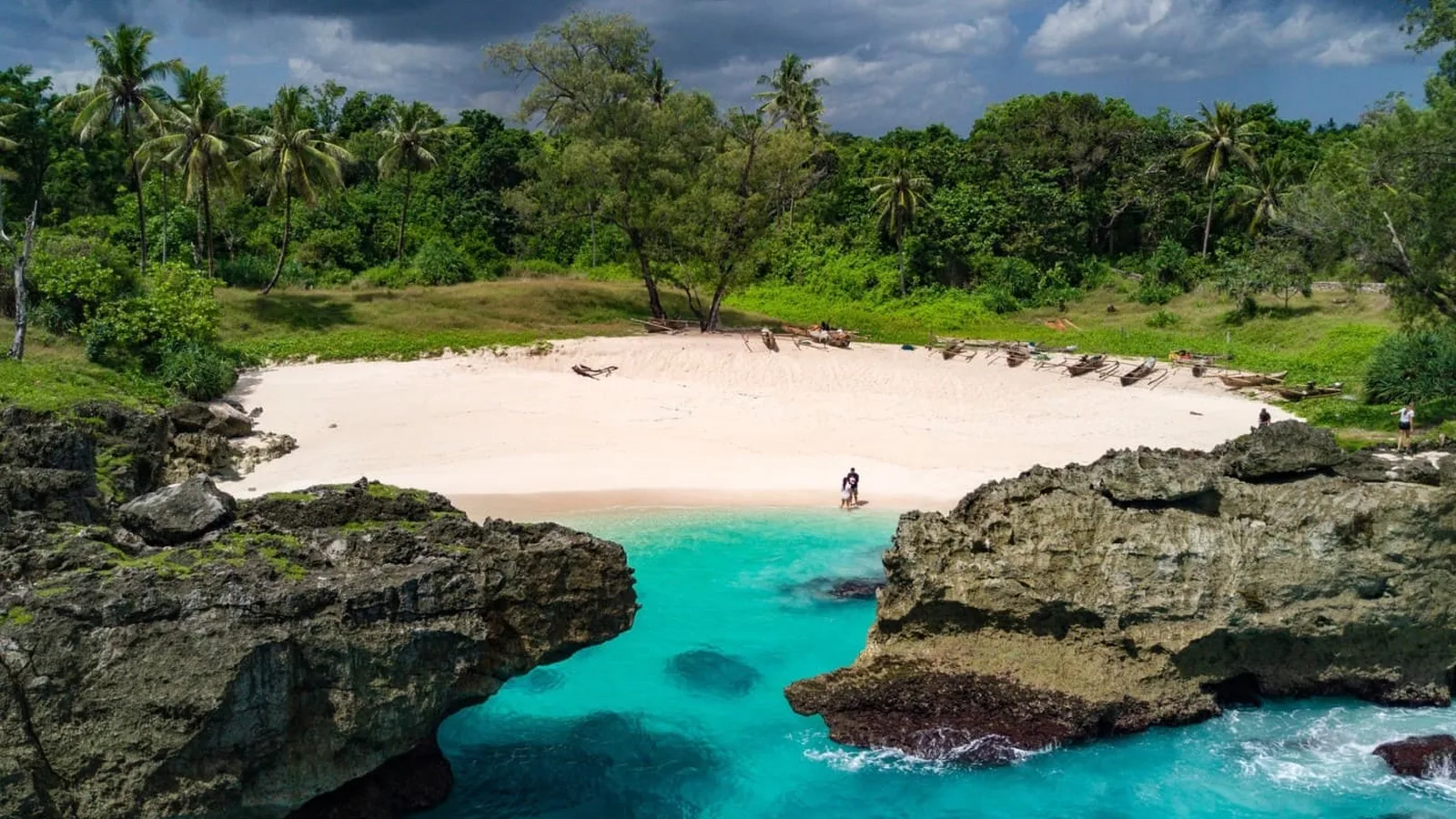
This is the reality for many who've chosen to settle in places like the lesser-known islands of Indonesia. Take, for instance, a place like Sumba. It's not the first island that comes to mind for most, overshadowed by its more famous neighbors. But for a certain type of individual, it represents an unparalleled blend of raw beauty, authentic culture, and burgeoning opportunity.
"We looked at Bali, Lombok, even Thailand," explains David Chen, a former investment banker now involved in sustainable tourism on Sumba. "But they felt...developed. We wanted something more pristine, more real. Sumba offered that, along with a genuine sense of community and a growing understanding of how to build things properly, responsibly. Our initial investment here was lower than it would have been anywhere else for the same scale, but the potential impact we could have felt exponentially greater."
Sumba's appeal isn't just aesthetic. Its government, recognizing its unique potential, has been keen to attract responsible investment – projects that respect the island's culture and environment while providing local employment. This creates a fertile ground for entrepreneurs and investors who are looking for more than just a quick return; they're looking to build something meaningful.
Consider the planned Eco Beach City development on Sumba. It’s a bold vision for a self-sufficient, environmentally-conscious community. While still in its early stages, it exemplifies the kind of thoughtful, long-term planning that some areas are embracing to avoid the pitfalls of unchecked development seen elsewhere. For those seeking a future-proof investment, or a place to live that aligns with sustainable principles, these are the emerging frontiers.
The Entrepreneurial Edge: Lower Overheads, Global Reach
For entrepreneurs and digital nomads, the financial case is particularly strong. "My overheads here are probably a fifth of what they were in Sydney," says Chloe Jenkins, who runs a global e-commerce business from her cliffside villa. "The cost of hiring local talent is significantly lower, but the quality, with the right training, is excellent. I can afford to experiment more, take bigger risks, because my burn rate is so much lower." A junior web developer might earn IDR 8,000,000 - IDR 15,000,000 ($520 - $970 USD) per month, a fraction of Western salaries, yet can produce high-quality work.
The regulatory environment, while sometimes complex, is becoming more streamlined across parts of the region. The advent of digital nomad visas in various countries, and the relative ease of setting up local companies, further sweetens the deal.
The Final Equation: Is It Worth It?
So, is the dream of a richer life in Southeast Asia a reality? Absolutely. But it’s not a universal truth for everyone. It requires adaptability, a willingness to step outside your comfort zone, and a genuine appreciation for a different way of life. The financial benefits are undeniable, but they are amplified when one embraces the local culture, samples the street food, learns a few phrases, and builds genuine connections.
It’s not just about spending less; it’s about getting more. More space, more time, more experiences, and often, a deeper sense of connection to the world around you. This isn't just a geographical move; it's a recalibration of priorities, a redefinition of what 'wealth' truly means.
And for those discerning enough to look beyond the obvious, beyond the well-trodden paths, places like Sumba offer a glimpse into a future where genuine value is measured not just in currency, but in community, sustainability, and breathtaking solitude.
Is your definition of 'living well' ready for an upgrade?