The Half-Life of Paradise: An Investor's Autopsy
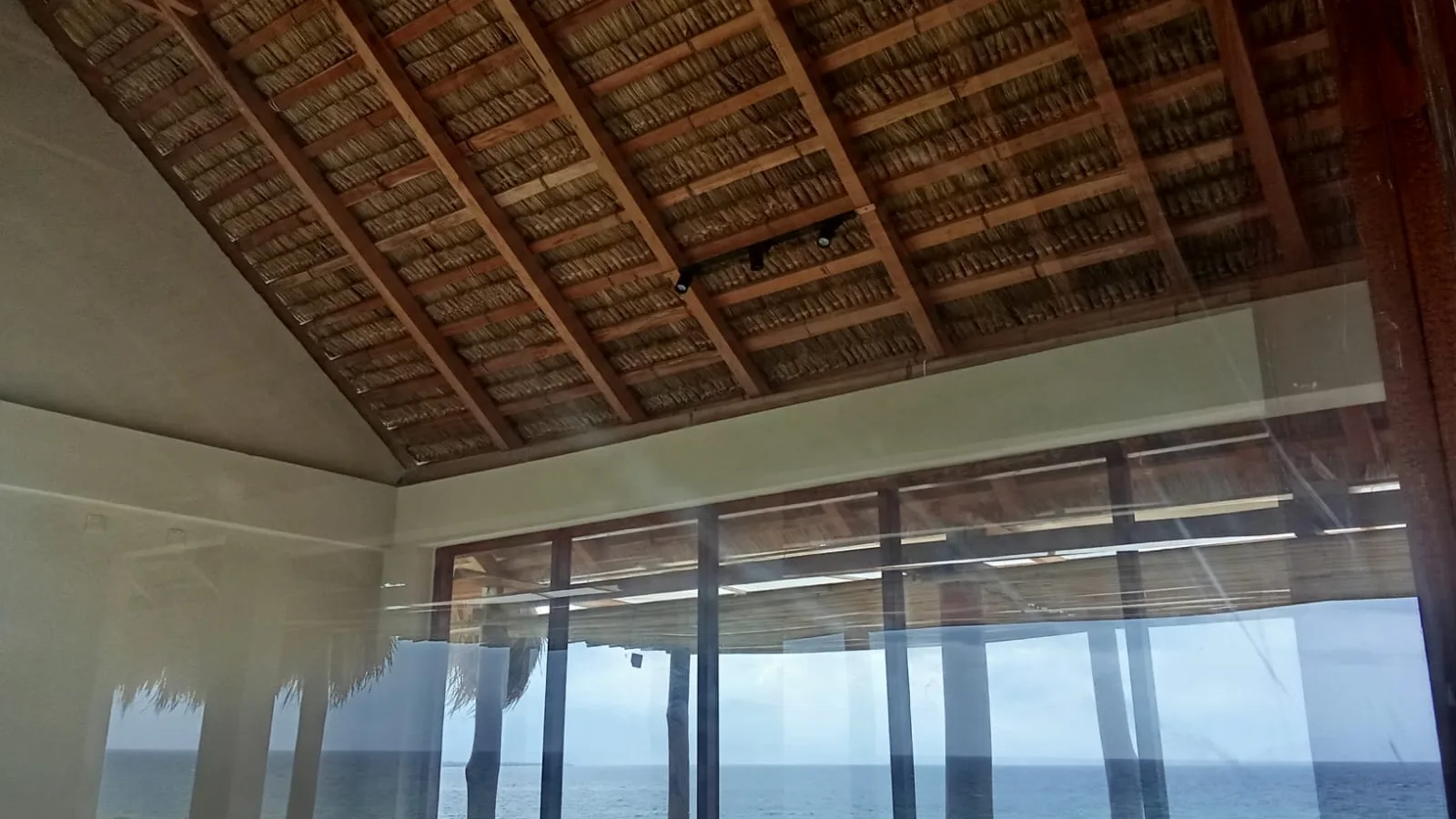
The spreadsheet said one thing. The salt air said another. I was looking at a single, beautifully minimalist brass tap extending over an outdoor stone basin in a US$3 million villa near Santa Teresa. Its owner, a software executive from Berlin, saw it as the epitome of wabi-sabi elegance, a testament to imperfect, nature-integrated living. He had, after all, traded the grey predictability of European urbanism for this.
Unseen, on the monthly invoice I was reviewing from the property management company, was a line item that told a different story: US$250 - Metal Fixture Corrosion Mitigation. This was the fee for a specialist who, for four hours every month, meticulously polished away the verdigris—that insidious green tarnish inflicted relentlessly by the salt-laced Pacific air. The tap wasn't gracefully aging; it was being kept on life support.
This small, expensive battle against chemistry is a microcosm of a much larger, and far more costly, economic miscalculation. It’s a quiet truth humming beneath the roar of the surf in the world’s most desirable post-pandemic havens. The global elite, flush with capital and weary of confinement, are pouring billions into an architectural fantasy. Yet they may be acquiring not an appreciating asset, but a voracious, high-depreciation consumption good disguised in the seductive language of real estate.
The Architectural Daydream and its Down Payment
The dream itself is intoxicating. It’s a vision plastered across the pages of architectural magazines and the screens of a million Instagram feeds: the seamless indoor-outdoor villa. Walls dissolve into vast panes of retractable glass. Living rooms spill onto terraces, bedrooms open to private gardens, and bathrooms feature showers exposed to the sky. It is the new global status symbol for a certain kind of wealth—one that values experience over ornament, and authenticity (or a curated version of it) over urban sterility.
This isn't your grandfather's Florida condo. The demographic snapping up these properties is younger, more mobile, and often from the tech or finance sectors. They are early retirees, seasoned digital nomads, and families seeking an escape from what they perceive as the soulless grind of metropolitan life. They don't just want a holiday home; they want a philosophical statement rendered in concrete, glass, and tropical hardwood. The data confirms the stampede. Post-2020, the global luxury real estate market saw a 19% surge in inquiries for 'resort/second home' properties, according to Knight Frank's 2023 Wealth Report. More tellingly, searches for 'indoor-outdoor living' on architectural platforms like ArchDaily rose by a staggering 60%.
Architects catering to this demand speak a language of profound connection. Marcio Kogan of Studio MK27, a Brazilian firm celebrated for its sublime tropical modernism, talks of 'dissolving boundaries' and creating 'a more sensory experience of the space.' The goal is not merely to build a house but to orchestrate an encounter between inhabitant and environment. The wind should be a feature, the rain a spectacle, the jungle a constant, visceral presence. It’s a powerful marketing narrative.
"We try to make the barrier between the internal and external the most tenuous possible," Kogan has stated. "It is a way of bringing the 'outside' 'inside'."
This philosophy, however, comes with a hefty down payment, and not just the one you make to the bank. The true cost is the willful suspension of economic disbelief. The fantasy being sold is one of effortless elegance, of a life lived in gentle harmony with nature. The reality is a high-stakes, high-cost, perpetual war against it. The architectural daydream is the hook; the economic realities that follow are the ones that quietly, methodically, drain your balance sheet. The house isn't just sitting there. It's in a constant state of being consumed by the very environment it's designed to embrace.
The Price of a Breeze: Deconstructing the Build Cost
The first fiscal shock for aspiring paradise-builders arrives with the construction budget. There’s a pervasive myth among first-time investors in developing economies: local materials and labor are cheap. While a bag of cement or a day's unskilled labor may indeed cost less than in Frankfurt or San Francisco, building a high-specification open-air villa is an entirely different proposition. The 'local' aesthetic is often a high-cost illusion constructed from a global supply chain.
Take the ubiquitous tropical hardwood. That rich, dark wood that looks so at home in the jungle? If it's to last more than a few seasons without rotting or being devoured by termites, it must be a high-grade, absurdly dense species like Ipe or Cumaru, much of which is sourced from South America. Furthermore, it requires expert kiln-drying and often chemical treatment to be viable. In many parts of Southeast Asia, a cubic meter of properly certified, construction-grade Ipe can cost over US$3,000 before it even lands on site. The 'natural' bamboo so popular in resorts like the Eco Beach City requires industrial pressure treatment with borate chemical solutions to prevent infestation—a costly process that belies its 'green' marketing.
Then there is the signature feature: the 'disappearing' wall. Creating that effortless sense of openness involves fiendishly complex engineering. Massive cantilevered roofs that seem to float require immense amounts of steel and precision engineering to handle wind loads and prevent deflection over time. The floor-to-ceiling glass panel systems—the kind that slide away into hidden wall pockets—are marvels of Swiss or German precision manufacturing. A square meter of a high-end system from a brand like Vitrocsa or Sky-Frame can easily exceed US$2,500 for supply and installation. A conventional high-performance wall and window assembly in a developed country might cost US$500-US$700 per square meter by comparison.
I once spoke to a project manager in Bali who lost what little hair he had left trying to build a US$4 million villa for a Dutch client. "The client specified a particular Gaggenau kitchen island and Fantini faucets from Italy," he told me, sighing into his Bintang beer. "First, the container was held up in Jakarta customs for six weeks over a paperwork 'discrepancy' that was only solved with a payment that won't appear on any official invoice. Then, the truck carrying the island couldn't make the turn on the village road to the site. We had to hire half the village to carry this 400-kilo block of steel and marble the last kilometer up a muddy track. The cost of getting that island from the port to the kitchen was 30% of the cost of the island itself. 'Effortless' is the most expensive word in construction."
This story is repeated across the tropics. The dream home is a hybrid beast: its soul may be in the jungle, but its nervous system—the plumbing, the wiring, the appliances, the very glass that frames the view—is almost entirely imported. Each component carries a tax of distance, duties, and logistical agony.
The Maintenance Multiplier: A War on Four Fronts
If the build cost is a shock, the long-term maintenance budget is a slow-motion financial catastrophe. The standard financial advice for homeowners in temperate climates is to budget 1-2% of the property's value for annual maintenance. For an open-air tropical home, that figure is not just wrong; it's dangerously misleading. The reality is a number closer to 6-8%, placing the property in the same operational cost bracket as a sea-going vessel.
This isn't maintenance. It's a relentless, four-front war against the very elements the home is designed to embrace.
The War Against Water: In the tropics, water is not a gentle rain; it's a biblical deluge. And when it's not raining, the air itself is saturated with it. Humidity levels regularly exceed 90%. This means mold is not a risk; it's a certainty. It blooms on leather goods, inside closets, on walls, and within the expensive audio-visual equipment. Constant vigilance, industrial-scale dehumidification systems, and specialized drainage designed for monsoonal downpours become non-negotiable.
The War Against Biology: The jungle doesn't politely stop at the edge of the manicured lawn. It wants its territory back. Termites, powderpost beetles, and a thousand other wood-boring insects see that expensive Ipe decking as a gourmet meal. Aggressive tropical flora will pry apart concrete foundations and clog drainage systems with astonishing speed. This necessitates a permanent, often chemical-intensive, pest control and landscaping regime that is far more aggressive than simple gardening.
The War Against Chemistry: This is the most insidious front. Salt-laced sea air is a brutally efficient corrosive agent. It doesn't just rust the obvious structural steel. It attacks everything metal. Stainless steel (which, despite its name, will 'tea-stain' and pit), anodized aluminum window frames, light fixtures, gate hinges, pool pumps, and even the micro-circuitry inside your electronics. The number one killer of high-end electronics in these homes is not power surges, but micro-corrosion on circuit boards from ambient salt and humidity, reducing the lifespan of a US$5,000 television from eight years to as few as two.
A property manager for a portfolio of luxury villas in Careyes, Mexico, told me bluntly: "We budget 7% of value, minimum. For a US$4 million home, that's US$280,000 a year. Before staff. Owners never believe it at first. After one year, they do."
I once walked a 'pre-rainy season' checklist with a villa manager on the Thai coast. It was 74 items long. It included everything from clearing every single roof drain and gutter, to pressure-washing incipient mold from exterior walls, to sealing micro-cracks in polished concrete floors, to replacing the 'sacrificial' zinc anodes on submerged steel supports for the cantilevered pool deck. It was the operational checklist for an industrial facility, not a home. The price of living without walls is eternal, expensive vigilance.
The Insurance Paradox: Underwriting an 'Unmanageable' Risk
For decades, insuring a beach house was a straightforward, if pricey, affair. No longer. The global insurance and reinsurance industry, reeling from a string of record-breaking climate-related payouts, is radically re-pricing risk in coastal zones. And the open-air tropical villa sits squarely in their crosshairs.
The problem is twofold. Insurers are looking beyond acute, one-off events like hurricanes and typhoons. They are now modeling the financial impact of chronic, guaranteed degradation. Things like mold, rot, and corrosion are not 'risks' in the actuarial sense; in a humid, open-air environment, they are operational certainties. Consequently, underwriters are shifting to 'named peril' policies that are marvels of exclusionary language. A standard policy might cover fire or theft, but explicitly exclude damage from mold, insect infestation, or gradual corrosion. The very things guaranteed to happen are the things you cannot insure against.
Then there is the design itself. An open-plan layout, with its vast openings and minimal interior partitions, can create a 'wind tunnel' or Venturi effect during a major storm. This dramatically increases the internal air pressure, which can lift a roof off its moorings from the inside. Insurers know this. Homes that lack the compartmentalization of traditional designs are penalized with higher premiums, as they are seen as inherently more vulnerable to wind and, crucially, wind-driven rain that can cause catastrophic interior water damage.
One underwriter at a major London-based reinsurance firm, who covers portfolios of high-value properties for private banks, was remarkably candid over a lunch in the City. "We don't classify these as standard real estate anymore. I have a meeting about a portfolio in the Caribbean next week, and our internal models treat them more like marine vessels than houses. They are constantly exposed, require specialist maintenance to stay 'seaworthy,' and are subject to rapid environmental degradation."
He leaned forward, tapping his pen on the table. "These aren't homes. They're beautifully designed claims waiting to happen. The architectural ambition has outpaced the ability to insure it at a rational price."
The numbers back him up. In prime Caribbean locations, premiums for high-value coastal properties have risen by an average of 55% over the past five years, according to data from insurance brokers Marsh. In some exposed areas, major insurers like AIG and Chubb are simply refusing to write new policies for homes located within 500 meters of the high-tide line, a practice known as 'insurance retreat.' The ultimate risk for an owner is not just high premiums, but the prospect of the property becoming completely uninsurable, and therefore unmortgageable, rendering it effectively worthless to any buyer needing financing.
Energy Gluttons in Disguise: The Myth of Passive Cooling
One of the most seductive elements of the open-air living narrative is its purported environmental harmony. The marketing language is filled with references to 'passive cooling,' 'natural ventilation,' and 'low-impact living.' The implication is that by opening the house to the elements, one can dispense with the energy-hungry evil of air conditioning. This is, for the most part, a comforting fiction.
The reality is that while you may trade the chill of an AC unit, you replace it with the non-negotiable energy demand of 24/7 dehumidification. To prevent the inevitable onslaught of mold and mildew in a house that is never sealed from the humid air, owners must run multiple, powerful dehumidifiers constantly. These are not the small, portable units you might have in a basement. We're talking about whole-house systems integrated into the HVAC, or multiple large-capacity standalone units.
A single, whole-house dehumidifier for a 400-square-meter home can easily consume over 12,000 kWh of electricity per year. In a location like the Bahamas, where electricity costs can be a staggering US$0.26/kWh, that's an annual bill of over US$3,100 for that one appliance alone. That's often more than the cost of running a modern, efficient, sealed air-conditioning system.
A homeowner I met in Phuket, who had built his dream open-plan villa, confessed the irony. "We had this romantic vision of living without AC, just feeling the sea breeze. The reality? We just traded the cold air for the constant low hum of three massive dehumidifiers. We don't feel the chill, but our electricity bill is 30% higher than our old, fully enclosed apartment in Bangkok."
This hidden energy consumption is compounded by the other standard amenities of this lifestyle. The large, infinity-edge swimming pool—often heated or chilled for perfect year-round comfort—requires a powerful pump running many hours a day. The extensive, artfully designed landscape lighting that makes the jungle look so magical at night consumes kilowatts. The high-wattage outdoor sound systems, security cameras, and automated insect-misting systems all add to a formidable base load of electricity consumption. The 'eco-friendly' villa, designed to embrace nature, often ends up consuming far more energy than the hermetically sealed urban box its owner was so keen to escape.
Comparative Energy Profile: Villa vs. Apartment
| Appliance/System | Open-Air Villa (400m²) - Tropical | Sealed Apartment (150m²) - Urban |
|---|---|---|
| Air Conditioning | Minimal / Zoned | Central System (High Use) |
| Dehumidification (Whole House) | 12,000 kWh/yr (Constant) | Negligible |
| Pool Pump (Large Pool) | 7,000 kWh/yr (8 hrs/day) | N/A |
| Exterior/Landscape Lighting | 2,000 kWh/yr (Extensive) | Minimal |
| Estimated Annual Total | ~21,000 kWh | ~9,000 kWh |
The Resale Mirage: An Illiquid 'Lifestyle Asset'
Every property investor, even one buying for lifestyle, harbors the hope of capital appreciation. It's the bedrock of real estate as an asset class. But the ultra-specific, high-maintenance tropical villa presents a serious challenge to this assumption. The secondary market for these homes is not just small; it's alarmingly thin.
The first problem is the buyer pool. You are not looking for someone who can merely afford the purchase price. You are looking for a buyer who has the capital for the acquisition and the appetite for the six-figure annual running costs. They must be willing to take on what is essentially a small, complex business operation. This immediately disqualifies a huge swath of the high-net-worth market. It's a far cry from selling a low-maintenance penthouse in a fully serviced building in a global city.
The second, more subtle problem is aesthetic depreciation. This is where the parallel to Dutch tulip mania becomes relevant. These homes are often built to a highly personal, of-the-moment architectural taste. What looks like cutting-edge design in 2024 can feel dated by 2030. More importantly, the materials themselves weather in ways that can be unappealing to a new owner. The salt-pitted steel, the water-stained concrete, the sun-bleached wood—these may tell the story of the house's life, but to a prospective buyer, they don't look like charming 'patina.' They look like a long and expensive to-do list.
This combination of high running costs and rapid aesthetic depreciation leads to frighteningly poor liquidity. An analysis of luxury listings (properties over US$2.5 million) in a prime Costa Rican enclave like the Papagayo Peninsula reveals an average 'days on market' of 485 days, according to a survey of listings on Sotheby's International Realty. Final sale prices frequently fall far below the initial asking price, with a 22% average discount being common. When you factor in the accumulated, non-recoverable maintenance costs over a 5-10 year holding period, many sellers walk away with a significant net loss on their total capital outlay.
A top agent with a luxury brokerage in the region put it to me with a refreshing lack of hyperbole. "You're not selling an investment. You're selling someone else's very specific, very expensive dream. The next buyer, the guy who can actually afford this, almost always wants to build his own dream, not buy a second-hand one. So we end up selling to a lower tier of buyer who gets a 'deal' on the price but then gets absolutely crushed by the running costs within two years."
It’s a pattern reminiscent of the first wave of villa developments in Dubai in the early 2000s, where hyper-specific designs sold for huge premiums off-plan, only to become nearly impossible to shift on the secondary market a few years later when tastes changed and the realities of maintenance in a harsh desert climate became apparent.
The Labor Equation: Imported Aesthetics, Local Realities
There is a final, uncomfortable dimension to the economics of the open-air villa: the human one. These architectural objects do not exist in a vacuum. They create and depend upon a very specific socio-economic structure, one that often sits in stark contrast to the progressive, nature-loving ethos their owners profess to embody.
The aesthetic and architectural vision is almost invariably imported. It comes from architects in London, São Paulo, or Los Angeles, and is commissioned by clients from Berlin, New York, or Hong Kong. This vision creates a dramatic visual and cultural break from the local vernacular. It is an architecture of imposition, not integration, no matter how much it 'borrows' from the landscape.
This imported dream is made possible—and, more importantly, sustainable—only by a large, relatively low-wage local workforce. An army is required, not just for the initial construction, but for the endless war against decay. Gardeners to beat back the jungle, pool boys to manage the chemistry, housekeepers to fight the mold, painters to touch up the rust, and technicians to fix the perpetually failing imported systems. The entire economic model is predicated on the arbitrage between the high value of the owner's time and the low cost of local labor.
Even in a place like Indonesia, known for its burgeoning 'ten new Balis' initiative, the numbers are stark. In many of these exclusive coastal developments, the average monthly salary for a full-time groundskeeper or maintenance worker is in the region of US$400. This is often less than 1% of the monthly cost of simply maintaining the property they work on, a figure that can easily exceed US$20,000 for a large estate (factoring in the 7% rule, a $3.5M home has a $20k monthly maintenance budget). This isn't a criticism of providing employment, but a question of the type of economic development this model fosters. Does it create a pathway to skilled, high-value careers, or does it simply entrench a permanent, low-skilled service economy catering to a transient elite?
The cultural parallel is the British Raj-era colonial bungalow in India or the Dutch plantation house in the Indies. Both were architectural imports designed to tame a tropical climate while preserving a specific, foreign lifestyle. Both were predicated on a vast, inexpensive labor force to manage the property and combat the relentless onslaught of nature. And both functioned as imposing physical symbols of a global economic disparity. Observing the morning 'shift change' at the gates of a modern luxury compound—a fleet of sputtering scooters and small motorbikes arriving as the owners finish their sunrise yoga on a pristine deck—it’s hard to shake the feeling that history is not so much repeating as rebranding itself with a better aesthetic.
The Consumable Home: Redefining 'Asset'
So what is the final accounting? When we strip away the architectural poetry and sum up the cold, hard numbers, a clear picture emerges. The open-air tropical villa is a financial proposition defined by high capital expenditure, extreme and escalating operational expenditure, poor liquidity, and a high probability of capital depreciation. In the language of finance, it behaves less like an 'asset' and more like a 'liability.'
Financial Profile: Asset vs. Liability
A comparison between a traditional urban asset and a tropical lifestyle property.
| Metric | €1.5M Amsterdam Apartment (120m²) | €1.5M Bali Villa (400m²) |
|---|---|---|
| Build/Acquisition Cost | €1,500,000 | €1,500,000 |
| Annual Opex (Est.) | ~€15,000 (1.0%) | ~€100,000 (6.7%) |
| 10-Year Total Cost of Ownership | €1,650,000 | €2,500,000 |
| Liquidity | High (Deep market) | Low (Thin market) |
| Insurance | Readily available, comprehensive | Expensive, exclusionary, uncertain |
| Appreciation Outlook | Stable to positive | Uncertain to negative |
| Financial Classification | Asset | Consumable / Liability |
This forces a radical reclassification. These properties are not real estate in the traditional investment sense. They are a form of ultra-luxury consumption, sitting in the same category as a superyacht or a private jet. The infamous rule of thumb for a superyacht is that its annual running cost will be about 10% of its initial value. The most extreme open-air tropical homes, with their 6-8% maintenance budgets, are now firmly in that territory. The value is not in growing equity, but in the experiential 'dividend' of living out a specific fantasy—for as long as one is willing and able to pay for it.
A managing partner at a Swiss family office that advises some of the world's wealthiest individuals confirmed this view. His firm is often asked to approve these purchases.
"I have a specific category for these properties in a client's wealth report. It's not under 'Real Estate Holdings.' I file it under 'Lifestyle & Travel,' alongside the art collection and the jet leasing costs. It's an expense, not an investment. The moment my clients start thinking about it as appreciating real estate, I tell them they are in serious trouble."
It’s a brutal but necessary financial distinction. You are not buying a home. You are buying a very, very expensive ticket to a show. And the price of admission is charged annually.
The ultimate luxury, then, is not the seamless transition from living room to jungle, nor the view of the sunset from an infinity pool. It is the financial freedom to treat a multi-million-dollar house as a beautiful, corrosive, and ultimately disposable object—a magnificent stage set for a fleeting chapter of one's life.