The Soil and the Spreadsheet: An Investor's Autopsy
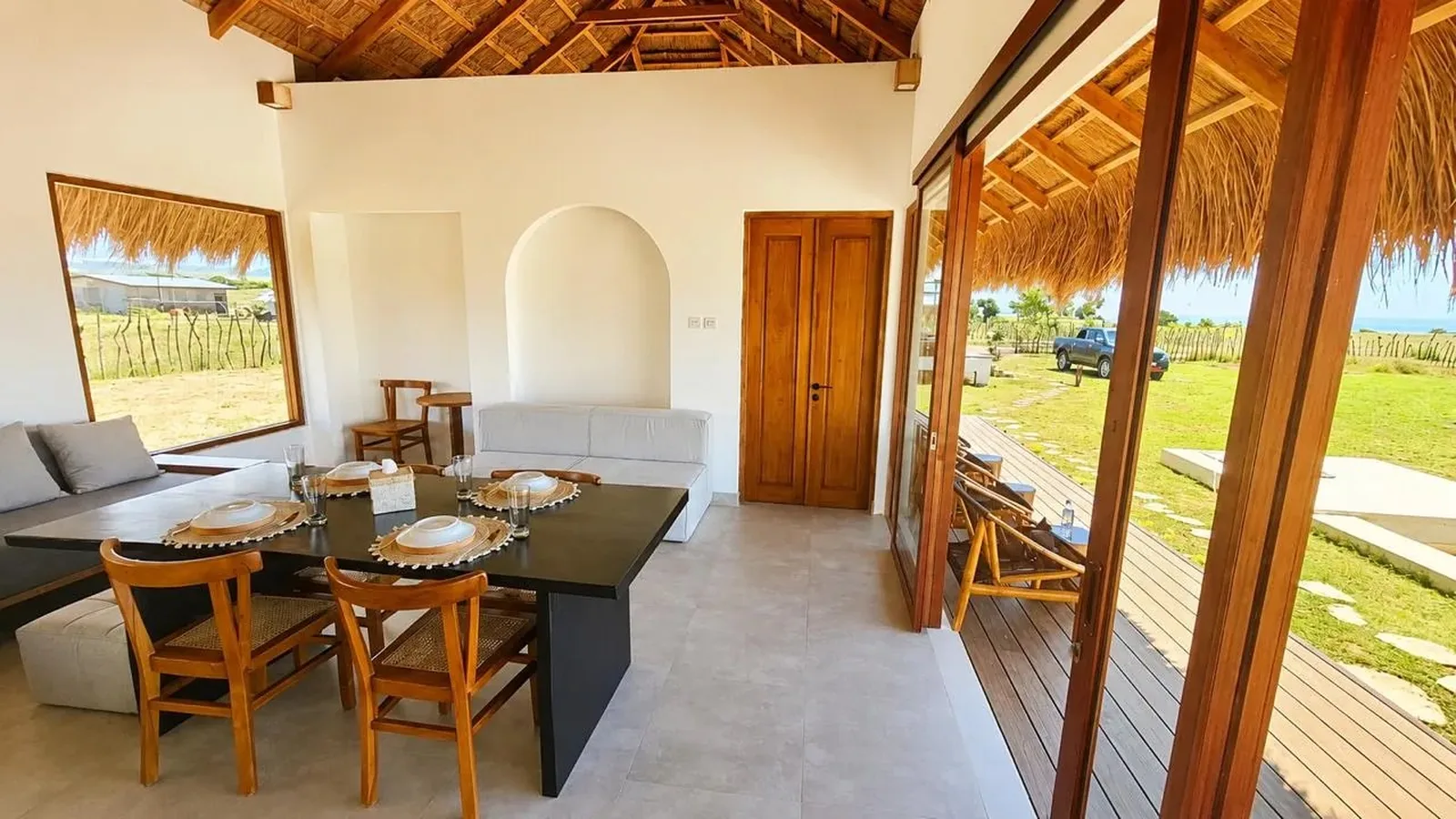
The architect, a thoughtful man from Antwerp with a tan that suggested permanent residence, stood beside a half-finished wall of striated earth. On the tablet in his hand, a German client’s face was frozen in a pixelated rictus of displeasure. The Zoom connection, bouncing off a satellite somewhere over the Java Sea, was doing neither of them any favours.
“The mineral content,” the architect explained for the third time, his voice strained with the patience required of those who translate dreams into budgets. “The laterite levels in this specific quadrant of the property are higher than the initial survey. It’s affecting the cure time of the lime binder.”
The client, who managed a derivatives fund from a glass tower in Frankfurt, was unmoved. On his screen was the 3D render he had approved six months ago: a seamless, monolithic sweep of terracotta perfection. He was looking at a digital promise. The architect was looking at a problematic pile of damp, reddish dirt that had just added an unforeseen 8% to the materials budget and three weeks to the project timeline. The sublime dream of ‘building with the land’ was meeting the brutal, non-negotiable reality of a globalized balance sheet.
This small, expensive drama, playing out on a cliffside overlooking an unnamed stretch of turquoise water, is a microcosm of a much larger economic phenomenon. It’s a story about the collision of post-pandemic aspiration with hard-nosed financial logic, a tale of how the most elemental materials—earth, wood, stone, grass—are being repackaged, priced, and sold back to a global elite at a staggering premium.
The ESG Allure: Selling Paradise as a Virtuous Investment
It is no longer enough for paradise to be merely beautiful. It must now be virtuous. The flight of capital and talent from congested urban centres, turbocharged by the pandemic’s great remote-work experiment, has rapidly been monetized by developers who understand that the new luxury is absolution. They are not selling houses; they are selling narratives of conscientious living, and business is booming.
The global wellness real estate market, a sector barely discussed a decade ago, is projected by the Global Wellness Institute to reach $919 billion by 2027. A key driver of this growth is a vocabulary arms race. Property listings and architectural briefs are now saturated with keywords like 'biophilic', 'artisanal', 'regenerative', and 'carbon-negative'. An analysis of high-end property portals shows that developments explicitly citing 'local materials' and 'nature integration' as a primary feature have grown by over 200% as a listed attribute since early 2020. This is ESG—Environmental, Social, and Governance—investing applied to the holiday home.
This aesthetic has been codified and globally disseminated through the frictionless channels of social media. An architect in Sri Lanka, a developer in Mexico, and a hotelier in Thailand can all find themselves scrolling through the same Pinterest board, converging on a deceptively homogenous template for ‘local’ design: sweeping bamboo arches, rough-hewn timber beams, infinity pools that bleed into the jungle canopy, and, of course, the ubiquitous rammed-earth wall. It is a globalized vision of the hyperlocal, an aesthetic that feels authentic precisely because it has been so perfectly curated to look that way.
“We don't sell a house; we sell a narrative,” a real estate marketer in Costa Rica’s Nicoya Peninsula told me, nursing a kombucha at a café that could have been in Venice Beach, California. “For $2 million, you're not just buying a villa with an ocean view. You're buying a story about living in harmony with nature that you can tell for the rest of your life at dinner parties in London or New York. The house is just the physical artifact of that story.”
This 'narrative premium' is the central economic engine of the movement. It allows an investor to frame a six-figure expenditure on a second home not as an indulgence, but as a form of patronage—of local craft, of sustainable practice, of a 'better way of living'. It transforms conspicuous consumption into conspicuous conservation. The catch, as our German fund manager discovered, is that the balance sheet for this narrative is often written in red ink, and the earth itself rarely cooperates with the clean lines of the prospectus.
Deconstructing 'Local': The Global Logistics of a Dirt Wall
The central promise of tropical modernism is its connection to place, a philosophy of building with what the land provides. It’s a powerful, romantic idea. It is also, in economic terms, frequently a fiction. The moment one applies the standards of international luxury—durability, precision, comfort, safety—to these elemental materials, a hidden and profoundly global supply chain spools into view.
Let’s return to that problematic rammed-earth wall. The primary cost in modern rammed-earth construction is not the earth, which is often excavated directly from the site for next to nothing. The cost lies in the things that make it a viable, insurable structure. It lies in the reusable steel or polymer formwork, likely fabricated in China and shipped halfway across the world. It lies in the specialized pneumatic compactors and vibrators required to achieve the necessary density, often imported from Australia or the United States. It lies in the lime or cement binder, which must meet specific chemical compositions for stability, and is almost certainly not from a local quarry. And, in the case of the villa from our opening scene, it may even lie in trucking in tons of 'better' dirt from a neighboring province when the on-site soil proves inadequate. The 'local' wall is, in fact, an assembled product of a complex, carbon-intensive global logistics network.
This paradox is everywhere. Consider bamboo, the poster child of sustainable construction. Certain species, like Dendrocalamus asper, when harvested at the right age and properly treated, possess a tensile strength greater than that of steel. Yet, to achieve this durability in a humid, pest-rich environment, the bamboo must be treated. The most effective and common method involves pressure-treating it with a solution of borates, a chemical compound primarily mined and processed in the United States and Turkey. A recent analysis of a celebrated bamboo project in the Philippines found that a staggering 45% of the material's final, on-site cost was not attributed to the bamboo itself. It was consumed by diesel for transport from the remote grove to a centralized treatment facility, the cost of the imported chemicals, and the fuel for the heavy machinery required to lift the massive culms into place.
These logistical frictions create absurdities. A project manager for a luxury development in the Riviera Maya recounted a story of exquisite agony. The architect, based in Milan, had specified a particular 'local' limestone for the bathroom tiles. When the first batch arrived from the quarry two hours away, the colour variation was deemed too pronounced. The tiles didn't match the exact, uniform shade of pale grey shown in the render. After weeks of delays and failed attempts to source a more consistent local stone, the client gave up. They air-freighted a container of travertine from a quarry near Tivoli, Italy—the very stone used to build the Colosseum—at triple the cost and an immeasurable carbon footprint, to achieve the 'natural' look they desired.
The Artisan's Wage: A New Guild or Exploited Labor?
Part of the virtuous narrative sold to investors is the revival of traditional craftsmanship. The marketing materials are filled with sepia-toned images of smiling carpenters hand-carving joints and weavers meticulously assembling grass roofing. The story suggests that by building this way, one is not merely constructing a home but resuscitating a culture, providing dignified, high-skilled work to a new generation of artisans. The economic reality is more complex and far less romantic.
The first issue is a dramatic wage disparity that creates a two-tiered economy on a single construction site. In a province in Northern Thailand, a master wood carver hired to create intricate panels for a luxury villa project can command a day rate of $180. A few hundred meters away, on a conventional hotel construction site, a general laborer earns roughly $18 for a day of pouring concrete and laying rebar. This tenfold difference seems like a victory for the artisan. But the market for such skills is perilously thin. In that entire province, there are only four such carvers with the skill and reputation to work on these high-end projects. The construction of one $3 million villa creates a lucrative, short-term contract for one of them, but it does little to build a sustainable industry. It’s a superstar economy in miniature, creating a few well-paid gigs rather than a broad-based improvement in construction wages.
This creates a 'gig economy' for a handful of master artisans who become entirely dependent on the whims of foreign-led projects. When the luxury villa boom slows, their hyper-specialized skills may have no other local outlet. A young builder I spoke with at a small construction firm in Da Nang, Vietnam, put it bluntly: “I would like to learn the old ways of building with timber and joinery, the way my grandfather did. But my boss says it’s faster and cheaper and more useful for my career to learn to pour concrete and weld steel frames. The bamboo and wood houses are only for foreigners with a lot of money and a lot of time.”
His boss is making a rational calculation. The time and cost required to train workers in non-standard techniques represent a significant, often unbudgeted, capital expense. Who pays for the weeks it takes to teach a crew the correct way to mix and compact rammed earth? Who pays for the inevitable mistakes, the cracked walls, the misaligned joints? In most cases, that cost is passed directly to the client, buried in the inflated 'management fees' or 'contingency' line items of the budget. Far from reviving a craft, the model often just makes the client pay a premium for on-the-job training for a technique that will be abandoned the moment a more conventional, profitable project comes along.
| Labor Cost Comparison: Tropical Modern vs. Conventional (per day, Southeast Asia) | |||
|---|---|---|---|
| Role | Luxury 'Artisanal' Project | Standard Commercial Project | Wage Premium |
| Master Wood Carver/Joiner | $180 - $250 | N/A | - |
| Rammed-Earth Specialist | $120 - $160 | N/A | - |
| General Skilled Laborer | $35 - $50 | $25 - $35 | 40% - 42% |
| General Unskilled Laborer | $20 - $25 | $15 - $20 | 25% - 33% |
Source: Field interviews with project managers in Thailand and Indonesia, Q1 2024. Figures are illustrative estimates.
This system doesn’t build a resilient local industry. It creates a small, fragile ecosystem of boutique skills, a new guild entirely at the mercy of the cyclical and highly fickle tastes of international capital.
The 20-Year Stress Test: Durability, Decay, and the Insurance Deficit
An architectural render is timeless. A timber beam in a 90% humidity environment is not. The most significant, and most frequently ignored, cost of tropical modernism is not in its construction, but in its inexorable decay. For any serious investor, the spreadsheet that matters more than the initial CapEx budget is the 'maintenance-sheet'—a 30-year projection of the total cost of ownership (TCO).
Consider the classic image of the Balinese villa: the beautiful, hand-laid alang-alang grass roof. It is an icon of tropical living. It is also a financial time bomb. A high-quality alang-alang roof, even when perfectly installed, requires complete replacement every seven to ten years in a climate prone to torrential rain and intense sun. At current prices, replacing the roof on a modest 150-square-meter villa costs approximately $20,000. Over a 30-year period, an owner can expect to pay at least $60,000 simply to keep the rain out. A standard clay tile roof, by contrast, has a 30-year lifespan with minimal upkeep beyond occasional cleaning, for a fraction of the initial cost.
Wood, another cornerstone of the aesthetic, presents similar challenges. During a trip to investigate a cluster of 'eco-lodges' near Manaus, Brazil, a disillusioned owner from São Paulo showed me the source of his financial misery. He pointed to a massive timber beam, celebrated in an architectural magazine for being 'sustainably-sourced' from a local managed forest. A dark, ugly stain spread across its surface. “Termites and mold,” he said with a sigh. The beam, it turned out, hadn't been sealed correctly for the unrelenting Amazonian humidity. The repair, which involved propping up the entire roof structure and replacing the compromised beam, came with a $40,000 bill not covered by his insurance.
This brings us to the insurance deficit. Actuaries, unlike architects, are not swayed by beauty. They are professional risk assessors, and they see a house made of non-standard, organic materials in a disaster-prone climate as a portfolio of liabilities. Major insurers are deeply hesitant to cover these structures. When they do, it is often with premiums up to 300% higher than for an equivalent concrete-and-steel building. Many policies for thatched or bamboo structures explicitly exclude damage from fire, pests, and even high winds—the very risks they are most susceptible to. In many tropical nations, traditional building techniques are not even included in official building codes. This forces developers to build a standard concrete skeleton simply to get a building permit, then apply the 'local' materials as a purely cosmetic, non-structural—and uninsured—façade.
Total Cost of Ownership (TCO) Comparison: 30-Year Horizon (Illustrative 200 sq. meter villa in a high-humidity coastal zone)
-
Conventional Concrete Villa:
- Initial Build Cost: $400,000
- Major Maintenance (painting, roof repair): $50,000
- Insurance (30 years @ $3k/yr): $90,000
- Total Cost: $540,000
-
'Tropical Modern' Timber/Bamboo Villa:
- Initial Build Cost: $650,000
- Major Maintenance (roof replacements, timber treatment/replacement): $150,000
- Insurance (30 years @ $9k/yr): $270,000
- Total Cost: $1,070,000
The TCO is nearly double. The romance of natural materials wilts under the harsh glare of a 30-year financial projection.
Case Study: The Boutique Hotel's Vernacular Premium
Despite the formidable costs and risks, it would be a mistake to dismiss the economic case for vernacular architecture entirely. Under the right conditions, with a ruthless focus on the business model, the 'vernacular premium' can be transformed from a liability into a formidable asset. The key is to move from a private residential model to a commercial one, where the architecture itself becomes the primary revenue-generating product.
Consider the case of Suarga Padang Padang, a boutique hotel perched on the cliffs of Bali’s Bukit Peninsula. The resort was built almost entirely from reclaimed wood—ironwood from dismantled bridges in Borneo, teak from dilapidated houses in Java—and bamboo. The construction was complex and slow. The final cost per room came in approximately 30% higher than it would have for a conventional luxury hotel built with concrete and plasterboard. On a standard residential balance sheet, this would be a disaster.
But for a hotel, the calculation is different. The architecture itself became the destination. The story of its construction—the reclaimed materials, the passive cooling design, the preservation of the landscape—is not an incidental detail; it is the core of its marketing strategy. The building is intensely photogenic, a magnet for the Instagram-driven travel economy. As a result, the hotel commands an Average Daily Rate (ADR) that is consistently 60% higher than that of its glossier, concrete-bound competitors just down the beach. Its occupancy rates are higher, and its marketing budget is lower. The building does the advertising for them.
“The architecture isn't a cost center; it's our primary marketing asset,” one of the project's original investors confided. “We spend almost nothing on traditional ads because the building itself is the story people want to share. That's the real ROI. We recouped the 30% construction premium within the first three years of operation through the higher room rates alone.”
Their financial models projected a full break-even on the entire investment in just six years, compared to the industry average of nine to ten years for a new luxury hotel. This is the vernacular premium monetized with brutal efficiency. By leveraging the 'narrative' to drive tangible revenue, they turned a potential money pit into a high-performance cash machine. The lesson is clear: for the economics to work, the building cannot simply be a container for a luxurious experience; it must be the experience, one for which customers are willing to pay a significant, quantifiable premium.
Case Study: The Rammed-Earth Money Pit
For every commercially successful Suarga, there are a dozen private residential projects that become financial black holes, monuments to the chasm between an architect's digital vision and the messy, unforgiving reality of the physical world. These are the projects where the vernacular premium is paid, but never recouped.
One of the most cautionary tales comes from the Pacific coast of Nicaragua. An American tech entrepreneur, enchanted by the idea of a minimalist desert-style home overlooking the surf, engaged a celebrated Mexico City architect to design a sprawling residence. The centerpiece of the design was a series of majestic, blade-like walls to be made from rammed earth, using soil from the site itself. The initial construction budget was set at a handsome, but seemingly manageable, $950,000.
The problems began almost immediately. The local soil, like in our opening anecdote, was found to have the wrong clay-to-sand ratio. It was too expansive, prone to cracking. The entire 'build with the land' concept was invalidated before the first foundation was poured. Tonnes of a more suitable soil mixture had to be trucked in from another region, a logistical and budgetary nightmare. The local construction crew, skilled in blockwork and concrete, had no experience with the specialized formwork and compaction techniques required. After two failed, crumbling test walls, the project was halted. A specialist rammed-earth construction team had to be flown in from Arizona, their wages and travel expenses adding hundreds of thousands to the cost.
By the time the house was finally completed, two years behind schedule, the final cost had ballooned to $1.6 million, a 68% overrun. The house was, by all accounts, a masterpiece. But the owner’s victory was short-lived. A change in family circumstances forced him to put the property on the market just a year later. This is where the second, more brutal, financial lesson emerged.
In an email to the frustrated owner, the local high-end realtor trying to sell the property wrote: “The official bank appraisal has come in, and I’m afraid the news is not good. They’ve valued it at $1.1 million, which is $500,000 under your build cost. The bank’s valuer said, and I quote, ‘we don't have a valuation model for a house made of dirt, however beautiful it may be.’ To them, it’s an uninsurable, non-standard structure in a niche market.”
The very uniqueness that made the house an architectural triumph also made it an illiquid, almost unsellable asset. It was too specific, too personal, and too difficult for the conventional financial system to value. The owner was trapped in a beautiful, bespoke money pit, a victim of the gap between aesthetic value and market price.
The Carbon Contradiction: A Green Facade on a Concrete Core
The final, and perhaps most cynical, critique of this architectural trend lies in its claims of sustainability. A rigorous lifecycle analysis, one that looks beyond the embodied carbon of the raw materials, often reveals a troubling paradox. Many of these 'green' villas are merely a sustainable facade wrapped around a profoundly unsustainable, high-carbon lifestyle.
The embodied carbon of a timber frame may be 50% lower than that of a concrete one, as a lifecycle analysis of a 'green' villa project in Thailand found. This is the figure that makes it into the marketing brochure. What is left out is the operational carbon. The same study found that the operational carbon footprint of the villa, primarily from air conditioning its magnificent double-height, open-plan living space, was 40% higher than a conventional, better-sealed design of the same size. The architectural features designed for aesthetic impact—vast walls of glass, soaring ceilings, indoor-outdoor living—are an energy-consumption nightmare in a tropical climate.
Then there is the carbon footprint of the fit-out. The clientele commissioning these homes is not content with locally made furniture. They demand the global standard of luxury. The 'local' shell becomes a container for high-performance, triple-glazed sliding glass panels fabricated in Belgium, state-of-the-art kitchen systems from Germany, sculptural bathroom fixtures from Italy, and minimalist furniture from Denmark. Each of these items comes with its own significant embodied carbon from manufacturing and thousands of miles of transport.
A structural engineer who has worked on dozens of these projects in Southeast Asia put it to me with a weary cynicism. “The client specifies a wall made from local earth, which we spend months perfecting. Then in the next breath, they specify a ten-meter, floor-to-ceiling, single-pane sliding glass door that has to be fabricated in Switzerland, shipped in a special container, and craned into place. It’s a performance of sustainability, not the practice of it. The real god on these projects isn't nature; it's the visual.”
This performance is the ultimate luxury: the ability to consume all the comforts of global modernity while wrapped in an aesthetic of earthy simplicity. It’s having your carbon cake and eating it, too.
The Verdict: A Replicable Model or Boutique Fetish?
So, is tropical modernism a genuine paradigm shift, a scalable solution for a warming world? Or is it simply the 21st century's answer to the 18th-century European fashion for the 'picturesque,' where aristocrats built artificial rustic 'follies' and faux-hermitages on their estates—a carefully curated, highly expensive performance of a simple, pastoral life that had no bearing on reality?
The evidence points overwhelmingly to the latter. The economic and regulatory barriers to scaling these techniques are immense. As a report from the planning department of Denpasar, Bali, found, applying the material and labor standards of a single luxury 'tropical modern' villa to a public housing project would increase the cost per unit by an estimated 250%, rendering it utterly unfeasible. Building codes, insurance underwriters, and bank financing—the institutional systems that govern mass-market construction—are all built around the predictable, standardized world of concrete and steel.
A stark financial comparison tells the story. An investor today can purchase a new, 120-square-meter concrete townhouse in a gated community outside of Bangkok for approximately $250,000. To build a 'tropical modern' home of the same size using bespoke timber and local stone, even on relatively cheap land, the build cost alone easily starts at $700,000—a 180% premium before factoring in the fees for a 'name' architect.
There is a profound opportunity cost here. The capital, expertise, and time invested in building one hyper-expensive, photogenic eco-villa could be used to build dozens of genuinely sustainable, if less aesthetically thrilling, homes for local communities. The intellectual energy of the world’s best architects is being poured into perfecting the luxury tent, while the world's fast-growing tropical cities are built from the cheapest concrete available.
On my last day researching this piece, I stood with a group of Western architecture students on a guided tour of a $5 million bamboo mansion, a cathedral of curated authenticity. They spoke in hushed, reverent tones about joinery and light. Down in the valley below, through the perfectly framed jungle view, a local family was mixing cement by hand on a plastic tarp, preparing to add another small, unadorned room to their concrete block house.
The romance of building with the earth may be this movement’s most valuable, and most misleading, asset. We are sold a story of returning to nature, but the price of admission is calculated on a global spreadsheet, reminding us that in the new economy of paradise, even the dirt beneath our feet comes with a luxury markup.