The Price of Pretending: An Island's Authenticity Trap
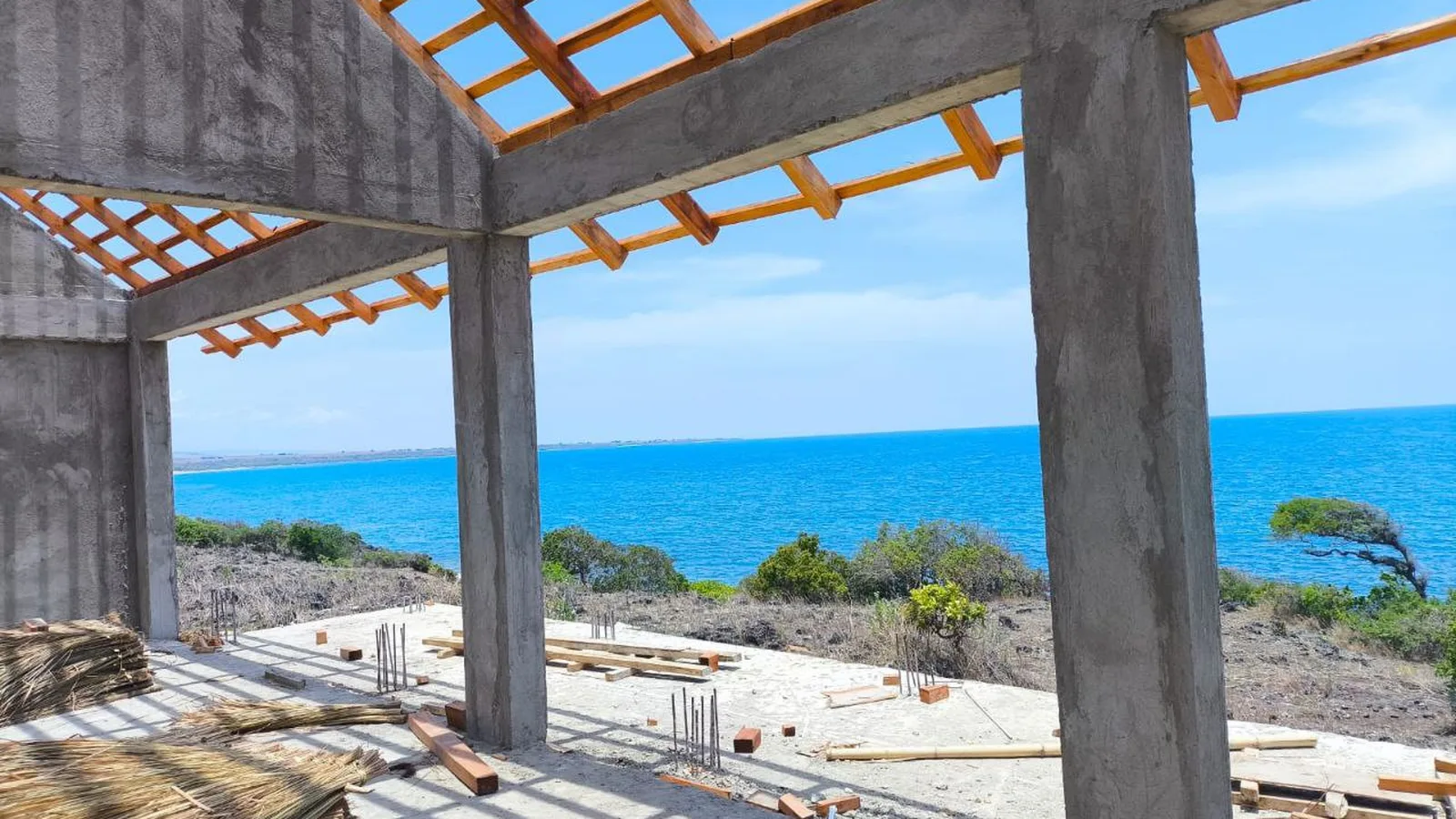
The first time I saw I Made Asnawa, he was listening to bamboo. In a dusty, open-sided workshop north of the traffic-clogged arteries of Canggu, he held a long, pale stalk to his ear and tapped it with a knuckle, like a doctor performing a percussion test on a patient’s back. The sound was a hollow, resonant thud. He wasn’t checking for musicality, but for structural integrity. A hairline crack, invisible to my eye, could mean failure under load. Satisfied, he tossed the nine-meter culm onto a growing pile destined for a bubbling, steaming tank behind him. The tank wasn't filled with pure mountain water, but a chemical solution of boron salts, a concoction that would permeate the fibers and make the bamboo indigestible to the powder post beetles that are the bane of every structure in the tropics.
This bamboo, harvested from a family-owned grove in the island’s highlands, was being embalmed. It was being prepared for a new, almost eternal life as part of a German-designed, multi-million-dollar yoga shala overlooking a cliff-fringed surf break. Treated this way, it would last fifty years, maybe more. Untreated, it would be dust in three. This chemical baptism is the unspoken secret behind the architectural aesthetic that has colonised coastlines from here to Costa Rica—a style that sells a fantasy of natural, indigenous living. It’s a transaction that promises a return to nature, but one that starts with a decidedly unnatural act. And as I’ve learned over eight years of watching these structures rise from the rice fields, that’s just the first of many contradictions.
Made, a man whose family has built with bamboo for generations, is a key player in this new economy. He’s a craftsman, a foreman, a vital link in a global supply chain that transforms a humble grass into a luxury building material. And he, like the island itself, is caught between the story the world wants to believe and the complex, often compromised, reality of providing it.
The Woven Horizon: Defining the New Tropical Vernacular
The aesthetic has become so ubiquitous it’s almost a filter. You’ve seen it on the covers of Architectural Digest and splashed across the Instagram feeds of wellness influencers. It’s a fusion of sensibilities that, on paper, shouldn’t work but in practice is intoxicating: the clean lines and spatial purity of Scandinavian minimalism, the indoor-outdoor fluidity of Brazilian modernism, and a material palette plucked directly from a Southeast Asian village. Polished concrete floors flow seamlessly to meet rough-hewn stone walls. Soaring bamboo arches, engineered with computer-aided design, frame views of the Indian Ocean. Custom-made rattan furniture sits beneath stark, industrial-style light fixtures imported from Italy. It’s a look that feels both ancient and aggressively new, raw and exquisitely refined.
I’m sitting in one such creation now, a newly completed four-bedroom villa in Uluwatu that I’ve wangled a tour of before it hits the rental market for $1,200 a night. The German owner, a tech entrepreneur who sold his startup for an eye-watering sum, describes it as “a sanctuary, a place to disconnect from the noise and reconnect with something real.” The air is thick with the scent of curing teak and the faint, sweet smell of the alang-alang grass roof. A gentle breeze, funnelled through cleverly designed openings, makes air-conditioning redundant. Through a floor-to-ceiling wall of retractable glass, the turquoise sea glitters. It is, by any measure, breathtaking. It is also a meticulously constructed performance of authenticity.
The architects behind this movement are now stars in their own right. Names like Alexis Dornier and firms like Ibuku or Patisandhika are whispered in reverential tones by the new class of tropical elite. They are the tastemakers, the visionaries who supposedly “discovered” the potential of these local materials, elevating them into the realm of high design. Their clients are people like me, or a wealthier version of me: serial expats, cashed-out founders, crypto-millionaires, and creative directors working remotely, all seeking a backdrop that is both a spectacular investment and a declaration of a certain kind of enlightened living. They don’t just want a house; they want a story. And the demand for that story is booming.
Between 2019 and 2024, online listings for 'tropical modern' villas for sale or rent on this island have increased by over 250% on major luxury property portals.
This explosion represents a profound shift in what the global affluent desire from a second home. The faux-Tuscan villa is dead; the glass-and-steel box feels cold. What they want now is a home that feels like it belongs, even if its owner is only there for six weeks a year. They want a villa that looks good on camera and makes them feel good about their place in the world—a home that says, “I’m not a tourist; I’m a patron of culture. I appreciate the handmade. I live in harmony with nature.” The problem is that harmony comes at an industrial scale, with a paradox at its core: the more we demand this handcrafted, natural ideal, the more we systematize and deplete the very traditions we claim to admire.
The Bamboo Industrial Complex
To understand the scale of this shift, you have to follow the bamboo. For centuries, it was the ultimate local material: fast-growing, ridiculously strong for its weight, and essentially free. A family would harvest culms from a communal grove to repair a kitchen, build a temporary structure for a ceremony, or weave a wall panel. Its use was cyclical, impermanent, and deeply democratic. That is no longer the case. Today, the journey of a structural bamboo pole is a story of industrial processing and global logistics.
It begins on the mineral-rich volcanic slopes of remote mountains, often on Java or here, where the most prized species, Dendrocalamus asper or ‘bamboo petung’, grows thick and strong. Farmers who once harvested selectively for their own needs now clear-cut entire groves to sell by the truckload to treatment facilities like the one where I met Made. The price is determined by diameter and length, not by the nuanced knowledge of a master builder.
“Ten years ago, if my brother needed to fix his roof, I’d just go to the family land and cut a few good poles,” a farmer named Wayan told me, gesturing towards a distant green slope. “Now, the agent for the factory comes. He buys everything. The price is good, very good. But when I need to fix my own house… I have to buy it back from the yard in the city. Treated. The best wood, my wood, I can’t afford it anymore for a small job.”
At the factory, the craft ends and the science begins. The bamboo is drilled, and the boron salt solution is forced through its vascular system under pressure, replacing the sugary sap that insects love. It’s a crucial process—without it, these multi-million-dollar villas would literally be eaten from the inside out. But it’s also an energy-intensive one that requires large vats, pumps, and chemical inputs often imported from China. Once treated and dried, the bamboo is no longer a piece of grass; it’s an engineered product with a warranty, ready to be catalogued and shipped to a construction site.
The demand is voracious. A single high-end villa project can require up to 5,000 poles of treated bamboo. That’s a volume an entire village might have used for traditional construction and ceremonies over the course of a decade. This creates a classic supply bottleneck. Prices for high-quality structural bamboo have tripled in the last five years, pushing it out of reach for local families and small-scale builders. The very material that symbolised accessible, democratic architecture is now a luxury good, its use and distribution controlled by a handful of large commercial players catering almost exclusively to the foreign market. The ‘Bamboo Industrial Complex’ is no longer a punchline; it’s a reality.
The Architect's Dilemma: Inspiration or Appropriation?
As the profile of these projects has grown, so has the myth of the heroic architect—almost always a foreigner—who arrives in the tropics and “reimagines” the local building culture. They are lauded in international magazines as innovators, their work praised for its sensitivity and vision. They aren't just building houses; they're creating a movement. But this narrative, seductive as it is, conveniently omits centuries of indigenous knowledge and sidelines a generation of local designers.
Of the 20 most-featured ‘Bali Modern’ homes on major design platforms like Dezeen and ArchDaily in 2023, a staggering 17 were designed by non-Indonesian architects. I spoke with Dewi, a talented young Indonesian architect who trained in Melbourne and returned home, eager to contribute to her country’s evolving architectural identity. Her experience has been one of quiet frustration. “There is pride, of course,” she told me over coffee in a minimalist cafe of her own design. “The world is looking at our materials, our landscape. But there is also a box. Foreign clients come to me and they already have a mood board. It’s always the same: bamboo, reclaimed wood, polished concrete. They want me to give them a ‘Balinese’ stamp on a design they found on Pinterest.”
When she tries to push the boundaries, she hits a wall. For a recent hotel competition, she submitted a sleek, ambitious design using formed concrete and glass, inspired by the erosion patterns on local river stones. The feedback from the European judging panel was polite but firm. One judge told her it didn't ‘feel Balinese enough.’ “They want our ‘authenticity’, but only the version they are comfortable with,” Dewi said, her voice tight with an anger she was trying to suppress. “Meanwhile, a German architect can build a white box with a few bamboo sticks on the front and call it ‘a modern interpretation of the vernacular,’ and he wins awards. What are we supposed to do? We are treated as stewards of the past, while they get to define the future.”
This dynamic is not new. It mirrors the 19th-century ‘Japonisme’ movement, where Western artists like Van Gogh and Monet passionately adopted Japanese aesthetics—asymmetrical compositions, flat perspectives—without a deep, or often any, understanding of their Zen Buddhist or Shinto underpinnings. They created a powerful new style, but it was one born of Western fantasy, a projection of what they imagined Japan to be. Today's tropical modernism runs the same risk, becoming a portfolio piece for international designers, a lucrative niche that can be more about brand-building than genuine cultural dialogue. The villa becomes a calling card, stamped with an exotic location and a photogenic aesthetic, easily digestible for a global audience.
The Teak Trade's Fading Memory
If bamboo is the structural skeleton of this new aesthetic, reclaimed teak is its soul. The story is irresistible: wood salvaged from century-old Javanese homes (joglos), weathered fishing boats, and colonial-era bridges, now given a second life as a kitchen countertop, a statement door, or a wide-planked floor in a luxury villa. Each knot, each nail hole, each dark stain tells a story. It’s the ultimate sustainable luxury—recycling with a pedigree. The marketing writes itself.
But what happens when the stories run out? The boom in tropical modernism has created a ravenous appetite for this ‘reclaimed’ wood, and the supply of genuine antique teak is finite. A few years ago, you could drive through the villages of Central Java and find dealers with stacks of massive, hand-hewn beams from disassembled houses. Now, those yards are mostly empty. The low-hanging fruit has been picked.
“The foreigners, they love the story. The older, the better,” a timber dealer named Agus told me in his yard in Jepara, the historic heart of Indonesia’s furniture trade. He kicked a dusty beam. “This one? Real. From a bridge near Solo. Maybe 100 years old. You can see the wear from the water.” He then pointed to another pile, the wood a similar silvery-grey colour but with a more uniform texture. “This one? New teak. We leave it in the sun, treat it with chemicals to raise the grain, maybe hit it with a chain a few times. Looks old, right? The foreigners, even the architects, most of them can’t tell the difference. But they pay the ‘antique’ price.”
This murky market, where newly harvested wood is artificially distressed and passed off as reclaimed, is the industry’s dirty secret. The price for genuinely old, high-quality teak has skyrocketed, rising by over 70% in the last five years alone, from approximately $1,200 per cubic meter to over $2,000. This not only fuels the fakes market but also puts immense pressure on legal, and illegal, logging of new teak. The romance of reclamation is inadvertently driving deforestation.
There’s a deeper, more philosophical cost as well. The very 'tradition' being monetized is often a romanticized fiction. Many of the ornate floral carvings seen on so-called 'traditional' Balinese doors and panels are based on motifs introduced by Dutch and German artists like Walter Spies in the 1930s. They are a colonial-era fusion, not a pure, ancient art form. When that carved door from a Javanese house is removed from its context and placed in a minimalist villa, its story is effectively terminated. It ceases to be a living part of a community’s history and becomes a decorative object, its cultural resonance flattened into a single, marketable word: ‘authentic’.
The Cost of Woven Walls
The visual language of tropical modernism—raw timber, woven surfaces, open-air living—suggests a simpler, cheaper way of building. It’s a seductive illusion. While the raw materials might seem humble, constructing one of these architectural statements is often significantly more expensive than building a conventional, high-quality concrete villa. This is the financial arbitrage that keeps me, and so many other expats, tethered to this part of the world: for a fraction of the price of a modest city apartment back home, you can build a sprawling, architect-designed private paradise. An 850,000 EUR, 150-square-meter apartment in Amsterdam becomes a 400,000 EUR, 250-square-meter villa with a pool and a view. But within that calculation lies another.
The premium for the ‘natural’ aesthetic comes from three main sources: specialised labour, essential treatments, and high-end finishes. You can’t just hire any construction crew. Building with bamboo, for instance, requires a team of artisans who understand how to join the round poles, how to account for their tapering forms, and how to execute the complex curves dreamed up by architects on their laptops. These master craftsmen command higher wages than general labourers. Then there are the hidden costs of the materials themselves: the chemical treatments, the kiln-drying, the logistics of transporting 12-meter-long bamboo poles down narrow village roads. Finally, the aesthetic demands a counterpoint of luxury. The rough stone wall is juxtaposed with German tapware, the woven rattan ceiling with an Italian kitchen island. These imported fixtures, carrying hefty price tags and import duties, are non-negotiable elements of the high-end look.
A side-by-side comparison reveals the true cost of this aesthetic choice.
| Feature | Conventional Concrete Villa | 'Tropical Modern' Villa | Cost Difference |
|---|---|---|---|
| Foundation & Structure | Reinforced Concrete | Concrete & Structural Bamboo | +20% |
| Walls | Brick & Plaster | Brick, Reclaimed Wood, Stone | +35% |
| Roofing | Clay Tiles | Ironwood Shingles / Alang-Alang | +50% |
| Labor | General Construction Crew | Specialized Artisans | +40% |
| Finishes & Fixtures | Standard (Local/Asian) | Premium (European Imports) | +60% |
| Total Estimated Cost (250sqm) | ~$270,000 USD | ~$400,000 USD | +48% Premium |
And the expenses don’t end when construction is finished. Maintenance becomes a kind of second mortgage. An alang-alang grass roof, so beautifully rustic, needs to be replaced every 7-10 years at significant cost. Wood needs to be constantly re-sealed to protect against the brutal combination of equatorial sun and monsoon rain. Pest control is a relentless battle. A concrete-and-tile house is comparatively a fortress; you build it, and for the most part, you can forget it. The 'natural' villa demands constant, expensive upkeep. It’s the price you pay for living inside a story.
The Carbon Footprint of 'Eco'
The ultimate justification for this architectural style, the one that soothes the conscience of its wealthy patrons, is sustainability. A building made of grass and reclaimed wood, they reason, must be lighter on the earth than a concrete box. It’s an intuitive assumption that, like so many things here, crumbles under scrutiny. The term ‘eco’ is often more of a marketing label than a verifiable claim.
When you conduct a proper sustainability audit, the picture gets complicated. You have to consider the ‘embodied energy’ of every component. Bamboo is a carbon sink, yes, but what is the carbon cost of the diesel truck that brings it from the mountain, the electricity that runs the boron treatment pumps, and the fuel used to transport it again to the site? Reclaimed teak saves a tree, but what if it’s a fake, and what’s the carbon footprint of shipping it from Java, kiln-drying it, and processing it with modern machinery? Projects like the talked-about Eco Beach City on the neighboring island of Sumba have to reckon with these supply chain realities on a massive scale.
Then there are the finishes. The carbon cost of shipping a single 20-foot container filled with high-end European fixtures—marble sinks from Tuscany, faucets from the Black Forest, appliances from Munich—to a port in Southeast Asia is approximately 1.8 metric tons of CO2 equivalent. That single shipment effectively negates the carbon sequestered by more than three acres of Indonesian rainforest in a year. The ‘green’ villa is built upon a foundation of global emissions.
“People get fixated on materials, but they miss the point,” a sustainability consultant based in Singapore explained to me. “True sustainability is about localism and lifecycle. A modest, well-designed house built with locally sourced bricks, locally made tiles, and locally fabricated window frames often has a far lower lifetime carbon footprint than a ‘bamboo palace’ filled with imported German tech. The concrete structure might last a hundred years with minimal structural upkeep. The ‘natural’ one? You’ll be replacing the roof three times in thirty years. Which one is really more sustainable?” His point is sharp: we’ve become so obsessed with the aesthetic of green that we’ve lost sight of the fundamentals.
The Craftsman's Hands: Valued Skill or Gentrified Labor?
Let’s return to I Made Asnawa, tapping his bamboo in the dusty workshop. The boom has, without question, been good for him. It has created a renaissance for crafts that were in danger of dying out. Specialist wood carvers, bamboo builders, and rattan weavers are in high demand. They are earning more than they ever have, and their skills are being celebrated on a global stage. A master carver working on a high-end villa project might earn $25 a day, a respectable sum compared to the $10 a day a general construction laborer earns.
But this celebration of craft exists within a system of staggering value extraction. That same master carver is creating an intricate panel that becomes a key selling point for a villa that will rent for $1,000 a night. His daily wage represents 2.5% of a single night’s revenue from the asset he is helping create. He is a celebrated artisan, but he is also gentrified labor. He is paid a premium for his skill, but that premium is a tiny fraction of the value he generates for the foreign owner and the foreign architect.
There’s also the question of creative agency. Is he preserving his heritage, or is he merely executing a minimalist aesthetic that has been predetermined for him? Traditional Balinese carving is ornate, dense, almost overwhelming in its detail, telling complex mythological stories. The new style demands clean lines, simplified motifs, a ‘less is more’ approach that strips away the very complexity that defined the art form. The craftsman’s hands are valued, but his creative voice is often muted, tasked with producing a sanitized version of his own culture that fits a Western design sensibility.
I catch up with Made on a Friday afternoon as his team is packing up. His face, usually creased with concentration, is relaxed. I ask him if he’s proud to see his work in magazines. “Of course,” he says, a wide smile breaking through the dust on his face. “My friends see the pictures on the internet. They say, ‘Made, you are a famous builder now!’” He pauses, his smile fading slightly. He looks at a half-finished bamboo model of a complex, vaulted roof. “But my son… he doesn’t want to do this. Too hard, too dusty. He wants to study English, be a villa manager. He sees the men who own the villas. He doesn’t see me. He sees them.” In that moment, the entire dilemma is laid bare: the father’s hands create the authentic object, but the son sees that the real power and profit lie in managing it for someone else.
Building a Better Blueprint
It would be easy to despair, to see this entire trend as just another chapter in the long story of colonial extraction, repackaged for the 21st century. But that isn't the whole picture. The immense flow of capital and interest into this region also creates an unprecedented opportunity to do things differently, to move beyond pastiche and toward genuine partnership.
There are glimmers of a more equitable future. I was introduced to a new project, a small boutique hotel an hour up the coast, designed by a collaborative studio. A foreign investor provided the capital, but the design lead was a young Javanese architect. They committed to sourcing 80% of their materials, including cement and tiles, from within a 50-kilometer radius. They invested in training a local team not just to build with bamboo, but to design with it. Crucially, the operating model directs 8% of the hotel's net revenue into a community fund that has already financed the architectural education for three students from the local village. It’s a model that shifts the focus from aesthetic extraction to capacity building.
This provides a blueprint for the conscious client—the reader of this article, perhaps, who is dreaming of their own tropical sanctuary. The way forward lies in asking better questions. Before you hire that star architect, ask about their local collaborators. Are they partners or just draftsmen? Ask your builder to trace the supply chain of your materials. Where does the wood really come from? Can you meet the farmer? Ask about the lifecycle cost, not just the build cost. Most importantly, ask yourself what you are willing to invest beyond money. Are you willing to invest time in understanding the local context, to fund training programs, to accept a design that might be less ‘perfect’ but more honest?
I met Dewi, the young Indonesian architect, again recently. She was sketching in her notebook, showing me an idea for a community library. It was a bold, angular structure, unapologetically modern, using a mix of rammed earth and intricately patterned steel screens inspired by local weaving. It was beautiful. It felt both deeply Indonesian and globally relevant, without needing to perform a vision of the past. “We have to stop trying to please the outside world’s idea of us,” she said, her pencil moving swiftly across the page. “Our culture is not a museum. It’s alive. We just need the chance to build its future.”
Looking at the finished yoga shala, its perfectly symmetrical bamboo arches glowing gold in the last light of day, it’s impossible to deny the beauty. The architecture is a triumph of engineering and vision. But the idyllic image is haunted by a new question, one that hangs in the humid air long after the sun has set: are we building a bridge between cultures, or just a beautiful, sustainably-sourced cage of our own expectations?