The Price of a Single Thought
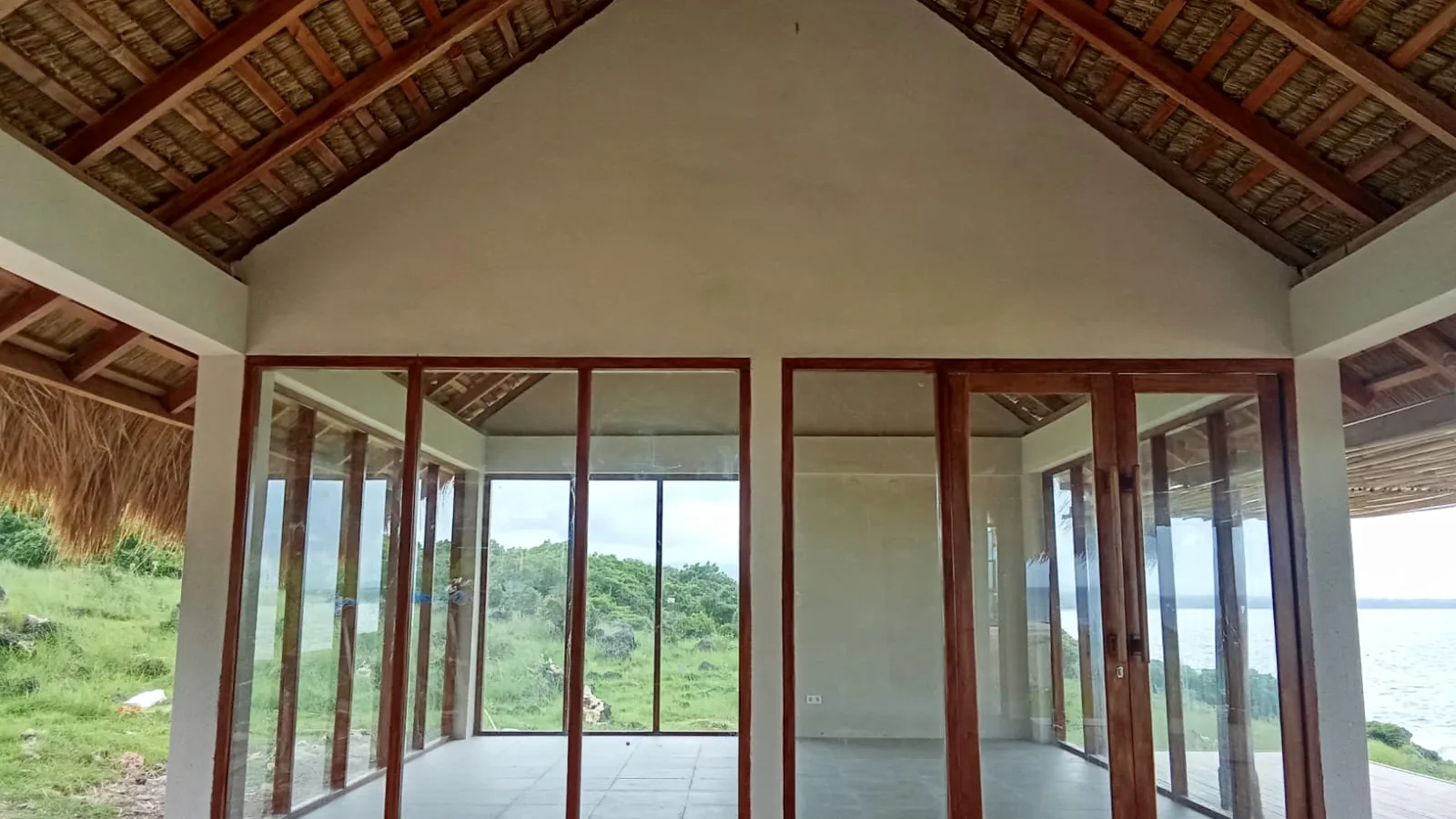
The first thing that hits you is the silence. It’s not an absence of sound—the geckos are having a jurisdictional dispute in the rafters, and a distant scooter whines like a trapped mosquito—but an absence of demand. It's a silence that asks nothing of you, a profound, humid indifference. Elena, thirty-two and what the tech press might call ‘spectacularly successful,’ sits on the cracked concrete porch of a bungalow that costs forty dollars a night. In front of her, a lukewarm coffee sweats onto a rickety plastic table. Next to the coffee is a black Moleskine notebook. It is aggressively, terrifyingly empty.
Three months ago, Elena’s life was the inverse of this. Her calendar was a weaponized prism of color-coded, 15-minute slots, a monument to optimized efficiency that left no room for stray thoughts. She was the co-founder of a fintech company that had just been acquired by a competitor in a deal that involved a number with nine digits. The transaction closed on a Tuesday. By Friday, she was on a plane with a one-way ticket, a single carry-on, and a single question that had been rattling around her skull for a year: What next?
This isn't a story about burnout, not in the traditional sense. It's not about escaping to ‘find yourself.’ This is about a new, brutally pragmatic business strategy emerging from the highest echelons of the startup world. Founders like Elena aren’t running away from their lives; they’re running towards a very specific, engineered environment. They are trading the chaos of infinite optionality for the clarity of deliberate constraint. They are here to do a job. The most important job, it turns out: the thinking that their old lives made impossible.
The Deliberate Disconnect
There’s a popular fiction sold on Instagram of the ‘digital nomad,’ a sun-kissed freelancer tapping away on a laptop between surf sessions, a life of perpetual, blissful freedom. This isn't that. This is something else entirely. If the digital nomad seeks freedom, this new archetype—the strategic solitary—seeks constraints. They’re not here to answer emails from a hammock; they’re here to build a fortress against their own inbox.
“For five years, my calendar was a Tetris game of other people's priorities,” Elena tells me, swatting at a fly that seems personally offended by her existence. We’re at a small warung, the kind of place with three items on the menu and a dog that has achieved a state of Zen that would make a monk jealous. “My job was to be a decision-making machine, a human API. Yes, no, fund it, kill it, hire her, fire him. I came here to find out if I still had any of my own questions left, let alone answers.”
Her experience is not an outlier. A recent survey from a Silicon Valley venture fund found that 63% of founders at high-growth startups feel they have almost no time for unstructured, strategic thinking in their daily routine. They are so busy running the business that they have no time to build the business at its most fundamental level. The company becomes a runaway train, and they’re just laying track as fast as they can, hoping they don't drive it off a cliff.
The first week, Elena admits, was hell. She’d wake up with a jolt of phantom adrenaline, reaching for a phone that was intentionally left in a drawer, its SIM card removed. The silence wasn’t peaceful; it was accusatory. The empty page of her notebook seemed to mock her. “I realized I hadn’t had an original thought in years,” she says, laughing a dry, humorless laugh. “My thoughts were all just responses to stimuli. An email, a Slack message, a term sheet, a user complaint. I was a world-class reactor. I had completely lost the ability to simply… act.” This self-imposed crucible is designed to burn away the reactive dross, to force a confrontation with the terrifying, liberating emptiness of a truly blank slate.
The Flight to Scarcity
In San Francisco or London or Singapore, the curse of the successful founder is ‘optionality fatigue.’ Every door is open. Every coffee meeting could be a new multi-million dollar venture. Every inbound email is a potential partnership. This firehose of opportunity isn't just distracting; it's cognitively crippling. A Stanford study found that the sheer volume of decisions we make in a day can reduce the quality of our strategic choices by up to 40%. You spend so much willpower deciding on lunch that when it's time to decide on the future of your company, the tank is empty.
These island outposts are an antidote to that abundance. They are a flight to scarcity. The Wi-Fi, when it works, has the speed and reliability of a government bureaucracy. The social circle is finite. The nearest Apple Store is a two-hour flight away. There are no Michelin-starred restaurants to book, no gallery openings to attend, no urgent networking events to suffer through. These are not bugs; they are features.
“He left a firehose of data and came back with a single, sharp spear.”
I heard the story from a venture capitalist in Singapore, a man whose patience is measured in nanoseconds. One of his portfolio founders, the CEO of a company teetering on the edge of irrelevance, simply vanished. His out-of-office was a cryptic message about ‘deep work.’ He was, a junior partner discovered, on the Portuguese island of Madeira. “We were ready to fire him,” the VC told me, swirling the ice in his glass. “The board was apoplectic. He was burning cash, and he goes on vacation?” But a month later, the founder returned. Not with a tan, but with a ten-page memo. It was a radical, gut-wrenching pivot for the company, abandoning their core product. It was also brutally, undeniably correct. “He left a firehose of data and came back with a single, sharp spear,” the VC said, a grudging respect in his voice. “That memo saved the company. It probably cost us a million in lost revenue in the short term. It made us a hundred million in the long term. Best damn vacation anyone ever took.”
This engineered scarcity forces a ruthless prioritization of thought. When you only have one hour of usable internet a day, you don’t waste it scrolling through Twitter. You use it to download a specific research paper or have a single, high-stakes video call. When you can’t distract yourself with endless consumption, you are forced to turn inward and, for better or worse, produce.
Neuro-Hacking Paradise
It’s tempting to dismiss all this as a woo-woo indulgence, but the hard science is rapidly catching up to the anecdotal evidence. What these founders are doing, whether they know it or not, is a form of applied neuroscience. Take the concept of ‘Blue Space,’ a growing field of research showing how proximity to water impacts our brains. It’s not just pretty. Neuroscientists have found that looking at water floods the brain with dopamine, increases blood flow to areas associated with creativity, and lowers cortisol. It’s a natural stress-reducer and creativity-enhancer rolled into one.
Then there’s the light. For eight years, I’ve started my day not with an alarm clock but with the sheer physics of the sun at this latitude. The light doesn’t politely suggest you wake up; it performs a full-scale cognitive intervention. This alignment with natural circadian rhythms, contrasted with the soul-sapping fluorescent hum of a 24/7 office culture, has a measurable effect on cognitive function, memory consolidation, and mood. One founder I met, a gaunt, caffeine-wired man from Berlin, told me he slept four hours a night for a decade. “After two weeks here, I was sleeping eight hours. I thought I was sick. My co-founder told me, ‘No, man, you’re just… a mammal.’”
This environment nurtures what psychologists call ‘soft fascination.’ Unlike the ‘hard fascination’ of a smartphone screen, which captures and drains your attention, soft fascination involves watching waves, clouds, or leaves in the wind. It holds the mind without demanding anything from it, creating the perfect mental state for mind-wandering. And mind-wandering, once considered a sign of a lazy brain, is now understood by neuroscientists to be the very state in which most creative breakthroughs and ‘aha!’ moments occur. It’s the brain’s default mode network, connecting disparate ideas in novel ways. These founders aren't staring at the ocean because they're lazy; they're staring at the ocean because that's where the work gets done.
Mental Health Proximity Effect
| Proximity to Coastline | Reduction in Symptoms of Mental Health Disorders |
|---|---|
| Within 1km | 22% |
| 1km - 5km | 13% |
| Over 5km | Baseline |
Source: University of Exeter, 2019 study on 'Blue Health'
The daily routine becomes a cognitive ritual. A walk on the beach at dawn to prime the brain. Four hours of intensely focused, offline work on a single problem. An afternoon snorkel or surf to hit the mental reset button, washing away what neuroscientists call 'attention residue'—the lingering cognitive load from a previously checked email or message. An evening of reading a physical book. It's a protocol designed to optimize the mind, treating it not as a limitless resource to be exploited, but as a precious instrument to be tuned.
The Economics of Engineered Clarity
To the uninitiated, spending three months on an island to ‘think’ sounds like the height of fiscal irresponsibility. But run the numbers. It’s one of the highest-leverage investments a founder can make.
Let’s do a simple cost-benefit analysis. A founder I know, let’s call him David, was struggling with a critical decision: whether to sell his B2B SaaS company for a solid, but uninspiring, $30 million, or to take a massive round of dilution-heavy venture funding to go for the billion-dollar outcome, a path fraught with risk. He was paralyzed. He took his family to Koh Lanta, a quiet island in southern Thailand, for three months. His costs were surprisingly modest.
| Item | Cost (3 Months) | Equivalent Corporate Cost | Notes |
|---|---|---|---|
| Private 3-BR Villa w/ Pool | $9,000 USD | - | Rented directly from owner. |
| Food, Transport, Misc. | $3,000 USD | - | Eating local, renting a scooter. |
| Total Founder Sabbatical | $12,000 USD | - | Cost for 3 months of strategic clarity. |
| Senior Strategy Consultant (e.g., Bain, McKinsey) | - | $250,000+ USD | For a 3-month engagement in SF/NY. |
For less than the price of a mid-range family car, David bought himself three months of unadulterated focus. The alternative? Hiring a single senior strategy consultant from a top-tier firm in New York would have cost his company over $250,000 for the same period. “And the consultant would have just given me a 200-slide PowerPoint telling me what I already knew,” David told me via a crackly WhatsApp call. “The problem wasn’t a lack of data. It was a lack of quiet.”
Now, consider the upside. The cost of a single failed enterprise software feature, factoring in engineering hours, wasted marketing spend, and opportunity cost, can easily exceed $500,000. The cost of a bad strategic pivot can kill a company. The cost of founder burnout is immeasurable, often leading to destroyed relationships, health crises, and shuttered businesses. In that context, $12,000 to immunize yourself against a multi-million dollar mistake doesn't look like an expense. It looks like the cheapest insurance policy on the market.
“My burn rate in SF was $50k a month to figure out product-market fit. Here, my burn rate is $2k a month to figure out myself. The second one is proving to be a better investment.”
The Micro-Mastermind
The image of the lone genius on a mountaintop is a romantic lie. While the initial goal is solitude, the most effective practitioners of this method don’t remain total hermits. They form small, curated, high-trust pods. This isn’t the glad-handing, business-card-swapping of a conference. It’s the modern, venture-backed equivalent of the Parisian salons or the Inklings of Oxford. It's a micro-mastermind for sense-making.
“It’s like a board meeting for my own brain,” says a German hardware engineer who spends two months every year in Bali. He’s part of an informal group of seven founders spread across Southeast Asia and the Canary Islands. “They're not there to give me answers, but to ask the questions I'm avoiding.”
Their network exists on a private Signal group with a strict set of protocols. Rule #1: No small talk. Rule #2: No pitching. Rule #3: Every Friday, one member gets the ‘hot seat.’ They have 30 minutes to present their single biggest, gnarliest problem—personal or professional. The other six members then have an hour to do nothing but ask clarifying, often uncomfortable, questions. No advice is given. The goal is not to solve the problem for them, but to illuminate the contours of the problem so the person can solve it themselves.
This structure provides the perfect balance of solitude and reflection. The founder does the deep, lonely work for six days, then on the seventh, they submit their fragile, half-formed ideas to a crucible of intelligent, empathetic, but brutally honest peers. The trust is absolute because the stakes are shared. Everyone in the group understands the unique psychological pressures of creating something from nothing. They are all wrestling with their own versions of Elena’s empty notebook. This is not networking; it's a shared survival strategy.
The Deep Work Stack
If you were to unpack the single carry-on bag of one of these strategic solitaries, you wouldn't find what you expect. It's an exercise in extreme, intentional minimalism. The toolkit is as important for what it excludes as for what it includes.
First, the analog. The most-cited tool is invariably a specific notebook and pen. A Leuchtturm1917 with its dotted grid, perfect for non-linear mind-mapping. A Japanese Midori Traveler’s Notebook, designed to get battered and personal. A specific fountain pen with a specific ink. This isn't hipster affectation. It's a conscious choice to engage a different part of the brain, to escape the tyranny of the blinking cursor and the linear logic of a word processor. It’s about thinking with your hands.
Next, the digital, but surgically so. You’ll find a Kindle, a single-purpose device for deep reading, not an iPad that tempts with a thousand other functions. Increasingly, you'll find a 'paper tablet' like the ReMarkable 2, a device that allows for digital note-taking without a web browser, email, or social media. It's no surprise that sales for this niche device grew by 135% year-over-year, with entrepreneurs and executives as a key demographic. The laptop itself is neutered. An app like Freedom.to is installed to aggressively block the internet for pre-scheduled blocks of time. Slack, email clients, and social media apps are uninstalled completely.
Here’s a typical 'Deep Work Stack' laid out on a bed in a bungalow:
- Hardware: 13” MacBook Air (with most apps deleted), Kindle Paperwhite, ReMarkable 2 tablet, Noise-canceling headphones (Bose or Sony).
- Analog: One Leuchtturm1917 A5 notebook, one Lamy Safari fountain pen.
- Apparel: Three linen shirts, two pairs of shorts, one pair of swim trunks, one pair of all-terrain sandals. Period.
- Reading Material: Three physical books, all on a single topic. For Elena, it was one book on systems thinking, one on urban planning, and a biography of the radical economist E.F. Schumacher.
This isn't about spartanism for its own sake. It’s about reducing cognitive load. Every item is chosen to serve a single purpose: to facilitate deep thought and eliminate everything else. It’s a physical manifestation of their mental goal.
The Re-Entry Problem
The hardest part of the journey isn't getting to the island. It’s leaving it. The return to ‘normal’ life is a form of reverse culture shock, a violent cognitive whiplash. One morning you’re watching the sunrise with a clear mind; the next, you’re in an Uber at 6 AM, mainlining cortisol from a backlog of 1,200 emails, your newfound clarity already beginning to fray.
This is the concept of ‘strategic decay.’ The profound insights gained in the crucible of solitude are fragile. Confronted with the high-velocity, high-noise environment of a scaling startup, they can erode with astonishing speed. Gartner research has shown that up to 69% of corporate strategies fail not because they are bad strategies, but because of poor execution and a fundamental disconnect between the high-level vision and daily operations. The founder returns with a beautiful, hand-drawn map, only to find the rest of the company is still using a different GPS, speeding in the wrong direction.
Successful founders anticipate this. They spend the last week of their retreat not generating new ideas, but building systems to protect the ones they’ve already had. They create ‘artifacts’ to bring back—not souvenirs, but anchors. A ‘Personal Constitution’ that outlines their non-negotiables. A one-page ‘Company Doctrine’ that codifies the new vision. A new decision-making framework for the leadership team. These documents act as a firewall against the inevitable chaos.
One founder, upon returning from a two-month stint in the Philippines, implemented ‘Thinking Thursdays.’ For the entire C-suite, it is a mandatory no-meeting, no-Slack, no-email day. It is a day reserved for the kind of deep work he had just paid a small fortune in time and travel to cultivate. “The team thought I was crazy,” he told me. “Then, after a month, the head of product came to me and said the best idea we’d had in a year came out of a Thinking Thursday. Now they guard that day like it’s sacred.”
Conception vs. Collaboration
What this trend reveals is a maturation of what ‘work’ means at the highest levels. The hustle-and-grind culture of the 2010s, with its ping-pong tables and performative all-nighters, is being replaced by a more sophisticated understanding of cognitive performance. It suggests a future that requires a bifurcation of work environments.
The office, with its open-plan layouts and endless meeting rooms, is for collaboration. It’s a high-bandwidth, high-fidelity environment designed for quick iteration, team alignment, and social cohesion. It is necessary but insufficient.
The ‘island’—whether it's a literal strip of sand in the Sulu Sea, a cabin in the woods, or simply a locked room with no internet—is for conception. It’s a low-noise environment designed for the singular, lonely, and most valuable work of all: thinking. This isn’t an either/or proposition. It’s a recognition that you need both.
Real estate trends are already reflecting this shift. A recent Jones Lang LaSalle ‘Future of Work’ survey projects that by 2025, dedicated ‘focus space’ will be the fastest-growing use of corporate real estate, projected to increase by 55%. Companies are finally realizing that you can’t have a breakthrough idea while someone is having a loud sales call three feet away from you. Even master-planned communities, like the ambitious Eco Beach City project on Sumba, are being designed with this bifurcation in mind, offering both hyper-connected communal hubs and off-grid 'focus villas' as part of their core value proposition.
Six months after her trip, I saw a video of Elena on a stage, presenting her new company. It was a venture focused on creating decentralized, resilient infrastructure for coastal communities. The first slide of her pitch deck wasn’t a chart of Total Addressable Market or a complex competitive analysis. It was a single, sun-bleached photo she’d taken on her phone. A photo of her empty Moleskine notebook and a sweating coffee, sitting on a plastic table on a concrete porch.
Above the photo, in simple white text, was the title: ‘The Genesis of the Idea.’
The ultimate luxury for the modern founder isn't a private jet or a corner office; it's a private, uninterrupted thought. And as it turns out, they'll fly to the ends of the earth just to have one.