The Other Ledger: A New Accounting for Life in the East
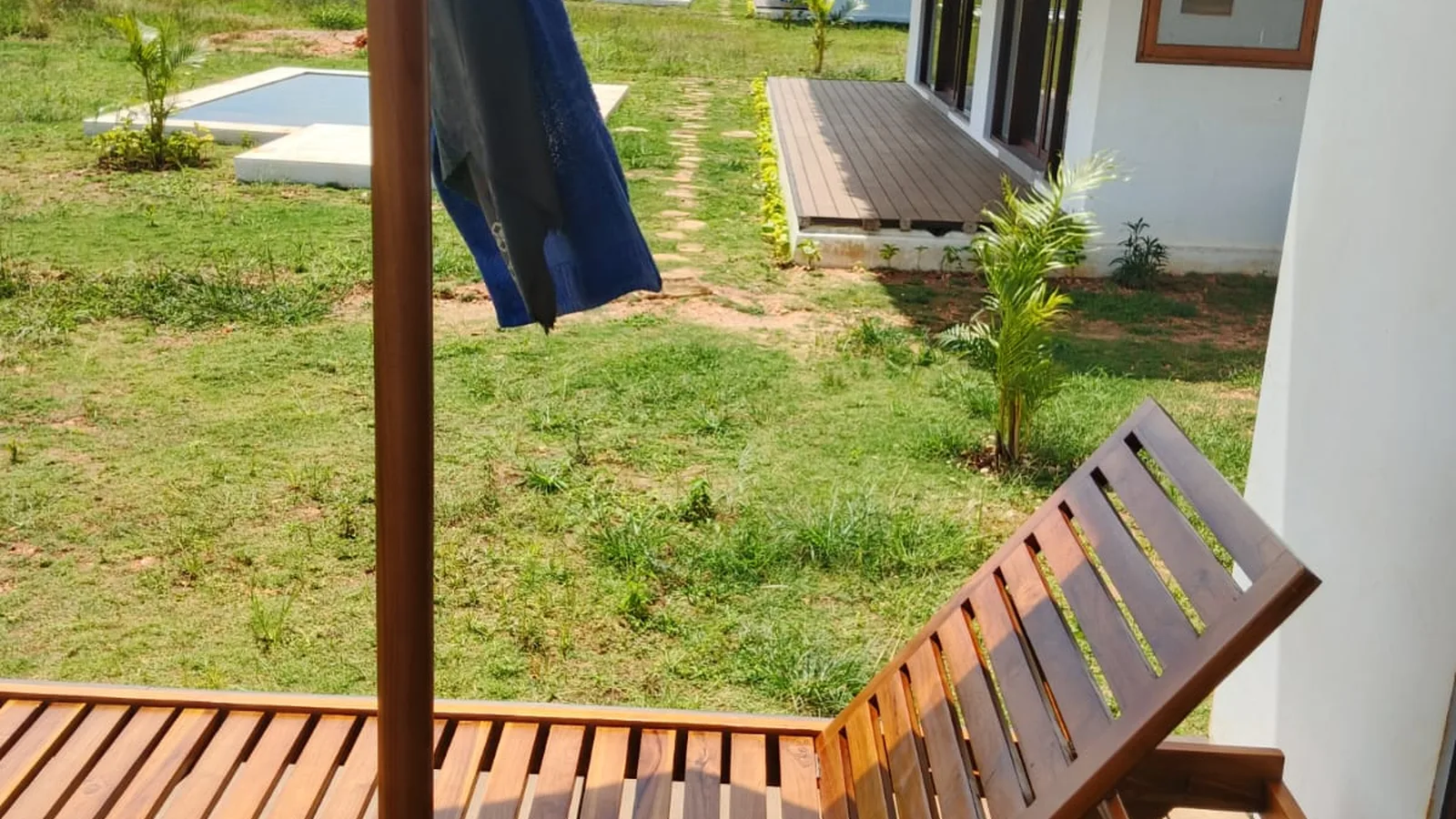
The spreadsheet said one thing. The steam rising from the coffee said another.
It’s 6:18 AM. The light flooding the rice paddies has the texture of liquid honey, thick and warm, clinging to each blade of green. A mist, thin as silk, drifts over the water channels, carrying the scent of damp earth and the ghost of last night’s clove-scented kretek smoke. Alex, who is 34 and looks ten years younger than his last London photograph, sips his Kopi Tubruk—a muddy, unfiltered coffee that costs 9,000 rupiah, about sixty cents—and stares not at a screen, but into the middle distance. His iPad lies on the rough-hewn wooden table, but instead of the cold, nervous flicker of a Bloomberg Terminal, its screen reflects the slow, majestic ascent of the sun over the palms.
He is sketching. It’s a floor plan for a three-bedroom guesthouse he plans to build on a small plot of leased land inland from here. The lines are clean, the spaces generous. He’s designing a life, not just a building. Three years ago, his days were measured in basis points and his nights in anxiety. He was an analyst for a hedge fund that managed billions, a job where success was a number on a screen and failure was a slightly smaller number. Now, he measures his days in tides and his success in the unburdened quiet of a morning like this.
This is not an escape. It is a calculation. It is the result of a long, cold audit of a Western life, a rigorous accounting that led him to a conclusion both radical and profoundly simple. He has executed the ultimate trade: the arbitrage of being.
I. The Great Re-Appraisal: Redefining Wealth
The phrase sounds like something cooked up in a California wellness retreat, but its roots are as pragmatic as a balance sheet. The ‘Arbitrage of Being’ is a philosophical and financial framework built on a single, powerful premise: that a Western definition of wealth has become a toxic asset. We have been taught to measure our lives by accumulation—of capital, of status-signaling possessions, of LinkedIn connections—while the liabilities of stress, debt, and chronic time-poverty mount silently on the other side of the ledger.
This new arbitrage seeks to exploit the inefficiency in that market. It trades the high cost and diminishing returns of a life in London, New York, or Amsterdam for an existence in Southeast Asia that is not merely cheaper, but yields a dramatically higher return on the metrics that are beginning to feel like the only ones that matter: time affluence, cognitive freedom, and the kind of daily sensory richness that rarely appears on an invoice but is, in the final accounting, priceless.
The profit is not measured in saved dollars, though those are significant. The true dividend is reclaimed hours. It’s the de-cluttering of a mind no longer choked with the low-grade panic of a morning commute or the psychic weight of a 30-year mortgage on a box in the sky. The numbers bear this out in stark relief. A 2023 Gallup poll found that a staggering 79% of the US workforce experiences work-related stress. Compare this not just to a lower-stress working environment but to a culture where the very concept of ‘work-life balance’ is moot because life itself—rich, textured, and present—is the assumed default.
“The post-industrial Western psyche is built on the idea of the ‘productive self,’ a relentless drive to optimize, perform, and justify one’s existence through output,” notes Dr. Aris Thorne, a cultural anthropologist who has studied the migration of professionals to Asia. “What many are discovering, or rediscovering, in the East is a philosophical tradition grounded in ‘being’—in presence, in the value of the unhurried moment. It’s not about laziness; it’s about a more intelligent allocation of one’s finite cognitive and emotional resources.”
This isn’t a new ‘Grand Tour’ for aristocrats seeking classical ruins. It is a modern pilgrimage for a generation that has audited its own civilization and found it wanting, seeking not just a different place to live, but a different way to be. They are trading a narrow, expensive definition of success for the expansive, sun-drenched horizon of a life actually lived.
II. The Daily Ledger: The Currency of a Single Day
Once the philosophical shift is made, the financial mechanics reveal themselves with startling clarity. The true weight of a Western cost of living isn’t in the occasional big-ticket purchase, but in the thousand small, daily cuts that bleed a bank account dry. It’s the $7 latte, the $18 ‘fast-casual’ salad that tastes of regret, the $50 Uber ride in stalled traffic, the soul-crushing monthly transit pass. These costs don't just shrink in Southeast Asia; for the most part, they evaporate, replaced by a system of exchange that feels more human-scaled and fundamentally joyful.
Consider the daily ledger. The grinding, 75-minute commute on a packed train is replaced by a five-minute scooter ride through quiet lanes, the air fragrant with frangipani and grilled satay. The cost of that journey is not the $150 monthly pass, but about twenty cents in gasoline. This isn't just a financial saving; it's a reclamation of 250 hours a year, a gift of ten entire days of life returned to their rightful owner. This lower cost base for essentials creates what can only be described as a ‘discretionary surplus’—not for more consumption, but for more experience. Suddenly, a weekly massage isn't an indulgence; it's a routine part of wellness. Eating out every night isn't a sign of extravagance; it's a way of participating in the rich culinary life of the community.
A morning at the Chowrasta Market in Penang, Malaysia, is a masterclass in this new economy. The air is a thick, intoxicating soup of sound and smell. The rhythmic thwack-thwack-thwack of a cleaver mincing garlic provides a percussive beat against the sing-song calls of vendors. A mountain of electric-pink dragon fruit sits next to a pyramid of spiky, reptilian rambutan. The pungent, funky aroma of shrimp paste from one stall is cut by the sweet, smoky scent of grilling sweet corn from another. A woman, her hands moving with the unthinking grace of three decades of practice, wraps a serving of char kway teow—smoky, wok-singed rice noodles with prawns and chives—in a banana leaf. The cost for this explosion of flavor, a meal that would command a $25 price tag and a two-week reservation in a trendy London restaurant, is 7 Malaysian Ringgit. About $1.50. The transaction is a smile, a few coins, a shared moment of humanity. There is no app, no friction, no sense of being processed. It’s just lunch.
This frictionless existence is amplified by the region's technological leapfrogging. Super-apps like Grab and Gojek integrate payments, transport, food delivery, and a dozen other services into a single, seamless interface. The 'life admin' that can consume hours of a Westerner's week is reduced to a few taps. It’s another form of arbitrage—trading the bureaucratic friction of the old world for the fluid efficiency of the new.
III. The Architecture of Well-being: Your Rent Reimagined
The most glaring line item in any Western budget is housing. But to simply compare rent figures is to miss the point entirely. The true arbitrage is not in the cost per square meter, but in the quality of the life that square meter enables. It’s the trade of a cramped, light-starved apartment for a home that breathes.
The numbers are, frankly, absurd when viewed side-by-side. Consider this simple comparison:
- San Francisco, CA: The average monthly rent for a 900 sq ft (84 sqm) one-bedroom apartment is approximately $3,300. This typically gets you four walls, a view of another building, and the constant hum of the city.
- Ubud, Bali, Indonesia: A fully-furnished 1,600 sq ft (150 sqm) two-bedroom villa with a private garden, a plunge pool, an open-air living room, and a view of a jungle ravine can be leased long-term for approximately $1,200 per month.
This isn’t just a better deal; it’s a different state of being. The psychological dividend of space, natural light, and daily connection to nature is immeasurable but profound. It is the antithesis of the sealed, climate-controlled boxes we have been taught to call home. Elise Fournier, a French architect who moved to Da Nang, Vietnam, a decade ago, specializes in what she calls ‘calm-tech’ homes that blur the line between indoors and out. “In Europe, a wall is a statement of security, of separation,” she says, leaning over blueprints in her studio, which is itself a masterpiece of polished concrete, dark wood, and lush tropical plants. “Here, a wall is a suggestion. A roof is for shade, not for sealing you away from the world. We use breeze blocks, not glass. We design for the prevailing wind. We invite the outside in. The financial return is that your electricity bill is lower. The emotional return is that your soul can finally exhale.”
This philosophy is embedded in the local vernacular. The terrazzo floors, cool underfoot. The outdoor shower where you can watch a gecko hunt moths on the wall. The open-plan living area where the evening breeze is the only air conditioning you need. These are not features of luxury; they are standards of living. They represent a fundamental re-evaluation of what a ‘home’ is for—not an asset to be leveraged, but a sanctuary for the self. It’s no surprise that projects like Eco Beach City in Sumba are gaining notice, not just for their sustainability, but for an architectural ethos that prioritizes well-being over sheer density. The question ceases to be ‘how much can I afford?’ and becomes ‘how do I want to feel each day when I wake up?’
IV. The Liberated Workday: Asynchronous Productivity
“But what about work?” This is the inevitable, fearful question. The assumption is that such a life is only possible for the retired, the independently wealthy, or the terminally unambitious. This assumption is now dangerously out of date. The rise of remote work has decoupled productivity from geography, and professionals are discovering that the time difference with Europe and North America is not a bug, but a powerful feature.
Imagine a workday that begins not with an alarm and a frantic rush, but with the gentle light of dawn. For Sarah, a marketing director for a US-based tech firm, the day begins at 6 AM with a surf session at My Khe beach in Da Nang. By 8 AM, she’s at her desk in her apartment, a fresh Vietnamese coffee in hand. Her US colleagues are still asleep. This gives her a five-hour, uninterrupted block of deep work—no Slack notifications, no inbound emails demanding immediate response, no pointless meetings. It is in these golden hours that she does her most strategic, creative, and valuable work. Her afternoon is for lunch with friends, a yoga class, or errands. The calls and collaborative work with the US team begin around 7 PM local time, lasting for a few hours before she signs off.
“I'm twice as productive in half the time,” she says, her face lit by the glow of a laptop in her breezy living room. “In San Francisco, my calendar was a weapon used against me by other people. Here, my time is my own. I front-load my day with life—with sun and saltwater and good food. By the time my US colleagues log on, I'm energized and focused, not drained and resentful. They think I'm living the dream. I think I'm just living smarter.”
This new professional ecosystem is supported by increasingly sophisticated infrastructure. Co-working spaces in Ho Chi Minh City, Bangkok, and Canggu are as stylish and well-equipped as any in the West, but at a fraction of the cost. A premium hot-desk membership at a top-tier space like The Hive in Ho Chi Minh City costs around $150 per month; a comparable WeWork All Access pass in London is over twice that, at approximately $385. Business overheads plummet. A freelance developer finds their effective hourly rate has doubled, not because they are charging more, but because their cost of living has been halved. The financial case is undeniable. The liberation of the workday, however, is a dividend that transcends mere finance.
V. The Unseen Dividend: Investing in Health and Serendipity
The Western model of work often treats the human body as a piece of hardware to be run at maximum capacity until it breaks, at which point an expensive and often inefficient repair process is initiated. The arbitrage of being offers a different model: one of constant, low-cost, preventative maintenance.
The financial value of this is rarely calculated, but it is immense. In Thailand, the concept of sanuk—a wide-ranging idea that life should be imbued with a sense of fun, pleasure, and social harmony—subtly infuses daily life. It’s an economic force, creating a society that prioritizes well-being. Consider the simple act of a massage. In the West, a one-hour massage is a luxury item, costing upwards of $100 and reserved for special occasions. In Thailand, a traditional one-hour massage, a complex and therapeutic practice honed over centuries, costs around 300 THB, or about $8. For many expats, a weekly massage is not an indulgence; it is a non-negotiable part of their wellness budget, costing less per month than a single session back home. Add to this the daily access to fresh, unprocessed food, the constant, gentle exercise of walking or swimming, and the significant reduction in chronic stress, and you have a powerful, multi-faceted investment in long-term health.
But the unseen dividend goes beyond physical well-being. It extends to the currency of serendipity. A structured, over-scheduled Western life minimizes chance encounters. Days are segmented into work, commute, gym, home. Social life is often planned weeks in advance. In the more fluid, less-structured social fabric of a place like Siargao in the Philippines or Bali in Indonesia, serendipity becomes a daily occurrence. The 'hustle culture' is often inverted; being perpetually busy is seen not as a badge of honor but as a sign of poor planning or being out of sync with the island's rhythm.
Two years ago, a former management consultant from Germany and a former graphic designer from Australia met at a weekly beach clean-up on the Philippine coast. They started talking about the plastic waste they were collecting. They kept talking over cheap beers at a beachside shack as the sun went down. A year later, they launched a sustainable sourcing company that works with local artisans to turn ocean plastic into high-end accessories, a business that now employs twelve people. This meeting, this spark of collaboration, could never have happened in their siloed corporate lives in Frankfurt and Sydney. The economic value of that single, unscheduled afternoon is a testament to the power of a life with open spaces on its calendar, an investment in the profitable magic of chance.
VI. The Visa Labyrinth: Buying a Longer Season
For years, the dream of a long-term life in Asia was a murky affair, a patchwork of visa runs, tourist extensions, and gray-area arrangements. That uncertainty is rapidly clearing. Recognizing the immense economic benefit of attracting skilled, affluent, and self-sufficient foreigners, governments across Southeast Asia are rolling out a new generation of long-term and digital nomad visas, transforming the landscape for would-be expats.
These are not just bureaucratic stamps; they are formal invitations, offering stability and a clear pathway for those looking to invest their time and money in the region. Malaysia’s DE Rantau Digital Nomad Pass, for example, is a model of clarity and accessibility. For a one-time fee of RM 1,000 (around $210) and proof of a stable remote income, a professional can secure the right to live and work in the country for up to two years. Thailand, long a hub for expats, has professionalized the process with its Long-Term Resident (LTR) visa, targeting wealthy global citizens, affluent pensioners, and 'work-from-Thailand' professionals with a 10-year, renewable visa that comes with a host of benefits, including a flat 17% tax rate for skilled professionals.
“The profile of our clients has changed completely in the last three years,” explains Jiraporn S., an immigration lawyer in Bangkok whose office overlooks the glittering towers of Sukhumvit. “It used to be retirees and a few backpacker-entrepreneurs. Now, it’s mid-career professionals from major tech companies, it’s young families who want their children to have a global education, it’s established founders who realize they can run their company from Phuket just as easily as Palo Alto. They are not just looking for a holiday; they are making a strategic, long-term life decision.”
For those with more capital, programs like the Thailand Elite Visa offer a 'golden visa' style solution, trading a one-time fee ranging from 900,000 THB (~$25,000) for five years to 5 million THB (~$135,000) for a 20-year++ validity for unparalleled ease of living, including VIP airport services, government concierge services, and the peace of mind that comes with long-term stability.
The financial arbitrage becomes even more compelling when modeled over time. The following table illustrates a conservative scenario for a professional couple.
| Metric | Amsterdam, Netherlands | Penang, Malaysia |
|---|---|---|
| Combined Gross Income | $180,000 | $120,000 (Remote) |
| Taxes & Social Security | ~45% | ~15-20% (depending on visa/structure) |
| Net Yearly Income | ~$99,000 | ~$99,000 |
| Monthly Housing | $2,800 (Mortgage/Rent on 70sqm apt) | $1,200 (Rent for 200sqm luxury condo, sea view) |
| Other Monthly Costs | $3,500 (Groceries, transport, utilities, insurance) | $1,800 (Eating out daily, part-time help, transport) |
| Total Monthly Expenses | $6,300 | $3,000 |
| Monthly Savings | $1,925 | $5,250 |
| Quality of Life Items | Limited budget for travel/dining, high stress levels | Weekly massages, frequent regional travel, low stress |
This isn't an apples-to-apples comparison. It’s a comparison between an apple and an entire orchard. The couple in Penang earns one-third less in gross income yet manages to nearly triple their monthly savings rate while simultaneously living a life of greater comfort, ease, and experience.
VII. The Risk Ledger: Pricing in the Unpredictable
To paint this picture without acknowledging the shadows would be a disservice. This is not a risk-free paradise. The ledger of arbitrage has a corresponding risk ledger, and any prudent investor must study it. The risks are different, not necessarily greater. One trades the ‘known’ risks of Western life—the slow crush of burnout, the certainty of high taxation, the creeping social isolation—for a portfolio of ‘foreign’ risks.
Healthcare is at the top of the list. While Bangkok, Singapore, and Kuala Lumpur boast world-class private hospitals for routine care and elective procedures, the quality can be inconsistent in more remote areas. For complex, chronic, or emergency conditions, the gold standard of care may still be a flight away. Political volatility is another factor. A sudden change in government can lead to an equally sudden change in visa policy, as many expats have discovered. Infrastructure can be brilliant in one moment and frustratingly absent in the next; high-speed fiber optic internet might be available, but the power grid it relies on may be less stable. A monsoon can wash out a road for a week. These are real, tangible risks.
Mitigation, however, is possible. The risk of healthcare costs is addressed with premium international health insurance. A comprehensive plan from a provider like Cigna or Aetna, offering global coverage including emergency evacuation, might cost a healthy 40-year-old between $3,000 and $5,000 per year. This is a significant expense, but it is often less than the annual deductible on many employer-sponsored plans in the United States. Financial diversification, keeping assets in stable hard currencies, and consulting with tax professionals who specialize in expatriate law are essential. Building a strong local network—both of fellow expats and local community members—is perhaps the most powerful risk mitigation tool of all.
I saw this in action last year. A sudden, unannounced change to a visa extension policy sent a wave of panic through the expat community in one coastal town. Within hours, WhatsApp groups were buzzing. A lawyer in the group offered a free breakdown of the new rules via a Zoom call. Others shared templates for the new paperwork. A long-time resident with connections at the local immigration office went to get clarification. What could have been a moment of chaos and isolation became a powerful, collaborative response. The risk was real, but the community’s resilience was realer.
VIII. The Final Balance Sheet: A Return on Life
We return to Alex, at the stilted cafe overlooking the rice paddies. The sun is higher now, the mist has burned off. His iPad is closed. His coffee is finished. His new balance sheet looks nothing like the ones he used to build in the glass towers of Canary Wharf. The assets are not stocks or bonds, but sunsets watched, a new language partially learned, a daughter who knows the name of the white-breasted waterhen that stalks the paddies.
The liabilities are not debts, but the occasional power outage and the persistent longing for a really good sourdough bread. It's a trade he would make again every single time. A hypothetical calculation: if by moving, he saves $30,000 a year in pure living costs, and he reduces his 'stress-related health depreciation'—the unquantifiable but devastating cost of burnout on his long-term health and happiness—by 50%, the five-year ‘profit’ on his move is not just $150,000. It is a decade of life quality returned. It is an incalculable return on investment.
This strategic relocation is not an escape. It is a pragmatic and deeply rational choice for a richer existence. It is the understanding that the most astute financial move of our time may not be to acquire more, but to need less. It is the quiet, profitable trade of the life you were told to want for the one your soul actually needs.
He pays his 9,000 rupiah, leaves a small tip, and swings his leg over his scooter. He's not heading to an office. He's heading home, where his young daughter is waiting. He promised he would teach her the names of the birds that gather in the fields as the light begins to fade. That, in the end, is the final entry on the ledger. The ultimate, incalculable profit. The reason for the entire equation.