The Paper Banyan: On Temporary Roots in the Tropics
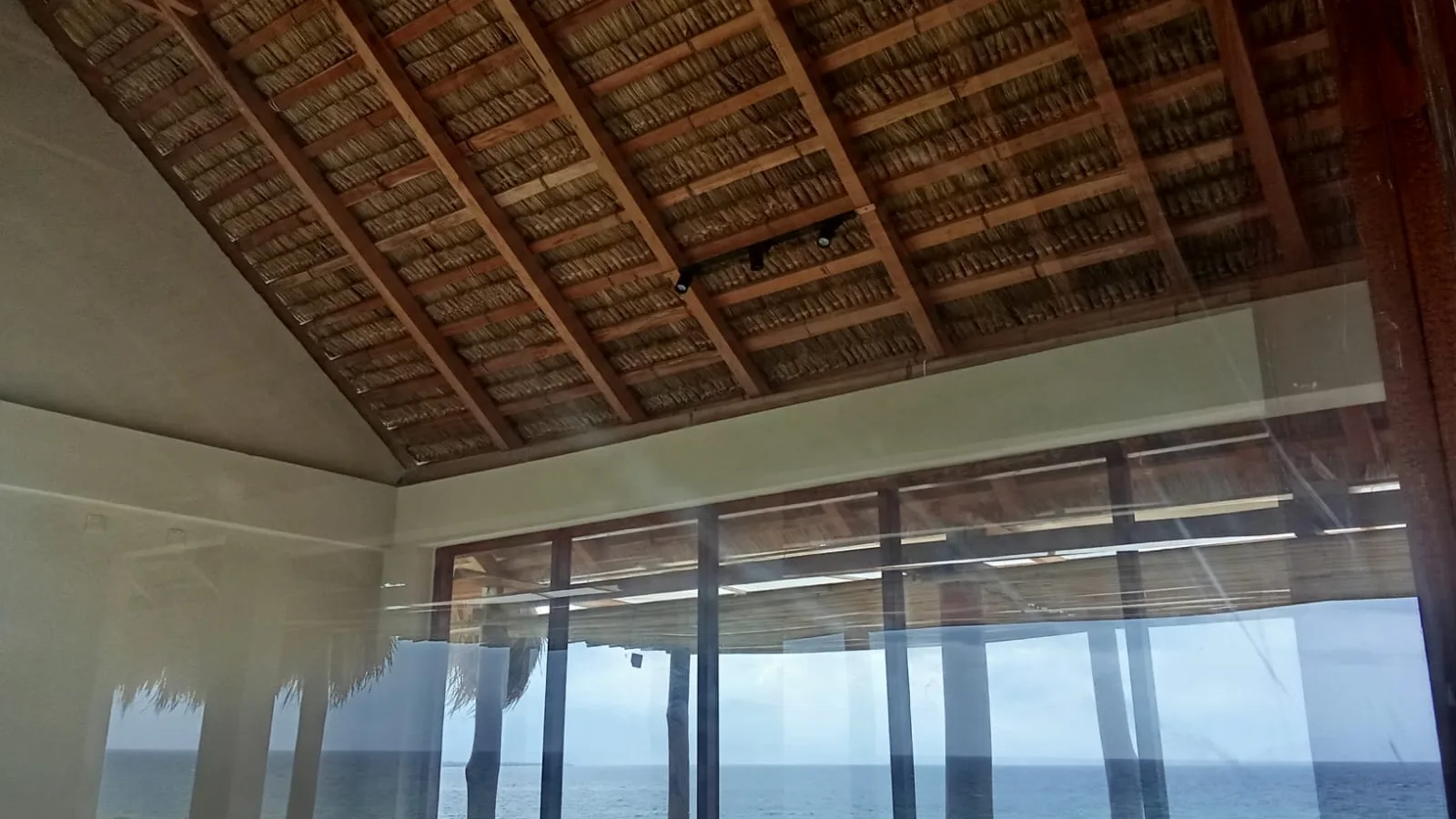
The iron gate groans a low, rusty G-sharp, a sound I’ll come to know as ‘home.’ Beyond it, a small courtyard garden, humid and pulsing with the sound of unseen geckos, holds the day’s last light. I am holding a one-year lease, a document that feels heavier than my passport, a fragile anchor in the equatorial drift. There is a profound difference between a place you visit and a place you arrange a life.
To arrive with a return ticket is to skim the surface. But to arrive with the intention of staying, of wiring money and setting up internet and learning the words for ‘excuse me’ and ‘too spicy,’ is to commit to a different kind of journey. It's a journey inward. The spreadsheet said one thing. The salt air said another. I had run the numbers, comparing the cost of a life in a European capital with the potential for arbitrage at eight degrees south of the equator. The figures were seductive, promising a life of amplified freedom and accumulated capital. A senior product manager earning €110,000 in Berlin, taking home roughly €5,500 a month after punishing taxes, could transplant that same income and see their disposable cash swell to over $5,000 monthly after covering a lifestyle that felt, by any Western metric, utterly decadent.
But the numbers tell a story of assets, not of being. The real work, I was beginning to understand, wasn't in the financial transaction but in the cultural one. It was the slow, often clumsy process of weaving oneself into a place that has existed for a thousand years without you. This wasn't about finding a 'hidden gem'; it was about learning the grammar of rot in a tropical garden, the protocol for a village ceremony, the specific weight of a promise made across a language barrier. This is the story of that process. Not a checklist for escape, but a meditation on the deliberate craft of building a temporary home.
The Paper Anchor: Navigating the Visa Labyrinth
The first root you try to put down is made of paper. It’s a fragile, bureaucratic tendril that determines whether you are a tourist fleeting through or a resident, however provisional. The visa is the foundational text of your new life, and in Indonesia, it's a sprawling, complicated scripture. The casual visitor knows only the visa-on-arrival, a 30-day pass to paradise. But for those of us attempting something more sustained, the conversation begins with the B211A ‘socio-cultural’ visa, a permit that offers up to 180 days on the promise that you are here to absorb, not to earn. It’s the first step away from the airport carousel and into the back-office maze.
My initiation took place in a cluttered agency in Denpasar. The air was a thick cocktail of clove-spiced kretek smoke, damp paper, and the sharp tang of glue. Passports, stacked in precarious towers, formed a miniature skyline on the desk—a silent testament to thousands of stories, thousands of gambles on a different life. My agent, a man named Wayan with a beatific smile and the focused eyes of a chess master, spoke in the calm, reassuring tones of a doctor delivering a complex but manageable diagnosis. “B211A is simple,” he said, tapping a form. “But for real life, you want KITAS.” The KITAS, or temporary residency permit, is the true anchor. It grants the right to open a bank account, sign longer leases, and exist within the system, not beside it. But it requires sponsorship, commitment, a significant investment of time and capital. More recently, the archipelago has unfurled new invitations: the D1/D2 ‘Digital Nomad Visa,’ a formal recognition of the laptop class, and the ambitious ‘Second Home Visa,’ which requires proof of funds of IDR 2 billion (around $130,000 USD) parked in an Indonesian state-owned bank. It’s a high bar, a clear signal of who is being courted.
For a fee of $350, Wayan’s office would handle the B211A, transforming a Byzantine online portal and a litany of required documents into a simple transaction. It’s a price most are willing to pay to avoid the bureaucratic undertow. This initial choice sets a rhythm for your existence. The B211A path means a ‘visa run’ every six months—a forced exodus to Singapore or Kuala Lumpur, a brief, jarring return to a world of sterile efficiency before plunging back into the warmth. The KITAS or Second Home Visa offers stillness. It’s the difference between dating a place and marrying it, however temporarily. That single piece of paper changes your psychology. You stop counting the days until you have to leave and start measuring the seasons by the fruiting of the mango trees.
The First Four Walls: Beyond the Monthly Rental
The transient live on monthly cycles, their homes sourced from platforms that price convenience in the hundreds, sometimes thousands, of dollars. They inhabit beautiful, anonymous villas with West Elm-knockoff furniture and art that says nothing about where they are. This is the high-cost trap, a gilded cage that keeps you perpetually separate. To break free, you must descend into the local market, the world of the kontrak tahunan—the yearly contract.
This market doesn’t exist on global websites. Its listings are whispered in cafes, posted on laminated A4 sheets in a local supermarket, or shared in hyper-specific Facebook groups with names like “Kerobokan Community Housing.” Here, the language of real estate shifts. Instead of price-per-night, you discuss price-per-are (100 square meters) and learn to decode the vernacular of a lease agreement. Does the price include the biaya banjar, the mandatory contribution to the local community council? Who pays for rubbish collection (a surprisingly contentious point)? Is the listed price for the building alone, or does it come lengkap, fully furnished? Navigating this requires patience, a local friend, or a trusted agent who works on a modest commission.
The leap from a monthly rental to a yearly lease is the moment you stop being a consumer of a place and start being a participant in it. You are no longer paying for a service; you are investing in a space, with all its imperfections and responsibilities.
I remember the first major rainstorm in the little house I’d rented. It was not the gentle pitter-patter of a temperate climate but a biblical deluge, a vertical river falling from a bruised-purple sky. A small leak appeared above the kitchen door, not a drip but a steady, hypnotic trickle. The sound of the rain on the tin roof over the patio wasn't a generic sound of rain; it was my rain, on my roof. In that moment, the generic space I had rented became specific. It developed a character, a set of flaws I had to learn to live with. This is the intimacy of the yearly contract. You inherit the house’s ghosts, its peculiar acoustics, its relationship with the geckos that patrol the walls. The financial logic is undeniable, a clear path to sustainability. But the emotional payoff is greater. You have a key that opens a door to a place that is, for a year, yours.
Annual Lease vs. Monthly Rental: A Cost Comparison (Pererenan, 2-Bedroom Villa)
| Metric | Monthly Rental (Airbnb) | Annual Lease ('Kontrak Tahunan') |
|---|---|---|
| Monthly Cost | ~$2,500 USD | ~$1,500 USD |
| Annual Cost | $30,000 USD | $18,000 USD |
| Annual Savings | - | $12,000 USD |
| Inclusions | Often includes all bills, cleaning | Typically excludes electricity, Wi-Fi, banjar fees |
| Flexibility | High (month-to-month) | Low (12-month commitment) |
This simple calculation reveals the economic imperative. A saving of $12,000 a year is not just a number; it’s another year you can afford to stay. It’s the freedom from having to constantly grind. It’s the capital to invest in a side project, or simply the peace of mind that comes from having a lower burn rate. It is the financial foundation upon which a more permanent life can be built.
The Digital Hearth: Weaving a Workspace from Wi-Fi
Your home is your sanctuary, but your Wi-Fi is your lifeline. For the modern professional who has traded the corner office for a corner of the tropics, the digital connection is the hearth around which the entire enterprise is arranged. The choice of provider—IndiHome, Biznet, GlobalXtreme—is a decision freighted with more anxiety than choosing a school district in the suburbs. You study coverage maps with the intensity of a military strategist. You poll neighbors and expat forums. You learn that advertised speeds are a mythology; the reality is a fluctuating current shaped by weather, neighborhood density, and the whims of unseen gods of infrastructure.
As of early 2024, Indonesia’s average fixed broadband download speed languished at 27.83 Mbps. This single data point is the source of a thousand nomad nightmares. It means a robust backup plan isn’t a luxury; it’s a categorical imperative. A Telkomsel SIM card in a 4G/5G mobile hotspot becomes your praetorian guard, ready to deploy when the primary line falters mid-Zoom call with a client in Zurich. This dual-source system is the first step in creating a professional-grade workspace.
The next is deciding where that workspace will be. The island presents a spectrum of options, each with its own cultural valence. There are the co-working spaces, buzzing hives of networking and forced serendipity, where you pay $250 a month for reliable internet, ergonomic chairs, and a ready-made community of fellow wanderers. Then there is the focused solitude of the home office, a space you must carve out and defend against the siren call of the swimming pool. Here, the primary enemy is the environment itself: humidity that seeps into keyboards and breeds a fine green fur on leather goods, heat that turns a laptop into a skillet. You learn to love the dry box, the dehumidifier, the cool ceramic tile under your bare feet.
And then there is the third space. I think of a man I’ll call Thomas, a German software developer who has lived here for seven years. He has perfected his third space. It’s a specific table at a small beachside warung in Seseh. The table sits under a gnarled frangipani tree, offering a direct line of sight to a mellow right-hand break. The staff know he takes his coffee black, with a small plate of pisang goreng. The Wi-Fi password is saved in his keychain as a sacred text. He arrives at 9 AM, works diligently until 1 PM, surfs for an hour, then works for another two. His 'office' costs him the price of two coffees and a lunch, maybe $7. He has woven his work into the fabric of a local business, his presence as regular as the tide. He is not just using the space; he is part of its daily rhythm, a quiet testament to the art of finding your digital hearth in the most analog of places.
The Local Current: Banking in Rupiah
You don’t truly grasp the scale of a place until you deal with its money. The Indonesian Rupiah, with its long tail of zeroes, recalibrates your sense of value. A million of anything sounds like a fortune, until you realize it’s about sixty-five dollars. This numerical vertigo is the easy part. The hard part is getting the money to begin with. Opening a local bank account at a major institution like BCA or Permata is a classic Catch-22: you need a bank account to prove your stability for certain long-term visas, but you need the visa to open the account. It’s a bureaucratic Escher sketch.
This is where the digital world provides a bridge. Platforms like Wise become indispensable, acting as a financial umbilical cord to your home currency. You can receive your salary in Euros or Dollars and convert it to Rupiah at rates that put traditional banks to shame, zapping it directly to a friend’s account or, once you’re established, your own. You learn to ride the currency fluctuations, buying Rupiah when the dollar is strong, holding back when it weakens. But even with these tools, you are forced into a more intimate relationship with physical cash. The maximum withdrawal from most ATMs is a paltry IDR 2.5 or 3 million—around $160 to $190. This isn't just an inconvenience; it fundamentally alters your financial behavior. You can’t just pull out a month’s rent in one go. You become a regular at the ATM, planning your withdrawals like a household chore, always keeping a larger-than-usual float of cash at home, tucked away in a dry, safe place.
This forces an engagement with a mixed economy. In the tourist hubs, you can live a nearly cashless life, paying for lattes and yoga classes with a flick of your phone using the ubiquitous QRIS payment system. But drive twenty minutes out of town to the morning market, or try to pay the guy who delivers your drinking water, and you’re back in a world where cash is king. It’s in this friction, this constant switching between the digital and the tangible, that a deeper understanding emerges. It mirrors the historical merantau tradition of Sumatra's Minangkabau people, who for centuries left home to seek knowledge and fortune in the outside world—the rantau. They learned to operate in new economies while keeping ties to the old. The modern nomad, managing multiple currencies and payment systems, is just the latest iteration of this age-old balancing act.
'You're not really living here until you argue with a bank teller in broken Bahasa about a mysterious Rp 10,000 admin fee. It's a rite of passage into financial citizenship.'
That quote, from a Dutch artist who has been here for a decade, captures it perfectly. The frustration, the linguistic struggle, the eventual resolution over a trivial sum—it’s an initiation. It’s the moment you stop being a visitor floating above the economy and become a customer enmeshed within it, with all its petty frustrations and small, shared victories.
The Daily Bread: Crafting a Rhythm of Wellness
The fantasy of a tropical life is one of effortless health, of sun-kissed skin and bodies fueled by exotic fruits. The reality is a project, one that requires structure and investment. The first, non-negotiable line item in that project is health insurance. To be here without it is an act of reckless magical thinking. A comprehensive international plan from a provider like SafetyWing or Cigna Global, one that covers you for a scooter accident or a bout of dengue fever, can run from $250 to $500 a month for a healthy 35-year-old. It feels like a phantom expense until the day you need it, at which point it becomes the single wisest investment you’ve ever made. You learn the geography of care: where the trusted international clinics like BIMC and Siloam are, which ones have direct billing, and whose number to have on your phone.
With that safety net in place, the daily craft of wellness begins. It starts with food. You can choose the air-conditioned aisles of Western-style supermarkets, paying a premium for shrink-wrapped Australian broccoli and familiar brands of olive oil. Or you can rise with the sun and go to the pasar pagi, the morning market. My first time in the Ubud market was a sensory assault. The air was thick with the scent of crushed lemongrass, galangal, and the sweet rot of overripe mangoes. A woman sat before a pyramid of fire-engine-red chilies, her hands a blur as she sorted them. The earthy, almost medicinal smell of fresh turmeric root clung to my clothes. The rhythmic thwack-thwack-thwack of a cleaver dispatching a chicken was the market's percussive heartbeat. I bought a kilo of spinach, still flecked with dark soil, from the woman who grew it, our transaction a slow pantomime of pointing and holding up fingers, sealed with a smile. The cost was a third of the supermarket price, but the value was in the connection, the brief, tangible link in a chain of production that felt honest and real.
This extends beyond food. You learn to avoid the 'permanent vacation' burnout by building routines that are of the place. A weekly pijat, a deep-tissue massage for a mere $10 that unknots the tension of a week spent hunched over a laptop. A morning ritual of drinking jamu, a potent turmeric-and-ginger tonic sold by women who carry it through the village streets. These aren't exotic indulgences; they are acts of grounding. They are the small, repeated rituals that anchor you in a local rhythm, that remind your body, on a cellular level, where you are. They are the difference between a long holiday and a life.
The Shared Courtyard: Weaving a Social Fabric
It’s easy to get stuck in the bubble. The coworking spaces, the Saturday beach parties, the brunch spots—they create a comfortable, English-speaking ecosystem, a floating world of fellow travelers. It’s a fun, frictionless social life, but it’s also a transient one, built on the shared circumstance of being foreign. Friendships are intense, accelerated by the lack of other history, but they often have an expiration date tied to a visa or a flight schedule. It’s a beautiful, poignant, and ultimately unsustainable way to live.
To build something more lasting, you have to push past the bubble’s shimmering walls. You have to find your tribe based on interest, not just nationality. Joining a local surf club, a Saturday morning cleanup crew, or a life-drawing class in a dusty studio puts you shoulder-to-shoulder with people who are rooted in the place. You start as the foreign curiosity, the bule, but with consistent presence, you slowly morph into just another person who shows up.
In many parts of the country, especially Bali, this means understanding the banjar. The banjar is the hyperlocal community council, a powerful and ancient institution that governs a block of anywhere from 50 to 500 families. It is the heart of civic and religious life, organizing temple ceremonies, managing local security (pecalang), and mediating disputes. As a long-term resident, you are not a member, but you exist under its purview. Being a good neighbor means acknowledging its authority. It means paying the small monthly fee (usually Rp 50,000-100,000, or $3-6) for rubbish collection and security without complaint. It means slowing your scooter and even dismounting when a ceremony blocks the street. These small acts of respect ripple outwards.
I remember the day my neighbor, a quiet carver of wooden masks, appeared at my gate holding a small, formal-looking invitation. It was for his daughter's tooth-filing ceremony, a crucial Balinese rite of passage. I was not expected to bring a gift or even to understand the intricate symbolism of the ritual. My role was simply to be present, to bear witness. I sat for two hours in the family compound, a silent guest in a sea of beautiful brocade and ceremonial chatter, humbled by the grace of their inclusion. In that shared courtyard, surrounded by the scent of incense and the sound of gamelan music, I felt a connection far deeper than any I had found in a trendy cafe. I wasn't an expat or a nomad. I was just a neighbor, sharing a moment in the life of the community. It’s in these unearned moments of grace that the fragile threads of a real social fabric are spun.
Speaking in Place: The Grammar of Belonging
Across Indonesia’s 17,500 islands, over 700 living languages are spoken. Yet there is a linguistic bridge that spans this staggering diversity: Bahasa Indonesia. To neglect to learn at least a few phrases of it is to choose to live behind a sheet of soundproof glass. You can survive, of course. In the tourist enclaves, English is the currency of commerce. But you survive on the surface, your interactions transactional, your understanding of the culture filtered and secondhand.
Learning the national language is the single most powerful tool for deepening your connection. The return on investment is immediate and immense. Research suggests that learning the 100 most common words in Bahasa Indonesia allows you to comprehend roughly 50% of an everyday conversation. The barrier to entry is deceptively low. The language uses the Latin alphabet, has no verb conjugations, and lacks the tonal complexities that make other Asian languages so daunting for Westerners. A few polite essentials—permisi (excuse me), terima kasih banyak (thank you very much), apa kabar? (how are you?)—are enough to transform a sterile transaction into a moment of human recognition.
There are many paths to fluency. Gamified apps like Duolingo can build a foundational vocabulary. But to truly learn the rhythm and nuance, nothing beats a human teacher. A private tutor can be hired for as little as $10-15 an hour, offering focused, personalized instruction that quickly moves beyond textbook phrases and into the slang and idioms of daily life. You learn about jam karet, or ‘rubber time,’ not as a disregard for punctuality, but as a cultural prioritization of relationships over rigid schedules. You learn the different levels of formality, when to use the polite bapak and ibu and when the more familiar mas and mbak are appropriate.
I saw the power of this firsthand during a negotiation for a small wooden statue at a crowded market. I’d been studying for a few months, and I was clumsy, my grammar flawed. But I made the effort. I asked about the craftsman’s family in polite terms. I complimented the work, using the correct words for ‘smooth’ and ‘detailed.’ When we discussed the price, I used the phrase for ‘friend’s price,’ harga teman. The vendor, a weathered man with kind eyes, broke into a wide, genuine smile. He gave me a small discount, but that wasn't the victory. The real prize was the shared laugh, the brief spark of connection that transcended commerce. In that moment, the language was not a tool for haggling. It was a bridge into his world, and he had graciously allowed me to cross it.
The Art of Leaving Well: Closing the Circle
Every temporary life contains the seed of its ending. The final act of rooting yourself in a place is to learn how to leave it responsibly. This is not as simple as packing a bag and booking a flight. It involves a careful, deliberate process of untangling the life you’ve so carefully woven. The first, and most overlooked, consideration is fiscal. A crucial and often ignored fact is that staying in Indonesia for more than 183 days within a 12-month period officially makes you a tax resident. This means your global income is, in theory, liable for Indonesian taxation, which follows a progressive scale up to 35% for high earners. For the high-earning nomad, this is not a trivial detail; it’s a multi-thousand-dollar consideration that requires professional advice long before you plan your departure.
Then come the practical logistics. Selling the scooter you came to rely on. Finding a new home for the dog you rescued. Disposing of the furniture that made your rented villa a home. You post to the same Facebook groups where you once searched for a house, now advertising a life for sale, piece by piece. You visit the bank to close your account, a process that can take a surprisingly long time. You settle your final electricity bill, your internet contract, your debt to the man who delivers the water. You leave a clean slate, a sign of respect for the system you were allowed to enter.
But the most profound ritual is cultural. It’s the practice of pamitan, of formally saying goodbye. It involves visiting your neighbors, your landlord, the staff at your favorite warung, and the friends you have made. The purpose is not just to say farewell, but to ask for forgiveness for any slights or disturbances, intentional or not, that you may have caused during your stay. It’s an act of profound humility, an acknowledgment that your presence had an impact, and a request to leave with grace and goodwill. It provides a sense of closure that a silent, anonymous departure never could.
I remember packing my own house, the rooms echoing with their new emptiness. Deciding what to leave for my neighbor—a favorite lamp he’d always admired. Deciding what to sell, and what small, worn object—a smooth black stone from a northern beach—would serve as the tangible memory of this entire chapter. In the corner of the bedroom, I recalled the Balinese concept of kaja-kelod, the sacred axis that orients a home towards the mountain and the sea. I had lived within that spiritual geography without fully understanding it, but I had felt its pull. Leaving was not a failure, but a completion. The circle was closing.
To set up a life here is not to solve a puzzle, but to learn a dance. The goal is not to have all the pieces perfectly in place, but to move with the rhythm of the island, to find your footing in the ebb and flow of the temporary. And to realize, in the end, that the most permanent structure you build is the one within yourself, re-shaped by the archipelago’s humid air and the quiet dignity of its welcome.