The Temporal Tide: Finding Sanity on the Ocean's Clock
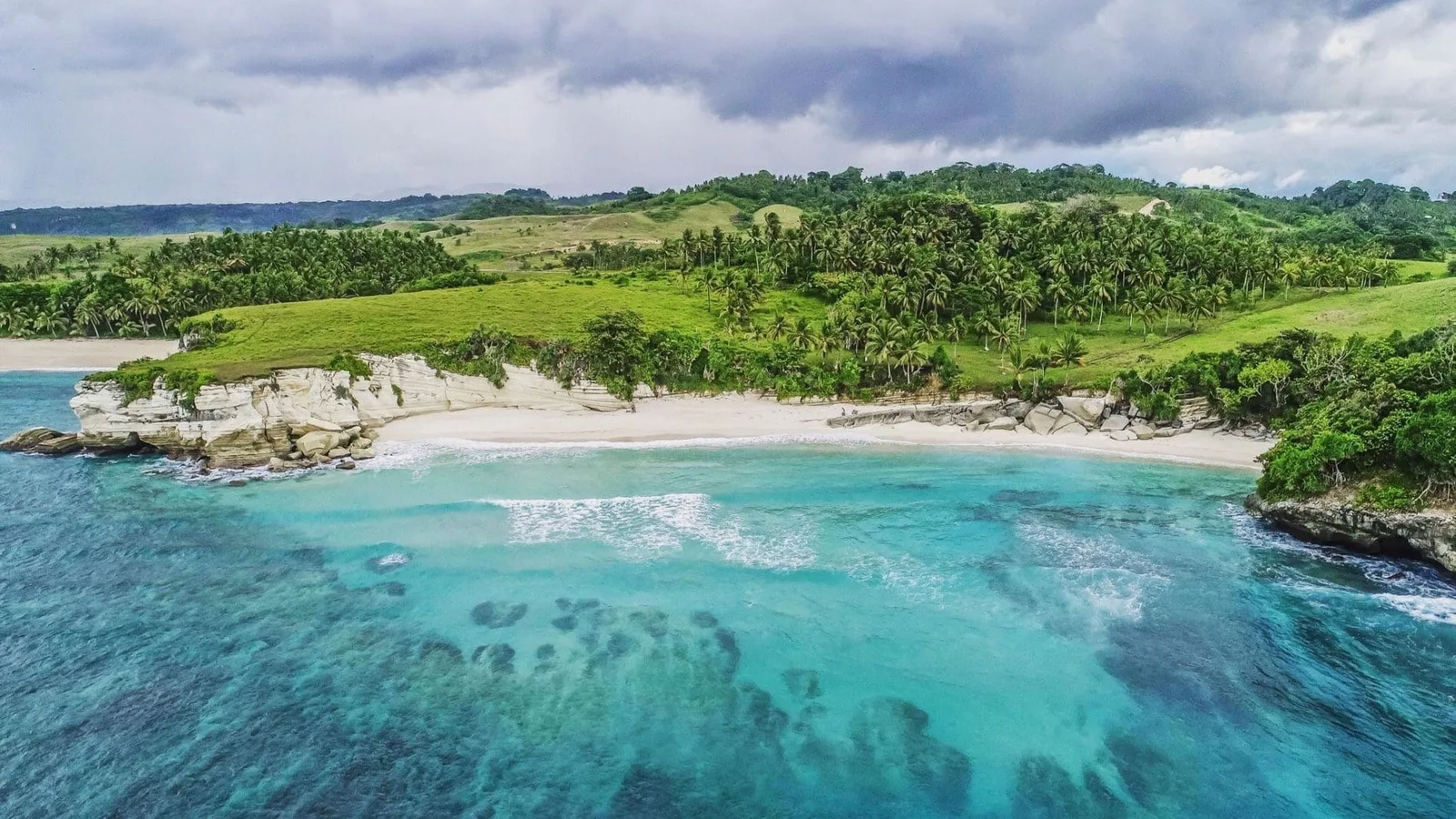
The water has a temperature that feels less like a number and more like a statement. It’s a hard, declarative sentence of cold spoken against the skin. He stands waist-deep in it, a man who has learned the language of discomfort in far more hostile places, and feels not the threat of hypothermia but the shock of a forgotten dialect. The sky over the Devon coast is the color of wet slate, indistinguishable from the sea itself except for a thin, mercurial line where the world seems to fold in on itself. There are no blues here, no sun-drenched invitations. There is only grey, and the low growl of water moving over stone.
He is not here for adrenaline, not in the way he once knew it. The adrenal spike of a door being kicked in, of incoming fire, of a decision that holds lives in its balance—that was a currency he spent for a decade. This is something else entirely. A swell, no bigger than a garden wall, begins to organize itself a hundred yards out. It is not a thing of violence but of profound, implacable physics. He feels it before he sees it properly, a subtle drop in the water level around his legs, a tension in the surface of the sea. It is a flicker of a pre-verbal language, a simple, physical command to move. For Liam, a former Royal Marine, this is the beginning of a new kind of literacy.
He is learning to read the ocean, not as an obstacle to be crossed or a threat to be neutralized, but as a text. The lessons are written in the intervals between the waves, in the pull of the unseen current, in the taste of salt that strips away everything but the present moment. The hypervigilance that kept him alive in Helmand Province—a constant, high-frequency scan for danger in every shadow and doorway—is useless here. The ocean does not hide its intentions. It broadcasts them in long, slow waves of energy, and the only way to meet them is with a different kind of attention. A quiet one. An attentive calm. He is dismantling one kind of situational awareness and building another, one wave at a time.
The Rhythm of the Fetch
The word surfers use is ‘fetch’. It’s a deceptively simple term for a colossal idea: the distance of open water over which wind blows to generate a wave system. A gust over a pond creates ripples. A gale blowing for three thousand miles across the North Atlantic, from the coast of Newfoundland to the reefs of Ireland, creates a groundswell. This is the source of the ocean’s deep pulse, a rhythm born of time and distance, of energy transferred and carried across a hemisphere. A typical groundswell from such a storm will have an interval of 12 to 15 seconds between its wave crests. You can count it. One-one-thousand, two-one-thousand… a slow, patient, metronomic heartbeat.
For Liam, this rhythm is a revelation. Military life, especially in combat, operates on a fractured timeline. Moments of sheer terror are spliced with days of crushing boredom. Time is an accordion, squeezed into seconds of life-or-death decision-making, then stretched into endless, watchful waiting. The nervous system learns to exist at these two poles: red-alert or standby. There is no middle ground. The sea, however, offers only the middle ground. Its rhythm is non-negotiable. It does not speed up when you are anxious, nor does it slow down when you are bored. It simply is. The 13-second interval becomes an anchor, a form of temporal therapy that pulls a dysregulated mind back to a primal, steady cadence.
“In the Corps, your situational awareness is all about predicting threat,” Liam tells me later, his face still flushed from the cold, a string of seaweed in his hair. “You’re looking for the anomaly—the parked car that shouldn’t be there, the flicker of movement on a roof. Here… here you’re feeling for the coherence. You’re not looking for the one thing that’s wrong. You’re feeling for the whole thing to be right. It’s a wave sense. You feel the energy building under you long before it becomes a shape you can ride. It’s the total opposite of looking for an IED.”
The water itself is a co-therapist in this process. Its coldness is a full-body shock that yanks the mind out of its spiraling narratives of past and future and slams it into the physical present. You cannot ruminate on a bill you have to pay or a painful memory when your entire being is screaming, I am cold. The salt water stings the eyes and coats the tongue, a constant reminder of this alien, powerful environment. The pull of a small rip current becomes a lesson in surrender; to fight it is to exhaust yourself, but to relax and move with it is to find the path back to shore. It is a physical dialogue, a forced mindfulness that no meditation app can replicate because the consequences are immediate and real. The fetch that brought the wave to the shore is a metaphor for the long journey of trauma. The rhythm of its arrival is the beginning of the way home.
The Blue Gymnasium of the Mind
What Liam is experiencing has a name, a clinical scaffolding that helps explain the quiet miracle of the sea. Neuroscientists call it Transient Hypofrontality. ‘Transient’ because it’s temporary. ‘Hypofrontality’ because it involves a quieting of the prefrontal cortex, the brain’s C-suite executive. This is the part of our brain responsible for long-term planning, complex decision-making, and, crucially, self-referential thought—the relentless inner monologue of rumination, worry, and criticism. In states of deep focus on a complex physical task, like balancing on a moving wave, the brain wisely decides to shut this chatterbox up, diverting precious neural resources to the motor cortex and cerebellum instead. Studies monitoring the brain during ‘flow states,’ which surfing readily induces, have shown a decrease in prefrontal cortex activity by as much as 70%. The anxious inner critic is, for a time, silenced.
The neuroscientist Dr. Easkey Britton, a pioneer with the International Surf Therapy Organization, describes the anxious brain as ‘a tangled fishing net,’ a chaotic mesh of crossed wires and snagged thoughts. The brain after a surf session, she suggests, is ‘the net being pulled straight and clean by the tide.’ The cocktail of neurotransmitters released during the act of surfing—dopamine from the novelty and challenge, adrenaline from the risk, endorphins from the physical exertion—isn't just about a fleeting ‘high.’ It’s about neuroplasticity. This chemical flood helps to forge new neural pathways, to write new code over the old, maladaptive loops of anxiety and PTSD. The brain learns, on a cellular level, that it can experience intense, acute stress (a wipeout, being held under by a wave) and not only survive but feel a profound sense of accomplishment afterward. This is ‘good’ stress, hormetic stress, and it teaches the nervous system resilience in a way that the chronic, low-grade stress of traffic jams, deadlines, and social media notifications never can.
This isn't a new discovery, but a new application of an old truth. People have always known the sea changes you. What’s surprising is who was there at the beginning. Long before the Beach Boys, one of the United Kingdom’s first known stand-up surfers was a young Agatha Christie, who learned the art in 1922 while on a world tour, riding boards in Muizenberg, South Africa. She wrote of the experience with sheer delight, describing the moment of catching a wave as one where “you are poised on the crest of a mountain of water, and come sweeping in…” She was not seeking therapy, but she found a form of mental liberation, a temporary silencing of the intricate, plotting mind that would go on to create Hercule Poirot. She found the blue gymnasium.
Architects of the Saltwater Sanctuary
The transformation from a personal pastime to a structured therapeutic intervention requires more than just good intentions and a few old surfboards. It requires architects. In the UK, one of the most successful blueprints has been drawn up by The Wave Project. Founded in 2010 with a small pilot program for just 20 young people in Cornwall, the charity has become a national force, now supporting over 1,500 children and young adults annually across the British coastline. Their model reveals that the magic isn’t just in the water; it’s in the scaffolding built around it.
A Wave Project course isn't a casual surf lesson. It’s a structured, six-week program where a young person is paired one-on-one with a trained volunteer mentor. The goal is not to create pro surfers. The goal is to create a space of psychological safety, to build trust, and to foster resilience. I watched a training session for new mentors on a drizzly Saturday in a Cornish community hall. The instructors weren’t teaching them how to read rip currents, but how to read a child’s hesitation. They focused on language. Instead of “You have to paddle harder,” the directive was, “Let’s see if we can try three big paddles together.” Instead of “Don’t be scared,” it was, “It’s okay to feel nervous, I’m right here with you.” It was a lesson in building confidence through tiny, incremental, and celebrated victories: sitting on the board, lying on the board, catching a whitewater wave on their stomach. The act of standing up was almost an afterthought.
This careful architecture comes with a cost. Running a program for a single participant costs the charity approximately £950. This covers everything from the specialized equipment—thick winter wetsuits, soft-top learner boards, buoyancy aids—to the rigorous training and safeguarding for volunteers, insurance, and the salaries of a small core staff. Funding is a constant patchwork of grants, corporate partnerships, and individual donations. Yet, when placed in the context of other mental health interventions, the model appears remarkably efficient.
Comparative Costs of Mental Health Interventions (UK)
| Intervention Type | Provider/Context | Approximate Cost per Individual | Key Considerations |
|---|---|---|---|
| Surf Therapy Program | The Wave Project (charity) | £950 (for a 6-week course) | Holistic, community-based, physical & mental benefits. |
| Antidepressant Medication | NHS | £270 (annually, per patient) | Focus on symptom management, potential side effects. |
| Private CBT | Private Therapist | £400 - £800 (for 8 sessions) | Verbally intensive, can be highly effective but costly. |
| NHS CBT/IAPT | NHS | Subsidized/Free | Effective, but with waiting lists often exceeding 18 weeks. |
What this data doesn’t capture is the communal dividend. After the six-week course, participants are invited to join a weekly Surf Club. This is where the long-term healing happens. It transforms a temporary intervention into a permanent community, a ‘tribe’ bonded by shared vulnerability and the shared joy of conquering a cold, grey wave. These are the saltwater sanctuaries, built not of brick and mortar, but of neoprene, fiberglass, and carefully chosen words.
Baptism by a Thousand Cold Kisses
There is a particular agony to entering the North Atlantic in February. It is not the gentle embrace of a tropical sea. It is a sharp, invasive cold that steals the breath and makes the bones ache. Surfers in places like Portrush in Northern Ireland or Tofino in British Columbia call it the ‘ice-cream headache’ that engulfs the whole body. For the first two minutes, the mind can form only one coherent thought: Get out. And then, something shifts. The body, faced with this onslaught, fights back. The breathing deepens, the heart rate stabilizes, and a strange clarity descends. This is not just character-building masochism; it is applied neuroscience.
The shock of cold water immersion is one of the most powerful known ways to stimulate the vagus nerve, the main highway of the parasympathetic nervous system, our body’s own ‘rest and digest’ network. A toned vagus nerve is linked to better mood, lower inflammation, and improved resilience to stress. The cold also triggers a flood of mood-elevating neurotransmitters. Studies have shown that immersion in water at 14°C (57°F) can increase dopamine levels by 250% and norepinephrine by 530%—a greater and more sustained surge than that produced by cocaine, with none of the destructive side effects. It’s the body’s own powerful antidepressant cocktail, mixed on demand.
This hormetic stress, a beneficial level of stress that stimulates the body to adapt and grow stronger, is a powerful antidote to the chronic, debilitating stress of modern life. The experience is like a baptism by a thousand cold kisses, each one washing away a layer of mental noise. The initial pain gives way to a profound sense of presence, and then, after the session, to a deep, radiating warmth that seems to come from the core of your being. A surfer I met in Tofino, a software engineer who surfs before work even when there’s frost on her car, tried to explain it.
“It’s the glow. The post-surf glow. I can get out of the water when it’s 5°C outside, wind howling, and I feel warmer standing on the beach in my wetsuit than I felt all day yesterday in my heated office. It’s a warmth that comes from the inside out. It recalibrates your entire sense of comfort. After that, a stressful work email just doesn’t have the same power over you.”
There is an ancient echo to this practice. The peculiar condition of ‘surfer’s ear,’ or exostosis—an abnormal growth of bone in the ear canal caused by repeated exposure to cold water and wind—has been found in the skeletal remains of Neanderthals. It suggests our ancient hominid relatives also spent significant time immersing themselves in cold water, perhaps for foraging. They weren't seeking dopamine hits, but survival. Yet they were unknowingly engaging in a practice that fortified their minds as well as their bodies, a deep, ancestral wisdom we are only now beginning to medically understand.
The Original Cadence
It’s easy to fall for the myth of surfing as a 20th-century invention, a sun-bleached export from California and Australia. But its soul is far older and deeper. In ancient Polynesian culture, particularly in Hawai’i, wave riding, or heʻe nalu, was not a mere sport; it was woven into the fabric of society, a spiritual and communal practice. Chants and oral histories describe it in detail, and archaeological evidence dates the practice back at least 1,000 years, long before Captain Cook’s crew made the first written record of it in 1778. It was a way of demonstrating grace and power, of communing with the ocean, which was seen as a living entity. Chiefs proved their prowess on massive wooden boards, and commoners settled disputes with wave-riding contests. There was no separation between the physical act and its cultural meaning.
This is a crucial lesson as surf therapy expands globally. A model that works for an anxious teenager in Cornwall may need to be profoundly adapted for a child soldier in Liberia or a youth from a high-violence township in Cape Town. Organizations like Waves for Change in South Africa are at the forefront of this cultural translation. They operate in communities like Khayelitsha, where many children have witnessed extreme violence and where the ocean, for many, was historically a place of fear or a symbol of the apartheid-era segregation that kept them from the best beaches. The program doesn't just teach surfing; it reclaims the ocean as a safe space, a therapeutic playground.
Tim Conibear, the founder of Waves for Change, understood that simply exporting a Western wellness model would fail. The program is delivered by local community members, trained as coaches, who understand the specific traumas and challenges the children face. The ‘diagnosis’ is not a clinical label like PTSD, but a shared understanding of ‘toxic stress.’ The therapy is not a one-hour session, but the creation of a dependable, safe, and fun routine in a world that is often chaotic and dangerous. A coach from the program in Cape Town put it best:
“For a kid whose whole world is a few square blocks of the township, the ocean is terrifying at first. It’s too big. But then they get in, and they feel its power, and they learn to use it. Suddenly, this huge, scary thing becomes their place. Their source of pride. The ocean doesn’t care what happened to you yesterday. It only asks what you are going to do right now, on this wave.”
This philosophy echoes the ancient Greek distinction between Chronos—sequential, measurable, clock time—and Kairos—an opportune, qualitative moment for action. Modern life is a tyranny of Chronos: deadlines, schedules, appointments. The ocean forces a return to Kairos. You cannot schedule the perfect wave. You cannot force a set to arrive. You can only be prepared, attentive, and ready to act when the opportune moment presents itself. This is the original cadence, a way of being in time that is both ancient and radically new.
A Dialogue Without Words
The most profound conversations are often held without a single word being spoken. For individuals who struggle with verbal therapy—veterans who find it impossible to articulate the horrors of combat, autistic youth overwhelmed by social communication, teenagers locked in a silent battle with depression—the surfboard can become a powerful tool of expression and discovery. It is an honest and immediate conversational partner. If your weight is too far back, the nose lifts and you stall. If you are hesitant and don’t commit, the wave passes you by. If your mind wanders, you lose your balance. The board provides instant, non-judgmental, physical feedback on your state of being: your posture, your focus, your balance, your intention.
I saw this dialogue unfolding in a dusty workshop on the edge of an industrial park, a place that smelled of resin, freshly sanded foam, and possibility. The shaper, a man with foam dust permanently etched into the lines of his hands, was talking me through his process. He was not just a craftsman; he was a kind of intuitive reader of people. When he builds a custom board—a practice that can cost anywhere from $800 to $1,500, a significant personal investment compared to the mass-produced global market valued at over USD 3.1 billion in 2021—he spends time talking to the rider. He’s not just asking their height and weight. He’s trying to understand their energy. Are they aggressive and powerful, or smooth and graceful? Are they nervous and seeking stability, or confident and wanting performance? The board he builds becomes a physical manifestation of that dialogue, a silent partner designed to complement and challenge the rider. The foam he uses, a polyurethane blank, is itself a Cold War accident, developed by chemists at Dow in the 1950s for use in spy buoys and Polaris submarines before a surfer named Hobie Alter realized it could be shaped into a lightweight, responsive surfboard. An instrument of war, repurposed for an instrument of peace.
This physical conversation can be the key that unlocks the door to healing when words have failed. The process of learning—the repeated falling and getting back up, the slow progression from belly-riding to standing, the feeling of glide—builds self-efficacy in a tangible way. You can’t fake it. You can’t talk your way into riding a wave. You either do it, or you don’t. For someone whose inner world is full of self-doubt and feelings of powerlessness, the simple, undeniable achievement of riding a wave to the shore can be a revolutionary act. It is a statement made with the body: I can do this. I am capable. I can fall, and I can get up again.
The Undertow of Progress
There is a necessary and uncomfortable truth that must be acknowledged: the ocean is not a gentle, benevolent therapist. It is a wild and powerful force that can kill you. Drowning, injuries from hitting the board or the seafloor, and encounters with marine life are real, objective risks. Part of the therapy, however, is learning to manage this risk. It is about respecting the power of the ocean, learning to read its moods, knowing your own limits, and making conscious decisions about when to paddle out and when to stay on the shore. This process of developing sound judgment in the face of objective danger is a powerful lesson that translates directly back to life on land, teaching a person to differentiate between perceived, anxious threats and real, manageable risks.
But there is another undertow: the commercialization of this healing. As the language of ‘wellness’ and ‘blue health’ becomes more mainstream, ‘surf therapy’ is at risk of being co-opted and commodified, packaged and sold to the highest bidder. The contrast is stark. On one hand, you have the grassroots, community-led initiatives like The Wave Project, funded by bake sales and small grants, running on the passion of volunteers. On the other, you have the proliferation of luxury surf-and-yoga retreats in Bali or Costa Rica, charging $5,000 a week for a curated ‘transformational experience’ that can feel more like a wellness-themed vacation than a genuine therapeutic process. There's a question of who this healing is for. Is it a fundamental human right, or another luxury good for the affluent? Thoughtful developments, like the planned Eco Beach City on Sumba, are grappling with this, trying to integrate authentic community wellness programs rather than simply building another exclusive resort, but the tension remains.
And then there is the most profound paradox of all. We are seeking healing in a patient that is itself critically ill. It is impossible to talk about the therapeutic power of the ocean without acknowledging its degradation.
“There are days,” an environmental scientist and lifelong surfer from California told me, “when the cognitive dissonance is almost too much to bear. You are paddling out at dawn, the light is perfect, and you are feeling this incredible sense of peace and connection. And you have to paddle through a slick of plastic debris to get to the break. You are trying to wash your own pain away in an ocean that is choking on our garbage.”
With an estimated 8 million metric tons of plastic entering the seas each year—the equivalent of a garbage truck full of plastic being dumped every single minute—this dissonance is becoming unavoidable. The very act of engaging with the ocean as a healing space now carries with it a new responsibility: to become an advocate for its survival. The healing cannot be a one-way transaction.
The Saltwater Echo
How much of the ocean’s peace can you carry back to land? The salt eventually dries on the skin, the wetsuit is hung up, and the rhythms of traffic and email servers replace the rhythm of the swell. The question at the heart of surf therapy is whether the lessons stick. Is it a temporary reprieve or a lasting change? The evidence suggests that something profound and permanent does take root. It’s a concept called ‘somatic memory’—the body’s ability to remember the feeling of calm, focus, and competence it experienced in the water.
A longitudinal study conducted by the International Surf Therapy Organization offered compelling data on this front. It found that 74% of participants reported a sustained improvement in their sense of belonging and social connection 12 months after completing a program. The community, the ‘tribe’ formed in the shared vulnerability of the surf, is often as powerful as the act itself. The ocean becomes the backdrop for forging human connections that are difficult to create in more conventional settings. In the water, stripped of the usual social signifiers of job titles and clothing, people are just people, struggling and succeeding together.
We come back to Liam. It’s a Tuesday afternoon, months after his first tentative sessions in the grey Devon water. He is in a crowded supermarket. The lights are too bright, the music is too loud, the sheer number of choices in the cereal aisle is overwhelming. A familiar knot of anxiety begins to tighten in his chest, the old hypervigilance flaring up, scanning the faces of strangers, the exits, the potential threats. It’s a feeling that once would have sent him retreating from the store, abandoning his cart.
But today, something is different. He stops. He closes his eyes for just a second. And he breathes. He doesn’t just breathe; he finds the rhythm he learned while sitting on his board, waiting for a set to arrive. A slow, four-second inhale through the nose, feeling his chest expand. He holds it for a moment, the quiet pause between waves. Then, a long, six-second exhale through the mouth, the slow release of tension. He is not in the ocean, but the saltwater echo is there, inside him. The memory of the ocean’s clock, its non-negotiable cadence, is a tool he can now use anywhere. He opens his eyes. The lights are still too bright, but the knot in his chest has loosened. He picks up a box of cereal and pushes his cart forward.
Perhaps the ultimate lesson of the waves is one of surrender. You cannot stop the set from arriving, nor can you hold on to the perfect ride. You can only be present for its brief, glorious existence. In its passing, and in the quiet space that follows, you find the peace to wait for the next one.