The Tarmac and the Tideline: Asia's New Coastal Calculus
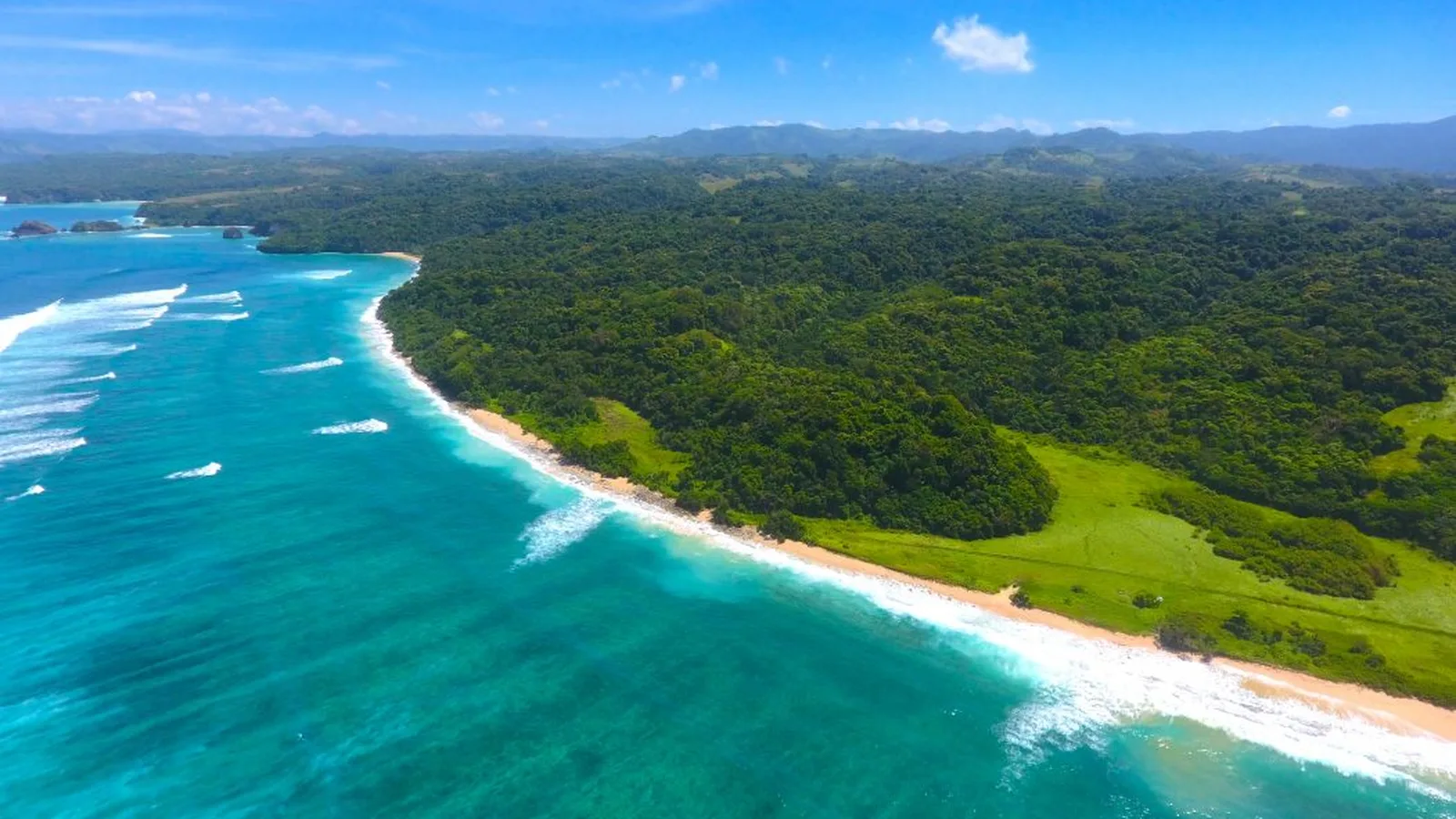
From a red plastic stool no bigger than a dinner plate, on the long, quiet curve of the bay, you can watch the future arrive on a schedule of its own. To my left, a fleet of weathered blue fishing boats, their paint peeling like sunburned skin, bobs in the morning calm. The air smells of salt, diesel, and nước mắm, the fermented fish sauce that is the lifeblood of this coastal town. An old woman in a conical hat methodically mends a green net, her fingers moving with a rhythm that has likely outlasted governments, wars, and typhoons. To my right, a different rhythm. Three tower cranes pivot in a slow, silent ballet against the hazy sky, assembling the concrete skeleton of what the billboards promise will soon be a five-star branded residence. It’s a stark, grey monument to the new kind of capital flowing to these once-forgotten shores of central Vietnam.
I’ve been living in Southeast Asia for eight years, long enough to develop a healthy skepticism for billboards and a deep affection for plastic stools. I’ve watched this story unfold before, in other places, with other names. The initial trickle of backpackers, the first brave expat opening a guesthouse, the glossy magazine feature, and then the deluge. But this feels different. It’s faster, bigger, more premeditated. This isn’t a gradual discovery; it’s a strategic deployment. The money isn’t just following the intrepid; it’s following the tarmac.
I order another cà phê sữa đá—the lethally strong iced coffee that fuels the Vietnamese economy—and point my cup towards the cranes. “Lots of change,” I say in my clumsy, tonal Vietnamese to the old man sitting at the next stool, smoking a hand-rolled cigarette. He follows my gaze, takes a long drag, and exhales a plume of smoke that mingles with the sea mist. “The sea is the same,” he says, his voice raspy. “The shore? The shore has changed more in five years than in the fifty before it. My father wouldn't recognize this place. My son owns a mobile phone shop.” He doesn't say it with regret or excitement, but with the simple, unvarnished finality of a weather report.
The End of the Infinity Pool
The dream that once powered the first wave of Southeast Asian coastal investment is, if not dead, then certainly on life support. For two decades, the formula was simple: buy a villa with an infinity pool in a place like Phuket or Bali, collect handsome rental checks from sun-starved tourists, and watch its value climb with the reassuring predictability of the tides. It was a potent fantasy, a way to transmute a holiday into an asset. For many, it worked. For a while. Now, that postcard paradise is looking a little frayed around the edges.
The numbers tell a stark story of diminishing returns. A decade ago, a prime beachfront plot in Phuket might have set you back a manageable sum; today, the average price per square meter for a luxury villa can exceed $5,000 USD, a 150% increase that has sent would-be investors scrambling for their calculators. The corresponding rental yields, once the main draw, have been squeezed by an oversupply of identical properties. Gross yields, which used to flirt with a healthy 8-10%, have compressed to as low as 3-4% in many prime areas—a return that barely justifies the headache of maintaining a property in a tropical climate, with its relentless assault of salt, humidity, and the occasional gecko in the fuse box.
But the problem isn't just financial. It's physical. The sheer weight of success is pressing down on these first-wave darlings. Over-tourism has turned serene beaches into human parking lots. Coastal erosion, exacerbated by hastily approved developments, is literally washing the primary asset—the beach itself—out to sea. I was on a popular stretch of sand in Seminyak, Bali, last year where luxury beach clubs had erected unsightly sandbag walls to keep the ocean from reclaiming their multi-million-dollar daybeds. It wasn't a good look.
This confluence of high prices, low yields, and environmental strain is forcing a fundamental pivot in investor psychology. The frantic chase for quick capital gains is giving way to a more sober search for durable, long-term value. The smart money is no longer asking, “Where is everyone going?” It’s asking, “Where is everyone going next?” And the answer, it seems, isn't found in another travel magazine, but on a government infrastructure map.
Following the Tarmac to the Sea
There’s a particular feeling you get driving on a brand-new stretch of Vietnamese highway. It’s an almost unnerving smoothness. For years, traveling the length of the country meant a bone-jarring, 50-hour ordeal on National Route 1, a chaotic two-lane road teeming with overloaded trucks, fearless scooter swarms, and the occasional water buffalo. Now, sections of the new North-South expressway are opening up, pristine six-lane ribbons of blacktop that slice through mountains and glide over valleys on immaculate concrete pillars. Driving it feels like you've been upgraded from economy to first class.
This smooth ride is the single most important story in Southeast Asian real estate today. The new map of investment opportunity is being drawn not by bohemian travel writers, but by civil engineers and national planning committees. State-led infrastructure projects are the silent catalysts, creating accessibility where there was once only isolation. Vietnam, perhaps more than any other country in the region, has embraced this strategy with breathtaking ambition. Its national infrastructure plan earmarks approximately $50.3 billion for investment by 2030, with a stated goal to more than double its national expressway system to 5,000 kilometers. It’s a project of nation-building scale, a concrete and asphalt declaration of intent.
I met a developer, a sharp, chain-smoking man named Mr. Tuan, at a glossy coffee shop in Da Nang that looked like it had been airlifted from Seoul. He had just returned from a site visit down the coast. “My strategy is simple,” he told me, stirring his espresso with a tiny spoon. “I don’t look for the best beach. I look for the best infrastructure. Show me a government plan for a new airport expansion or a future expressway exit, and I will show you my next acquisition target. The government is our primary market analyst. They are spending billions to de-risk these locations for us.”
His current focus was the coastline around Quy Nhon, a city that, until recently, was a sleepy fishing port known mostly to domestic tourists. The game-changer was the upgrade of Phu Cat airport, allowing for more frequent and larger flights. Suddenly, a four-hour drive from the nearest major hub became a 45-minute flight from Ho Chi Minh City or Hanoi. “We buy the land when it’s still just a 30-minute drive on a dirt road from the airport,” Tuan explained. “By the time we are ready to build, the government has paved the road. We are not just building resorts; we are following the tarmac to the sea.”
The Philippine Gambit: A 7,000-Island Portfolio
If Vietnam represents a calculated, state-directed push into new territory, the Philippines is its wilder, more unpredictable cousin. With over 7,000 islands scattered across the western Pacific, it is the region’s undisputed king of raw, jaw-dropping natural beauty. Places like Palawan and Siargao don’t just have nice beaches; they have landscapes that seem conjured from a fever dream, all limestone karsts, gin-clear water, and sand as fine as powdered sugar. For the coastal investor, it’s a portfolio of almost infinite potential.
It is also a masterclass in navigating complexity. The primary barrier to entry—and, for the patient, the primary source of alpha—is a legal and bureaucratic system that can feel, at times, deliberately opaque. The Philippine Constitution strictly forbids foreign ownership of land, a nationalistic firewall that has sent foreign investors on a long and winding road through a jungle of legal structures, the most common of which is a 50-year land lease, renewable for a further 25 years.
But even securing a lease requires a level of due diligence that would make a forensic accountant weep. I spent an evening in Siargao drinking beer with an Australian surfer-turned-investor named Jake, who had spent the better part of his thirties building a small, successful boutique hotel. He described the process of securing his land as a two-year odyssey. “You’re not just buying land; you’re buying the story of the land,” he said, laughing a little maniacally. “And you have to make sure it has a happy ending.”
“You’re not just buying land; you’re buying the story of the land. Make sure it has a happy ending.”
His journey involved hiring a local genealogist to trace the land’s ownership back three generations, cross-referencing family trees with municipal archives to ensure no disgruntled, long-lost cousins could emerge from the woodwork with a competing claim. It involved meetings in sweltering government offices, endless paperwork stamped with bewildering acronyms, and a healthy budget for what he diplomatically termed “facilitation fees.” This is the ‘patience premium’ in action. The reward for this bureaucratic marathon is access to land at prices that are a distant memory in more mature markets. In developing areas like San Vicente on Palawan, a government-designated tourism enterprise zone, fully titled beachfront lots can still be found for under $150 per square meter—a figure that would barely buy you a square foot of condo in Phuket. It’s a high-stakes gambit, but for those who can navigate the maze, the archipelago offers prizes found nowhere else.
Outsourcing Paradise: The Branded Sanctuary
Not everyone, it turns out, has the stomach for genealogical research and municipal archives. For a growing class of global, time-poor investors, the dream of a beach house is quickly soured by the reality of managing it. A leaky roof, a rebellious gardener, the endless chase of rental bookings—it’s a far cry from the passive-income fantasy. Into this gap have stepped the giants of the hospitality world: Rosewood, Aman, Accor, Hyatt. The branded residence has become the turnkey solution for the risk-averse.
The value proposition is brutally simple. You buy a villa or an apartment that is part of a luxury hotel complex. In return for a share of the revenue and a hefty management fee, the hotel operator handles everything: maintenance, marketing, staffing, and security. Your property is placed in their global rental pool, benefiting from their worldwide distribution system and brand recognition. It transforms a potentially messy real estate project into a clean financial asset.
I spoke via Zoom with a Singaporean fintech executive named David Chen, who had recently purchased a two-bedroom villa in a new branded development near Quy Nhon. He was precisely the target market—affluent, international, and utterly uninterested in the operational details of property ownership. “Look,” he said, his face framed by the minimalist decor of his Singapore apartment, “I spend twelve hours a day optimizing code and managing a team of fifty. I don’t have the time or the mental bandwidth to interview gardeners in a language I don’t speak. I’m buying an asset that emails me a quarterly statement, not a project that calls me at 3 a.m. about a broken air conditioner.”
This peace of mind comes at a literal premium. Data from property analysts shows that across Southeast Asia, branded residences command an average price premium of 31% over equivalent non-branded properties. In nascent, second-wave markets like the one Chen invested in, that premium can soar to over 50%. Investors are not just paying for concrete and sea views; they are paying for the powerful de-risking effect of the brand itself. In an unproven location, the name—be it a Four Seasons or a Meliá—becomes the primary guarantee of quality and a powerful magnet for rental guests, effectively outsourcing the entire business of paradise.
| Feature Comparison | Branded Residence (Vietnam) | Non-Branded Villa (Vietnam) |
|---|---|---|
| Management | Professional, by hotel operator | Owner's responsibility / local hire |
| Rental Program | Mandatory inclusion in hotel pool | Optional / owner-managed |
| Upfront Cost | 30-50% Price Premium | Market Rate |
| Potential Gross Yield | 5-7% (stabilized) | 6-10% (highly variable) |
| Owner Usage | Restricted (e.g., 60 days/year) | Unrestricted |
| Exit Strategy | Strong brand adds resale value | Dependent on local market |
Cambodia's Coastal Bet: From Ghost Town to Gold Coast?
If you want a lesson in how quickly a coastal dream can curdle, spend a day in Sihanoukville. Cambodia’s southern coast is a case study in the violent cycles of speculative boom and devastating bust. In the mid-2010s, a tsunami of Chinese capital, chasing the promise of online gambling licenses, washed over this once-sleepy port town. The result was a frenzy of construction that was as fast as it was unregulated. For a couple of years, it was the Wild East, with rents and land prices doubling every few months.
Then, in 2019, the Cambodian government, under pressure from Beijing, abruptly banned online gaming. The capital evaporated overnight, leaving the city a spectral landscape of failure. Today, the skyline is dominated by hundreds of abandoned, half-finished concrete hulks. They stand like skeletal monuments to bad bets, their empty window frames staring out at the turquoise sea. The post-casino bust was catastrophic, with rental prices in the city center plummeting by as much as 80% from their 2019 peak.
Yet even here, amidst the ruins, a second act is being tentatively scripted. I took a tuk-tuk out to Otres Beach, a few kilometers down the coast. The contrast was jarring. On one end of the dusty road stood a monstrous, half-built casino complex, its Greco-Roman columns looking absurd against the palm trees. An eerie silence hung over it, broken only by the wind whistling through the exposed rebar. But 500 meters down the beach, the air was filled with the clink of glasses and the sound of laid-back reggae. A small, tastefully designed boutique hotel, run by a French couple, was doing a brisk trade. I sat down with one of the owners, a woman named Isabelle.
“People see the ghosts,” she said, gesturing vaguely towards the abandoned city, “and they run. We see the bones. The beaches are still beautiful. The islands are pristine. The government made a mistake tying everything to the casinos. Now, they know it.” She’s referring to a new national tourism master plan that explicitly aims to rebrand the region, moving away from gaming and towards eco-tourism and family resorts, with a goal of attracting 7.5 million non-gaming tourists by 2035. “We are doubling down on the rebound,” Isabelle told me. “The big money left, but the real travelers are starting to come back, looking for what Sihanoukville was before the madness. It’s a big bet. But the rent is cheap.”
The Laptop on the Lanai: A New Class of Buyer
The most profound demand driver reshaping these coastlines has nothing to do with tourism seasons or hotel occupancy rates. It’s the quiet, global revolution of remote work. The ability to earn a San Francisco salary while living on a Southeast Asian beach is no longer a fringe lifestyle for a few rogue bloggers; it’s a mainstream aspiration for a new class of affluent, mobile professionals.
This demographic shift has fundamentally altered the real estate checklist. Seclusion, once the ultimate luxury, has been usurped by connectivity. High-speed, reliable internet is now the most critical utility—more important, in some cases, than paved road access or proximity to a town. I’ve seen million-dollar villa listings that proudly advertise their fiber-optic connection speeds before they even mention the number of bedrooms.
I was talking to a real estate agent on Koh Phangan, a Thai island once famous for its full-moon parties and now rebranding as a digital nomad hub. We were sitting at a beachside cafe where half the patrons had laptops open next to their smoothie bowls. “My sales pitch has completely changed,” she explained. “Five years ago, I sold escape and disconnection. I’d talk about the quiet beaches, being off the grid. Now? Now I lead with the fact that we have redundant fiber lines and Starlink dishes offering 200 Mbps download speeds. I show them the air-conditioned co-working space with soundproof call booths. The dream isn't to disconnect anymore. The dream is to be fully connected, but from a hammock.”
Governments are scrambling to catch up and cash in on this new tribe. Thailand’s recently launched 10-year Long-Term Resident (LTR) visa is a prime example. Aimed at “wealthy global citizens” and “work-from-Thailand professionals,” it has already attracted over 4,000 applicants in its first year. These aren’t backpackers; they are high-earning individuals and families with significant purchasing power and very specific real estate needs. Developers are taking note. New projects in places like the Eco Beach City in Indonesia are being designed from the ground up with this buyer in mind, incorporating dedicated home offices, communal work hubs, and robust digital infrastructure as standard features, not afterthoughts.
The Green-Washed vs. The Green-Hearted
As you walk through the marketing suites of these new coastal developments, one word echoes more than any other: sustainability. Every project, it seems, is an “eco-resort,” every villa a “green home.” The brochure language is a torrent of reclaimed wood, organic gardens, and harmony with nature. But after eight years in the region, my bullshit detector for green-washing is finely tuned. I’ve seen too many “eco-lodges” powered by a belching diesel generator hidden behind the staff quarters.
Discerning buyers are growing wary, too. They are learning to distinguish between the green-washed and the green-hearted. They are looking past the marketing and demanding tangible proof: internationally recognized certifications like LEED or EDGE, verifiable data on energy and water consumption, and a genuine commitment to local materials and community integration. This isn’t just about altruism; it’s about shrewd risk management. A villa that relies on a massive, energy-guzzling air-conditioning system is a liability in an era of rising energy costs and carbon taxes. A project that alienates the local community is planting the seeds of future conflict.
In the Philippines, a 20-meter 'salvage zone' from the high-tide line is public land, meaning many 'beachfront' villas are legally set back behind a public path, and owners do not own their direct beach access.
In a small studio tucked away in the rice paddies outside Ubud, Bali, I met with the founders of an architectural firm that specializes in what they call “bioclimatic design.” The lead architect, a woman with a passion for vernacular building techniques, showed me the plans for a villa project they were completing on the island of Lombok. “The client’s neighbor built a standard concrete box. It’s an oven,” she said, pointing to a 3D model. “Our design uses a modern interpretation of the traditional Sasak high-pitched roof. It creates a natural thermal chimney, pulling hot air up and out. We combine that with large overhangs for shade and strategic cross-ventilation.” The result? Their design was independently audited to show a 40% reduction in air-conditioning energy consumption compared to the neighboring villa. “This isn’t about feeling good,” she insisted. “It’s just good design. It’s cheaper to run, more comfortable to live in, and it will hold its value better.” A recent JLL survey of Asia-Pacific real estate investors seems to confirm her point, finding that 70% were willing to pay a rental premium for buildings with leading sustainability credentials.
A Lease on Limbo: The Fine Print of Paradise
Ultimately, no matter which coastline you choose, which architectural style you prefer, or what connectivity speeds you require, foreign investment in Southeast Asia boils down to a single, unromantic document: the lease. With few exceptions, the dream of freehold, outright ownership of a piece of coastal land remains just that—a dream. The reality is a complex, country-specific web of leasehold agreements, nominee structures, and usage rights.
In Thailand, the standard is a 30-year lease, often with a prepaid option to renew for two subsequent 30-year terms. In Vietnam, the 2014 Law on Housing opened the door for foreigners to purchase apartments and, in some cases, landed properties on a 50-year leasehold basis, with a potential 50-year extension. In the Philippines, it’s a 50-year lease with a 25-year renewal. Each framework creates a distinct asset class, a tradable right to use a property for a defined period.
This reframes the entire investment. You are not “buying a house” in the Western sense of perpetual ownership. You are securing a multi-decade lifestyle right. It’s a crucial distinction, both psychologically and financially. I sat down with a lawyer in Da Nang, a man who had structured hundreds of these deals for foreign clients. He took a pen and drew a small box on a napkin. “This box is the building, the concrete,” he said. “If the project qualifies, you own this for 50 years. You can sell it, you can leave it to your children.” He then drew a much larger box around the first one. “This box is the land. You do not own this. The state owns this. You are a tenant. Never, ever forget the difference.”
A standard 120-square-meter, two-bedroom apartment in a non-prime area of Amsterdam will cost approximately €750,000. For that same investment, one could acquire full ownership of a new 350-square-meter, four-bedroom luxury villa with a private pool on a 50-year land lease within a managed resort community in Quy Nhon, Vietnam, including all furniture and legal closing costs.
This reality doesn’t have to be a deal-killer. Since Vietnam liberalized its laws, over 16,000 units have been sold to foreigners on this basis, creating a new, actively traded asset class. But it demands a clear-eyed understanding of what is actually being purchased. The old, shadowy methods of using local nominee shareholders to circumvent ownership laws are becoming increasingly risky. Thailand’s Land Department, for instance, has been actively prosecuting and dissolving companies found to be illegal nominee structures, turning a once-common legal loophole into a significant liability.
The final contract, then, isn’t for the sand and soil, which will always belong to the nation, or perhaps, in the long run, to the sea. It’s for a slice of the sunset, a fifty-year right to a view, a long-term lease on a dream. And the smartest investors I’ve met out here all seem to understand that with any dream, the most important decision is knowing when it might be time to wake up.