The Sunset Bubble: Auditing the Golden Hour Economy
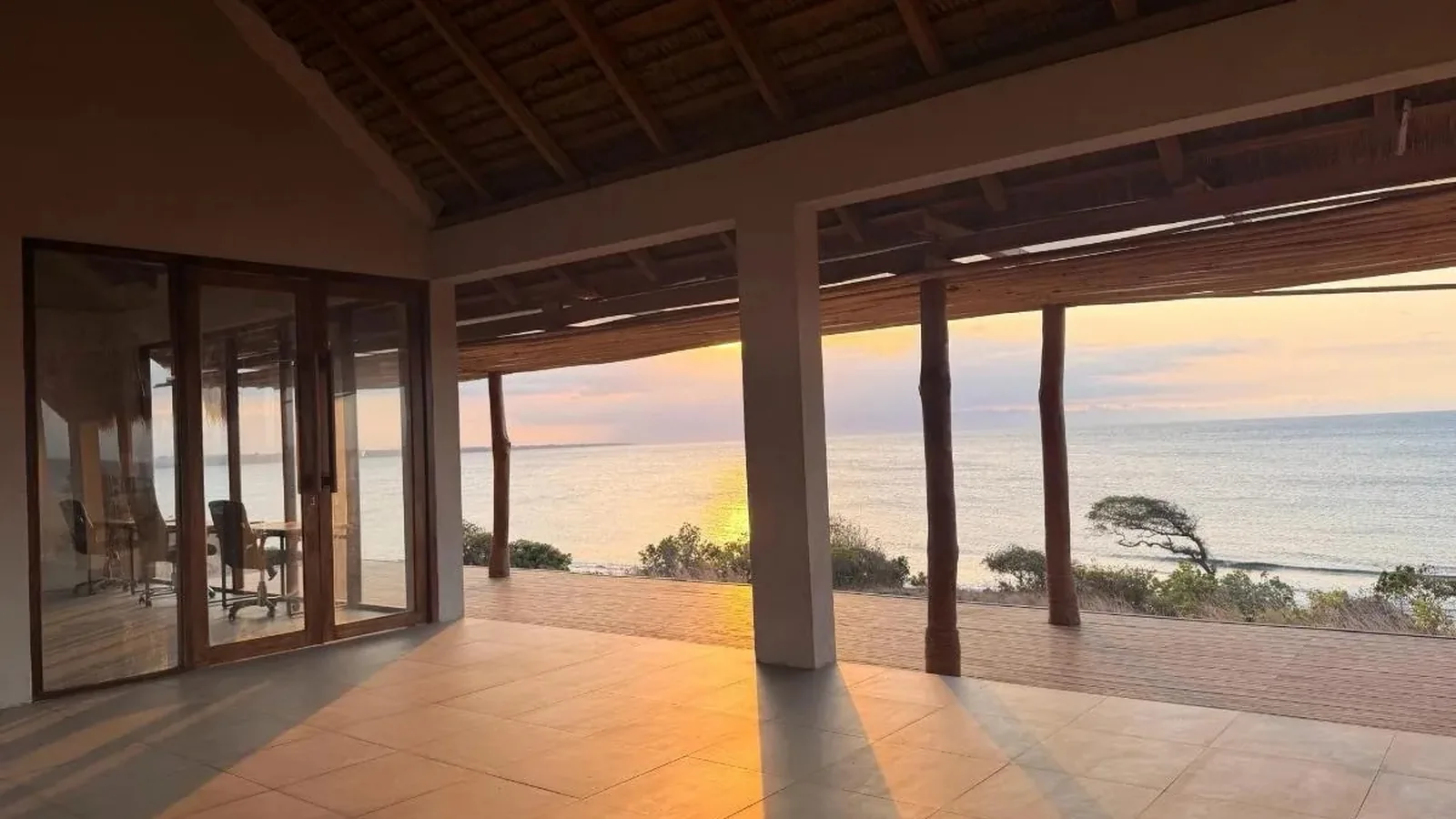
The spreadsheet said one thing. The salt air, thick with the scent of clove cigarettes and overpriced sunscreen, said another. I was sitting on a slightly damp beanbag, the kind that costs about twelve dollars to manufacture and rents for a forty-dollar minimum spend. In front of me, a twenty-something from Manchester was contorting his body into a shape not seen since the Spanish Inquisition, all to frame a luridly blue $15 cocktail against the sinking sun for a photograph that 300 of his friends would ‘like’ before he’d even paid the bill.
Behind him, barely visible in the throng, a manager was barking into a walkie-talkie, his voice a tense staccato against the ambient chill-out music. “Zone C, clear for second seating in fifteen. I repeat, fifteen. Prepare the 8 p.m. arrivals.” The sun hadn’t even touched the horizon, and already its demise was being monetized, scheduled, and turned over for the next round of customers.
I wasn't watching the sky. My gaze was fixed on the human machinery whirring around this daily celestial event. I was tallying the minimum spends, estimating the occupancy rates, mentally calculating the revenue-per-square-foot of this patch of volcanic sand. And I was asking myself a question that felt both absurd and entirely necessary: is this the most beautiful, most perfectly formed, most ephemeral market bubble in the world?
The Sunset Exchange: Pricing a Priceless Commodity
A sunset, at its core, is a simple astronomical event. It is free. It is reliable. It happens every single day. And yet, here in the southern latitudes of Indonesia, an entire multi-million-dollar industry has been constructed around its 90-minute observation window. This is the ‘Sunset Industrial Complex’, an ecosystem of beach clubs, tour operators, and real estate developers that have successfully commodified the sky itself. They have taken a public good and, through clever application of basic economic principles, turned it into a luxury product.
The mechanics are textbook. First, create scarcity. A thousand people can watch the sunset from the beach, but only one hundred can do so from the tiered, front-row daybeds of a place like Finns or La Brisa. This manufactured scarcity immediately creates value. Second, leverage social proof. Every Instagram post of a silhouetted figure against a blazing orange sky is free marketing, signalling to thousands of others that this specific location is the place to be. It’s a self-perpetuating cycle of aspirational consumption. This isn't new; it's a digital-age echo of 17th-century Dutch Tulip Mania, where the value of a flower bulb was driven not by its intrinsic utility but by social competition and the feverish desire to possess what others coveted.
The final step is sophisticated price discrimination. The beanbag on the sand has one minimum spend. The daybed by the pool has a higher one. The private cabana on the second level, complete with its own small pool and dedicated server, commands a price that could fund a local family’s housing for a year. A sunset cocktail at a prime beachfront club in Seminyak or Canggu now averages around IDR 225,000 ($15). That same cocktail, made with the same Bintang beer or local arak, can be found for IDR 65,000 ($4) at a family-run warung just 500 meters inland. This isn't just a markup; it's a 350% premium for the view. You aren't buying a drink; you are renting a vantage point.
“I remember when the only minimum spend was buying a 25,000 Rupiah Bintang from Ibu Ketut’s cooler box,” a Dutch architect who has lived in Bali since 1998 told me, gesturing towards a beach club thumping with a bassline you could feel in your teeth. “We’d just sit on the sand. The dogs would run around. Now, they’ve monetized the sky. They charge you for the angle of the sun. It’s brilliant, in a completely depressing way.”
The evolution of these coastal strips from sleepy surf breaks to high-yield entertainment zones has been brutally efficient. A decade ago, this was agricultural land, its value measured in rice yields per hectare. Today, its value is measured in revenue per minute during the golden hour. A single front-row daybed, with a minimum spend of, say, IDR 2,000,000 (~$130) for a three-hour slot, generates more income than the farmer who once owned the land might see in a month. When you compare the estimated nightly revenue from just the prime seating during that 90-minute window at a popular Seminyak spot—upwards of IDR 75,000,000 (~$5,000)—it becomes clear. On a per-minute, per-square-meter basis, this patch of sand is more profitable than prime retail space on Fifth Avenue.
Gili Trawangan: A Case Study in Infrastructure Lock-in
Nowhere is the economic distortion created by the sunset more apparent than on Gili Trawangan, a tiny sliver of an island off the coast of Lombok. At just three square kilometers, with no motorized vehicles, it should be a simple market to analyze. Yet this small economy is geographically and financially bifurcated by a single, daily event.
There is the sunrise side (the east), and there is the sunset side (the west). The east is where the boats arrive, where the bulk of the dive shops are, and where the island’s main artery of restaurants and bars is located. The west, historically, was little more than scrubland. But the invention of the smartphone camera changed everything. Suddenly, the west-facing real estate became the most valuable asset on the island. The data is stark: land on the west-facing coast of Gili Trawangan now consistently commands a 25-40% price premium per square meter compared to equivalent plots on the east side. This premium isn't for better beach access or calmer waters; it's a pure, unadulterated surcharge for an unobstructed view of the sun’s descent behind Bali’s Mount Agung.
This premium has led to a fascinating phenomenon I call the ‘Sunset Swing.’ On the west coast, investors have poured millions into building a very specific type of infrastructure: waterfront swings and hammocks. These are not amenities for guest comfort; they are capital investments designed explicitly to capture and monetize social media users. The swings, often standing in the shallow water, are human-scale branding devices. They exist to be photographed. The businesses that own them, often resorts or bars, understand that the cost of building and maintaining these swings is a marketing expense with an exponential return. A single viral image of a couple on a ‘Gili sunset swing’ generates more global reach than a five-figure advertising budget.
Meanwhile, on the other side of the island, a daily economic migration takes place. Around 4:30 PM, the east coast begins to empty out. Tourists on bicycles, on foot, or in electric carts begin their pilgrimage west, chasing the light. For businesses on the east side, this creates a significant opportunity cost. I spoke to the owner of a dive center on the east coast, a pragmatic Australian named Mike.
“From five to seven, we’re a ghost town,” he said, leaning against his counter as a group of newly certified divers made plans to rent bikes. “We’ve done the math. We have to offer two-for-one drink specials, sometimes even giving away free snacks, just to keep a fraction of our customers here. The pull of that sunset photo is stronger than any happy hour we can dream up. We’re competing against the sun. It’s an impossible business partner.”
This daily exodus represents a massive, predictable dip in revenue for half the island’s businesses. They are, in effect, suffering from infrastructure lock-in. Their location, once prime due to its proximity to the harbor, becomes a liability for two of the most profitable hours of the day. The entire island's rhythm, its flow of capital and people, is dictated by the rotational axis of the Earth.
West vs. East Gili Trawangan: A Sunset-Driven Economy
| Metric | West Side (Sunset) | East Side (Sunrise) |
|---|---|---|
| Real Estate Premium | +25-40% per m² | Baseline |
| Prime Time | 5 PM - 7 PM | 8 AM - 4 PM |
| Key Infrastructure | Swings, viewing platforms, beanbags | Dive centers, harbor, restaurants |
| Marketing Strategy | Visual (Instagram-centric) | Service/Activity-based (Diving) |
| Evening Revenue Model | High-margin sunset cocktails, entrance fees | Discounted happy hours, ancillary sales |
This table doesn't just show a difference in business models; it shows an entire micro-economy warped around the gravitational pull of a single, photogenic moment.
The Komodo Calculation: Factoring the Exclusivity Premium
If the Bali beach club represents the mass-market commodification of the sunset, and Gili Trawangan its geographical distortion, the Komodo archipelago illustrates how high barriers to entry can create an exclusive, high-cost sunset market. Here, the sunset isn’t an à la carte menu item; it’s the capstone on a very expensive packaged tour.
The classic Komodo sunset is viewed from the summit of Padar Island, a prehistoric-looking landscape of savannah-clad hills overlooking three distinct, multi-colored beaches. But this view is not easily accessible. First, one must fly to Labuan Bajo, a dusty port town undergoing a chaotic, government-fueled development boom. From there, you must charter a boat. Options range from rickety, shared backpacker vessels to opulent, multi-million-dollar Phinisi schooners. Then come the fees: national park entrance fees, snorkeling fees, ranger fees, and a new, controversial ‘conservation’ levy. All told, the total cost to achieve the classic Padar Island sunset photograph for a visitor on a mid-range 3-day, 2-night boat tour averages around $850 per person. This makes it, per viewing, one of the most expensive sunsets in the entire Indonesian archipelago.
Here, the sunset is bundled with other high-value experiences, chiefly the encounter with the Komodo dragons themselves. Is the sunset a primary product or a value-add? For the liveaboard operators, it’s a crucial part of the itinerary, the grand visual finale to a day of diving and dragon-spotting. For the consumer, the economics are complicated by the psychological principle of effort-justification. The journey to the top of Padar involves a steep, 30-minute hike up a set of dusty stairs under a punishing tropical sun. The physical cost—the sweat, the burning calves, the breathlessness—increases the perceived value of the reward. You didn’t just see this sunset; you earned it. This feeling of accomplishment makes the view more precious and the cost more palatable.
At the summit, a fascinating social tableau unfolds. I watched as different economic strata converged to consume the exact same view. Backpackers in sweat-soaked t-shirts who had spent the night on a noisy deck, eating instant noodles, stood shoulder-to-shoulder with affluent European couples who had just been ferried ashore from a luxury Phinisi, complete with air-conditioned cabins and an on-board chef. They all pointed their identical iPhones at the same sinking star. The product was perfectly uniform, yet the cost of acquisition varied by a factor of ten. The luxury clients weren't just paying for the boat and the food; they were paying to be insulated from the discomforts the backpackers endured. Yet, at the moment of peak experience, on that windy ridge, their return on investment was identical: one spectacular, fleeting view.
Uluwatu's Arbitrage: The Economics of Bundled Experiences
The cliff-top temple of Uluwatu on Bali's southern Bukit peninsula offers a masterclass in behavioral economics and the art of bundling. Every evening, thousands of tourists pay an entrance fee of IDR 150,000 (around $10) to watch the Kecak fire dance, a captivating performance by a chorus of over a hundred chanting men. The performance is strategically timed to coincide with the sunset, with the stage set against a dramatic backdrop of the Indian Ocean.
The key question for an economist is: what are people actually buying? A ticket to a cultural performance? Access to a historic temple? Or a premium seat for the sunset? The genius of the Uluwatu model is that it’s impossible to disentangle the three. By bundling the cultural performance with the natural event, the operators have created a powerful, singular ‘must-do’ product that cleverly reduces price sensitivity. If you were asked to pay $10 just to watch the sunset from a crowded cliff, you might balk. But paying $10 for a world-renowned cultural performance that also includes a stunning sunset view feels like a bargain.
Surveys of attendees bear this out. An informal poll conducted by local tourism students found that over 70% of attendees cited the 'sunset view' as a primary or secondary reason for attending. The sunset isn't a bonus; it’s a core component of the value proposition. This allows the operators to generate staggering revenue. With the amphitheater seating around 1,000 people, the performance generates approximately IDR 150,000,000 (roughly $10,000) in ticket revenue every single evening. This is financial arbitrage on a grand scale—taking a free asset (the view) and making it the lynchpin of a high-volume, ticketed event.
However, the model also introduces a significant negative externality: crowd dynamics. The marginal utility of a beautiful view decreases in direct proportion to the number of selfie sticks obscuring it. The experience of watching the sun dissolve into the ocean is fundamentally altered when it is accompanied by the jostling of a thousand other people, the cacophony of a hundred simultaneous video recordings, and the low-level anxiety of planning your exit strategy.
The logistical ballet of this nightly event is a spectacle in itself. It is a synchronized chaos of thousands of people trying to enter and exit a single clifftop location via a narrow road within a tight 90-minute window, a migration pattern dictated entirely by the sun's descent. Buses get stuck, taxis quote exorbitant fares, and a general sense of frantic urgency descends, a comical counterpoint to the serene spectacle they have just witnessed.
This is the Uluwatu paradox: a sublime experience meticulously packaged for mass consumption, which, by its very success, begins to erode the sublime quality it was meant to deliver.
The Raja Ampat Anomaly: Sunsets as a Rounding Error
Far to the east, in the remote archipelago of Raja Ampat, the sunset economy operates under a completely different set of rules. Here, in one of the most biodiverse marine environments on Earth, the primary product is so overwhelmingly valuable that a world-class sunset is treated as little more than a pleasant, un-marketed bonus. It’s a rounding error on a balance sheet dominated by manta ray encounters and pristine coral gardens.
Consider the marketing materials. An analysis of websites and brochures for top-tier resorts in Bali’s popular zones shows that over 80% explicitly feature ‘sunsets’ as a key selling point, often with dedicated photo galleries and promotional packages. In contrast, a similar analysis of high-end dive resorts in Raja Ampat reveals that less than 5% of their marketing materials prominently feature sunsets. They sell the underwater world, the biodiversity, the exclusivity, the sheer remoteness. The fact that this remote paradise also happens to feature spectacular, uncontested sunsets is almost an afterthought.
This leads to the concept of 'value dilution'. When a trip is 'all-inclusive' and costs, for example, $7,000 for a ten-day liveaboard experience, does the perceived value of its individual components decrease in the consumer's mind? If that trip yields ten sunsets, one could absurdly argue that each one is a '$700 sunset'. This calculation highlights the folly of trying to price every element of an experience. In Raja Ampat, the sunset isn't a product to be sold; it's part of the ambient environment, as free and expected as the air itself.
I discussed this with a German marine biologist who had been working at a research station near Misool for three years. She found the tourist obsession with sunsets baffling. “They sit on the deck and take a thousand pictures of the sky turning orange,” she told me, shaking her head. “They think that’s the big show. They have no idea that the real show, the event of the day, is the coral spawning that happens two hours after dark. Or the flashlight fish creating their own constellations under the jetty. They’re watching the closing credits, but they’ve missed the entire film.”
Her perspective is a potent reminder that value is subjective. The tourism market has placed an enormous premium on one specific, easily photographed phenomenon, while other, perhaps more profound, natural events go completely un-monetized and largely unnoticed. In Raja Ampat, you are paying for access to a pristine ecosystem. The sunsets are thrown in for free. It’s perhaps the only honest transaction left in the entire Indonesian archipelago’s golden hour economy.
Finding Alpha in the Malukus: A Search for Undervalued Assets
For a skeptical investor, the logical response to a bubble is to search for undervalued assets. Applying the principles of value investing to travel, this means seeking out spectacular experiences in locations with minimal tourist infrastructure and, therefore, no embedded pricing premium. It means looking for alpha in the archipelago’s forgotten corners. My search led me to the Maluku Islands, specifically the Kei archipelago.
Here, the sunsets are not merely spectacular; they are elemental. They unfold over horizons of empty sea, illuminating impossibly white sandbars that appear and disappear with the tides. But there is no beach club, no minimum spend, no one offering you a cocktail. The ‘cost’ of this experience is not measured in Rupiah, but in logistical friction. Getting to the Kei Islands from Jakarta requires a multi-leg journey, often with a long layover, and can cost upwards of IDR 4,500,000 (~$300) for a return flight. Once there, infrastructure is basic. Accommodation is in simple guesthouses, and transport is by hiring a local with a motorbike or a boat.
The resulting calculation is an inversion of the Bali model. A magnificent sunset dinner of fresh-caught grilled fish, rice, and vegetables, eaten on the sand at a place like Pasir Panjang beach, costs a mere IDR 50,000 (~$3.30). The flight to get there, however, costs 90 times that amount. The premium is not on the experience itself, but on the access. You are paying for the privilege of being in a place where the sunset has not yet been packaged and sold.
I experienced this firsthand on a tiny sandbank called Pasir Timbul, a short boat ride from the main island. For an hour, as the tide receded, a strip of perfect white sand emerged from the turquoise water. My boatman and I were the only people there. As the sun set, turning the sky into a watercolor wash of pink and gold, I tried to perform the same cold calculation I had in Seminyak. What would it cost to replicate this moment for mass tourism? You would need a jetty, a floating bar, safety regulations, staff, a booking system. You would need to market it, create an Instagram page, invent a hashtag. You would need to build something like the Eco Beach City project some developers are dreaming of for other islands. And in doing so, you would inevitably destroy the very thing that gives this moment its value: its solitude, its simplicity, its complete and utter lack of commercial intent.
This is the authenticity paradox. The moment an 'undiscovered' spot gets featured in an article like this, the market inefficiency begins to correct. The first intrepid bloggers arrive, followed by the pioneers, then the tour operators. The value investor’s goal is to experience it in that brief window after it becomes accessible but before it becomes commercialized. It’s a short, and shrinking, window.
The Borobudur Blind Spot: Alternative Sunset Markets
The entire discourse around the sunset economy is overwhelmingly coastal, focused on a specific brand of tropical hedonism. But to fully audit the market, one must look inland. The 9th-century Buddhist temple of Borobudur in Central Java offers a compelling alternative model, where the sunset is not a backdrop for a party, but for pilgrimage.
The value proposition is entirely different. Here, the goal is not a cocktail and a DJ, but a sense of peace, history, and spiritual connection. The product is silence and awe. The authorities managing this UNESCO World Heritage site understand this well, and they price it accordingly. To climb Borobudur for sunrise or sunset, outside of regular opening hours, requires a special ticket. This ticket has historically been priced at a premium of over 400% (around $30-$50) compared to the standard daytime entrance fee. This is a classic example of peak-load pricing, charging a premium for access during a moment of peak temporal value.
But the high price serves a dual purpose. It's not just revenue generation; it's a powerful tool for crowd control. The fee acts as a filter, limiting the number of people on the ancient stones during these fragile hours, preserving both the structure and the visitor's experience. By pricing out a segment of the market, they ensure that those who do pay are rewarded with a less crowded, more contemplative atmosphere. The contrast with the chaotic crush at Uluwatu could not be more stark. At Borobudur, there is a hushed reverence. People speak in whispers. The focus is internal as much as it is external. Is the consumer’s goal a spiritual awakening or a photographic trophy? Inevitably, it’s a mix of both, but the context of the location—a sacred monument—profoundly shapes the demand and the behavior.
The paradox here is that even the attempt to find a non-commercial experience becomes a commercial transaction. You are paying a premium for a manufactured sense of tranquility. It's an honest transaction—the fee is transparent, and the product (relative quiet) is delivered—but it underscores the difficulty of escaping the market altogether. Whether on a beach or a temple, the best light of the day always seems to come with a price tag attached.
The Marginal Utility of Another Perfect Sunset
After crisscrossing the archipelago, from the packed beanbags of Seminyak to the empty sandbars of the Malukus, a clear picture emerges. The sunset economy is a classic speculative bubble, inflated by the compressed air of social media and the fear of missing out. Its fuel is the replicable digital image. The value isn't in the unique, personal experience of a sunset, but in the creation of a standardized, shareable asset: the sunset photo.
The law of diminishing returns applies viciously here. The first ‘perfect’ Bali beach club sunset you experience feels transcendent. The fifth, purchased for the same high price and accompanied by the same thumping bassline, provides significantly less marginal utility. The global travel ‘experience’ market, of which these sunset tours are a small but telling part, is projected to grow at a CAGR of 6.5%. This commodification trend is accelerating. We are getting better and better at packaging, pricing, and selling moments that were once the free domain of poets and daydreamers.
The paradox, of course, is that the intense red and orange hues we prize in a sunset are significantly amplified by aerosols in the atmosphere. These can come from sea salt, but they are also a function of pollution and volcanic dust. In a strange twist of atmospheric science, the ‘best’ sunsets are often a lagging indicator of poor air quality.
Is there a way out? Perhaps the true ROI is found not by seeking out the ‘best’ or most exclusive sunset, but by embracing the ones that defy economic analysis. I think back to a forgotten sunset from years ago. I was stuck on a delayed public ferry in a nondescript harbor somewhere between Flores and Sumbawa. The boat smelled of diesel and cloves. The deck was crowded with families, chickens in cages, and sacks of rice. There was no music, no cocktail, no beanbag. I didn’t even have my camera out.
The sun went down behind a smudge of a distant island, the light muted by humid haze. It was an imperfect, unremarkable sunset. And it was completely free. It cost me nothing but time. It offered no social capital. It was utterly, beautifully, un-commodified.
Perhaps the ultimate lesson from auditing the golden hour is that we've created a frantic market for something that is supposed to be a signal to stop calculating. In our relentless pursuit of the perfect, Instagrammable asset, we've forgotten that a sunset’s true function has always been to mark the closing bell on the day’s transactions, inviting us, just for a moment, to stop counting and simply be.