The Sunrise Audit: Paradise Hacked for Peak Performance
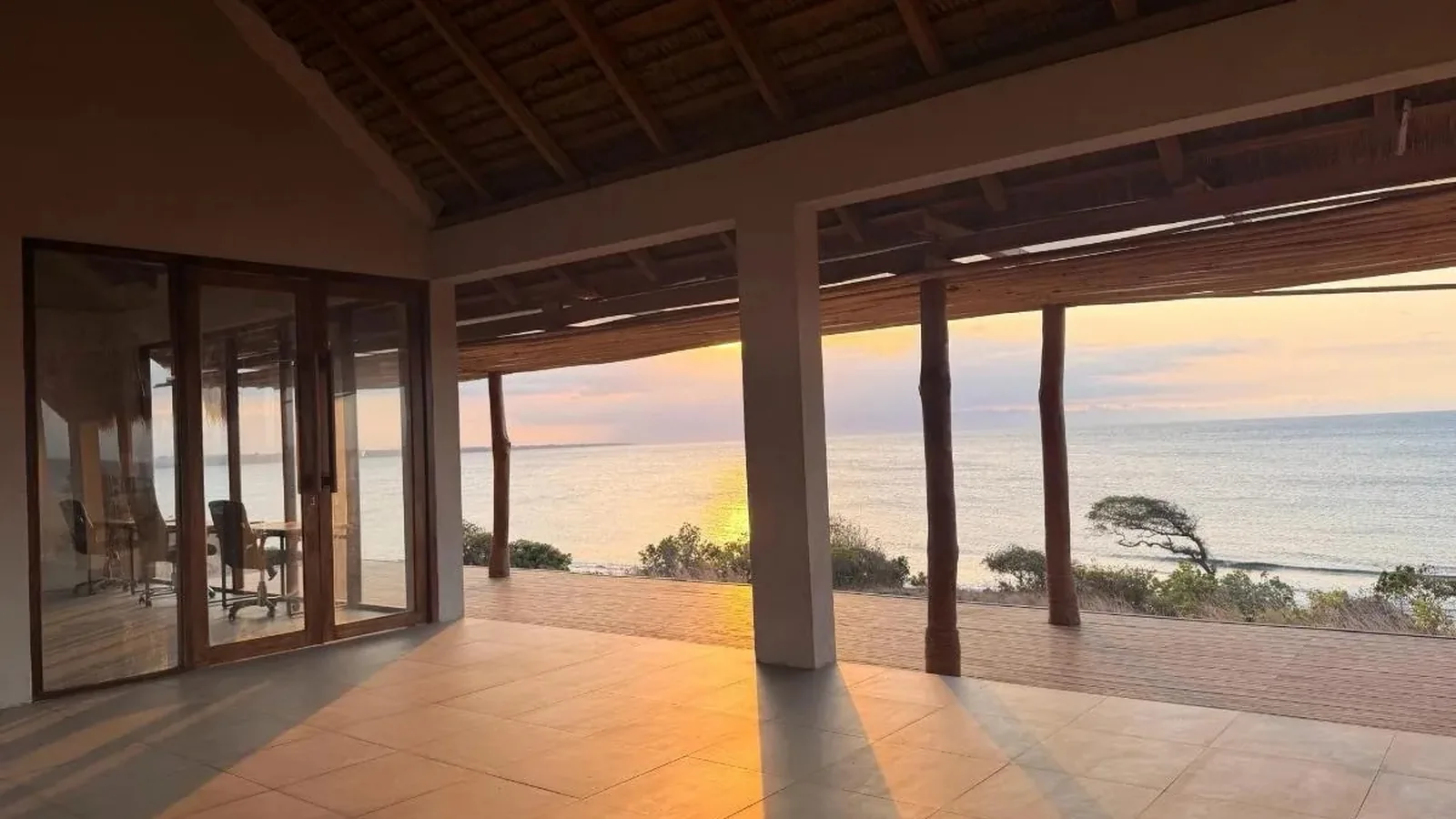
At 4:17 AM, the howler monkeys that serve as Santa Teresa’s unofficial town criers are still an hour from their guttural chorus. The Pacific is a quiet, inky expanse. But inside a starkly minimalist villa perched on the hillside, a different kind of audit has already begun. Marcus Thorne, a fintech founder who decamped from London two years ago, is bathed in the cold blue light of a tablet. He isn't checking overnight market movements in Asia or reading emails from his Series B investors.
He is auditing his own biology.
The screen displays a dashboard that would look more at home in a Formula 1 pit lane than a Costa Rican surf town. Data streams from the titanium ring on his finger and the small white patch on his tricep. Deep sleep: 2 hours, 14 minutes. REM: 1 hour, 52 minutes. Resting heart rate: 46 bpm. He cross-references these against his overnight blood glucose curve, noting a small spike around 2 AM that he mentally flags for investigation. He is piloting a human machine, and this is his pre-flight check.
This clinical ritual, performed in a hermetically sealed, climate-controlled box, is a world away from the humid, chaotic, irrepressibly alive jungle just beyond the triple-paned glass. That world is an unquantified variable, a dataset he cannot control. So he ignores it. His primary objective for the next 90 minutes is not to watch the sunrise, but to ensure his body is calibrated for maximum output. The key metric flashes green: a Heart Rate Variability (HRV) score of 87ms. Anything above 85ms, he believes, correlates directly with the clarity of his decision-making. The system is go. The day, like the code he writes, can now be executed according to plan.
The 4 AM Audit: Colonizing the Dawn
Across the world’s tropical belt, in similar villas from Phuket to Playa del Carmen, the dawn is being colonized. A new archetype of global elite—the tech founder, the private equity investor, the e-commerce mogul—is enacting a similar script. They have chosen to live in what marketing brochures call ‘paradise,’ but their relationship with it is not one of communion. It's one of domination. Their morning routine is not a gentle easing into the day; it's a meticulously engineered system of control designed to insulate them from the very environment they inhabit.
This is not the laid-back escapism of a prior generation of expatriates. There are no leisurely breakfasts of tropical fruit discovered at a local market, no spontaneous decisions to go for a surf as the sun crests the horizon. Instead, there is data. There is protocol. There is the relentless pursuit of optimization. Before the first local fisherman has pushed his boat into the sea, these individuals have logged their sleep scores, measured their ketones, analyzed their metabolic state, and ingested a precise cocktail of supplements designed to fortify them against the unpredictability of their surroundings.
Consider the case of a German e-commerce CEO in Bali. His day begins not with the scent of frangipani, but with the sterile beep of a Lumen device, a pocket-sized metabolic analyzer he breathes into to determine if his body is burning fats or carbs. The result dictates the precise macronutrient composition of his first meal, which has been pre-planned by a nutritionist in California and will be prepared by his local chef. The goal is to maintain a state of metabolic flexibility, to keep his energy levels consistent and his mind sharp for a day of calls that will stretch across three continents, starting with San Francisco at 6:30 AM local time. The jungle outside his window, with its unscripted rhythms and biological diversity, is merely a backdrop. It is the view, not the reality. The reality is the data on the screen, the controlled inputs, and the optimized outputs. The sunrise is just a time marker that indicates the next phase of the protocol is about to begin.
Bio-Sovereignty: The Philosophy of the New Tropical Elite
This rigorous discipline is rooted in a philosophy best described as ‘Bio-Sovereignty.’ It is the practice of establishing absolute personal governance over one's own physiology, independent of—and often in direct opposition to—the external environment, local culture, or traditional customs. It reframes the human body not as a vessel for experience, but as the ultimate asset. Like any core asset in a portfolio, it must be managed, hedged against risk, and optimized for maximum return. In this context, the tropics represent a high-yield, high-risk environment. The potential rewards are a lower cost of living, a favorable time zone for global business, and the aesthetic pleasure of a beautiful setting. The risks are foreign variables: unfamiliar microbes, inconsistent food quality, energy-sapping heat and humidity, and the cognitive fog that can accompany it.
'My clients aren't here for a vacation. They are here to build empires from a laptop, and their body is their headquarters. My job is to ensure the HQ is impregnable.'
That's a performance coach based in Phuket, speaking on condition of anonymity to protect his high-profile client list. His statement cuts to the core of the bio-sovereign mindset. This isn't about adapting; it's about fortifying. It's a stark departure from the expat dream of 'going native.' The bio-sovereign has no intention of integrating in a way that might compromise their system. They seek to build a physiological fortress, a state of personal homeostasis that is impervious to the chaos and unpredictability of the outside world. This mindset isn't anecdotal. A 2023 survey of 500 founders and executives in ‘nomad hubs’ like Bali, Lisbon, and Santa Teresa found that 72% followed a non-negotiable morning routine lasting over 90 minutes. The primary stated benefit wasn't 'well-being' or 'relaxation,' but 'cognitive control.'
There is a historical echo in this behavior. The highly structured routines of 19th-century British colonial administrators—their rigid meal times, dress codes, and the sacrosanct evening sundowner at the club—were a well-documented psychological defense mechanism. It was a way to impose familiar order and maintain a distinct identity against the overwhelming backdrop of a foreign culture. The new tropical elite has simply updated the tools. The G&T at the club has been replaced by an electrolyte-and-nootropic-infused sparkling water. The starched collar has been replaced by a Whoop strap. The underlying impulse, however, remains eerily similar: to create a predictable, controllable micro-culture as a bulwark against the perceived disorder of the macro-environment.
The Arsenal of Control: A Quantified Paradise
The construction of this physiological fortress requires a sophisticated arsenal. This is not the simple Fitbit-and-MyFitnessPal world of the casually health-conscious. This is a pro-level suite of medical-grade sensors and bespoke supplements, a stack of technologies and protocols designed for granular control. The global market for these 'biohacking' technologies is projected to exceed $63 billion by 2028, a growth driven almost entirely by this demographic of high-net-worth, performance-obsessed individuals.
The foundational layer of the stack is continuous monitoring. An Oura Ring ($349) tracks sleep stages, body temperature, and HRV. A Whoop 4.0 strap ($239/year) provides a minute-by-minute strain and recovery score. For the truly committed, a Levels continuous glucose monitor (CGM) program ($398/month) offers a real-time feed of how every single food item affects their blood sugar. The data from these devices is the raw intelligence. The morning audit is the process of turning that intelligence into an action plan for the day.
| Item | Upfront Cost | Annual/Ongoing Cost | Purpose |
|---|---|---|---|
| Oura Ring Gen3 | $349 | $72/year | Sleep & Readiness Tracking (HRV, Temp) |
| Whoop 4.0 Subscription | $0 | $239/year | 24/7 Strain & Recovery Monitoring |
| Levels CGM Program | $199 | $199/month | Real-time Blood Glucose Monitoring |
| Lumen Metabolic Analyzer | $299 | $0 | Fat vs. Carb Metabolism Tracking |
| Premium Supplement Stack | - | ~$500/month | Nootropics, Vitamins, Peptides |
| Total Estimated Year 1 | $847 | ~$9,100 | Comprehensive Physiological Control |
This 'starter kit' is just the beginning. The real expense lies in the 'software'—the supplements, nootropics, and peptides that are used to act on the data. We're talking about monthly shipments of Qualia Mind, bottles of methylene blue, custom-compounded NAD+ injections, and exotic mushroom extracts. Procuring this arsenal in places where Amazon Prime doesn't offer next-day delivery presents its own logistical challenges. One private equity manager living in Playa del Carmen, Mexico, admits to paying a 'customs facilitator' a significant monthly premium. The fee ensures his supply of a specific brain-boosting peptide from a California lab isn't delayed or confiscated by Mexican authorities, a transaction he views as a simple, non-negotiable cost of doing business.
Metabolic Arbitrage: Weaponizing Climate and Biology
Once the data is gathered and the arsenal is procured, the routine weaponizes the local environment against itself. It's a strategy of metabolic arbitrage, exploiting biological responses to gain a competitive edge over the very conditions that define a tropical climate. The pervasive heat and humidity, which can demonstrably decrease scores on cognitive function tests by up to 15% in unacclimatized individuals, is not passively endured. It is actively combatted with a paradoxical application of extreme temperatures.
The morning ice bath is a cornerstone of this practice. Submerging the body in near-freezing water (often 3-5°C) for three to five minutes is not for the faint of heart, but the physiological payoff is immense. The shock triggers a massive release of norepinephrine, a neurotransmitter critical for focus, attention, and mood. Studies have shown this cold-plunge-induced surge can increase norepinephrine levels by over 250%, providing hours of heightened alertness and mental clarity that effectively steamrolls the lethargy-inducing effects of the tropical warmth. Counterintuitively, many also incorporate morning sessions in a 90°C sauna. This practice is designed to trigger heat shock proteins, part of a hormetic stress response that, with regular practice, improves the body's cellular resilience and thermoregulatory efficiency, making the ambient humidity more tolerable throughout the day.
'It’s a neurological reset. The cold shock strips away the brain fog. The heat pre-conditions you. By 7 AM, you’ve basically built a physiological shield for the rest of the day.'
This is from an interview with a former Amazon executive who now runs a portfolio of FBA businesses from his villa near Manuel Antonio, Costa Rica. His day begins with this precise temperature-driven sequence. After emerging from his personal ice plunge, he immediately checks his Whoop recovery score to quantify the physiological stress and subsequent response. Only then does he consume his first meal: a pre-weighed 150g portion of papaya, a locally sourced fruit he values not for its taste, but for its papain enzyme content and polyphenol profile, logged dutifully into his cronometer. Even the gifts of the local environment are not enjoyed spontaneously; they are processed, quantified, and integrated into the system as functional inputs.
The Hermetic Villa: Engineering the Physical Environment
The bio-sovereign project extends beyond the body. It requires the total engineering of one's immediate physical space. The romantic image of the open-air jungle villa, with gentle breezes flowing through bamboo walls, is a marketing fantasy. The reality for this elite is a hermetically sealed fortress, a controlled environment designed to eliminate every possible external variable.
The cost to retrofit a standard luxury villa in a place like Bali or Costa Rica with a full environmental control system can easily exceed $35,000, an investment seen as essential. This isn't just about powerful air conditioning. It involves installing hospital-grade HEPA filtration systems to scrub the air of pollen, mold spores, and pollutants. It means wiring a multi-layered, redundant internet system with both fiber and satellite backup to ensure enterprise-grade connectivity, eliminating the risk of a dropped Zoom call with a key investor. It involves fitting every window with automated total-blackout curtains that descend at a pre-programmed time, ensuring that no stray light from a rising sun or a village festival can interfere with the meticulously planned sleep cycle.
One architect who specializes in designing these 'executive homes' in tropical locations shared his perspective. 'They buy the view, but they don't want the environment,' he explained. 'They want the picture of the jungle, framed perfectly by their floor-to-ceiling window, but they want to live and work in the air quality of a Zurich clinic and the acoustic silence of a recording studio.' He described projects where entire wings of a house are soundproofed to create an 'executive work pod,' shielded from the 'noise pollution' of exotic birds, distant temple music, or children playing. The villa becomes less of a home and more of a life-support system for a high-performance career. The financial arbitrage makes this possible. A lifestyle of comparable luxury and privacy in a global hub like London or New York would be astronomically more expensive, leaving little capital for such elaborate personal infrastructure. In the tropics, a five-figure investment transforms a beautiful house into a high-tech cocoon.
The Connection Paradox: Global Log-ins, Local Log-outs
This relentless focus on a controlled, self-referential routine creates a profound paradox. While these individuals are more globally connected than ever, logged into networks spanning San Francisco, Singapore, and London, they are almost entirely logged out from the local reality just feet from their door. The very structure of their optimized day becomes a formidable barrier to the kind of spontaneous human connection and cultural immersion that once defined the expatriate experience.
An analysis of one subject's calendar, a venture capitalist living on the Bukit Peninsula of Bali, was revealing. In a typical week, 85% of his morning 'social' time, from 6 AM to 11 AM, was occupied by scheduled video calls with his partners, portfolio companies, and LPs in the US and Europe. Less than 5% of his calendar was allocated to any kind of unstructured, in-person local interaction. The routine is the priority, and the routine is incompatible with local life.
A late-night dinner invitation from a Balinese neighbor is an impossibility—it would disrupt the strict 14-hour fasting window and push past the non-negotiable 9 PM bedtime required to achieve 8 hours of sleep. An invitation to a daytime village temple ceremony, a cornerstone of Balinese social and spiritual life, is politely declined because it conflicts with a 'deep work' block scheduled to coincide with peak cognitive performance, as dictated by his morning HRV score. One such individual, an American who has lived in the same village for three years, admitted he had never once attended the annual Odalan festival at the temple less than a kilometer from his house. 'It's a beautiful tradition, I'm sure,' he said, 'but it's a three-day affair. The data shows my REM sleep is heavily impacted by even minor deviations. It's just not worth the performance cost.' The local community, with its rich, complex, and unpredictable social fabric, becomes another variable to be managed—or, more often than not, excluded.
Spirituality as a Service: The Optimization of Mindfulness
Walk into the hermetically sealed office of a bio-sovereign expat, and you will likely find evidence of a spiritual practice. A meditation cushion may sit in the corner. A high-end journal with a fountain pen rests on the desk. But here, too, spirituality has been co-opted and refactored into a tool for performance enhancement. It is spirituality as a service, another input to be optimized for a measurable output.
The goal of a 20-minute morning meditation isn't transcendence or peace; it's to increase alpha brain wave activity, which studies have linked to a state of 'relaxed alertness' conducive to creative problem-solving. They use apps like Calm or Waking Up, not for spiritual guidance, but to track their 'mindful minutes' with the same diligence they track their sleep cycles. Breathwork, drawing from ancient yogic traditions, is re-branded as a biohack to consciously regulate the autonomic nervous system, a technique to be deployed before a high-stakes negotiation call to lower cortisol and increase vagal tone. The global corporate mindfulness market, which packages and sells these techniques, understands its audience perfectly. Its projected growth from $2.1 billion to $5.8 billion by 2030 is predicated on this exact premise: mindfulness as a competitive advantage in the business world.
'They're not meditating to find God. They're meditating to find an extra 2% of alpha brain wave activity so they can close a deal. It's ROI, not OM.'
This cynical but sharp assessment comes from a clinical psychologist who works with expatriates dealing with burnout. She observes a fundamental disconnect between these commodified practices and the deeply embedded, communal spiritual traditions of their host countries. In Bali, for example, spirituality is an inseparable part of daily life, expressed through communal offerings, ceremonies, and a complex web of social obligations that reinforce a collective identity. The bio-sovereign's version is solitary, data-driven, and utilitarian. It's the spiritual equivalent of taking a vitamin—a targeted intervention to fix a potential deficiency, stripped of all cultural and communal context.
The Paradise Tax: When the System Inevitably Fails
What is the cost of this relentless self-surveillance? What happens when you build an entire life around the elimination of unpredictability, only to be confronted by it? This is the paradise tax, and it always comes due. For some, the cost is psychological. The constant monitoring can breed a new kind of anxiety. A 'bad' sleep score or a lower-than-expected HRV reading can trigger a cascade of stress, a feeling of having failed before the day has even begun. This can lead to orthorexia, an unhealthy obsession with 'correct' eating and living, where any deviation from the protocol is met with guilt and self-recrimination. A preliminary study in the 'Journal of Expatriate Psychology' linked these hyper-structured, data-monitored routines in foreign environments to a 30% higher self-reported incidence of Generalized Anxiety Disorder compared to expats with more flexible lifestyles.
The system's greatest vulnerability is its rigidity. It makes its adherents incredibly powerful in a stable state but extremely fragile in the face of true chaos. A prolonged power outage that drains backup batteries, a gastrointestinal bug from an unavoidable meal, or a tropical fever can do more than just make them sick. It can crash their entire operating system. The data turns red. The carefully calibrated machine sputters. The loss of control is total.
This is what happened to a former crypto-millionaire living in Thailand. For two years, he was the poster child for bio-sovereignty, his biometric scores a testament to his discipline. Then he contracted dengue fever. For three weeks, the virus ravaged his body. His HRV plummeted, his resting heart rate spiked, and his sleep was a chaotic mess of fever dreams. His dashboards were a sea of red alerts. 'It broke me,' he recounted. 'I had built this identity around being in complete control of my biology. And a mosquito just… deleted it.' The experience was a forced reckoning. After he recovered, he abandoned the system entirely. He sold the villa with its ice bath and sauna, smashed his Oura Ring, and moved to a simple bungalow by the beach. 'I'm just learning to surf now,' he said with a laugh. 'Badly.'
His audit is complete. The system is green-lit. His day, perfectly calibrated for peak performance, is set to unfold. Marcus Thorne takes a final look at his dashboard, then turns to the window. Outside, the jungle is erupting in a chaotic symphony of light and sound. The howler monkeys have begun their call. The sky is shifting through impossible shades of orange and pink. It is vibrant, wild, and perfectly imperfect. He looks at it for a moment, a spectator watching a beautiful film through a thick wall of glass, before turning back to his screen. In his relentless quest to master his morning, he has engineered the perfect day, every day—a pristine, predictable replica that ensures he never has to truly experience the one unfolding just outside.