The Sun as Shareholder: A New Ritual Economy
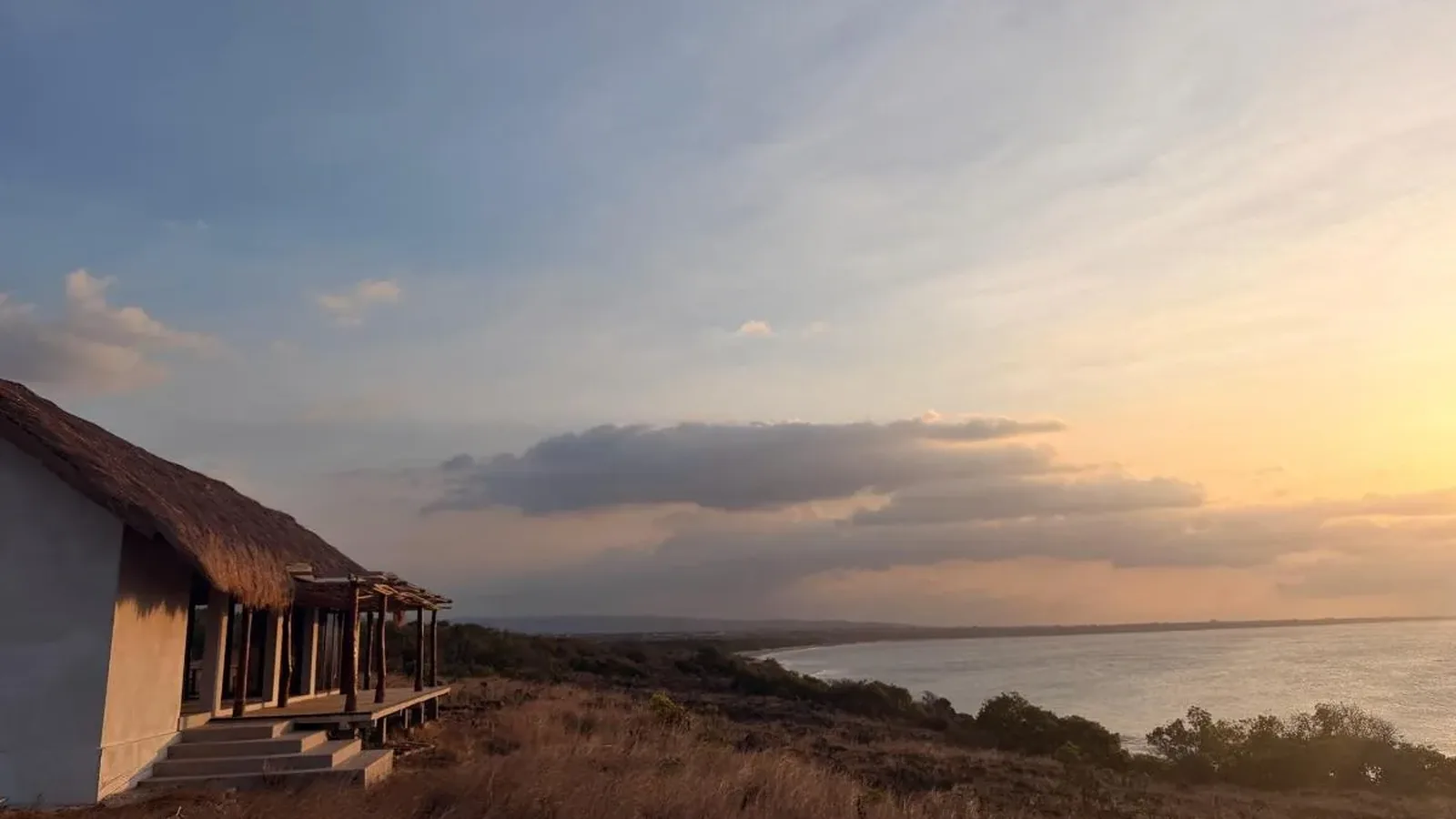
At 5:17 AM, the air on the Nicoya Peninsula still holds a cool, damp promise. It’s the briefest of respites before the sun asserts its equatorial authority. Julian Voss, a man who once managed a nine-figure derivatives portfolio in Frankfurt, is not scrolling through overnight market reports from Asia. He is not mainlining espresso. He is 200 meters offshore, sitting on a nine-foot longboard, feeling the gentle heave of the Pacific. His hands are tracing patterns in the water, which is turning from inky black to a bruised purple.
This, he tells me later, is his daily "liquidity check." The term is a wry joke, a nod to his former life. But he's serious.
"You read the ocean before you read anything else. It tells you what kind of day you're going to have, what kind of decisions you're capable of making."
For ten minutes, he does nothing but watch the surface turn to molten gold. He is not optimizing. He is not hacking. He is yielding.
This act of surrender, repeated daily by a growing class of founders, investors, and creatives who have decamped from the world’s financial and cultural capitals, is not an escape from work. It is the work itself. They have discovered that in the tropics, the environment is not a passive backdrop for a Zoom call. It is an active co-author of their productivity, a force to be collaborated with, not conquered. They are not just transplanting hustle culture; they are forging a hybridized model where the rhythm of success is dictated by the sun and the tides, not the stock market ticker.
The Solar Imperative: Waking to a Biological Mandate
I spent my first year in Southeast Asia fighting the sun. I installed blackout curtains, bought an expensive SAD lamp for the monsoon season, and tried to impose my London-forged 9 AM start time on a world that was already six hours into its day. It was a losing battle. The light here doesn’t politely suggest it’s morning; it performs a hostile takeover of your consciousness. It finds the cracks in your defenses and floods your retinas with an intensity that feels less like a gentle awakening and more like a biological mandate.
Klaus Richter, a German architect I met in Phuket, calls it "a daily surrender to the light." When I visit his home, a stunning structure of concrete and glass perched on a hillside, I understand what he means. There are no curtains on the east-facing windows of his bedroom. "Why would I block my most reliable source of energy?" he asks, gesturing to the expanse of the Andaman Sea. "In Hamburg, my life was a battle against the dark. Six months of the year, you wake up and it’s night. You leave the office and it’s night. You're fighting your own body clock, pumping it with caffeine just to function. It’s madness."
His new life is a study in circadian alignment. The tropical dawn, he explains, can reach 10,000 to 25,000 lux within minutes of sunrise. A dreary London morning might struggle to deliver 1,000. This isn't just poetic; it's physiological. That intense 'light bath' triggers a sharp, clean cortisol awakening response (CAR), the body's natural "go" signal. The specific blue-light spectrum of a tropical sunrise, around 480 nanometers, is up to 30% more effective at resetting the body's master clock in the hypothalamus than the artificial glow from our devices. "My alarm clock is the physics of the planet," Klaus says with a smile. "It has never been late. It has never needed a software update." This philosophy is built into the very bones of his house. Corridors are designed to channel the morning light, workspaces face east, and evening spaces face west, a silent architectural choreography that guides his energy throughout the day. He’s not just living in the tropics; he’s plugged into them.
Trading the Treadmill for the Tide: Blue and Green Exercise
The "solar imperative" gets you out of bed. The next question is what you do with that jolt of energy. For most of my life, exercise was a chore, a punitive transaction performed in a climate-controlled box. You paid your dues on the treadmill to offset the sins of the desk chair. Here, that logic dissolves. The gym, with its recycled air and humming machinery, feels absurd when the world’s most dynamic fitness facility is right outside your door.
This is the shift from programmatic exercise to intuitive, nature-based movement. It’s surfing, ocean swimming, trail running, or simply walking through a rice paddy. Critically, it’s framed not as 'working out' but as a form of sensory engagement. I meet Anika Patel, a venture capitalist who moved her one-person fund from New York to Siargao, a teardrop-shaped island in the Philippines. She’s waxing her surfboard as we speak, her eyes already scanning the break at Cloud 9. "This isn't my cardio," she clarifies, almost offended by the suggestion. "This is my morning meeting with my board of directors. The ocean is the chairman."
She explains that her decision-making improves exponentially after an hour in the water. "You can’t be in your head out there. You have to be totally present. You’re constantly assessing risk, calculating energy expenditure, deciding which opportunity—which wave—is worth paddling for and which you should let go. It’s a perfect metaphor for venture capital." She catches a wave, a fluid, powerful motion, and I can see her point. This isn’t about burning calories; it’s about practicing focus. A 2019 University of Exeter study backs up her intuition, finding that just 20 minutes in a natural setting—what researchers call 'blue and green space' exposure—significantly lowers cortisol levels. Anika puts it more bluntly. "This," she says, patting her board, "saves me the $200 an hour I used to spend on a shrink in Manhattan to talk about managing stress. The ocean listens better, and it’s free."
Hacking the Humidity: The Siesta's Second Act
The morning is a gift. The afternoon is a tax. This is the non-negotiable bargain of tropical life. Around 2 PM, a suffocating blanket of heat and humidity descends, turning the air into a warm, wet soup. Your brain feels like it’s been gently poached. Trying to force high-level cognitive work through this miasma is not just unproductive; it’s a form of self-harm. The first-wave expat, clinging to their Western work ethic, tries to power through with air conditioning and iced coffee. The adapted expat gives in.
They embrace the siesta. Not necessarily as a literal nap, but as a planned, guilt-free trough in the day. This isn't laziness; it's a strategic retreat. NASA studies on pilot performance confirm what anyone living near the equator knows instinctively: cognitive function can plummet by up to 50% when core body temperature rises by just one or two degrees Celsius, a state easily reached when the ambient temperature climbs above 28°C (82°F) with high humidity. You can’t fight physics.
Instead, they redesign the workday. The monolithic 9-to-5 block is shattered into a more effective 'split shift.' I'm talking to a French novelist in Martinique via a crackly WhatsApp call. "My agent in Paris has finally learned my rhythm," she tells me, the sound of cicadas buzzing in the background. "I write from 6 AM to 9 AM. The prose is clean, the ideas flow. My brain is sharp from the cool morning air. From noon until four, the house belongs to the lizards, the hammock, and my subconscious. I read, I swim, I do nothing. Then, around 5 PM, as the heat breaks, I return. And my most brilliant plot twists, my best dialogue, it arrives in emails sent after the sun has set." This modernized siesta isn't empty time; it's incubation. The problems you table at 10 AM are often solved by the time you return to your desk at 5 PM, your brain having worked on them quietly in the background while you were watching a gecko hunt ants on the ceiling.
Breakfast as Ethnobotany: The Local Pantry as Pharmacy
In the West, wellness has become a high-end consumer category. We import Peruvian quinoa, Mexican chia, and Brazilian açaí, turning ancient staples into expensive powders and packaged goods. My first few years here, I did the same, pathetically trying to find almond milk and kale in a place where coconuts and morning glory grew like weeds. Then I started paying attention to what my neighbors were eating. The pivot from imported 'superfoods' to a hyper-local, ethnobotanical diet is a key part of the tropical morning ritual.
Nowhere is this clearer than in Bali. I remember meeting Ben, a former Silicon Valley product manager who looked ten years younger than the last time I’d seen him in San Francisco. His secret, he claimed, was ditching his $12-a-day bulletproof coffee habit. His new morning ritual costs him 50 cents. Every morning, a woman on a scooter, a Jamu Gendong, pulls up to his villa.
"For the first month, I had no idea what I was drinking. I just knew it made me feel incredible. Now I know. It's fresh turmeric, ginger, tamarind, and a bit of palm sugar. It’s a powerful anti-inflammatory, right from the source."
The daily transaction has become a relationship. He’s learned the names of her children. She saves him the best part of the batch. This isn't just nutrition; it's connection. This principle applies across the tropics. Instead of shipping in vitamin C tablets, people eat a handful of acerola cherries from the garden in the Caribbean; a single cherry can pack over 1,600mg of Vitamin C, about 30 times that of an orange. In Southeast Asia, a breakfast might include mangosteen, a fruit whose peel contains xanthones—a unique class of polyphenols being studied for potent anti-inflammatory effects that may directly counteract the stress of heat and humidity. The morning market visit becomes an act of discovery, a real-time lesson in applied botany. You’re not just buying food; you're buying into a system of local knowledge that has been perfecting wellness for centuries, long before it became a hashtag.
The Unplugged Dawn: Infrastructure as a Feature
We have come to equate productivity with seamless, high-speed connectivity. We panic when the Wi-Fi drops, when the 5G signal dips to 4G. It feels like a roadblock, a failure of infrastructure. But for a certain type of deep-thinking expat, the occasionally unreliable infrastructure of the tropics is not a bug. It's a feature. It’s a forced 'digital sundown' that creates a protected space for the kind of work that a constant stream of notifications makes impossible.
Consider the stark difference in digital environments:
| Location | Typical Internet Speed | User Perception |
|---|---|---|
| Lisbon, Portugal | ~150 Mbps | "Essential for high-volume trading and cloud collaboration." |
| Oaxaca Coast, Mexico | ~15 Mbps (spotty) | "My enforced focus filter." |
| Singapore | ~240 Mbps | "Table stakes for a global business hub." |
| Belize | ~25 Mbps (with outages) | "A forced analog reset." |
I spent a week with an Amazon FBA seller in a small town in Belize. She runs a seven-figure business selling esoteric kitchen gadgets. Her power, like clockwork, goes out every morning at 7 AM for exactly thirty minutes while the local co-op switches generators. In her first year, this drove her mad. Now, she calls it the most productive half-hour of her day. "The internet is down. The lights are out. The phone is useless. It’s just me, a cup of coffee, and my notebook," she says. "In that thirty minutes, I plan my entire day. I strategize. I think about the big picture. When the power clicks back on at 7:30, I’m not reacting to my inbox. I’m executing a plan I’ve already built in total silence."
This isn’t a Luddite rejection of technology. It’s a recognition of its cognitive cost. These expats aren't anti-internet; they are pro-focus. Some even choose their location based on this principle, deliberately opting for a village with slightly worse connectivity as a 'firewall' against the 'always-on' demands of their industries. A successful podcaster I know on the Oaxacan coast happily works with his spotty 15 Mbps connection. "It’s fast enough to upload my episodes overnight," he shrugs, "but it’s just slow enough that I can’t mindlessly stream YouTube or get sucked into a Twitter war. It forces me to be intentional."
The Communal Clock: Beyond the Self-Care Bubble
The internet is full of articles about the solipsistic morning routines of tech billionaires. The ice baths, the journaling, the no-device-before-10-AM rules. It’s a narrative of heroic individualism, of the self-optimized man against the world. But that model feels brittle and lonely when you transplant it into a communal, relationship-based culture. The most successful and, frankly, happiest expats I know have morning rituals that are not bubbles of self-care, but bridges to their community.
Their clocks become synchronized with the local rhythm. For them, the morning is not a private affair. It's public. This happens by necessity as much as by choice. In my town in Indonesia, you can’t escape it. The 5 AM call to prayer, the clatter of the noodle cart vendor at 6, the laughter of kids walking to school at 7. To wall yourself off from this is to wall yourself off from life. Instead of fighting it, you join it.
"I learned more about business, negotiation, and Colombian culture in that cafe than in my entire MBA program. It cost me about two dollars a day."
This is what a British software entrepreneur in Medellín told me. He was struggling to learn Spanish and integrate. His solution was radical. For one year, he spent the first hour of every day, from 7 to 8 AM, at a small corner cafe, drinking tinto and just listening to a group of old men argue about football, politics, and their wives. He didn’t speak for months. He just listened. He calls it his "most valuable and cheapest MBA." The financial calculus is also compelling. The €4,500 that a family might spend monthly on a cramped two-bedroom apartment and utilities in Lisbon can be completely repurposed in a city like Medellín. A comparable $1,800 monthly budget there can secure a spacious penthouse, a weekly organic produce delivery, and a personal trainer. This isn't just about lower costs; it's about reallocating capital from "shelter" to a rich "wellbeing infrastructure" that is inherently social. The morning is the primary entry point to this infrastructure. It’s when the 'wet markets' are at their most frenetic. In many Asian towns, over 60% of fresh food is still purchased in these markets, making them unavoidable hubs of commerce and gossip. Your morning ritual becomes less about you, and more about your place in the web of everyone else’s morning.
The Ecosystem as Executive Coach
After you’ve lived in the tropics for a while, you start to see patterns. You notice how the strangler fig doesn't kill its host tree immediately, but slowly, strategically envelops it over decades—a masterclass in long-term competitive strategy. You watch how coral polyps, tiny individual organisms, collaborate to build massive, resilient reef structures that protect the entire coastline. You see business models everywhere. For many long-term expats, the morning walk in the jungle or swim on the reef transcends wellness and becomes a form of applied philosophy, an ecosystem-as-executive-coach.
This idea, that nature holds the answers to our most complex problems, is formalized in the field of biomimicry. While master-planned communities like Eco Beach City attempt to formalize this connection through biophilic design mandates, for these individuals, it’s less a formal science and more an intuitive source of metaphor. It’s a return to the ancient Roman concept of otium—not idle laziness, but a form of dignified leisure pursued in rural villas, where distance from the chaos of the city allowed for deeper thinking. They've just swapped the Roman olive grove for the Panamanian rainforest.
"I was losing my mind over a supply chain issue," a startup founder in Bocas del Toro, Panama, tells me. She was trying to build a resilient distribution network for her artisanal food product. "Our model was too centralized. One delayed truck from the city and our whole operation would grind to a halt." She was stuck. "Then, on a morning hike, I just stopped and watched leaf-cutter ants for twenty minutes. They're incredible. They don't have one single highway from the leaf to the nest. They have a dozen redundant, decentralized, constantly-shifting paths. If one gets blocked by a fallen twig, they just flow around it. There's no single point of failure." She went back to her laptop and completely redesigned their logistics model based on the ants. "I now have three smaller, regional suppliers instead of one big one. It's less efficient on paper," she admits, "but it's infinitely more resilient. The ants taught me that." The jungle isn't just scenery; it’s a boardroom filled with consultants who have been solving problems of resource allocation, competition, and resilience for millennia.
Designing the Descent: Planning the Afternoon from Dawn
A perfect tropical morning is a beautiful, fragile thing. And it can be completely undone by a poorly planned afternoon. That early peak of light-fueled, nature-infused energy is physiologically guaranteed to crash. The final, crucial piece of the tropical morning ritual is not about the morning at all. It’s about consciously designing the descent. It's about acknowledging the inevitable energy trough and planning for it with kindness rather than fighting it with stimulants.
This means the last thirty minutes of the morning work session are often dedicated to triage and task-scheduling for the rest of the day. It’s an act of cognitive budgeting. Scientific studies on ultradian rhythms confirm what we feel in our bones: there is a significant performance dip, the so-called 'post-lunch dip,' between 1 PM and 4 PM. In a hot climate, this dip becomes a canyon. To schedule a high-stakes negotiation or a creative brainstorming session for 2:30 PM is an act of professional malpractice.
I got a look at the daily planner of a creative director in Kuala Lumpur, Malaysia. Her schedule is a masterclass in energy-aware planning. Her morning block, from 9 to 11 AM, is labeled 'Deep Work: Concept Creation.' This is when she’s at her sharpest. But it's the afternoon blocks that are most telling. The 2 to 4 PM slot is reserved for 'Shallow Work: Admin & Email Triage.' The tasks are sorted by cognitive load. She’s pre-loading decisions in the morning, when her decision-making capacity is at its peak. "I decide in the morning what I will do in the afternoon," she says. "The morning version of me is smart and strategic. The afternoon version of me is basically a well-meaning golden retriever who can follow simple commands. I don’t trust her with important things." This isn't about working less; it's about working smarter by aligning tasks with the body's natural energy curve. The final act of the morning ritual is to set the afternoon-self up for success, ensuring the day ends not in a frazzled heap, but in a gentle, managed landing.
The expats who thrive here, who build sustainable businesses and fulfilling lives, are not the ones who import the most efficient tools of the North. They are the ones who learn to read the local operating system. They understand that productivity is not a finite resource to be extracted from the self, but an ambient quality to be channeled from the world around them. Perhaps the most radical discovery they have made is that peak performance isn't achieved by conquering the environment, but by yielding to it. The ultimate tropical luxury isn't the infinity pool or the beachfront villa, but the profound freedom to let the sun, not the quarterly report, dictate the first and most valuable currency of the day: your attention.