The Other Side of the Stone: Sumba's Underwater Ledger
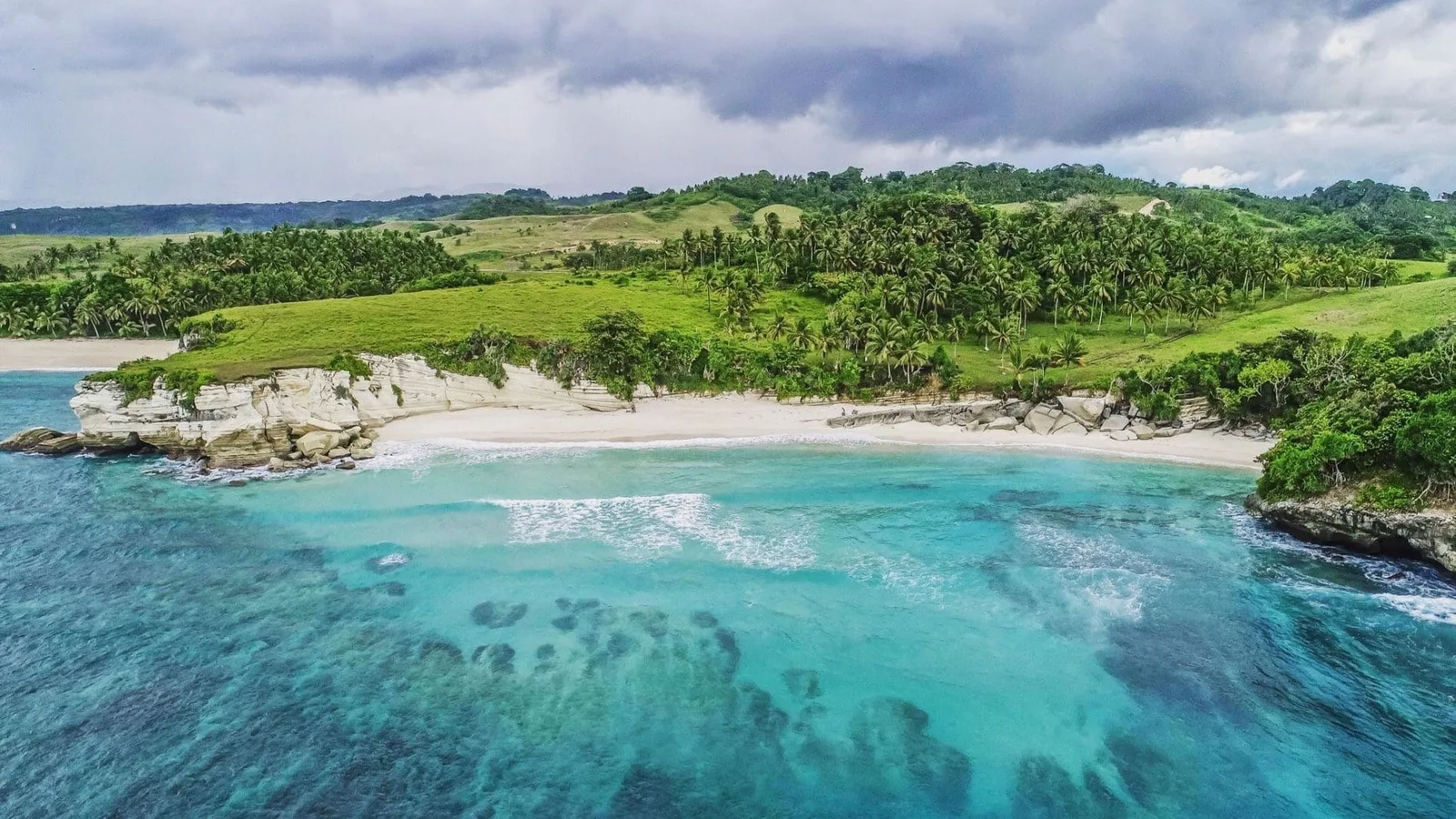
The sea was a sheet of hammered pewter, holding the last of the morning’s milky light. Umbu, a man whose chronology was etched in the sun-bleached creases around his eyes rather than in any official document, spat into his hand-carved wooden goggles. The lenses were fragments of polished glass, sealed with beeswax. He cleared them with a practiced swipe of his thumb, the gesture as automatic as breathing. Then, without a sound, he slid over the side of the narrow outrigger canoe. There was no splash, just a quiet parting of the water that closed behind him as if he were a secret being delivered back to his source.
He carried a single, hand-forged spear. That was it. No fins, no tank, no brightly colored neoprene. He was just a man, a lungful of air, and a piece of pointed metal, descending into the blue.
I was left alone in the sudden, profound silence, bobbing in my own world of high-tech apparatus. My rented BCD—a buoyancy control device that looked and felt like an inflatable tactical vest—was festooned with clips and hoses. A digital console dangled by my hip, its screen displaying depth and pressure with sterile precision. I was encased in 3mm of neoprene, my feet shod in rubber booties, my face sealed behind a panoramic wall of Italian silicone. I felt less like a diver and more like a badly-packed piece of cargo, entirely overdressed for what I was beginning to understand was not a sport, but a communion.
The Spear and the Silence
To be an expat in Southeast Asia for eight years is to become a connoisseur of silence. There’s the pre-dawn silence of the rice paddies, thick and expectant. There’s the midday silence of a village during the hottest hour, a stillness heavy with sleep. But this silence, the one Umbu had slipped into, was different. It was the silence of a parallel dimension, one that existed just inches below the hull of our boat but felt a universe away. Umbu was a citizen of that dimension. I was merely a tourist with a visa of compressed air.
He reappeared thirty seconds later, just as quietly as he had vanished. A glistening, meter-long trevally writhed on the end of his spear. He dispatched it with a quick, economical movement, his face impassive. “Makan siang,” he said, breaking a small grin that revealed teeth stained red from betel nut. Lunch. He tossed the fish into the bottom of the boat, where it lay like a bar of silver. He had been gone for less time than it takes me to check my email in the morning. He had descended, hunted, and returned, all on a single breath held somewhere deep in his wiry frame.
His goggles, I later learned, are called Leko. They are artifacts of a tradition stretching back centuries, carved from a specific type of lightweight wood. Their design is an ergonomic marvel of necessity, but it comes with a trade-off. The narrow, separated eye-pieces provide only about 50% of the field of view of a modern mask. You don’t get the sweeping panorama. You get a focused, predatory view of the world. You aren’t observing the reef; you are looking for a weakness in its defenses. “You see what you need to see,” Umbu’s nephew explained to me later, translating for his uncle. “You don’t need to see everything at once. The ocean shows you what you need, when you need it.” It was a philosophy of sufficiency, not surplus—a concept that felt as foreign to my Western mind as the language he spoke.
Anamnesis in Carbon Fiber
Two days later, I was standing in a different kind of cathedral. Not one of wood and ancestor worship, but of polished concrete, exposed bamboo, and the hushed reverence of expensive equipment. The air smelled of neoprene and that faint, metallic tang of compressed air that signals the start of an adventure you’ve paid dearly for. This was the dive center attached to one of the island’s impossibly exclusive resorts, a place where the cost of a single night could feed Umbu’s entire village for a month.
Here, the ritual of preparation was not a quiet spit into a wooden mask, but a liturgical gearing-up. My guide, a sun-cured Dutchman named Jan who had the weary patience of a man who has explained how regulators work a thousand times, walked me through the litany. “Okay, BCD is on. Connect your low-pressure inflator. Check your primary, check your octopus. Computer on? Good. We’ll airdrop in at eighteen meters, descend to twenty-five.” It was the vocabulary of a technical operation, a mission into a hostile environment that had to be tamed with technology and training.
“They’ve done the Maldives, they’ve done Raja Ampat. They’re not looking for a place, they’re looking for a time—before everyone else arrived.”
My gear for the week was a symphony in black rubber and gleaming chrome. A high-end regulator set, a dive computer that could probably file my taxes, a form-fitting wetsuit. All told, the equipment strapped to my body represented an investment of well over $5,000 USD. On an island where the average rural income hovers around $500 a year, I was wearing the equivalent of a decade of someone’s labor just to go look at fish. The absurdity was not lost on me. It felt like anamnesis—the philosophical concept of rediscovering forgotten knowledge. I was using a fortune in carbon fiber and silicone to remember a world that Umbu had never forgotten how to access.
Jan gestured to the other clients assembling their kit. A German couple who ran a successful software firm. An American family who had sold their chain of dental clinics. These were not the dirtbag surfers who had first put this island on the map decades ago. These were adventure capitalists, the global elite for whom pristine wilderness is the ultimate luxury good. “The clients here are different,” Jan told me, his voice low as he tightened the valve on my tank. “They don’t want a party. They want silence. They want to see something no one else has seen. They're chasing the feeling of being first.”
The First Descent: A Liquid Pasola
The boat powered out over the turquoise flats, heading for a blue so deep it felt like a tear in the fabric of the sea. Below us, the charts named this the Savu Sea, a vast, powerful channel that serves as a superhighway for marine megafauna. It's a key migration route for at least 14 different species of cetaceans; blue whales, the planet’s largest living things, pass through these waters on their way to feeding grounds, their silent, colossal journeys running on a schedule far older than any human calendar.
The dive site was called ‘The Cathedral’. As we rolled backward off the zodiac, the world dissolved from the harsh glare of the sun into a cool, blue infinity. The initial shock of the water gave way to a sense of weightlessness, of absolute freedom. We descended down a vertical wall that plunged into the abyss. It wasn't a wall of rock; it was a wall of life. Every square inch was colonized by something: electric-blue soft corals that pulsed gently in the current, fiery orange sea fans big as dinner tables, sponges shaped like trumpets and barrels and brains.
Then came the charge. A vast, swirling vortex of bigeye trevally, thousands of them, moved as a single intelligence. The school enveloped us, a tornado of silver bodies that blotted out the sun. It was disorienting, exhilarating, terrifying. And in that moment, I understood the Pasola. The island’s famous ritual battle, where scores of men on horseback charge at each other with wooden spears, is a violent, chaotic, and sacred affair. The blood spilled on the fields is believed to guarantee a fertile harvest. It’s a transaction of life, paid for with a symbolic show of death.
Here, in the liquid cathedral, was a constant, silent Pasola. The trevally were the horsemen. A flash of silver in the periphery was a Spanish mackerel, its hunt as swift and final as a spear’s throw. A whitetip reef shark patrolled the edge of the wall, a watchful warrior waiting for a moment of weakness. Every interaction—the parrotfish crunching on coral, the moray eel snatching a careless crab, the very act of the trevally school forming a defensive ball—was a part of this brutal, life-giving ballet. There was no malice, only necessity. The great, violent hunt of the reef is what keeps it alive, what ‘fertilizes’ it with the perpetual motion of predator and prey, ensuring its abundance. Up on the land, men reenact this truth with horses and ceremony. Down here, it just is.
The Coral Accountants
After the sheer spectacle of the fish, I started to notice the architecture. The fish are the tenants, but the coral is the city. They are the silent accountants of the sea, their structures a living ledger of time, temperature, and trauma. On our next dives, I began to see the reef not as a garden, but as a historical document, written in calcium carbonate.
Our guide, Jan, would point out the difference between the hard, reef-building corals—the stony skeletons of Acropora and Porites that form the foundation—and the soft corals, the flamboyant, fleshy polyps that sway like flowers in the wind. “The hard corals are the historians,” he explained, his voice bubbling through the regulator. “A big colony of Porites, say, two meters high? That can be hundreds of years old. It’s been sitting on this exact spot, recording everything.”
He showed me what they record. On one dive, he pointed to a wide patch of brilliant white on a coral head that should have been a muddy brown. “That’s bleaching,” he signaled, drawing a finger across his throat. “Water gets too hot, the algae living inside the coral gets expelled. The coral is still alive, but it’s starving. It’s a warning.” The science is stark: even a sustained 1°C rise in sea surface temperature can trigger these mass bleaching events. Records for this corner of the Indonesian archipelago show that temperature anomalies have already crept up by +0.8°C over the last decade. The coral is the first to know. It wears the fever on its sleeve.
Later, he pointed out a crown-of-thorns starfish, a creature that looks like something out of a medieval nightmare, all spines and venom. It was methodically devouring a table coral, leaving a dead white scar in its wake. “A few of these are natural,” came the translation back on the boat. “But when the water chemistry is off, or their predators are overfished, you get an outbreak. They’re like a plague.” The coral ledger records this, too—in entries written as bone-white patches of death. The reef tells you not only about its own health, but about the health of the entire ocean system it depends on, a story of balance and, increasingly, of imbalance.
Night Dive with the Ancestors
To descend into the reef at night is to enter an entirely different country. The familiar landmarks of the day are gone, your world shrunk to the narrow cone of your flashlight beam. The senses are rewired. Sound becomes more intimate, color vanishes except for what you choose to illuminate. It’s a world of shadows, secrets, and things that only stir in the dark. It is, I realized, the closest a secular Westerner can get to entering the Sumbanese spirit world.
For the island’s indigenous Marapu faith, the world is divided into the tangible day and the spiritual night, a time when the veil thins and the ancestors walk among the living. As we descended into the inky blackness, the water around us exploded with tiny, ephemeral sparks. Bioluminescent dinoflagellates, microscopic organisms that can flash up to 100 times per second when disturbed, turning our every movement into a shower of cold fire. It felt magical, supernatural. We were swimming through stars.
The creatures that emerged belonged to this nocturnal realm. A decorator crab, covered in bits of sponge and algae, moved with the slow, deliberate gait of a ghost. Moray eels, hidden in their lairs during the day, now slithered free in open water, their alien faces passing through my beam. Then, the star of the show: a Spanish Dancer nudibranch, a sea slug as large as my hand, unfurling its crimson body like a flamenco dancer’s dress and ‘flying’ through the water column.
Suddenly, my local guide, a quiet young man named Yanto who had taken over from Jan, grabbed my arm and pointed his light at a fish hovering near a rock. It was a triggerfish with three distinct black spots on its side. He made a series of excited hand signals I didn’t understand. Back on the boat, his excitement was palpable. “Ikan Taga,” he said, the words heavy with significance. In local lore, the Ikan Taga, or three-spot triggerfish, is not just a fish. It is considered a messenger from the ancestors, from the spirit world. “To see one on a night dive… it is a good sign,” Yanto explained. “It means the ancestors are watching over the reef. It means the balance is good.” I had logged it in my dive computer as Balistoides conspicillum. For him, it was a communiqué from another world. Science and mythology, submerged in the same dark water.
The Unmarked Grave: A Dynamite Autopsy
For every story of a pristine cathedral, there is a counter-narrative of a ruin. On my fourth day, Yanto took me to a site that wasn’t on the glossy brochures of the dive resort. There was no clever name for it on the map. It was just a place the local fishermen knew. “Bombed,” Yanto said, with a quiet finality, as we geared up.
Dropping into the water was like dropping into a graveyard. The contrast with 'The Cathedral' was sickening. Where there had been a three-dimensional city of coral, there was now a flattened, grey wasteland of rubble. The skeletons of corals lay in shattered heaps, like the bombed-out buildings of a city after an air raid. There were no large schools of fish, no patrolling sharks, only a few desperate-looking damselfish picking at algae-covered rocks. The silence here was not the peaceful silence of a healthy ecosystem; it was the hollow silence of absence.
This was the legacy of dynamite fishing, a practice now mostly stamped out by patrols but which left deep, lasting scars across huge swathes of Indonesia’s reefs. A single beer bottle filled with fertilizer and kerosene, dropped from a boat, can destroy a hundred-square-meter area of coral in seconds—coral that took centuries to grow. Experts say it can take over 50 years for a reef this devastated to regain even a semblance of its former structure, and often, it never fully recovers. It’s a permanent act of ecological vandalism for a few moments of easy fishing.
I swam slowly over the destruction, my flashlight beam tracing the outlines of what was once a vibrant community. In the center of the blast zone, I saw something glinting. I swam closer and hovered over it. Fused into a lump of dead coral by the heat of the explosion was the unmistakable brown glass neck of a Bintang beer bottle. A modern artifact embedded in an ancient tragedy. It felt like performing an autopsy, finding the bullet still lodged in the bone. This wasn't a shipwreck, a noble ruin of wood and steel being reclaimed by the sea. This was an unmarked grave, a testament to human impatience and a brutal, short-sighted hunger.
The Price of a Tomb vs. The Price of a Reef
Back on land, it’s impossible to ignore the other ledger being kept on this island. The magnificent, terrifying, and awe-inspiring ledger of death. The culture here is dominated by its relationship with the afterlife. Wealth, status, and social obligation are expressed through the construction of megalithic tombs and the staggering cost of the funeral ceremonies that accompany them.
I was told of a recent funeral for a high-ranking nobleman in the west. The ceremony involved dragging a multi-ton stone slab several kilometers from a quarry to the village, a feat requiring hundreds of men over several days. The family was obliged to feed the entire community for the duration. The climax involved the sacrifice of nearly 100 water buffalo, each animal worth upwards of $2,000, with prize bulls fetching ten times that. All told, the cost of honoring this single ancestor, of securing his passage and cementing the family’s status, easily exceeded $250,000 USD.
This is where the paradox of the island comes into sharp, almost painful focus. A culture that invests fortunes—generational wealth, staggering debt—to build monuments of stone for the dead, while the living, breathing monument that sustains them is treated, in places, as a disposable commodity. I sat down with a village elder, a man wrapped in the intricate local ikat cloth, who patiently explained the logic. “We honor our ancestors to secure our place in the next life,” he told me, his gaze firm. “The stone is forever. The buffalo’s soul accompanies the departed. This is our way. It is the law of the ancestors.”
Later that day, I spoke with a young, energetic Indonesian woman who ran a small, foreign-funded conservation NGO. Her perspective was a mirror image. “We must honor our living sea to secure our children’s place in this one,” she said, her frustration barely concealed. The numbers she laid out were a stark counterpoint to the funeral economics.
| Item | Estimated Cost (USD) | Beneficiary |
|---|---|---|
| High-Status Megalithic Funeral | $250,000+ | One ancestor's spirit; one family's social status |
| Community-Managed Marine Protected Area (MPA) <br> (50-hectare, setup & 1st-year patrol) | ~$50,000 | Entire village (food security, tourism potential) |
| Annual MPA Maintenance <br> (Patrol boat fuel, ranger salaries) | ~$10,000 | Entire village, for generations |
She wasn’t asking people to abandon their traditions. She was simply asking for a recalibration of value. “What is the better investment?” she asked, not expecting an answer. “A quarter-million dollars for one stone, or a sustainable future for a thousand people?”
Surfacing: The View from the Bungalow
You don’t leave a place like this unchanged. You surface, quite literally, with a new understanding of depth. I sat on the porch of my bungalow that evening, the outrageous luxury of it all feeling more pronounced than ever. The resort I was in had been built with a deep reverence for local aesthetics. The steeply pitched roofs mimicked traditional homes. The support pillars were covered in intricate carvings of crocodiles, sea turtles, and squid—the totemic animals of the island's cosmology.
Before my dives, they were just beautiful decorations. Now, they were ghosts. I had seen their living, breathing counterparts just meters offshore, in a world most guests here would never witness. I had seen the silent Pasola of the reef sharks and the ancestral message of the Ikan Taga. I had also seen their unmarked graves in the rubble fields. The sounds from the land—the evening chant of cicadas, the distant, rhythmic thud of a ceremony in a nearby village—no longer seemed separate from the world beneath the waves. They were two verses of the same epic poem.
The sea is the island’s subconscious. It holds its history in the strata of its coral, its mythology in the movements of its creatures, and its future in the delicate balance of its chemistry. And that future is arriving fast. Projections show tourism here growing by 15% annually, spurred by a new 'golden visa' and government initiatives to create the “next Bali.” This growth is almost exclusively coastal, putting immense pressure on the very ecosystems being marketed as pristine.
As dusk turned the sea from pewter to indigo, I watched a young boy, not yet ten, walking along the low-tide flats where the reef began. He held a cheap, bright-pink snorkel mask, a piece of plastic flotsam from the new world, pressing it to his face and peering into the shallows. He stood as a silhouette against the coming night and, a little further down the beach, the skeletal silhouettes of cranes erecting the next multi-million-dollar resort. I found myself holding my breath, wondering which world he would inherit. Umbu’s silent, abundant sea, or the curated, ticketed aquarium being built in its place.