The Protein Portfolio: An Audit of Sumba's Underwater Assets
The spreadsheet said one thing. The salt air, thick enough to taste, said another. I was sitting in a rented 4x4, the engine ticking as it cooled on a cliffside track somewhere east of anywhere you've ever heard of, a calculator app open on my phone. I was attempting to model the economics of a man I’d just watched spend three hours submerged in the sea.
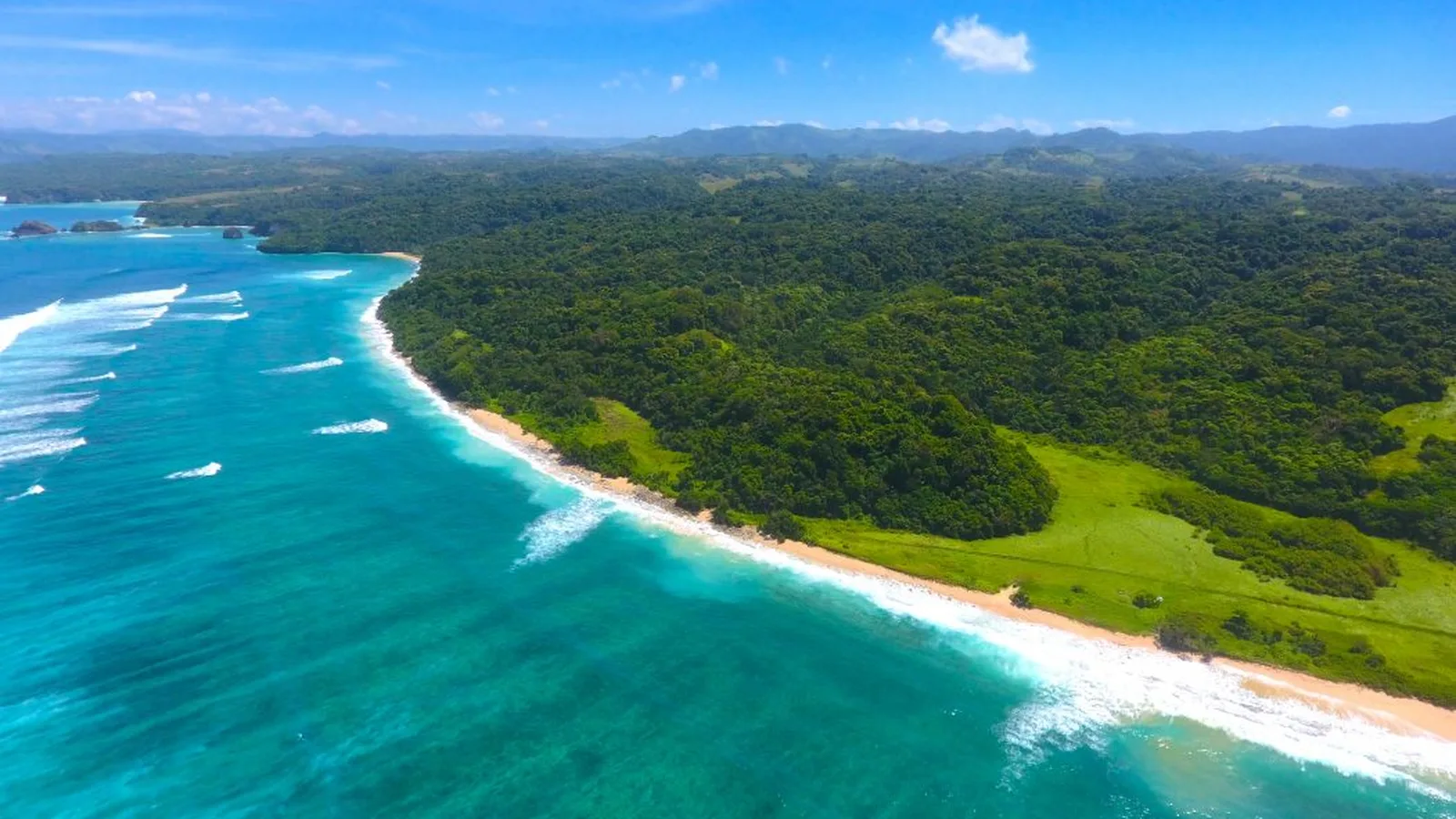
Yohanes, twenty-eight years old and wiry as a steel cable, had surfaced with a single, iridescent parrotfish. It weighed less than a kilogram. He held it up, a fleeting trophy against the impossible blue of the Savu Sea, a migratory superhighway for at least fourteen species of cetacean. The fish represented either dinner for his family of four or, if he was lucky, about 50,000 rupiah from the kitchen of a discreetly luxurious resort a few kilometers down the beach. That’s roughly $3.20.
He had to make a choice. Not between fish and rice, but between two entirely different economic systems. He was standing, quite literally, with a foot in each. This wasn't a quaint cultural dilemma for a travel documentary. It was a cold, hard asset allocation problem, played out daily on a shoreline where the 21st century is arriving not as a gentle tide, but as a tsunami of capital.
The Opening Balance: An Underwater Calculus
Let’s dispense with the romanticism. For men like Yohanes, spearfishing is not a hobby. It’s a line item in a personal portfolio of skills, assets, and income streams. It's a form of human capital, acquired over a decade of informal, high-risk apprenticeship. The question I was trying to answer, as Yohanes rinsed the salt from his eyes, was a brutal one: is this asset appreciating or depreciating?
His daily economic equation is stark. The average subsistence spearfisher here, on a good day, might bring in 1.5 to 2 kilograms of reef fish. Sold to a local middleman or a small warung, this generates approximately 75,000 IDR, about five U.S. dollars. This is not profit; it’s revenue. From this, one must mentally subtract the amortized cost of equipment, the physical cost in calories, and the significant risk of injury, from coral cuts to decompression sickness, however rare.
Now, consider the alternative. A new villa complex is rising on the next bay over, part of a development that might or might not be called something like Eco Beach City. A reliable, if unskilled, construction worker there earns a fixed 150,000 IDR ($10) per day. That’s double the fisherman's revenue, with zero volatility. The construction worker knows exactly what his day is worth before he even picks up a tool. Yohanes knows only when he surfaces for the last time.
This tension is visible in his equipment. It’s a case study in bricolage economics. His speargun is a beautiful, lethal thing, carved by hand from a single piece of teak, its shape refined over generations. But the power source is thoroughly modern in its expediency: the rubber bands are thick strips cut from a scavenged truck inner tube. His mask, which allows him to see his prey, was bought on credit from a shop in the nearest town and is already crazed with fine scratches. The snorkel is held to the strap with a zip tie. It is a perfect physical manifestation of his economic reality: a deep, traditional knowledge base being leveraged by whatever scraps of the modern world he can afford.
He is a freelance hunter-gatherer in the age of the gig economy, a sole proprietor in one of the world's most volatile markets: the open ocean. Every dive is a speculative venture.
What is the 'book value' of his skill? In an economy without formal credit scores, it’s his family’s protein security. It offers a floor, a guarantee that there will be food. But as cash becomes king, that floor is looking less like a safety net and more like a trap. The need for cash to pay for school fees, petrol, and mobile phone data is relentless. And cash doesn't swim in the reef.
The Original Capital: Marapu and the Maritime Mandate
Before there were spreadsheets, there was Marapu. To understand the original valuation of the sea, one must look past the balance sheet and into the animist cosmology that has governed this island for centuries. The sea is not merely a resource; it is a realm, home to powerful spirits who must be respected. To the outsider, this is folklore. To an economist, it looks suspiciously like a highly effective, pre-scientific system of marine resource management.
Oral traditions, passed down through 'Rato'—the clan priests who act as living repositories of ancestral law—are filled with what amount to ecological regulations dressed in spiritual vestments. Certain reefs are declared 'tabu' (forbidden) to fishermen for specified periods, sometimes as long as seven years following the death of a great chief or a significant community event. Ecologists today would call this a 'no-take zone,' a cornerstone of modern coral reef conservation designed to allow fish stocks to regenerate. The Rato, however, would explain it as a period of mourning required by the sea spirits. The outcome is the same; the enforcement mechanism is merely different. One relies on park rangers and fines, the other on the terrifying prospect of supernatural retribution.
I spoke with Rato Ledi, a man whose eyes held the weary authority of someone who has mediated disputes between the living and the dead. We sat on woven mats in the shade of his high-peaked traditional house. "The sea gives, but it also watches," he told me, his voice a low rasp. "If a man takes too much, if he fishes in a sacred place, the spirits of that place will follow him. His child might get sick. His boat might break. It is a debt."
This concept of a spiritual 'debt' is fascinating. It’s an intangible liability on a personal balance sheet. The 'cost' of overfishing isn't a fine paid to the government; it's a sudden illness in the family, which then requires the costly sacrifice of a pig or chicken to appease the offended spirit. The economic deterrent is real, just routed through a different accounting system. Prohibitions against catching certain species during their spawning seasons are similarly framed not in the language of fish population dynamics, but as a mark of respect for the sea's fertility. Was this a deep spiritual wisdom, or was it the result of generations of empirical observation, codified into a belief system because myth is a more durable technology for knowledge transfer than a scientific paper? The question is probably a false dichotomy. It was likely both. Pragmatism and spirituality were one. This system preserved the natural capital of the reef for centuries. But its power is fading. A resort chef's offer of cash for an undersized lobster is a tangible, immediate credit. The Rato's warning of a sick child is a probabilistic, future liability. The modern fisherman, like any modern financial actor, is increasingly choosing to discount future risk in favor of present gain.
The Training Pipeline: Opportunity Cost of a Skill
No one becomes a master spearfisherman by attending a course. The 'training pipeline' is a decade-long apprenticeship that begins in childhood, and its cost is measured in one of the most unforgiving metrics in economics: opportunity cost.
At the age of seven or eight, a boy here learns to swim in the shore break. By ten, he is shadowing his father or uncle, a small, hand-carved pole spear in his hand, learning to stalk small fish in the shallows. He is not in a classroom. The hours he spends mastering the subtle arts of the sea are hours he is not spending on formal education. The curriculum is demanding. It includes fluid dynamics (reading tides and currents), marine biology (understanding the behavior of dozens of fish species), physics (the ballistics of a spear in water), and materials science (choosing the right wood for a speargun). He learns advanced physiological control, mastering breath-holding techniques that allow for dives of two to three minutes. He becomes a living repository of topographical data, memorizing every coral bommie, every cave, every channel in his family's ancestral waters.
This is an immense body of knowledge. It is deeply valuable. But its value is recognized only within the context of the subsistence economy. The formal economy, the one represented by the resort HR department, does not have a line on its application form for 'Can identify a sleeping grouper from 20 meters away'.
Consider the numbers. The high school enrollment rate in West Sumba, according to 2021 government data, is a mere 58%. Many boys, particularly in coastal communities, drop out of the education system to contribute to the family's livelihood. They join their fathers on the water. This decision, often made out of necessity, represents a significant long-term earnings trade-off. A high school diploma, and the English proficiency that often comes with it, is the entry ticket to the lucrative tourism sector.
I watched one afternoon as a father, a man named Markus, patiently coached his ten-year-old son in a tidal pool. He pointed to a dark crevice in the coral. "Wait," he whispered, his hand on the boy's shoulder. "He is there. Don't look at the hole. Look through the hole." The pride in the father's eyes was obvious. He was passing on the most valuable asset he possessed: the skill to provide. Yet, that same afternoon, the son's classmate was likely attending an after-school English club funded by a foreign NGO, learning the vocabulary that would one day allow him to become a front desk manager or a tour guide. One boy was learning to hunt for food. The other was learning to hunt for a salary. In the new economy of this island, only one of those skills comes with a payslip and health insurance.
'The old gun was for feeding your family,' one fisherman told me, polishing the stainless steel trigger mechanism of his new weapon. 'The new gun is for feeding the tourists. It is an investment, but a risky one. If it breaks, you have nothing.'
This isn't a criticism of Markus's choice. It's an observation of the cruel math he faces. The investment in traditional skills offers a reliable, low-level return in the form of food security. The investment in formal education is higher risk—not every graduate gets a good job—but offers a vastly higher potential return. For generations, the choice was simple because there was no choice. Now, there is. And that choice is redefining the very concept of what a 'valuable' skill is.
The Equipment Ledger: Teak vs. Carbon Fiber
Every enterprise requires capital expenditure, and spearfishing is no different. The evolution of the speargun on this island is a perfect microcosm of its collision with the global economy. A cost-benefit analysis of the fisherman's toolkit reveals the stark financial realities of moving from subsistence to commercial hunting.
At one end of the spectrum is the original 'tool': a simple, fire-hardened bamboo pole with a sharpened tip. Its cost is effectively zero, requiring only labor. Its range is a few feet. Its yield is low—small, slow-moving reef fish. It's a tool for supplementing dinner.
At the other end is the weapon of choice for the serious, commercially-minded fisherman: a modern, band-powered 'panah,' or speargun. And here, a new set of calculations emerges. A locally made teak gun, like Yohanes's, is a masterpiece of craftsmanship but still carries costs. The wood must be sourced, the steel for the trigger mechanism and spear shaft purchased. The rubber bands are a constant expense, wearing out every few months. The total cost might be 1,500,000 IDR ($95), a significant investment.
But the real game-changer is the imported speargun. A sleek, black Rob Allen carbon-fiber speargun, shipped from South Africa or Australia, is the ultimate status symbol and the most efficient tool for hunting the large, valuable pelagic fish—dogtooth tuna, giant trevally—that the high-end restaurants crave. The cost? In an Indonesian dive shop, it can be upwards of 12,000,000 IDR ($775). In the province of East Nusa Tenggara, where the regional minimum wage is around 2 million IDR per month, this is an astronomical sum. It's the equivalent of half a year's wages for many, an investment on par with buying a motorcycle.
Spearfishing Gear: A Cost-Benefit Analysis
| Gear Type | Initial Cost (IDR) | Effective Range | Target Species | ROI Potential | Risk Profile |
|---|---|---|---|---|---|
| Bamboo Pole Spear | ~0 | < 1 meter | Small Reef Fish | Subsistence | Low (equipment) |
| Hand-made Teak Speargun | ~1,500,000 | 3-5 meters | Reef & Pelagic Fish | Low Commercial | Medium (breakage) |
| Imported Carbon-Fiber Gun | ~12,000,000 | 6-8+ meters | Large Pelagic Tuna | High Commercial | High (theft/loss) |
This high-end gear introduces a new fisherman to the global supply chain. When a specialized rubber band snaps or a trigger mechanism fails, the replacement part isn't found in the village. It must be ordered from Bali or Jakarta, incurring shipping costs and downtime. The fisherman is now exposed to currency fluctuations and logistical friction. He has, in effect, become a small business owner with international suppliers, high capital costs, and a volatile revenue stream. The risk profile has shifted dramatically. Losing a bamboo spear is an inconvenience. Losing a $775 speargun bought with borrowed money is a catastrophe.
This escalation in technology also has ecological implications. The traditional spear was a check on overfishing; you simply couldn't catch that many fish. The modern gun, with its power and range, allows a skilled hunter to systematically empty a reef of its largest, most valuable breeding stock. The investment in better gear, made to secure a better financial future, may be the very thing that undermines the long-term viability of the resource it depends on. It's a classic tragedy of the commons, accelerated by carbon fiber.
The Daily Yield: Volatility in the Protein Market
If a spearfisherman's income were a stock, no sane fund manager would touch it. It is a textbook example of extreme volatility. The daily 'yield' is subject to a bewildering array of variables that make consistent forecasting impossible. The hunter's income is dictated by weather, tidal patterns, water clarity, seasonal fish migrations, the phase of the moon, and his own physical health. One day can bring a windfall; the next three can be a total loss.
Let's consider the basic energy-to-protein transaction. A three-hour spearfishing session, involving constant swimming, diving, and breath-holding, is exceptionally demanding. Sports science data suggests it burns between 900 and 1100 calories. Now, consider the return. A one-kilogram grouper, a very respectable catch, provides approximately 920 calories of energy. On many days, the caloric balance sheet is negative before the fish is even brought to shore. The hunter has spent more energy than he has acquired. This is a thermodynamic reality that generations of subsistence hunters have lived with. The practice of 'blood-packing,' a dangerous freediving technique to force extra air into the lungs for deeper, longer dives, is a modern, high-risk attempt to tilt this energy balance for marginal economic gain.
Here’s a snapshot of a week in the life, a montage of the market's wild swings:
- Monday: High winds, rough seas. Impossible to go out. Yield: 0. Income: 0.
- Tuesday: Perfect conditions. Four hours in the water results in a single, 15kg Dogtooth Tuna ambushed near the reef drop-off. A massive windfall. Sold to a resort for 1,200,000 IDR ($77). This single fish is worth more than a week's construction wages.
- Wednesday: Emboldened by success. Another four hours in the water. Nothing. The big fish are gone. He returns with two small reef fish, barely enough for dinner. Yield: ~0.8kg. Income: 0 (kept for family).
- Thursday: Tired. The previous days' efforts have taken their toll. A short, two-hour session. Spears a decent-sized snapper, but his aim is off. The spear glances off the rock behind the fish, blunting the tip. The fish escapes. Yield: 0. Income: 0. Net result: a damaged spear requiring repair.
- Friday: Calm seas. Back in the water. A good day. Three coral trout and a bluefin trevally. Total weight around 4kg. Sells the lot for 300,000 IDR ($19).
The weekly income is 1,500,000 IDR ($96). On paper, this looks comparable to the construction worker's 900,000 IDR ($58) for six days' work. But the fisherman’s income came almost entirely from one single, lucky event. The other four days produced almost nothing. This is the life of a prospector, not a wage earner. It breeds a certain kind of psychology, a gambler's optimism. But it's a terrible way to plan for a mortgage, or even next month's school fees.
A Hunter's Caloric Balance Sheet
| Activity/Item | Caloric Value/Cost | Notes |
|---|---|---|
| 3-Hour Spearfishing Session | -1000 calories | Estimated average expenditure |
| 1kg Grouper (catch) | +920 calories | Raw caloric value of the fish meat |
| Net Caloric Result | -80 calories | A deficit before even cooking or selling |
| 2 Packs of Instant Noodles | +760 calories | Common meal purchased with fish proceeds |
This volatility is the single greatest force pushing the next generation away from the sea. They have seen their fathers come home empty-handed too many times. The promise of a steady, predictable paycheck, however small, is a powerful antidote to a life spent chasing the whims of the ocean.
Market Arbitrage: The Five-Star Upgrade
The arrival of ultra-luxury tourism on this coast has introduced a powerful economic distortion into the local fish market. It has created a classic opportunity for arbitrage. An asset—in this case, a freshly caught coral trout—has a dramatically different value in two parallel markets that exist just a few hundred meters apart.
Yohanes can catch a fish for the 'cost' of his time and effort. He can sell that fish in the local village market for, say, 50,000 IDR per kilogram. But if he walks a little further down the beach to the service entrance of a resort where villas rent for $1,500 a night, he has entered a different economic reality. Here, the executive chef, under pressure to source 'fresh, local, sustainable' ingredients for his discerning clientele, will happily pay a premium.
This is where the numbers become truly astonishing. That 2kg coral trout that might fetch 100,000 IDR ($6.40) in the village is sold directly to the resort kitchen for 150,000 IDR ($10). Yohanes has made a 50% premium for knowing who his customer is. But the arbitrage doesn't stop there. The chef will fillet the fish, grill it with some lime and chili, plate it with some artistically arranged local greens, and place it on the dinner menu. The price? 1,200,000 IDR ($77), plus a 21% service charge and tax. The resort has marked up the raw ingredient by 800%. From the moment the fish left the water to the moment it's served to a hedge fund manager from New York, its value has inflated by over 1,000%.
This vast price discrepancy turns the local fisherman into the first, and most poorly compensated, link in a luxury supply chain. And it creates perverse incentives. The pressure to provide for one's family is immense, amplified by cultural obligations like the Sumbanese dowry, or 'belis,' which can require a groom's family to provide dozens of buffalo and horses, an ancient tradition with a modern cash value that can exceed $50,000. This pressure forces young men to chase any available source of cash, and the resorts are an immediate, tangible source.
'My father fished to show he was a man. I fish to pay for my son's school uniform,' Yohanes explains, without a trace of sentimentality. 'He must learn English. That is the new hunt.'
The resorts, for their part, have begun to commodify the hunt itself. The 'authentic spearfishing experience' is now a marketable activity, offered to guests for several hundred dollars. I watched one such expedition. A guide, a cousin of Yohanes, took a hesitant American tech executive into the shallows. The guide, an expert who could have harvested a dozen fish in an hour, spent his time subtly herding fish towards the guest's clumsy spear, offering enthusiastic encouragement. The tourist eventually speared a small snapper, which he held up for an Instagram photo with a look of profound, primal achievement. The guide smiled. The guest was buying a story about himself. The guide was just doing his job. The skill of spearfishing, once a tool for survival, has been transformed into a form of immersive theatre, its value shifting from protein to performance.
The Succession Crisis: A Depreciating Asset
For any asset class to maintain its value, there must be a next generation of buyers. For the human capital of spearfishing, the market is collapsing. The apprenticeship model is breaking down for a simple reason: the apprentices are walking away to take other jobs. The skill is facing a succession crisis.
The allure of stable, less dangerous work is proving irresistible. Why spend your days at the mercy of the tides when you can have a steady job as a hotel receptionist, a driver, or a shopkeeper? A 2022 survey of Sumbanese youth aged 15-18, conducted by a local development agency, was telling. When asked about their desired profession, 'hotel manager' ranked number one. 'Fisherman' ranked fourteenth, trailing behind 'government official,' 'teacher,' and 'driver.'
I met Yohanes's sixteen-year-old cousin, Rian, during his break. He works as a bellboy at a newly opened boutique hotel. He wears a crisp uniform, and his English is hesitant but functional. I asked him if he spearfished with Yohanes. He laughed. "For fun, sometimes. But as a job? No way. Why would I swim for hours and risk the reef? Here, I get a salary, lunch is provided, and I can practice my English with the guests. My future is air-conditioned."
'My future is air-conditioned.' That single sentence is a brutal epitaph for a way of life. It encapsulates the entire economic and cultural shift. The calculus is clear. The resort job offers not just money, but a pathway to a different world. It offers status, comfort, and, most importantly, predictability. The social symbols of success are no longer a large fish slung over the shoulder or the ability to read the sea. They are a new smartphone, a Yamaha motorbike, and a pair of knock-off Nikes. These are assets purchased with a salary, not speared on the reef.
This isn't unique. It's a pattern I've seen play out from the fishing villages of Costa Rica in the 1990s, when the eco-tourism boom began, to the pearl-diving communities of the Persian Gulf a generation earlier when oil was discovered. A traditional, high-skill, high-risk profession is rendered economically obsolete almost overnight by the arrival of a new, dominant industry. The skills that defined a man's worth for centuries become, in the space of a decade, a romantic hobby for the old-timers.
The 'asset' of spearfishing is depreciating rapidly because the market that valued it—the subsistence village economy—is being supplanted. The knowledge of how to navigate the reef is being replaced by the knowledge of how to navigate a hotel booking system. And the young men of Sumba are, quite rationally, choosing the latter.
Portfolio Rebalancing: The Future of the Hunt
Is the tradition dying? Perhaps. But it's more accurate to say it is evolving, being rationally re-priced and repositioned within the local economic portfolio. The smartest operators aren't abandoning the hunt; they are rebalancing their assets. Spearfishing is ceasing to be a primary source of income and is instead becoming a valuable 'side hustle,' a supplementary income stream, and an essential food security backstop.
This transition mirrors the decline of artisanal whaling in 19th-century Nantucket. Once the defining industry and a source of immense wealth and identity, it became economically irrational with the discovery of petroleum and the subsequent collapse in the price of whale oil. The dangerous, identity-defining maritime skill was forced to either vanish or transform into a romanticized, historical curiosity. Here, the precipitating force isn't kerosene, but tourism and wage labor.
The most successful young men are adopting a hybrid model. Data from a local fishing cooperative in Kodi tells the story: in the generation of fishermen over 50, only 15% hold a second job. For those under 30, that figure is now over 70%. They work as drivers, gardeners, or security guards at the resorts from 9 to 5. Then, in the late afternoon, they enter the water, not with the desperate need to feed their family, but with the focused goal of securing high-value fish for a specific client.
Take the case of a man named Agustinus. He works as a maintenance technician at a luxury villa complex. His salary, roughly 4 million IDR ($255) a month, covers his family's core expenses. It pays for rice, school, and fuel. This stable income has allowed him to do something his father never could: professionalize his fishing. He used his salary as collateral for a small loan to buy a fiberglass boat with a 15-horsepower outboard motor. He invested in two high-quality imported spearguns. He no longer sells his catch to middlemen. He has a direct line to three resort chefs and two private villa owners. He communicates with them via WhatsApp. He is a just-in-time supplier of premium organic seafood. He has transformed a volatile subsistence activity into a formalized small business, a lucrative supplement to his primary employment. His 'portfolio' is now diversified and far more resilient.
This is the future. Spearfishing is no longer the central pillar of the coastal economy, but it has become a powerful, flexible asset for those savvy enough to integrate it into the new cash-based world. It offers a way to tap directly into the high-margin tourism economy without being on its payroll. It’s a hedge against a low-paying job, a source of untaxed cash, and a guarantee that, if all else fails, there is still the sea.
The tradition isn't dead. It's just been to business school.
We see Yohanes back on the beach, the sun low and orange behind him. The parrotfish is gone, sold. In his hand is not another fish, but a small plastic bag. He walks past the local warung selling grilled fish and rice. He stops at a small kiosk and, with the crumpled rupiah notes, makes his purchase. Two packs of Indomie instant noodles. A one-kilogram bag of rice. And a 1GB data top-up card for his smartphone.
He is trading the wild, unpredictable protein of the sea for the processed carbohydrates and digital connectivity of the modern world. It is a perfectly rational, and quietly heartbreaking, transaction on the new balance sheet of his island.