The Custodians of Wild: Sumba's High-Stakes Ledger
Rato Nale, a high priest of the Marapu faith, stands on a grassy bluff overlooking the Indian Ocean. His hand-woven ikat, dyed in somber tones of indigo and rust, is a testament to his rank, its patterns telling stories older than any written deed. He is motionless, a man accustomed to waiting for spirits. To his left lies a cluster of ancestral stone tombs, megaliths weighing many tons that have anchored his clan to this specific patch of earth for centuries. To his right, the infinity pools of a new multi-million dollar luxury villa development glint in the hard afternoon sun, the sound of an angle grinder a faint, metallic whine carried on the sea breeze.
There's a particular quality to the light at nine degrees south of the equator. It doesn't flatter; it exposes. Here, on this wind-scoured clifftop, it illuminates the central tension of an island caught between two irreconcilable ideas of value. One is measured in ancestral memory and spiritual obligation. The other is quoted per square meter, its value soaring with every glossy magazine feature and influencer's post.
When Indonesia's Ministry of Public Works and Housing quietly approved a 42 billion rupiah infrastructure allocation for a cluster of islands most Jakartans couldn't pinpoint on a map, it was a minor line item in the national budget. But for property analysts and a discreet network of European family offices tracking Jakarta's 'Ten New Balis' initiative, it was a signal flare. The machinery of development was turning its gaze toward a place long defined by its isolation. The spreadsheet was coming for the salt air.
The Blueprint of the Ancestors
To understand this island, one must first understand that the land is not empty. It is crowded with meaning. Every hill, spring, and ancient tree is part of a spiritual cosmology known as Marapu. This animist belief system, to which an estimated 45% of the island's 750,000 people still adhere, is not a Sunday faith; it is an all-encompassing operating system for life. It dictates the orientation of a house's high-peaked roof, the timing of the rice harvest, and the obligations between the living and the dead.
Marapu views the land not as a commodity to be carved up and sold, but as a living, breathing entity. Balance is the paramount virtue—a delicate equilibrium between the celestial world of the spirits and the terrestrial world of man. Disturbing this balance through greed or disrespect invites misfortune: failed crops, sickness, social discord. Authority in this world rests with men like Rato Nale. The Rato, or priest, is the mediator, the spiritual jurist, the custodian of rituals that appease the spirits and maintain harmony. His authority, derived from lineage and deep traditional knowledge, often carries more weight in village disputes than a decree from a distant provincial court.
I met Rato Nale not on the clifftop, but in the cool, shaded veranda of his uma mbatangu, a traditional clan house with a soaring thatched roof that looks like a witch’s hat. Chickens scratched in the dust at our feet. He spoke through a translator, a nephew who had studied in Java. When I asked about the new villas down the coast, he took a long, slow draw from his clove cigarette and pointed a betel-nut-stained finger towards the ancient tombs.
'That ground is not for sale; it is where the spirits of our grandfathers rest,' he said, his voice a low rumble. 'The foreigners, they come and they offer money. They say, ‘Think of your children.’ But we are already thinking of our children. This land is their story. You cannot put a price on memory.'
This is the invisible architecture of the island. Before any developer can pour a concrete foundation, they must navigate a landscape of clan ownership, sacred sites, and ancestral obligations that have no place on a legal survey map. The Marapu blueprint is one of kinship and cosmic balance, a stark contrast to the transactional logic of the market. It’s a belief system that sees selling ancestral land not as a business deal, but as a form of cultural suicide—selling the very bones of your identity.
The Billionaire's Philanthropic Fortress
Before the land rush, before the speculators and the lifestyle brands, there was one man and one wave. In the late 1980s, American surfer and entrepreneur Claude Graves, along with his partner Petra, stumbled upon a near-perfect left-hand break on the island's remote southwest coast. They spent years slowly, carefully, building a relationship with the local community, eventually securing the rights to a stunning crescent of land. In 2012, they sold a majority stake to Chris Burch, the maverick billionaire co-founder of the Tory Burch fashion empire. The result was Nihi Sumba.
Nihi is not merely a resort; it’s an idea. Voted the world’s best hotel by Travel + Leisure magazine for two consecutive years, it pioneered a model of 'philanthropic capitalism' that has become the island's dominant, and most debated, development template. With villas costing upwards of $2,000 a night—and the entire resort available for a buyout of over $150,000 per night—it caters to an infinitesimal sliver of the global elite. The famous wave, 'Occy's Left,' is capped at ten surfers a day, a privatization of nature that rankles some but ensures a pristine experience for those who can afford it.
Crucially, Burch didn't just buy a hotel; he inherited and supercharged a social contract. The Sumba Foundation, established in 2001 by Nihi’s founders, became the vehicle for this contract. Funded by a percentage of the resort's profits and direct donations from its high-net-worth guests, the foundation became a parallel state, delivering services the actual government could not. Since its inception, the foundation reports it has raised and invested over $30 million. This capital has funded 72 water stations, built and supplied 16 primary schools, and established four health clinics.
Perhaps its most celebrated achievement is in public health. In its core project areas of West Sumba, the foundation's relentless campaign of education, bed net distribution, and diagnosis has led to a staggering 93% reduction in malaria prevalence. For families who once saw the mosquito-borne fever as a grim, seasonal certainty, this is not a statistic. It is a revolution. Daniel, a middle-aged man who has worked at the resort since its early days as a simple surf lodge, remembers the initial skepticism. 'When the first bule (foreigners) came, we watched them,' he recalls, sitting in a staff canteen that is cleaner and better-equipped than many local restaurants. 'We thought they just wanted the beach. But then the foundation came to my village. They didn't just talk; they dug a well. My wife no longer had to walk two hours for water. That is when trust begins. Not with words, but with water.'
This symbiotic relationship creates a powerful, self-reinforcing narrative: extreme luxury funds essential survival. The guests get their unspoiled paradise and a clear conscience; the local community gets healthcare and education. It's a compelling model, but it also creates a fortress of immense private power on an island with weak public institutions, raising profound questions about sovereignty and dependence.
The Pasola: Ritual Combat as Cultural Anchor
Twice a year, following the full moon in February and March, the fragile peace of the savannas is deliberately broken. This is the time of the Pasola, a ritual battle that is the island's most potent cultural expression and its most fearsome spectacle. The word comes from sola or hola, meaning a long wooden spear. The event is precisely that: a pitched battle between two teams of men on horseback, hurling blunted spears at each other with startling ferocity.
To the outsider, it is a chaotic and violent melee. Hundreds of riders, clad in bright, festive headbands, surge across a wide, dusty field. The air is thick with the smell of horse sweat, dust, and a palpable, electric tension. The native Sandalwood Pony, a distinct breed renowned for its stamina, weaves through the chaos with terrifying speed. A rider takes a hit to the chest and tumbles from his horse. The crowd roars. His teammates swoop in to protect him as opponents close in. It is part sport, part warfare, and all ritual.
The Pasola is no mere performance for tourists. It is a sacred obligation, deeply tied to the agricultural cycle and Marapu belief. The ritual's origin myth involves a beautiful woman, a spurned husband, and a pact to assuage communal grief through ritual combat. Critically, the ritual demands that blood must be spilled—human or horse—to fertilize the land and repay the debt to the spirits. A bloodless Pasola is a harbinger of a failed harvest. While fatalities are officially discouraged and have become rare in the modern era, local memory and records from the 1990s confirm an average of one to two deaths per festival season was not uncommon.
I stood on the sidelines of a Pasola near Wanokaka, pressed against a bamboo fence with thousands of locals. The energy was exhilarating and deeply unsettling. There's none of the curated safety of a modern sporting event. 'There is fear,' admitted a young rider named Yulius before the match, his chest bare, a red sash tied around his head. 'But the honor is greater. To ride for my village, to spill blood for the harvest... it makes me a man. My grandfather rode, my father rode, and now I ride. It is in our soul.' The Pasola functions as a living, breathing advertisement for the island’s 'wild' reputation, attracting a hardy brand of traveler. Yet it remains fundamentally untamable, its timing dictated by the arrival of a mystical sea worm, its outcome unpredictable. It's a stark reminder that beneath the veneer of luxury tourism, there is a culture that still answers to older, bloodier gods.
The Weaver's Ledger: Sumba's Soul in a Thread
If the Pasola is the island's explosive, masculine expression of its soul, then the art of Ikat is its patient, feminine counterpart. In the quiet, dusty villages that dot the island's interior, women perform a form of alchemy, transforming humble cotton and foraged plants into some of the world's most sophisticated and sought-after textiles.
This is not simple weaving. Sumba's Ikat—the word means 'to tie'—is a resist-dyeing technique where bundles of thread are meticulously bound and dyed multiple times before being set on the loom. The pattern exists in the weaver's mind and on the threads themselves long before the cloth takes shape. A single, museum-quality Hinggi, a large ceremonial blanket worn by men, can represent a staggering investment of time. From planting and harvesting the cotton, to spinning the thread, to foraging for the roots and leaves for the dyes (a deep indigo blue from the Indigofera plant, a rich red-brown from the Morinda tree's roots), to the months of tying and dyeing, and finally the weaving itself, the process can take up to 24 months. This painstaking labor is reflected in the price: top-tier pieces regularly fetch over $10,000 USD in the international art and design market, providing a vital source of independent income for women in a patriarchal society.
But the cloth is more than a product. It is a ledger. The motifs—stylized crocodiles, horses, chickens, skulls, and the ubiquitous mamuli, a gold ornament shaped like the female omega symbol—are not merely decorative. They are a coded language, a paperless deed to one's identity. They tell of a person's clan, their lineage, their social status, and the great myths of their ancestors. In a culture with a largely oral history, these textiles are the history books, the marriage contracts, and the shrouds that will carry a noble person's story into the next world.
In the village of Prailiu, I sat with a master weaver, Ana Humba. Her hands were permanently stained a deep blue from years of working with indigo. On her simple backstrap loom was a cloth in progress, a complex pattern of rampant horses and ceremonial gongs. 'This is for my son's wedding,' she explained, her fingers moving with an economy born of a lifetime of practice. 'The horses show he is from a noble family, one that can ride in the Pasola. The gongs are for wealth, to show he can provide. When he wears this, everyone will know who he is, where he comes from. It is his skin.' To lose this art would be to lose the language of the island itself.
The Great Land Rush
That same sense of identity is now at the heart of the island's most explosive conflict: the great land rush. The 'discovery' of the island by the global elite has triggered a speculative fever that is transforming the coastline and tearing at the social fabric of villages.
Mapping who is buying is a complex task. The buyers are a mix of Indonesian high-net-worth individuals from Jakarta and Surabaya, foreign investors from Europe and Australia operating through local proxies, and a new class of international lifestyle entrepreneurs. They are drawn by the same things: the promise of pristine beaches, a 'wild' aesthetic, and the perception that this is the 'next Bali,' a chance to get in on the ground floor. This influx of capital has had a dramatic effect on prices. According to local brokers and land agents, the numbers are stark:
| Land Area | Price per 'are' (100 sqm) 2013 | Price per 'are' (100 sqm) 2023 | % Increase |
|---|---|---|---|
| Wanokaka Beachfront | ~$150 USD | ~$2,500 USD | ~1,570% |
| Lamboya Coast | ~$200 USD | ~$3,000 USD | 1,400% |
| Kodi (undeveloped) | ~$50 USD | ~$1,500 USD | 2,900% |
A single hectare (100 are) of prime, undeveloped beachfront in the Kodi region can now command a price of over $1.5 million USD. For the same amount, one could purchase a 120-square-meter, two-bedroom apartment in London's Zone 2. The premium on a slice of 'untouched' paradise now rivals a foothold in a global metropolis.
This gold rush collides directly with the island's ambiguous land ownership structures. While Indonesia has a formal legal system of land certificates (Sertifikat Hak Milik), much of the island is still governed by adat, or customary law. Under adat, land is often owned communally by a clan (kabihu) and administered by its elders. It cannot be sold without the consensus of the entire clan, and even then, it is often seen as a betrayal. This creates a volatile environment ripe for exploitation. Cunning brokers, often from outside the island, arrive in villages flush with cash. They might approach a single, vulnerable member of a clan, convincing them to sign documents they don't understand, or exploit divisions between younger, commercially-minded members and the traditional elders.
I witnessed a version of this drama play out during a village meeting in a dusty coastal hamlet. A representative for a French investor, a slick young man from Bali, was presenting a plan for a boutique hotel. He spoke of jobs and progress. The village chief, an old man with the weary eyes of a traditional leader, sat silently. But a younger man, a cousin, stood up. 'My children need shoes for school, not just stories of the ancestors,' he argued, his voice sharp. 'This is our chance.' The meeting devolved into a tense, hushed argument in the local dialect, a family and a village cleaving in two in real time, caught between the spirits of the dead and the promise of cash in hand.
The Heirs to Nihi: A New Wave of Development
The success of Nihi created a blueprint, and now a new generation of developers is seeking to write their own chapter. This second wave is more diverse in its approach, but it is undeniably putting the island's fragile infrastructure and unique culture to the test. They are the heirs to Nihi, attempting to replicate its magic, or at least its profitability.
Leading this new cohort is Cap Karoso, a striking piece of modern architecture on the island's northwestern Kodi coast. The creation of French couple Fabrice and Evguenia Ivara, the resort represents a reported initial investment of over €60 million—a massive injection of capital into the West Sumba regency. With 47 rooms and 20 private villas, its scale is significant. Unlike Nihi's more rustic-luxe aesthetic, Cap Karoso is unapologetically contemporary, a collection of clean lines and brutalist-inspired forms softened by local materials and an extensive collection of Sumbanese art. A project of this scale has an immense appetite for resources, from water and electricity to skilled labor, placing undeniable strain on a region where paved roads are a novelty and power cuts are common. Some see it as a welcome catalyst for modernization, while others worry it's too much, too fast.
Then there are projects like The Sanubari, another coastal development that explicitly follows the Nihi playbook of low-density luxury and surf access. Further down the coast, smaller, more discreet ventures are taking shape. Places like the ambitious Eco Beach City are being planned, promising sustainable design and community integration, but the line between genuine eco-consciousness and clever marketing is often blurry.
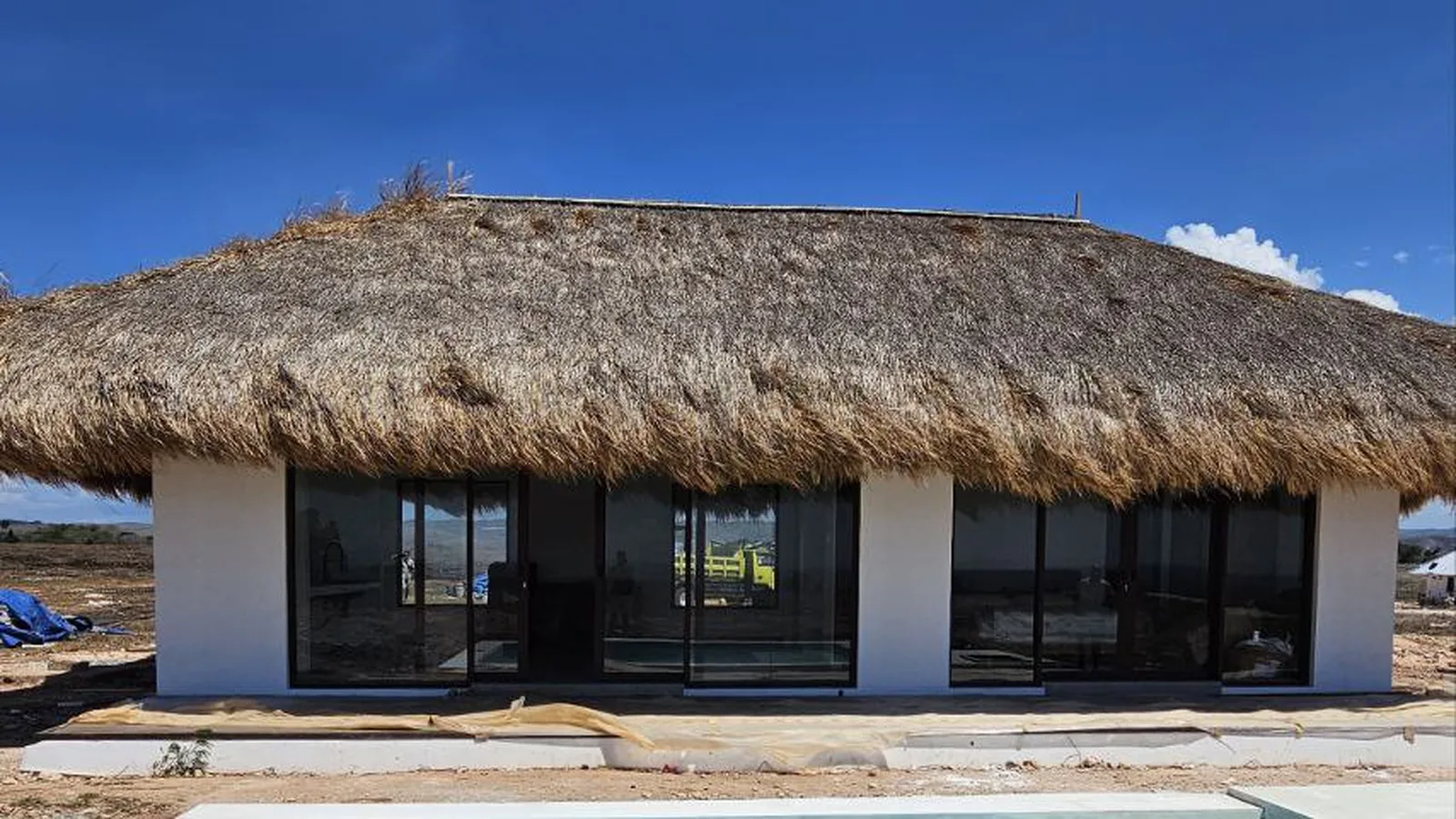
These developers are acutely aware of the cultural landscape they are entering. They speak the language of sustainability and respect. They hire cultural liaisons, commission art from local weavers, and incorporate Marapu architectural principles into their designs.
'You can't just build here. You have to ask the land, and the ancestors, for permission,' explained one European architect working on a new villa project, who asked to remain anonymous. 'We had to hold a ceremony with the local Rato, sacrificing a pig to ask the spirits to approve our plans. We moved the location of a pool because it was too close to a sacred rock. For my clients in Ibiza or St. Barts, this would be insane. Here, it’s just the cost of doing business.'
But this deference has its limits. The fundamental model is still extractive: it extracts beauty, solitude, and culture, and packages it for a global clientele. Each new resort, no matter how well-intentioned, increases the pressure on the island's finite resources and chips away at the very isolation that makes it so alluring. The island is rapidly becoming a case study in the paradox of luxury tourism: in the process of selling paradise, you risk destroying it.
The Savanna Paradox
Fly into either of the island’s two small airports and the first thing you notice is the color. It's not the undifferentiated, saturated green of the rest of the Indonesian archipelago. It is gold. For much of the year, the landscape is a vast expanse of rolling savanna, dotted with gnarled, deciduous trees and dramatic limestone outcrops. It feels less like Southeast Asia and more like East Africa, an 'Out of Africa' tableau dropped into the middle of the Coral Triangle.
This unique landscape is a geological and climatic anomaly. Sumba sits in a rain shadow created by the taller, more mountainous islands to its north. It receives, on average, just 1,150 mm of rainfall per year. This is less than half of Bali's 2,500 mm and is concentrated in a short, intense wet season. For the rest of the year, the sun and a relentless wind bake the land into its signature golden hue. Centuries of human activity, including slash-and-burn agriculture and the now-defunct but historically devastating sandalwood trade, have also shaped this terrain.
For generations, this arid landscape was seen as a mark of poverty and hardship. It was difficult to farm, a place of scarcity compared to the fertile volcanic soils of Java or Bali. But in the calculus of modern luxury tourism, this liability has been transfigured into a primary asset. The savannas are now the backdrop for the island’s marketing narrative. They represent wildness, freedom, and space—the very things absent from the crowded, manicured landscapes their clientele are paying to escape. The marketing copy for new developments is filled with images of horseback riding through tall grass at sunset, of villas perched on lonely, windswept hills.
Driving through the Wanokaka valley as the sun begins to dip below the horizon, the scale is immense. The grasslands appear empty, a canvas of monumental solitude. The feeling is one of being at the edge of the world. But this emptiness is an illusion. Every hectare of this land is owned by a clan, named in a story, and watched over by ancestral spirits. Every hill has a purpose, every stream a memory. The savanna paradox is that a landscape that looks like a void to an outsider is, to its inhabitants, a dense and storied text. The 'wildness' that is now its most valuable export is a carefully managed, deeply cultural product.
The Cost of a Beautiful Idea
Here, then, is the central conflict. A battle is underway to define the future of an island, a struggle between the beautiful idea of preserving an 'authentic' Sumba and the irresistible economic logic of development. Can the two coexist, or is one destined to consume the other?
So far, the development model has created a starkly two-tiered system. On one side, there are the hermetically sealed worlds of the ultra-luxury resorts, bubbles of unimaginable comfort and security where the global one percent can experience a curated, frictionless version of wildness. On the other side is the rest of the island, where development is slow and uneven, and the benefits of this new-found fame trickle down with agonizing slowness. The gap between the two is vast and growing.
Consider the raw numbers. The official annual tourism budget for the regency of West Sumba in 2023 was approximately 8 billion IDR, or around $520,000 USD. This modest sum is meant to cover marketing, infrastructure improvements, and staff salaries for the entire region. By contrast, a single top-tier resort like Nihi can generate estimated annual revenues exceeding $15 million USD. The immense financial power of private capital dwarfs that of the local state, creating an imbalance that shapes everything from land policy to law enforcement.
I spoke with Stefanus, a young Sumbanese man in his late twenties. He left the island to get a university degree in tourism management in Bali and has recently returned to start a small tour company. His perspective is a complex tapestry of pride, hope, and deep-seated anxiety.
'Of course, I am proud that the world now sees how beautiful my home is,' he told me, as we sat in a small warung in the capital of Waikabubak. 'Nihi, Cap Karoso... they bring jobs, they bring attention. My cousins work there. They have skills they never would have learned. But sometimes I worry we are selling the best parts of ourselves. We are becoming the scenery for someone else's vacation. What happens when they get bored and move on? Will we still remember who we are?'
Sumba's beauty is not a static landscape to be passively consumed. It is a script being written and rewritten in real-time, negotiated daily in village meetings, on dusty construction sites, and at the looms of women whose hands are stained with indigo. The final, unsettling question is not whether the island is beautiful, but whether its story will end as a masterpiece of cultural resilience or a tragedy of gilded appropriation.