The Blue Balance Sheet: Valuing an Island's Marine Assets
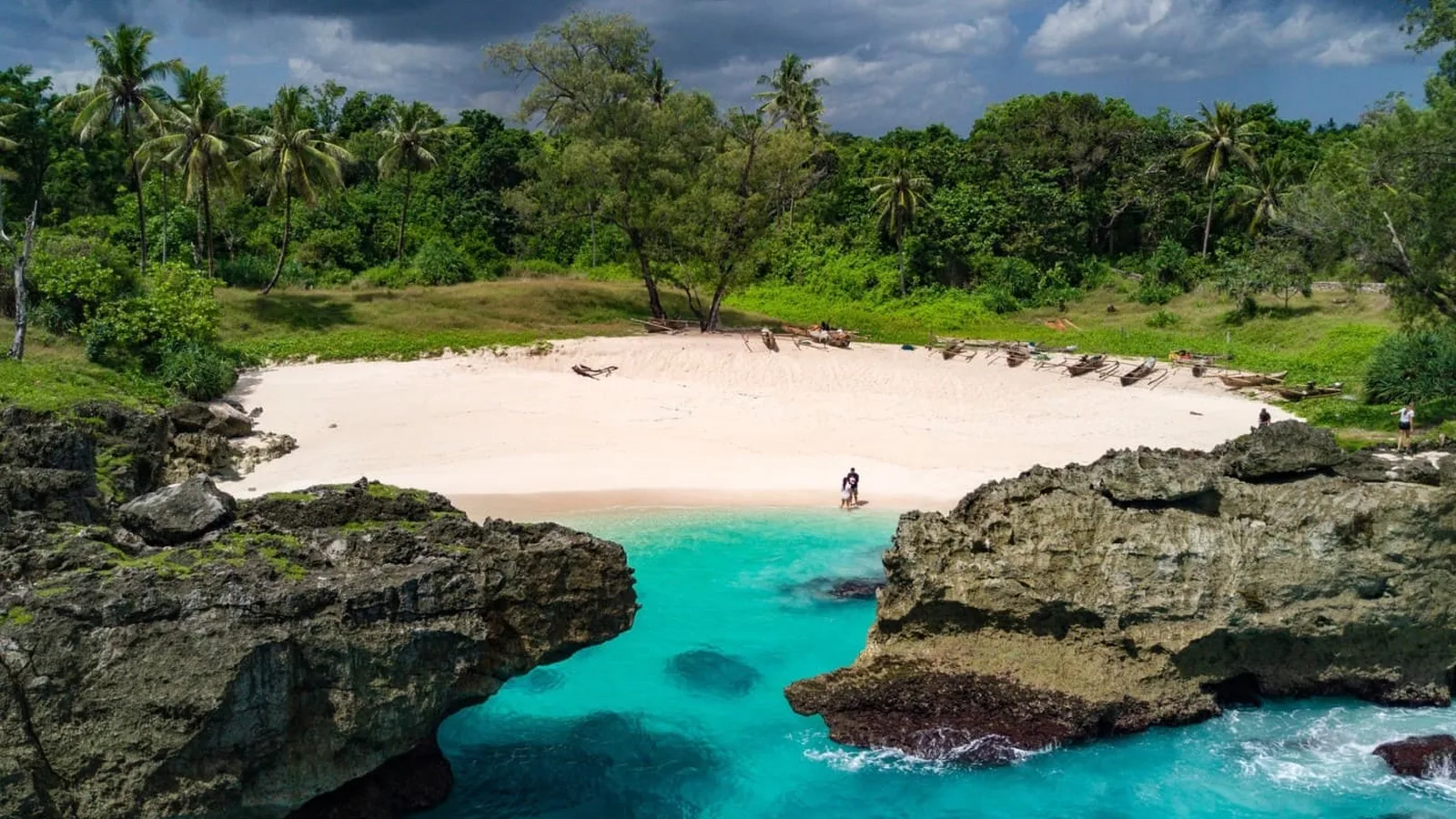
Dr. Anya Sharma surfaced with the quiet efficiency of someone who has spent more of her life underwater than on land. She pulled the regulator from her mouth, the hiss of compressed air giving way to the gentle slap of waves against the boat’s hull. The two Oceanic Manta Rays, each with a wingspan wider than a king-sized bed, had been magnificent. But Sharma didn't comment on their beauty. Not yet.
Instead, she tapped her dive computer, cross-referencing its depth and time data with a custom-built app on a waterproof tablet. Two Manta birostris. Encounter duration: 14 minutes. Depth: 22 meters. Behavior: cleaning station. Other divers present: zero. For Sharma, a marine biologist with a past life in quantitative finance, this wasn’t just another spectacular dive. It was a data point. It was a transaction logged in a ledger that values not gold or oil, but biological scarcity.
There’s a new calculus for a certain class of analytical traveler, one who views the world not just as a collection of experiences but as a portfolio of assets. They don't chase sunsets; they benchmark water visibility. They don't just count fish; they calculate encounter density per dive hour. For them, a remote coastline southeast of Bali represents what might be the planet’s most undervalued asset class. Its value proposition is defined not by what it has, but by what it lacks: crowds, development, and the long shadow of extractive tourism. It’s a masterclass in the economics of managed scarcity.
The Sumba Spread: Quantifying Marine Scarcity
To understand the investment thesis here, you first have to understand the geography. The island of Sumba occupies a unique oceanographic position. It’s a block of ancient continental crust, geologically distinct from its volcanic neighbors. This means fewer rivers wash sediment onto its reefs, resulting in water visibility that regularly exceeds 40 meters. It sits at the confluence of the warm, biodiverse Savu Sea and the cool, nutrient-rich Indian Ocean. The island acts as a southern wall for the Indonesian Throughflow, a marine superhighway that channels a colossal volume of Pacific water into the Indian Ocean, creating a crucible of genetic diversity for coral and fish species that is statistically higher per square kilometer than many celebrated areas within the central Coral Triangle.
This is the underlying asset. But the real value—the 'alpha' in investment terms—comes from a simple ratio: biodiversity-to-diver. Komodo National Park, the regional benchmark, logged over 300,000 visitors in 2019. Sumba’s entire dive tourism market is estimated to be less than 5% of that volume. The result is a diver density metric that is orders of magnitude lower. It’s the difference between trading on the floor of the New York Stock Exchange and executing a private deal with Warren Buffett himself.
Dr. Sharma’s methodology treats the ocean like a market. “I track my ‘experiential ROI’,” she explained, holding up her tablet. “It’s a simple calculation: (Number of key species encounters x Encounter quality score) / (Total dive time in hours + Number of other divers in sight). Quality is scored 1 to 5, where 1 is a fleeting glimpse in a crowd and 5 is a prolonged, solitary interaction. Komodo gives me a score of around 0.8. The Red Sea, maybe 0.6. My average here in Sumba is 4.5. The numbers don't lie. This is where the value is.”
This approach reframes a dive trip from a simple holiday into a strategic acquisition of rare experiences. It’s about securing a return that can’t be replicated in more saturated markets. While others are queuing for a glimpse of a turtle, a small number of discerning individuals here are having private audiences with squadrons of eagle rays. It’s not about seeing life; it’s about experiencing it in a state of nature so undisturbed that you feel less like a visitor and more like an anachronism. The spreadsheet says one thing. The salt air says another. And for the first time in a long time in global travel, they’re both saying the same thing: you’re early.
Asset Allocation: The West vs. East Sumba Dive Portfolio
For the analytical diver, Sumba isn’t a single destination; it’s a diversified portfolio. A smart trip here involves a strategic allocation of time and capital between the island’s two distinct marine asset classes: the wild west and the tranquil east. Speaking to a veteran Dutch dive guide who has spent 15 years charting these waters, the framework became clear.
“I don’t ask clients what they want to see anymore,” he told me over a crackling radio. “That’s the wrong question. I ask about their risk tolerance. Then I know whether to take them west or east.”
West Sumba, facing the open Indian Ocean, is the 'high-risk, high-reward' play. Areas around Kodi and Pero are defined by powerful currents, dramatic underwater topography, and seasonal upwellings. These upwellings can cause water temperatures to plummet from a balmy 28°C to a bracing 23°C in a matter of hours. This 5°C differential is a dinner bell for the ocean's heavyweights. This is the territory of schooling hammerheads, transient oceanic mantas, and, if your risk profile and luck align, the occasional whale shark or mola mola. Diving here requires experience and a calm disposition. It’s expeditionary. You can have the dive of your life, or you can spend 60 minutes fighting a current to see nothing but brilliant, empty blue. It's the venture capital wing of your dive portfolio.
A typical western dive might involve a negative entry—rolling backward off the boat and descending immediately to get below the surface chop—into a roaring current. You hook into the reef with a metal rod and fly like a kite, watching the pelagic theatre unfold before you. It is exhilarating, physically demanding, and utterly unpredictable.
East Sumba, by contrast, is the 'stable, high-yield' asset. Protected coves like Tarimbang Bay offer consistently calm, warm waters that hover around 28-29°C year-round. The value proposition here isn't the high-stakes gamble on megafauna; it's the near-guaranteed return from some of the healthiest, most vibrant coral gardens on the planet. The reef systems are vast, intricate, and teeming with an almost overwhelming density of reef fish and macro-critters. This is where you go for long, relaxing, multi-hour dives, exploring swim-throughs and cataloging the thousands of small miracles that constitute a thriving ecosystem. This is your blue-chip bond, providing reliable, impressive returns on every single dive.
A typical eastern dive is the antithesis of the west. You slip into glassy water from a boat anchored in a calm bay, descending slowly over a sloping reef that feels like a meticulously curated botanical garden. Your guide might spend twenty minutes hovering over a single coral bommie, pointing out cleaner shrimp servicing a moray eel, a family of anemonefish, and three different species of camouflaged scorpionfish you had completely missed. The return here is measured in biodiversity, color, and tranquility. A well-balanced Sumba 'portfolio' allocates maybe 30% of its time to the high-stakes west and 70% to the reliable returns of the east, creating a risk-adjusted strategy for a perfect dive holiday.
Blue Chip Biology: Calculating the Value of a Manta Encounter
In any investment portfolio, there are the 'blue chip' stocks—the reliable, high-value assets that anchor the entire enterprise. In Sumba’s marine ecosystem, these are the charismatic megafauna: reef sharks, whale sharks, and most significantly, manta rays. These aren't just animals; they are high-performing, sustainable economic engines. And the data backs this up.
A 2013 study published in the journal PLoS One calculated that a single reef manta ray can generate over $1 million USD in direct tourism revenue over its lifetime. It’s a living annuity, generating consistent returns year after year. Compare that to the one-time payout of approximately $500 for its meat and gill plates in the black market, and the economic argument for conservation becomes irrefutable. Furthermore, a 2018 survey on diver preferences found that the average 'willingness to pay' for a guaranteed manta sighting was an additional $40 per diver, per dive. These creatures are not just beautiful; they are quantifiable tourism assets.
What Sumba offers, however, is a premium on this asset: the probability of a clean encounter. Anyone who has dived the famed Manta Point off Nusa Penida near Bali knows the modern reality of megafauna tourism. You may see mantas, but you will see them through a blizzard of bubbles from 50 other divers, jostling for a photo while a flotilla of ten boats overhead casts a pall on the scene. The encounter is devalued by its own popularity.
I spoke with a New York hedge fund manager, a man who tracks his life in spreadsheets and closed deals. He’d spent a decade trying to see a whale shark. “I went to the Philippines, Mexico, the Maldives… always the same circus. Twenty boats, a hundred snorkelers kicking you in the face. It felt like chasing a celebrity down a red carpet. It wasn't an experience; it was a transaction. Here,” he gestured to the empty horizon, “I finally got it last year. Just our boat, the shark, and my two kids. It wasn’t an emotional moment; it was closing a position I’d held open for a decade. The value was in the solitude.”
That solitude is the premium Sumba offers. The probability of encountering mantas at certain cleaning stations in the west is high during specific seasons—upwards of 80% on some days. The probability of sharing that encounter with another boat is less than 10%. This transforms the experience from a crowded spectacle into a private viewing. It’s the difference between seeing the Mona Lisa in a packed room at the Louvre and having Leonardo da Vinci show it to you in his studio. You are not just consuming the product; you are experiencing its unadulterated, original value. For those who can afford it, this premium for privacy is the only metric that matters.
The Micro-Cap Market: Sumba's Macro-Photography Yield
While the blue-chip megafauna draw the headlines, the sophisticated marine investor knows that a significant portion of a portfolio's value often lies in the 'long tail'—the small-cap and micro-cap assets. In the underwater world, this is the lucrative and data-rich domain of macro life: the bizarre nudibranchs, the perfectly camouflaged pygmy seahorses, and the host of rare crustaceans that live on the reef. East Sumba, in particular, is emerging as a world-class market for these assets.
The economic profile of the macro photographer is distinct. They are specialists who often spend more on camera equipment than on the trip itself. They have a higher average daily spend, stay longer, and are fanatically dedicated. They don't need to see sharks; they need stable, current-free conditions and a guide who can spot a creature the size of a grain of rice from three meters away. East Sumba delivers on this with astonishing reliability.
Recent biodiversity surveys conducted in Tarimbang Bay have identified over 50 distinct species of nudibranchs—flamboyantly colored sea slugs—along a single 100-meter transect of reef. This is a species density comparable to Indonesia’s legendary Lembeh Strait, long considered the global Mecca for macro-photography. The crucial difference? Lembeh hosts dozens of dive resorts and liveaboards, resulting in high diver traffic on its premier sites. Tarimbang Bay currently has just one dedicated luxury resort, Eco Beach City, on its shores. The 'diver-to-nudibranch' ratio is, to put it mildly, favorable. You are not shooting over someone’s shoulder; you have entire reef systems to yourself.
One afternoon, I sat with a celebrated German underwater photographer as he reviewed his day’s work. He’d spent three hours and two full oxygen tanks exploring a 10-square-meter patch of rubble on the seafloor. He showed me an image of a tiny, translucent shrimp with iridescent blue spots, sitting on the tentacle of an anemone. “I’ve cross-referenced this with every database I have,” he said, his voice hushed with the thrill of discovery. “I think this is an undocumented species of Periclimenes. For me, finding this is the equivalent of a stock tip that returns 1000x. It’s not about money. It’s about a return on effort, on knowledge. It’s the ultimate dividend.”
This is Sumba’s hidden yield. The island provides a platform for genuine discovery. For the macro enthusiast, a week here is not a vacation; it's a research expedition with five-star amenities. The potential for finding new or exceptionally rare species, like the psychedelic frogfish or the harlequin shrimp, is not a distant possibility but a daily probability. This transforms a dive from a sightseeing tour into a treasure hunt, where the treasure is real, biological, and, in some cases, completely new to science.
The Premium for Privacy: A Cost-Per-Encounter Audit
There is no denying that Sumba is an expensive proposition. The logistical challenges of reaching a remote island, combined with a deliberate strategy of low-volume, high-end tourism, result in a significant financial barrier to entry. An all-inclusive daily rate at one of the island's handful of luxury resorts can hover around $1,200 USD. A comparable mid-range liveaboard exploring Komodo might cost $450 per day. On the surface, the value equation seems skewed.
But a deeper, data-driven audit reveals a different story. The metric to consider is not the crude daily rate, but the 'cost-per-quality-dive-hour'. This is where the analysis gets interesting. The high sticker price in Sumba buys something that is almost impossible to price in more developed markets: exclusivity. The diver-to-guide ratio is often a luxurious 2:1, sometimes even 1:1. In Komodo, an excellent 8:1 ratio is standard. This granular level of personal guidance radically increases the quality and discovery potential of every minute spent underwater.
When you factor in the near-total absence of other dive boats, the calculation shifts dramatically. Let's build a simple comparative model:
| Metric | Sumba (Luxury Resort) | Komodo (Mid-Range Liveaboard) |
|---|---|---|
| All-in Daily Rate (USD) | $1,200 | $450 |
| Dives per Day | 3 | 4 |
| Diver-to-Guide Ratio | 2:1 | 8:1 |
| Other Boats at Dive Site | 0-1 | 5-10+ |
| Cost per Guided Dive Hour* | $200 | $450 |
Calculation: Daily Rate / (Dives per Day * (1 / Guide Ratio)). This figure represents the cost to have one guide's full attention for one dive.
The numbers are stark. Despite the far higher daily rate, the cost to secure a guide's focused attention for an hour underwater in Sumba is less than half of what it is on a crowded Komodo boat. You are paying a premium not for the room or the food, but for a diluted-down, high-quality experience. The high barrier to entry acts as a natural filter, preserving the very quality of the 'product'—the pristine, empty ocean—for those who can and are willing to meet the price.
I shared this analysis with a Silicon Valley CEO I met, a repeat guest at one of the island's top resorts. He laughed. “You consultants and your models. It’s simpler than that. I don’t pay for the room; I pay for the empty ocean. It’s the only true luxury left. I amortize the cost over the number of other boats I don’t see: zero. Show me another world-class destination where you can do that. You can’t.”
This is the ultimate luxury. It’s not about thread counts or Michelin stars. It’s about securing a private slice of the planet’s most magnificent wilderness. In a world of increasing crowds and diminishing returns, Sumba’s high cost is not a bug; it's a feature. It is the price of admission to one of the last quiet rooms on Earth.
Liquid Entry Points: Valuing Sumba's Snorkel-Depth Reefs
While the deep-water assets attract the seasoned investor, a comprehensive portfolio analysis must also consider the low-barrier-to-entry opportunities. In Sumba, these are the extensive, world-class reefs that lie just meters from the shore, accessible to anyone with a mask and fins. These snorkel-depth ecosystems are an often-overlooked asset class, yet they represent a crucial component of the island’s overall marine value proposition.
Unlike many tropical destinations where the best reefs require a boat trip and the shore-accessible corals are degraded from runoff and foot traffic, Sumba’s unique geology and low population density have preserved its littoral zones to an extraordinary degree. At premier beaches like Kerewe, which fronts the NIHI Sumba resort, hard coral cover in the top three meters of water averages a staggering 75-85%. To put that figure in perspective, the average for snorkel sites in the heavily-trafficked Gili Islands off Lombok is closer to 50%, with many sites falling well below that due to bleaching and physical damage. Sumba's shallow reefs are not a consolation prize for non-divers; they are a vibrant, self-contained ecosystem.
These reefs function as a critical 'on-ramp' for the broader tourism market. They allow families and less-experienced swimmers to directly engage with the island's biodiversity, creating a powerful first impression that often seeds a deeper interest in marine conservation. One afternoon, I watched a family gamify their snorkeling. Armed with waterproof fish ID cards, the children and parents were competing to log the most species. They weren't just swimming; they were conducting an informal transect survey, shouting out sightings of parrotfish, moray eels, and a passing hawksbill turtle. Later, their findings were logged into a digital database at the resort's conservation center, contributing to a growing citizen-science project tracking the health and resilience of the shallow-water corals. This model transforms a passive activity into an active, educational, and data-gathering endeavor.
For the property investor or hotel developer, the message is clear: the value of a beachfront plot here is directly tied to the health of the reef just offshore. A discerning investor could acquire a 1-bedroom, 70sqm apartment in a prime Amsterdam canal district for approximately €750,000. For the same investment, one could fund a 10-year, dedicated marine survey and conservation project for a 5km stretch of Sumba's coastline, effectively underwriting the preservation of a dynamic, living asset while securing unparalleled, exclusive access—a strategic shift from owning static property to stewarding a high-yield experiential portfolio. The snorkeling reef is the curb appeal for the entire investment.
The Social Bond: Marapu Animism as a Conservation Hedge
No financial model of Sumba’s marine assets would be complete without considering its most unique and effective risk mitigation strategy: the indigenous Marapu belief system. To the outside world, it’s fascinating folklore. To the Sumbanese, it is a functional, decentralized framework for resource management that has protected the island’s ecosystem for centuries, long before the first marine biologist or NGO arrived.
Marapu animism posits that the natural world is inhabited by spirits—in the trees, the rivers, and most powerfully, the sea. These spirits are not distant gods but active stakeholders in the community's welfare. This belief system attaches a profound spiritual 'cost' to environmental destruction. Taking too many fish, cutting down a sacred forest, or using destructive fishing methods is not just illegal or unsustainable; it is an act that offends the spirits, risking immediate and tangible retribution in the form of poor harvests, illness, or misfortune. This cultural software functions as a more powerful deterrent than any government regulation could ever hope to be.
This is borne out by data. According to reports from several environmental NGOs working in the region, the documented rate of destructive fishing practices like dynamite and cyanide use in Sumba is over 90% lower than in the waters of neighboring Flores and Sumbawa. While enforcement patrols play a role, conservationists partially attribute this stark divergence to the powerful social enforcement of Marapu traditions.
I had the opportunity to speak with a Rato, a Marapu high priest, in a village in the island's west. He was a man whose authority was etched not in law books but in the deep lines of his face. He explained the community’s relationship with the ocean. “The spirits of the sea do not 'give' us the fish,” he explained through a translator, his gaze fixed on the waves. “They 'loan' them to us. Every fish we take creates a debt. We repay this debt with respect, with offerings, and by never taking more than the loan allows. If the balance is not respected, the loan will be called in, and the sea will become empty.”
This concept of a spiritual balance sheet, of assets loaned rather than given, is a conservation model of profound sophistication. Sacred zones along the coast, declared tabu by the Ratos, function as de facto Marine Protected Areas (MPAs), often with higher compliance rates than their government-mandated counterparts. This cultural framework is the ultimate conservation hedge, an intangible asset that underpins the value of the entire tangible marine portfolio.
Modeling the Future: Sumba's Growth vs. Spoilage Curve
With all the data points assembled—high biodiversity, low diver density, a premium for privacy, and a strong cultural conservation ethic—the question becomes: what does the future hold? Sumba is at a critical juncture. It currently sits at a point of what might be called 'Peak Experiential Value'. The challenge is to navigate the inevitable pressures of growth without sliding down the 'spoilage curve' that has devalued so many other paradise destinations.
The island’s leadership appears to be aware of the stakes. The government's 10-year tourism master plan calls for a controlled 15% annual growth in arrivals. This stands in stark contrast to the pre-pandemic, breakneck 40% year-on-year growth seen in Labuan Bajo, the gateway to Komodo, which led to significant strains on infrastructure and the environment. Sumba seems to be consciously choosing 'The Bhutan Model' of high-value, low-volume tourism over the mass-market model of its neighbors.
We can visualize the potential futures on a simple strategic matrix:
| Low Diver Volume | High Diver Volume | |
|---|---|---|
| High Regulation | The Sumba Model (High Experiential ROI, Sustainable) | The Palau Model (Managed Growth, Declining ROI) |
| Low Regulation | Early Raja Ampat (Pristine, Undeveloped) | The Komodo/Phuket Model (High Spoilage, Negative ROI) |
Sumba is currently in the top-left quadrant, the most valuable and sustainable position. The critical tipping point is the moment when increased diver traffic begins to yield diminishing returns on experiential ROI due to crowding, both on the reef and on the balance sheet. Every new hotel, every new dive boat, every additional flight route must be evaluated against this curve. Does it add to the asset value, or does it begin the slow, irreversible process of liquidation?
Dr. Sharma, scrolling through years of her own meticulous data, offered a final, chillingly precise diagnosis. She pointed to a graph on her screen tracking encounter quality against estimated visitor numbers. “The models are clear,” she said, her voice devoid of emotion. “Sumba is at Peak Value. Right now. Based on the degradation patterns I’ve modeled in two dozen other locations, the ecosystem can likely absorb another 20-30% increase in traffic before the 'clean encounter probability' for key species drops below 50%. After that, the decline is exponential. You don't get it back.”
Her analysis was a stark reminder that this island’s unique value is a finite resource. It’s a moment in time, a perfect confluence of pristine nature and managed access that is as precious as it is precarious.
The ultimate metric for Sumba is not the number of divers it attracts, but the number it wisely turns away. The island's underwater portfolio is a masterclass in the value of scarcity, and its greatest future return will be measured by the richness of what remains, not the volume of what was extracted.