Sumba's Coral Frontier: A Reckoning at the Reef's Edge
The water column shimmered. Forty minutes by speedboat from the nearest inhabited coastline, above a volcanic pinnacle the local guides call ‘Magic Mountain,’ the sea was performing its daily alchemy. Dr. Anya Sharma, a marine biologist from the University of Queensland on a sabbatical that had morphed into a mission, pointed downwards with a steady hand. Below, a fever of at least a dozen manta rays, each the size of a small car, glided through the blue expanse, their movements a form of silent, effortless ballet. Then, she shifted her gesture, pointing to a sprawling patch of staghorn coral just meters away. It was bone-white, a skeletal city stripped of all life and colour.
Back on the boat, the salt drying on her face, she pulled off her mask and tried to put words to the spectacle. ‘This is the paradox right here,’ she said, her voice still raspy from the regulator. ‘You are witnessing genesis and apocalypse in the same single dive. A perfectly functioning pelagic superhighway next to a graveyard. One side is what this place is. The other is what it’s about to become if we get it wrong.’
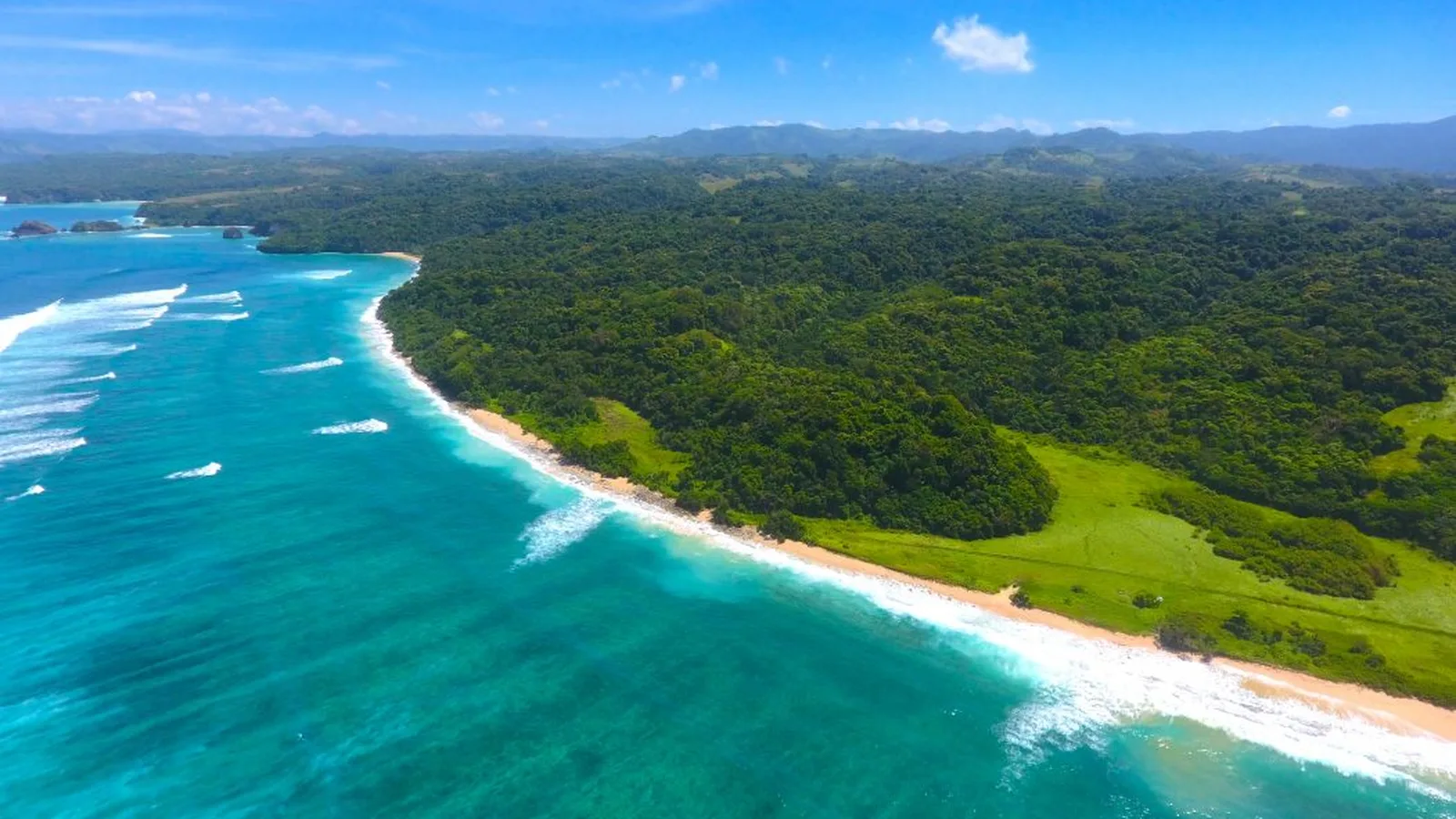
We are eight degrees south of the equator, in the Savu Sea, a vast and turbulent body of water that funnels the immense power of the Indonesian Throughflow. For centuries, the island looming on the horizon has been known to the outside world, if at all, for its fierce horseback warriors, its towering megalithic tombs, and a brutal annual ritual called the Pasola. Its identity has been forged on land, in arid grasslands and sandalwood forests. Few knew, and fewer still cared, about what lay beneath the waves. Now, they are coming. Not for the ritual battles, but for the silent world that Sharma is fighting to document before it vanishes.
The Saltwater Anomaly
For decades, this island remained a curious outlier in the Indonesian archipelago. It is vast—at 11,052 square kilometers, it’s twice the size of its famous neighbor, Bali—yet sparsely populated. With a population density of just 73 people per square kilometer, compared to Bali's nearly 650, much of the island feels profoundly empty, a rolling expanse of savannah under an enormous sky. This geographic and cultural isolation acted as an inadvertent fortress, preserving not just its unique Marapu animist beliefs but also the startling biodiversity thriving just offshore.
The local Sumbanese, whose lives are governed by the rhythms of the land and ancestral spirits, traditionally viewed the ocean as a larder, not a destination. I sat with Stefanus, a fisherman in his late sixties, on the porch of his wooden home in the village of Kerewe. His skin was the texture of cured leather, his eyes fixed on the turquoise shallows where his sons were mending a net. ‘When I was a boy, the only foreigner we saw was a Dutch priest, maybe once a year,’ he recalled, speaking in a mix of Bahasa Indonesia and the local dialect. ‘He never wanted to go in the water.’
He laughed, a dry, rattling sound. ‘Now, people come from Europe, from America. They pay much money. Not to catch the fish, not to eat the fish. They want only to stare at them with their goggles and tubes.’ He shook his head in lingering disbelief. ‘They call the fish by strange names. The names we have are for eating. Good to grill, good for soup. Their names are for... for looking.’ This simple observation cuts to the heart of the island’s transformation. A resource that was once purely sustenance is being rebranded as an experience, a commodity of sight and wonder. This shift is happening at a dizzying speed, catching a culture rooted in ancestral time completely off guard. The very isolation that protected these waters for so long has also made them supremely vulnerable, a blank canvas for outside capital and ambition with little local capacity to negotiate the terms.
‘We weren’t just buying land; we were buying the stewardship of an entire, functioning ecosystem. It's the ultimate luxury asset.’
This isn't a story of gradual evolution. It’s one of sudden, jarring discovery. The island's marine wealth was less a secret and more an irrelevance until about a decade ago. Now, it's the central exhibit in a high-stakes development push, forcing a reckoning between ancient ways of life and the voracious demands of the global luxury travel market. The anomaly is no longer that the island is undeveloped; the anomaly is that its underwater world survived intact long enough to be discovered at all.
Charting the Blue Treasure
The ‘discovery’ of Sumba’s underwater realm wasn't a single event but a slow trickle of intelligence from intrepid divers, liveaboard captains, and conservation scientists who found something unexpected. Unlike many of Indonesia’s volcanic islands, Sumba is a continental fragment, a piece of Gondwana that broke off and drifted into its current position. This unique limestone-based geology has created a submarine topography of breathtaking complexity: sheer walls that plummet into the abyss, networks of caves, and dramatic volcanic pinnacles that rise from the seafloor like submerged cathedrals.
These structures, combined with the island’s strategic position, create a staggering variety of marine habitats. The northeast coast, partially sheltered, hosts sprawling, intricate coral gardens. Here, the diving is a slow, meticulous exploration, a search for the rare and the miniature. It’s where you find pygmy seahorses no bigger than a fingernail camouflaged on gorgonian fans, and the psychedelic flash of a flamboyant cuttlefish hunting across the sand. The southwest, by contrast, is a wild, untamed frontier. Exposed to the full force of the Indian Ocean, its headlands are magnets for pelagic giants. This is where whale sharks congregate between October and December, where pods of dolphins and pilot whales are a common sight, and where the world’s second-largest manta ray population comes to feed and clean.
Recent scientific surveys have begun to quantify what was once just anecdotal evidence. A multi-year study in the Savu Sea Marine National Park, which borders the island, by Conservation International has formally identified over 500 species of reef-building corals and more than 300 fish species. Since 2020 alone, scientists working in these waters have documented at least three species of fish previously unknown to science. The engine driving this extraordinary productivity is the Indonesian Throughflow. This massive, deep-ocean current acts as a planetary conveyor belt, moving trillions of tons of water from the Pacific to the Indian Ocean, delivering a constant, nutrient-rich soup that fuels every level of the food chain, from plankton to apex predators. It also brings cooler, deeper water to the surface, a crucial buffer that has so far helped the island's reefs withstand the worst of global bleaching events.
Yulius, a divemaster from a small village near the southwest coast, embodies this rapid transfer of knowledge. Five years ago, he was a fisherman. Today, he briefs European clients in confident English, pointing to laminated charts. ‘This one, we call ikan napoleon,’ he explained, tapping a picture of a humphead wrasse. ‘But you call it Napoleon wrasse. Before, my father would catch him for a wedding feast. Now, I tell my guests he is more valuable alive. One fish, a tourist will pay $100 to see him. My father sold him once for $10.’ Yulius has become a frontline custodian, his daily log of sightings and coral health now a more accurate barometer of the reef’s condition than any elder’s memory.
The Pioneers' High-Stakes Gamble
The raw, untamed nature of Sumba’s marine ecosystem is precisely the asset that drew the first wave of high-end investors. This was not a play for the mass market. It was a calculated bet on the growing global demand for exclusivity, authenticity, and isolation. The strategy was pioneered by Nihi Sumba, a resort that has become synonymous with a new paradigm of ‘wild luxury.’ Opened in its current form in 2012, it deliberately positioned itself at the apex of the market. With just 33 villas spread across 567 acres of pristine coastline, and nightly rates that can exceed $1,700 for a one-bedroom villa, Nihi’s business model is built on scarcity.
By intentionally capping guest numbers at a maximum of 66, the resort argues it can deliver an unparalleled experience while minimizing its physical footprint. This low-volume, high-yield model was a radical departure from the typical resort development seen elsewhere in Southeast Asia. Chris Burch, the American billionaire investor who acquired and reimagined the property, wasn't just building a hotel; he was curating an entire environment. The famous left-hand surf break, ‘Occy’s Left,’ is limited to just ten registered surfers per day, a policy that transforms a natural resource into a keenly sought-after luxury good.
Following Nihi's lead, other pioneers like Alamayah, a boutique wellness retreat on the south coast, have adopted a similar philosophy. Their gamble was enormous. In the early days, they faced a near-total lack of infrastructure—no reliable power grid, unpaved roads, and a supply chain that was both expensive and unpredictable. They had to navigate a complex and often unwritten system of ancestral land rights, a process requiring years of patient negotiation with local clans and elders. A foreign investor I spoke with, who was part of an early syndicate, described the calculus: ‘We weren't just buying land; we were buying the stewardship of an entire, functioning ecosystem. It's the ultimate luxury asset.’
This perspective is crucial. For these investors, the healthy coral reefs, the consistent surf, the vibrant local culture—these are not just pleasant backdrops; they are the core assets underpinning their multi-million dollar valuations. A bleached reef or a polluted beach would represent a direct and catastrophic loss of value. This has turned them into unlikely, and often self-interested, conservation partners. Their success proved that a market existed for this type of travel, attracting a clientele willing to pay a premium not just for five-star service, but for the privilege of experiencing a place that still felt real.
To understand the scale of the financial bet, consider the raw numbers:
- Land Acquisition Cost (South Sumba): An investor might acquire a 2,500 square meter plot of raw, beachfront land for approximately $120,000 USD.
- Comparative Urban Asset (Singapore): For the same $120,000, that investor could purchase a 45 square meter, one-bedroom apartment in a non-prime district of Singapore.
The wager is that the value of the pristine coastline, the ‘functioning ecosystem,’ will appreciate far faster than the cramped urban apartment. It’s a bet on the increasing scarcity of wilderness itself.
The Conservation Conundrum
The arrival of high-end tourism and the scientific ‘discovery’ of the reefs created an urgent imperative: protect the asset. This has given rise to a complex and sometimes fraught conservation landscape, led by NGOs like The Sumba Foundation—originally established by Nihi’s founders—and a patchwork of smaller, community-led initiatives. Their primary tool is the Marine Protected Area (MPA), a globally recognized strategy for allowing fish stocks and coral to recover by restricting or banning extractive activities.
On paper, the results look promising. In a newly gazetted 150-hectare MPA near the coastal town of Wanokaka, initial monitoring by a local conservation group has shown a reported 25% increase in total fish biomass in just two years. Dive operators confirm a visible return of larger, commercially valuable species like groupers and snappers inside the no-take zones. This is the conservation model working as intended, creating a healthier, more resilient ecosystem that in turn enhances the tourism product. But this success comes at a cost, and it's not borne equally.
For generations, the reefs have been the primary source of protein and income for coastal communities. The establishment of a no-take zone, while ecologically sound, is a direct economic blow to local fishermen. They must now motor an extra eight kilometers past the MPA boundaries to reach legal fishing grounds, burning more fuel—which is expensive and often scarce—for a potentially smaller catch. This has created a deep-seated tension, a quiet but palpable conflict between the long-term goals of conservation and the immediate needs of survival.
I met with a village elder, a Rato, from a community near the Wanokaka MPA. We sat on woven mats as he spoke, choosing his words carefully. 'We understand the ocean needs to rest. My grandfather knew which reefs to leave alone during the spawning season. This is not a new idea for us,' he explained, referencing the traditional environmental stewardship embedded in the Marapu faith, which holds that spirits reside in specific reefs and headlands. 'But the ocean has fed us for a thousand years. Now, a man from Jakarta with a paper map and a GPS comes and tells us where we can and cannot go. The fish inside his lines are for the tourists to see. The fish outside, they become harder to find. Who feeds my family if the fish are only for looking?'
‘The ocean has fed us for a thousand years. Now, a man from Jakarta with a paper map tells us where we can and cannot go. Who feeds my family if the fish are only for the tourists to see?’
Enforcement is another challenge. While community ranger patrols have been established, they are often poorly equipped to deal with the persistent threat of blast and cyanide fishing, destructive practices often carried out by crews from other islands. The sound of a distant underwater explosion is a chilling reminder that the new conservation economy exists in a fragile state, vulnerable to being undermined by the old, extractive one. The conundrum is that for the MPA to be truly successful, the local community must see a direct, tangible benefit that outweighs the loss of their fishing grounds. So far, that benefit is trickling down, but perhaps not fast enough to win hearts and minds completely.
The Science of a Fragile Survival
The threats to Sumba's reefs are a catalog of modern ecological plagues. The most immediate is climate change. Rising sea temperatures cause coral bleaching, a process where the coral expels its symbiotic algae, turning ghostly white and eventually dying. Outbreaks of crown-of-thorns starfish, a native but voracious coral predator whose populations explode in stressed ecosystems, can wipe out entire reefs in months. And then there is the tide of plastic pollution, washing in from the wider Indonesian archipelago and choking marine life.
Yet, Sumba’s corals have demonstrated a surprising resilience. During the catastrophic 2016 global bleaching event, which devastated large parts of the Great Barrier Reef, Sumba's reefs showed a 40% higher recovery rate than those in the more famous, and more sheltered, Komodo National Park. Scientists like Dr. Anya Sharma attribute this tenacity to two key factors. First, the powerful currents of the Indonesian Throughflow not only supply nutrients but also act as a flushing mechanism, washing away pollutants and preventing water from stagnating and overheating. Second, the constant upwelling of cooler, deep-ocean water provides a vital thermal refuge, giving corals a fighting chance to survive heatwaves.
This natural resilience is now being augmented by innovative, small-scale scientific interventions. In a makeshift, open-air lab behind a dive shop, Dr. Sharma showed me her work. She held up a small, star-shaped ceramic plug, onto which a tiny fragment of acropora coral, no bigger than a thumbnail, was glued. This is a form of 'micro-fragmentation,' a technique where a single coral colony is broken into dozens of small pieces. Freed from the energy expenditure of maintaining a large skeleton, the fragments enter a supercharged growth phase. 'These little guys will grow up to 50 times faster than they would in the wild,' she explained. 'We are essentially cultivating 'super corals'—fragments taken from colonies that survived the last bleaching event, hoping their genetic resilience will be passed on.'
Once they reach a viable size, these fragments are transplanted back onto damaged reef structures. It's painstaking, laborious work. A single dive might only see a few square meters of reef replanted. Across the bay, another team is experimenting with underwater structures made from electrified rebar, known as Biorock, which accelerates coral growth by creating a favorable chemical environment. None of these are silver bullets. They are human-scale responses to a planetary-scale problem. Sharma is under no illusions. 'It feels like building a sandcastle against a coming tsunami,' she admitted, placing the coral plug back into its saltwater tray. 'But you have to try. You have to buy time. Every hectare of reef we can keep alive is a victory.'
The Trickle-Down Economy of the Reef
A tourist's decision to take a $100 diving excursion sets in motion a complex economic chain that reaches deep into local villages. That single payment is first split between the dive resort, which provides the equipment and marketing, and the boat operator. The resort’s share pays for international dive instructors, marketing budgets, and profits for often foreign-based owners. But a significant portion stays on the island. It pays the salary of the local divemaster, like Yulius, who can now earn up to 5,000,000 IDR (about $320 USD) per month—more than triple the island's average income.
It also pays the boat captain, the man who fills the tanks at the compressor station, the woman who prepares the post-dive lunch, and the receptionist at the front desk. These are new jobs, skilled and semi-skilled positions that offer an alternative to the precariousness of subsistence agriculture and seaweed farming. However, the benefits are not evenly distributed. An analysis by a local development agency estimated that for every tourist dollar spent in Sumba, as much as 60 cents 'leaks' out—going to off-island food suppliers, foreign booking agents, and overseas investors. The challenge is to plug these leaks, to create a more circular economy where tourism revenue recirculates within the local community.
I spoke with Maria, a 22-year-old woman who left her family's corn and cassava farm to work as a receptionist at a new mid-range dive resort. The cultural and economic whiplash has been profound. 'At home, everything is for the family. You work, but there is no money, only food for the next meal,' she said, her English learned from a smartphone app and interactions with guests. 'Here, I have my own salary. I can send money to my parents, but I can also buy a new phone or clothes. My mother doesn't understand this.'
This new financial independence is creating a social revolution in miniature, particularly for young women. But it also comes with anxieties. Maria described the pressure of dealing with demanding foreign guests and the feeling of being caught between two worlds. 'They want everything to be perfect, like in Bali. But this is not Bali,' she said. 'Sometimes the power goes out. Sometimes the boat engine breaks. My village life taught me to be patient. This job teaches me to be fast.' Her story is a microcosm of the island's broader transition: a rapid professionalization of the workforce, bringing both opportunity and a palpable sense of cultural dislocation.
To visualize the shift, consider the changing economic landscape of a single coastal village:
| Economic Activity | Traditional Model (c. 2010) | Emerging Model (c. 2024) |
|---|---|---|
| Primary Income | Subsistence farming, seaweed farming | Dive guiding, boat captain, hospitality |
| Key Asset | Ancestral land, water buffalo | Outboard motor, English skills, certifications |
| Market | Local market, Surabaya traders | International tourists, online agents |
| Monthly Earnings | ~1,200,000 IDR (variable) | ~3,500,000 - 5,000,000 IDR (more stable) |
| Main Risk | Crop failure, price collapse | Tourism downturn, ecological damage |
This table doesn't capture the cultural nuances, but it starkly illustrates the economic trade-offs being made village by village, family by family.
From Seaweed to Snorkels
Nowhere is this trade-off more tangible than in the story of Paulus. For 15 years, he and his family cultivated seaweed in the clear, shallow waters off Tarimbang, a stunningly beautiful but remote bay on the southeast coast. Seaweed farming was once hailed as a sustainable cash crop for coastal communities. But in the last five years, rising sea temperatures have stressed the crops, making them vulnerable to disease, while the global market price for dried seaweed has plummeted by over 30%. Paulus’s income became unpredictable, then untenable.
Two years ago, he made a decision that shocked his family and neighbors. He sold two of his family’s ancestral water buffalo. In Sumbanese culture, buffalo are not just livestock; they are living repositories of wealth, essential for dowries, funeral rites, and displays of social status. To sell one for anything other than a ceremonial purpose is a profound break with tradition. With the proceeds, a little over 30,000,000 IDR ($1,900 USD), Paulus bought a brand-new Yamaha 40-horsepower outboard engine and a fiberglass boat.
Today, he no longer wades into the water to tend his seaweed lines. He waits on the beach for a call from one of the nearby guesthouses. His new trade is taking tourists on two-hour snorkeling trips to the reefs at the mouth of the bay. For one trip, he charges 400,000 IDR ($25 USD). On a good day, he can do two trips. ‘It was a hard choice,’ Paulus told me, polishing the gleaming blue cover of his Yamaha engine. ‘My father said I was selling our ancestors for a machine. But our ancestors don't pay for my children's school fees.’
His bet on tourism is a bet on a different kind of future. He hopes his son, now 10, won't be a farmer or a fisherman, but maybe a hotel manager. His fears are just as potent. He worries about becoming entirely dependent on a fickle industry that could vanish with the next pandemic or economic downturn. He sees the trash washing up on the beach and worries the beautiful corals his clients pay to see will disappear. His story is not unique. All along the coast, the tangible assets of the old economy—buffalo, looms, fishing nets—are being liquidated to finance the entry into the new one. The Yamaha outboard has become the new buffalo, a potent symbol of risk, hope, and the irreversible turn towards a future tied to the whims of the outside world.
‘Sumba isn't a lost world to be found. It's a future world being built, for better or worse. What happens here in the next decade will be a blueprint, or a cautionary tale, for every last wild place on Earth.’
The Tipping Point
Sumba is poised on a knife's edge. The low-volume, high-cost model championed by the pioneers has proven that tourism can, in theory, coexist with and even fund conservation. It has created a powerful economic incentive to protect the reefs. But there is a serious question of scale. Is this model a sustainable blueprint for the whole island, or is it merely an exclusive bubble, a pristine enclave for the 1%, that will inevitably be overwhelmed when the pressures of mass development arrive?
The signs of that pressure are everywhere. The Indonesian government, under its 'Ten New Balis' tourism development initiative, has earmarked the island for major investment. The Ministry of Public Works has already approved significant infrastructure allocations, and Tambolaka Airport in the northwest is slated for runway extensions to accommodate larger aircraft. Government projections forecast a 200% increase in tourism arrivals by 2028. Critically, local budgets for environmental protection and enforcement are only slated to increase by 15% over the same period. This gaping divergence between development ambition and conservation capacity is the island’s single greatest threat.
The development here feels organic, almost chaotic, a stark contrast to top-down, master-planned visions like the controversial Eco Beach City project proposed for Rempang island near Singapore. In Sumba, development is a patchwork of individual land deals, small guesthouses, and a handful of large resorts, all moving at different speeds with little central coordination. This lack of a master plan is both a blessing and a curse—it has prevented monolithic, destructive projects, but it also means there's no coherent strategy for managing water resources, waste, or coastal zoning.
Dr. Sharma, reflecting on her work, sees the island as a laboratory for the future. 'Sumba isn't a lost world to be found,' she stated, her gaze fixed on the horizon. 'It's a future world being built, for better or worse, right now, in front of us. What happens here in the next decade will be a blueprint, or a cautionary tale, for every last wild place on Earth.'
As our boat motored back to the small harbor, the setting sun ignited the sea, turning it into a sheet of liquid gold. Just beneath the shimmering surface, the two worlds were clearly visible. Vibrant colonies of purple and blue coral pulsed with life, fish darting between them. And right beside them, stark and silent, stood the white skeletons of the dead reef, a permanent, underwater ledger of what has been lost, and a fragile testament to all that is still fighting to survive.