The Solvency of a Sunset: Asia's New Ledger for Life
The spreadsheet said one thing. The thick, jasmine-scented air of the alley said another. Alex, who had spent the last decade translating human desire into lines of code in San Francisco, sat on a red plastic stool that wobbled slightly on the uneven pavement. Before him was a bowl of khao soi, its surface a fiery orange constellation of crushed peanuts, fried shallots, and chili oil, all for 50 baht—about $1.50. The morning sun, having just cleared the tiered roof of the neighborhood temple, cast a long shadow from its golden stupa, striping the lane in light and dark. He finished the last of the rich, coconut-curry broth and pulled out his phone, not from habit, but for a ritual.
A notification glowed on the screen. It was from his brokerage account, a quiet confirmation that the interest earned on his savings in the last thirty days had just covered his entire month’s rent on a spacious one-bedroom apartment a few blocks away. For a man who once spent 65% of his after-tax income just to keep a roof over his head in a city that demanded everything, this small, digital whisper felt like a tectonic shift. It was a private, stunning moment of liberation. He hadn't broken the system. He hadn't invented some revolutionary financial instrument. He had simply changed his longitude.
This isn't a story about dropping out. It's about opting in to a different kind of solvency. It’s a quiet migration, not of backpackers seeking cheap beer, but of seasoned professionals, entrepreneurs, and investors who have done the math and realized the most valuable asset they can acquire is their own life. They are engaged in the ultimate arbitrage: not of currencies or commodities, but of existence itself. They've understood that in certain corners of the world, the cost of living has become decoupled from the quality of life, creating an opportunity so profound it demands a complete re-evaluation of what it means to be financially secure.
The Great Re-Pricing of a Life
The West is exhausted. It is a exhaustion born not just of work, but of the work required simply to afford to work. A relentless cycle of earning to pay for the expensive infrastructure of a life—the mortgage, the car, the childcare, the hurried, overpriced lunches—that leaves little room for the life itself. This is the 'hustle culture' that has been sold as ambition but feels more like a frantic treading of water. In this environment, time is not a resource to be spent but a debt to be serviced. Each day is carved up and allocated with the grim efficiency of a bankruptcy trustee, with slivers left over for sleep and, if one is lucky, a fleeting moment of peace.
Contrast this with the quiet epiphany in a Chiang Mai alley. The decision for people like Alex to relocate to Southeast Asia is often misdiagnosed as an escape, a retreat from responsibility. This is a fundamental misreading of the strategy. It is, in fact, a deeply proactive and aggressive financial maneuver. It's the strategic purchase of time and mental space, the two most finite and precious commodities. It's a reallocation of one's life portfolio away from accumulating liabilities in high-cost, time-poor environments and towards a new form of solvency measured in presence, health, and autonomy.
Let’s ground this in the stark arithmetic Alex left behind. He was a senior software engineer earning a handsome salary, yet his financial reality was a paradox of wealth and scarcity.
| Expense Category | San Francisco, USA | Chiang Mai, Thailand |
|---|---|---|
| 1-BR Apt Rent (City Center) | $3,397 / mo | $450 / mo |
| Monthly Utilities (85m2 Apt) | $195 | $70 |
| Monthly Transit Pass | $81 | $35 |
| Total Monthly Core Burn | $3,673 | $555 |
This isn't just a comparison of prices; it's a comparison of pressures. For Alex, that $3,118 monthly difference wasn’t just savings to be squirreled away. It was the sound of a cage door swinging open. It was the mental bandwidth previously consumed by rent anxiety, now freed up for a new language, a business idea, or the simple, unmonetized act of watching the light change on a temple spire. He hadn't abandoned ambition; he had moved it to a place where it could breathe. He was hacking the system, not with code, but with geography, executing a trade that swapped a life of frantic accumulation for one of profound, and affordable, existence.
Where the Monthly Burn Dissolves into Mist
The psychological release begins not with the big-ticket items, but with the small, daily abrasions of cost. It's the absence of the constant, low-grade hum of financial calculation that accompanies every decision in a high-cost city. Do I take the subway or an Uber? Can I afford that second glass of wine? Should I make coffee at home or buy one out? This relentless micro-accounting drains cognitive resources, a tax on the soul paid in a thousand tiny increments. In places like Penang, or Da Nang, or a dozen other Southeast Asian locales, this hum simply fades away.
There is a moment, perhaps a month or two after arrival, when the expatriate brain finally recalibrates. You stop mentally converting the price of a meal back to your home currency. You just pay the 30 ringgit, the 150,000 dong, and realize it’s an insignificant sum. This isn't about being rich; it's about the friction of money being removed from the majority of your daily interactions. The monthly burn, that fearsome dragon that must be slain anew every thirty days, doesn't just shrink; it dissolves into the humid evening mist.
The feast arrived in waves. First, the char kway teow, the flat rice noodles seared in a screaming-hot wok with prawns and bean sprouts, kissed with the smoky breath of the charcoal fire—the wok hei—that is the soul of the dish. Then came the oyster omelette, crispy at the edges, gooey in the center, a perfect textural counterpoint. A plate of satay, the chicken impossibly tender, glazed with a sweet and savory peanut sauce that clung to the meat. All of it laid out on a Formica-topped table at a hawker stall in George Town, the air thick with the scent of tamarind, chili, and grilling meat, the symphony of a hundred different meals being cooked in the open air. The bill for this gastronomic tour-de-force for two, including fresh-pressed sugarcane juice, came to less than $10. It wasn't just cheap; it felt like a form of abundance that money in the West could no longer buy.
This daily compounding of small efficiencies creates a staggering cumulative freedom. A life where a delicious, nourishing meal costs $3 instead of $30, where a taxi across town is $4 instead of $40, isn't just 10 times cheaper. It's existentially different. A single year of living in London on a modest budget can easily consume £30,000 in basic living expenses. That same year in Penang might cost $12,000. The $18,000 difference isn't just a number on a statement. It's a year of not having to work. It's the capital to launch a small business. It's the freedom to say 'no' to a project you don't believe in. When you can live well for a year on what a few months cost back home, you have effectively broken the linear relationship between time and money.
The Currency of Connection
In the calculus of relocation, we often focus on the tangible assets: rent, food, transport. We neglect to price one of the most critical components of a fulfilling life: social connection. In the hyper-scheduled, economically stratified cities of the West, community has become a luxury good. Seeing friends is an event, planned weeks in advance, often carrying a price tag—a $100 dinner, a $20 cocktail—that subtly curtails its frequency and spontaneity. We 'network' with an agenda, hoarding social capital like a scarce resource. This transactional nature of relationships is another hidden tax on well-being.
In much of Southeast Asia, the financial barrier to entry for social contact is virtually nonexistent. The 'third place'—that essential nexus of community between home and work—is not a boutique coffee shop charging $6 for a latte, but a streetside stall where a glass of potent, sweet Vietnamese coffee costs a dollar, or a simple café where a cappuccino is still less than two. This trivial cost changes the entire dynamic of social life.
'Back in Paris, seeing my friends was a scheduled, expensive event. It required coordination, budget, and travel time,' explains Hélène, a French graphic designer who now lives and works from Da Nang, Vietnam. 'Here, it’s a spontaneous part of the day. A message pops up: 'Coffee in 15?' The answer is always yes. We have the time, and literally no one is counting the cost. My social life is ten times richer, and I'm spending 80% less on it.'
This isn't merely a pleasant lifestyle perk; it’s a powerful investment in mental health and professional growth. The low cost of gathering enables a far higher frequency of interaction, which in turn accelerates the formation of deep, authentic bonds. Instead of the stilted ritual of a networking event, connections are forged over shared meals, impromptu beach trips, and casual co-working sessions. The communities that form—a blend of locals, long-term expats, and transient digital nomads—are fluid, diverse, and incredibly supportive. Need advice on a visa? Someone in the group has just been through it. Looking for a reliable developer? A recommendation is a five-minute conversation away. This organic support system has a tangible economic value, providing the kind of resilience that in a Western context one might have to pay a therapist or a business coach to access. The currency of connection here has a much higher purchasing power, and the returns are measured in a richness that no balance sheet can capture.
The New Corner Office: A Veranda Overlooking the Rice Paddies
The great Western housing dream has curdled. For a generation, it has become a nightmare of crippling debt, bidding wars, and the acceptance of ever-smaller spaces for ever-larger sums of money. A 1,000-square-foot apartment in Austin, Texas, a city once considered an affordable alternative, now commands a median price of over half a million dollars. The reward for this immense financial commitment is often a life spent indoors, with a view of another building, paying off a 30-year mortgage that acts as an anchor, tethering you to a single job in a single city.
This is where the arbitrage of place becomes most vivid. The concept of 'home' is completely redefined. The North American or European notion of leveraging oneself to the hilt to own a property is replaced by a far more flexible, and luxurious, model of long-term leasing. Consider the financial power of this shift: a 35-year-old professional with €350,000 in savings in Amsterdam might, if they are lucky, secure that as a down payment on a modest apartment, locking them into decades of mortgage payments. In Bali, that same capital can secure the 25-year lease on a brand new, three-bedroom villa with a private pool and a view of verdant rice paddies. Crucially, it leaves a substantial portion of that capital free, generating income that can cover all living expenses for years. It's a move that transforms a lifetime liability into an asset that buys total freedom for a half-decade or more.
Morning for Jürgen, a 68-year-old retired engineer from Berlin, now begins not with the screech of the S-Bahn but with the chattering of geckos. He slides open the glass doors of his bedroom and steps onto a stone patio. The air is heavy with the sweet, almost narcotic scent of frangipani blossoms that have fallen into his private swimming pool overnight. He dives into the cool water, the shock and silence of it a daily baptism. He swims a few laps, looking out over a small, terraced rice field where a lone farmer is already at work, his conical hat a moving focal point in a sea of impossible green. This entire scene, this private paradise, costs him less in monthly rent than the Nebenkosten—the utility and service fees—on his former 60-square-meter apartment in the Charlottenburg district. This isn't just more space. It’s a different state of being. The daily dose of light, nature, and tranquility is a form of preventative healthcare, a dividend of well-being paid out every single morning.
The Healthcare Hedge: World-Class Care Without the Ransom
One of the most persistent anxieties for anyone considering a move away from the developed West is healthcare. The narrative is one of compromise: you trade lower costs for lower standards. This is a dangerously outdated cliché. For two decades, countries like Thailand, Malaysia, and Singapore have been quietly building a healthcare infrastructure that in many cases surpasses the quality, and certainly the efficiency, of the systems their new residents have left behind. This isn't about rustic clinics; it's about a thriving, globally competitive medical industry.
The proof is in the numbers. Bumrungrad International Hospital in Bangkok, a gleaming facility that feels more like a five-star hotel than a medical center, treats over 520,000 international patients from 190 countries annually. These are not people seeking budget care; they are seeking elite care at a logical price. The region's top hospitals are JCI-accredited, staffed by Western-trained doctors, and equipped with technology that would be the envy of many American or European counterparts.
For the relocated professional, this reality provides a powerful 'healthcare hedge.' The cost of top-tier international health insurance that provides comprehensive coverage across Southeast Asia is a fraction of the price of an equivalent plan in the United States.
- Average annual premium for a 40-year-old in the USA: Approx. $6,000
- Premium international plan covering SEA: Approx. $2,200
The annual saving of nearly $4,000 is significant, but the real peace of mind comes from the out-of-pocket costs. Mark, a 45-year-old teacher from Oklahoma living in Bangkok, experienced this firsthand. A sudden, excruciating toothache on a Sunday evening led him to a 24-hour dental clinic. 'I was terrified,' he recalls. 'I imagined some back-alley place. Instead, I walked into a facility that was cleaner and more modern than anything I'd ever seen back home. They did a digital X-ray, diagnosed an abscess, and performed an emergency root canal on the spot. The endodontist had trained in Michigan. The whole procedure, from walking in the door to walking out three hours later, pain-free, cost me $300. I just paid with my credit card. No insurance forms, no deductibles, no co-pays. The shock wasn't the pain; it was the utter simplicity and affordability of receiving world-class care.' This isn't an isolated anecdote. It is the standard experience, a system where healthcare is treated as an efficient service, not a complex and often predatory financial product.
The Time Dividend: Investing in Your Own Horizon
After all the spreadsheets are closed and the cost-of-living indices are put away, the ultimate return on this geographic investment becomes clear: time. The financial freedom purchased by relocating is not an end in itself; it is the currency you use to buy back your own life, hour by hour, day by day. This is the 'time dividend'—the surplus of waking hours no longer indentured to the sheer mechanics of survival. And what people do with this dividend is the truest measure of the relocation's success.
It’s the Canadian couple in their late forties on the island of Siargao in the Philippines. They moved their online marketing business, automated much of it, and now work a focused 15 hours a week instead of 50. The rest of their time is dedicated to a local marine conservation project they co-founded, working to protect the reef they now dive on every weekend. Their lives are no less productive, but their productivity is now aligned with their purpose, not just their profit margin. This is a story echoed across the region: the lawyer-turned-potter in Ubud, the finance director-turned-yogi in Koh Phangan, the IT manager-turned-novelist in Hoi An. These are not tales of retirement, but of re-engagement with dormant passions and latent talents, unlocked by the gift of unstructured time.
Governments are beginning to recognize and formalize this new model of living. Once the domain of those willing to navigate grey areas and border runs, this lifestyle is being brought into the light. Malaysia's DE Rantau Nomad Pass, for instance, offers a one-to-two-year visa for remote workers who can demonstrate a verifiable annual income of just $24,000 USD. It is a formal sanctioning of a life built on geographic freedom, a recognition that these new residents bring value beyond their direct spending. They bring skills, build communities, and cross-pollinate ideas. This journey recalls the 19th-century 'remittance men' sent to the colonies with a stipend. But where their story was often one of exile and slow decline, today's digital expatriates are on a voluntary pilgrimage of self-actualization and strategic financial ascent.
The Risk Register: The Ghosts in the Balance Sheet
To paint this picture without its shadows would be a disservice. Paradise is a marketing term, not a geographic reality. The balance sheet of this life must also account for its risks and non-financial costs, the ghosts that don't appear on a bank statement. The very systems that make life affordable can also be sources of frustration and instability. Visa regulations can change with the political winds, turning a carefully planned life into a scramble for residency. The charmingly chaotic infrastructure can mean unexpected power cuts or internet outages that can derail a workday.
There is a learning curve, steep and often humbling, in navigating cultures where 'yes' may not mean yes, where saving face is more important than delivering bad news, and where the concept of time can be maddeningly fluid. The Corruption Perceptions Index from Transparency International provides a stark, numerical reminder of this reality. A country like New Zealand ranks 3rd, a bastion of predictability. Thailand, a popular destination, sits at 108th. This gap isn't just an academic data point; it can manifest as the need for 'tea money' to expedite a bureaucratic process or the uncertainty of enforcing a contract. A contingency fund is not an option; it's a necessity.
And then there is the emotional cost, the heaviest liability of all. The time difference that turns urgent family calls into bleary-eyed 3 a.m. conversations. The ache of missing a wedding, a funeral, a niece's first steps. Technology can bridge the distance, but it cannot close it. The life you left behind continues without you, and the sense of being an outsider in both your new home and your old one can be a profound form of loneliness.
'The numbers were undeniable,' says Sarah, an advertising strategist who spent three years in Ho Chi Minh City before moving back to the UK. 'I was saving money, traveling, living a life that looked incredible on Instagram. But I realized I was pricing my life in spreadsheets, and I hadn't factored in the cost of missing my sister's kids grow up. The financial arbitrage was real, but the emotional arbitrage eventually ran against me. I don't regret it, but it's not a permanent solution for everyone.'
The Final Reconciliation: A Richness Measured in Sunsets
So what is the final accounting? What is the 'net worth' of a life re-priced in a new longitude? It begins with the numbers, which remain brutally, starkly compelling. The cost of living in New York City is 225% higher than in Bangkok. But it doesn't end there. To focus solely on the savings is to miss the entire point. The real value is not what remains in your bank account at the end of the month, but the quality of the life that the lower burn rate enables.
It's a move from a defensive financial posture to an offensive one. Instead of working to afford your life, your life is structured to afford you freedom. The true financial case for this relocation is a radical redefinition of personal wealth, shifting the measurement from accumulated assets to accumulated experiences, from the size of your mortgage to the breadth of your personal horizon. You are investing in a diversified 'life portfolio' where the returns are time, health, community, and purpose.
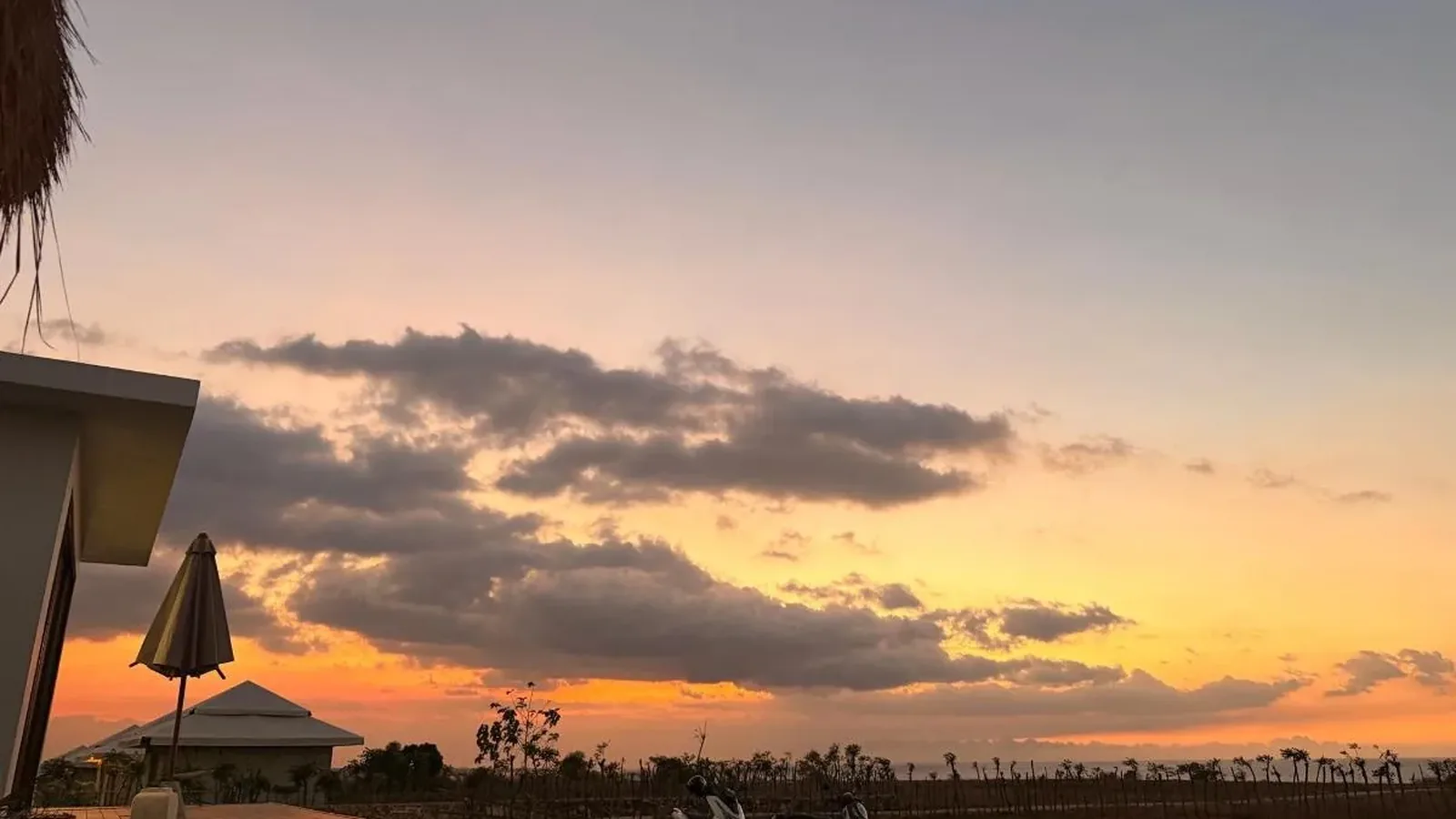
We return to Alex, leaving the noodle shop. The sun is higher now, the heat beginning to assert itself. He doesn't pull out his phone to check work emails or summon a ride to an office. Instead, he turns and walks through the gates of the temple. He finds a shady spot beneath a sprawling bodhi tree and sits, watching the slow, deliberate movements of the monks as they sweep fallen leaves into piles. The financial calculation of the morning is complete, a neat, satisfying equation. But this, now, is the solution. This quiet, unhurried moment that belongs to no one but him. The day, and the life it contains, is his own.
Perhaps the ultimate arbitrage isn't about currency exchange rates or property yields. It is about exchanging a life of frantic, expensive accumulation for one of profound, and affordable, existence. You might arrive hoping to save money, but you could leave having saved yourself.