The Provenance Imperative: An Ecology of the New Elite
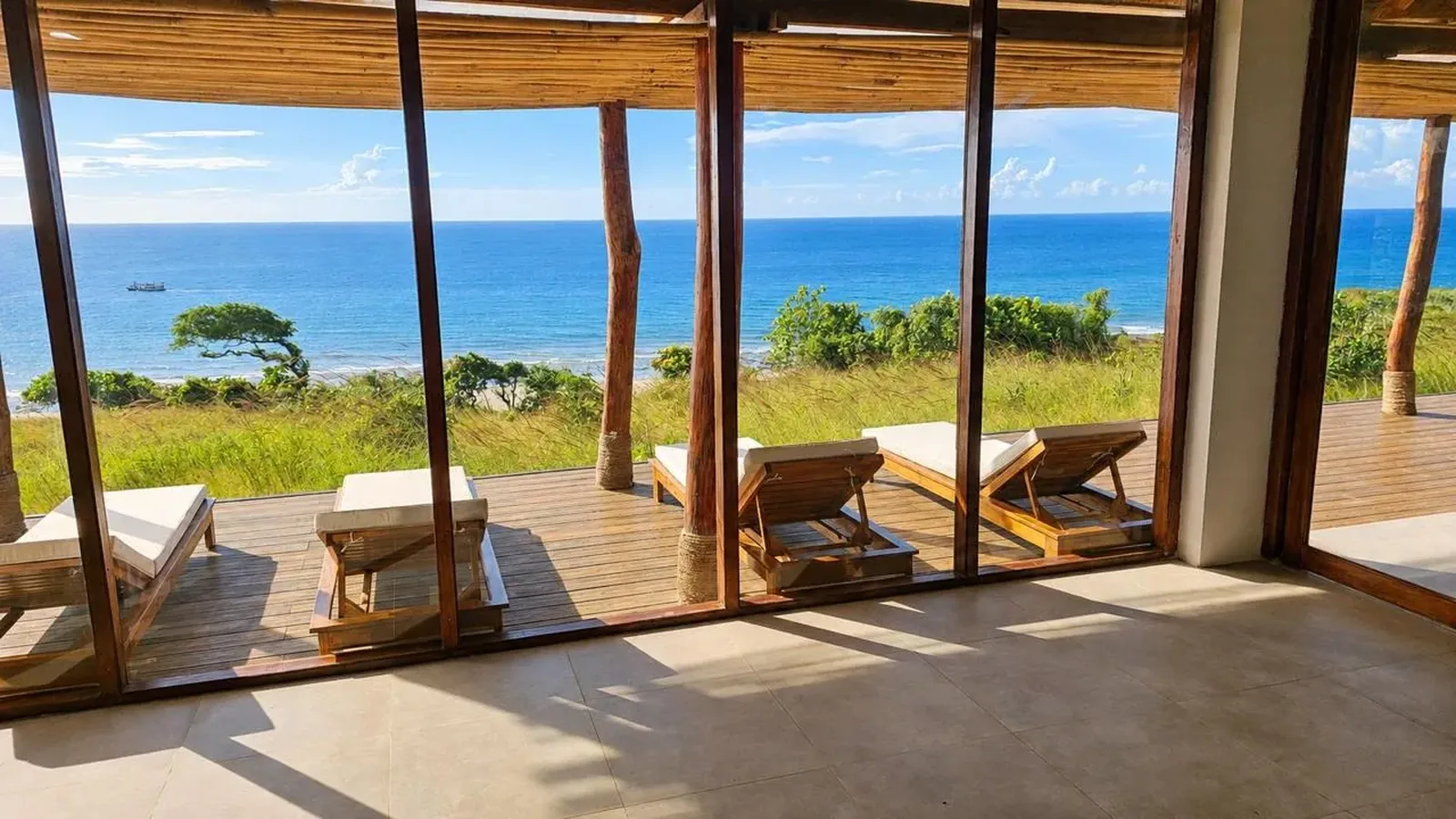
Jonas Thorsteinsson is balanced on a windswept bluff in northern Iceland, a place where the Arctic wind has more authority than any building code. He’s not at a hotel. He’s on a construction site, his own, clad not in the technical gear of his former Silicon Valley life but in a dense, cream-coloured lopapeysa sweater, its wool sourced from sheep grazing less than five kilometres away. With practiced care, he lowers the final block of turf onto the roof of his house, patting it into place. The structure beneath him has no concrete foundation, its walls are made of rammed earth dug from the hillside it now inhabits, and its formidable insulation comes from the very wool on his back.
This isn’t a vacation home. It’s the flagship asset in what Thorsteinsson, a 42-year-old software engineer who sold his data-analytics firm for a rumoured nine figures, calls his “Provenance Portfolio.” It’s a life built, not bought. An existence curated not for its accumulation of branded goods, but for the radical verifiability of its supply chain. He gestures to the fjord below, a slash of deep navy between emerald hills.
“The spreadsheet said one thing. The salt air said another,” he explains, his voice low against the wind. “In Palo Alto, my entire life was an abstraction layer. My food, my energy, my clothes, my data—it all came from an invisible, global machine. I wanted to see the machine. And then I wanted to build my own, a better one, right here.” The house is just the beginning. The portfolio includes everything from his food to his travel, each component subjected to a ruthless calculus of locality, ethics, and tangible connection. This is the new frontier of extreme wealth, moving beyond conspicuous consumption to conspicuous conservation, where the ultimate status symbol is not a thing, but its story.
The Zero-Kilometer Home: Beyond the Passive House
The lexicon of luxury housing has long been dominated by technology—the ‘smart home’ that anticipates your every need with a symphony of integrated apps and automated blinds. But a more radical philosophy is taking root, one that swaps digital integration for ecological integration. The shift is from the smart home to the ‘living home’, a structure conceived not as an object placed upon the landscape, but as an extension of the landscape itself.
Thorsteinsson’s Icelandic outpost is a case in point. The project is guided by a principle of extreme material sourcing. Its load-bearing walls are not steel and concrete, but two-foot-thick rammed earth, compacted in layers using soil excavated for the building’s footprint. The distinctive colour striations in the walls are a geological timeline of the very ground it stands on. Interior timbers were reclaimed from a demolished fish processing plant in a nearby village, their salt-weathered grain telling a story of the local economy. The stone for the hearth was quarried by hand from an outcrop on the property. This isn't architecture; it's a form of applied geology.
This philosophy extends to the home’s metabolism. While a certified Passive House—the previous gold standard in eco-building—consumes up to 90% less energy for heating and cooling than a conventional building, the ‘living home’ ideal pushes further. Thorsteinsson’s house is part of a private ‘microgrid’ powered by a geothermal borehole that taps into Iceland's volcanic heartbeat. Its water doesn't come from a municipal pipe; it's pulled directly from the humid Icelandic air by an array of atmospheric water generators. Wastewater isn't sent to a sewer; it’s purified on-site through a 'living machine,' a series of tanks filled with specific algae, plants, and microorganisms that mimic a natural wetland, returning clean water to the landscape. A standard American household uses over 300 gallons of municipal water per day; Thorsteinsson's reliance is near zero.
“My client doesn't get a house. They get a geological and botanical portrait of their own valley.”
This approach requires a new kind of architect, a figure like Alejandro Vargas, a self-described 'terroir-ist' based in a remote valley in Patagonia. Vargas works with a handful of international clients, imposing a strict rule: no material can arrive by container ship. “The process begins with a year of observation,” he says via a crackling satellite link. “We map the sun, the wind, the water flows. We inventory the soil types, the stone, the available timber. The land dictates the design entirely. My client doesn't get a house. They get a geological and botanical portrait of their own valley.” For his patrons, the long, arduous process is the point. It’s a form of ‘proof-of-work’ that transforms a dwelling from a passive asset into an active, deeply personal creation.
This movement represents a profound re-evaluation of what a home is. It’s no longer a shell to protect inhabitants from the environment, but a membrane designed to interface with it directly and symbiotically. The ultimate luxury is no longer infinity pools and panic rooms, but a home with a supply chain you can walk across in an afternoon.
The Hyper-Local Wardrobe: The End of the Brand
For decades, sustainable fashion meant choosing a brand with the right certifications—organic cotton, fair trade labour. But for the new vanguard of the Provenance Portfolio, this is insufficient. Buying from even the most conscientious global brand is still an act of passive consumption, reliant on opaque, globe-spanning supply chains. The new ideal is to move past the brand entirely and commission not just a garment, but an entire wardrobe from individual artisans operating within a strictly defined local ecosystem.
This is the concept of the 'fiber-shed,' a term coined by weaver and author Rebecca Burgess to describe a geographical area—typically a 150-mile radius—that can provide for all the stages of textile production, from soil to skin. It’s a principle being adopted by a small but influential set of patrons who are now mapping and utilizing only the textiles grown and processed in their immediate vicinity. This might mean commissioning linen garments from flax grown in nearby fields, sweaters from a specific flock of sheep, or even experimental textiles from nettle or hemp cultivated on their own estate.
On the Isle of Skye in Scotland, a weaver named Eilidh MacLeod works from a stone workshop overlooking the choppy waters of The Minch. She has only three clients: a tech billionaire in California, a financier in Zurich, and a Hong Kong heiress. Her waitlist is two years long. MacLeod works exclusively with the wool from a single, named flock of rare Hebridean sheep that graze on the neighbouring croft. She uses natural dyes she forages herself—gorse for yellow, lichen for grey-green, iris root for a subtle purple. The entire process, from shearing to weaving the final tweed, happens within a five-mile circle. “They don’t just buy a bolt of cloth,” MacLeod says, the rhythmic clatter of her loom filling the small room. “They are commissioning a piece of this specific landscape. They know the name of the shepherd. They’ve walked the fields where the sheep graze. The cloth has a biography.”
Technology plays a paradoxical role in this pre-industrial revival. Clients don’t fly to Skye for fittings. Instead, a tailor local to them performs a 3D body scan, creating a precise digital avatar. MacLeod and her client’s chosen tailor then collaborate on digital patterns, ensuring a perfect bespoke fit that eliminates the 15% average material waste of traditional garment production. The final, hand-woven cloth is shipped to the tailor for its final transformation. This blend of ancient craft and modern precision results in a garment that is both deeply personal and ruthlessly efficient.
The impact is measurable.
- Off-the-Rack Luxury Suit: Sourced globally (wool from Australia, buttons from Italy, lining from China), its cradle-to-gate carbon footprint is estimated at 32 kg CO2e.
- Fiber-Shed Bespoke Suit: Using local wool, natural dyes, and artisanal production, its footprint is under 5 kg CO2e.
This isn’t about wearing a label. It’s about wearing a story, a verifiable narrative of place, craft, and ethical production. It marks the end of the brand as the arbiter of quality and the rise of the artisan, the flock, and the field as the new markers of ultimate luxury.
The Curated Kilometre: The Estate as an Ecosystem
The phrase ‘farm-to-table’ has become so ubiquitous in high-end dining as to be almost meaningless. For the proponents of the Provenance Portfolio, it’s a concept that has been superseded. The new, more ambitious model is ‘estate-to-table,’ where a private property is meticulously engineered to become a closed-loop, self-sufficient food ecosystem.
This has created a new key role within the domestic staff of the ultra-wealthy: the Homestead Manager or, more revealingly, the Ecological Chef. This individual is a hybrid of farmer, scientist, and artist, tasked with overseeing not just a kitchen garden, but a complex network of regenerative agriculture plots, climate-controlled mycology labs, apiaries for honey and pollination, and even small-scale aquaculture systems. Their KPI isn’t just the quality of the meals, but the percentage of ingredients sourced from within the estate’s boundaries.
Step inside a converted barn in the Berkshire hills of Massachusetts. The air is warm, humid, and smells deeply of damp earth and mushrooms. This is the mycology lab of a private 300-acre estate owned by a hedge fund manager. On stainless steel racks under soft blue light, a dozen varieties of fungi are fruiting: lion’s mane with its cascading white tendrils, sculptural king oysters, and delicate, ink-black trumpets. The estate’s Ecological Chef, a young man named Ben who holds degrees in both mycology and culinary arts, inspects a log of shiitake. “Last night, we served a seven-course tasting menu for eighteen guests,” he says. “The venison came from a deer culled on the property last fall. The greens, root vegetables, and herbs were from the geodome garden. The honey in the dessert was from our hives. The cheese was made from the milk of our four goats. And all the mushrooms, of course, came from this lab.” His employer’s greatest luxury, he explains, is “eating a meal with a supply chain of 200 meters.”
This model is a private, intensified version of what pioneering restaurants like Blue Hill at Stone Barns in New York have championed. A typical high-end restaurant’s sourcing map is a dizzying web, often involving over 250 different suppliers from around the globe. By contrast, Blue Hill aims to source up to 80% of its ingredients from its own 80-acre farm and the immediate Pocantico Hills valley. The private estate model takes this to its logical extreme, aiming for 95-100% self-sufficiency for the family’s daily needs. Food provenance becomes the ultimate status symbol, where serving guests wine pressed from your own grapes, charcuterie cured in your own cellar, and olive oil from your own trees is a more potent display of wealth than any famous label.
The Art of Absence: The New Aesthetic of Travel
The traditional grand tour of the wealthy—a frantic, multi-country itinerary ticking off five-star hotels and Michelin-starred restaurants—is beginning to look dated, even vulgar, to a certain set. Its replacement is a mode of travel defined by slowness, depth, and a radical new luxury: the art of absence. Absence of connectivity, absence of consumption, and absence of a demanding schedule.
This new aesthetic favors deep, months-long immersive stays in a single, often remote, location. The goal is not to see, but to participate. It has given rise to a form of ‘conservation travel,’ where the primary purpose of the journey is not leisure, but the active rewilding or scientific study of a piece of land. For this cohort, acquiring and restoring an ecosystem is the new acquiring a superyacht. The metrics of a successful trip are not countries visited or photos taken, but hectares rewilded or species documented.
Consider the carbon footprint comparison. A single first-class round trip from London to Los Angeles generates approximately 6.2 metric tons of CO2 per passenger. It’s an ephemeral experience. By contrast, a family can fund the complete rewilding of one hectare of depleted British countryside through a program like Heal Rewilding for a one-time cost of £21,000, creating a permanent carbon sink and a legacy that can be visited and engaged with for generations.
“My vacation is no longer about escaping my life. It’s about building a better one, even if only for a month.”
Sarah Chen, a tech executive who made her fortune in AI, used to own a share in a house in the Hamptons. She sold it three years ago. Now, she and her family spend every August in a remote fjord in western Norway, in a simple house accessible only by boat. There is no cell service and the internet is a slow, satellite-based affair used only for emergencies. Their ‘vacation’ is structured around a partnership with a local marine biology institute. Mornings are spent in a small boat, using hydrophones to record whale songs and taking biopsy samples from humpbacks for genetic analysis. Afternoons are for hiking, fishing for their dinner, and entering data. “For the first few years in my career, luxury was about instantaneous gratification,” Chen says. “Now, it’s about delayed, meaningful impact. The ultimate luxury here is the silence. The sheer, profound absence of digital noise is a verifiable metric of the trip’s success. My vacation is no longer about escaping my life. It’s about building a better one, even if only for a month.” This form of travel repositions the traveler from a mere consumer of scenery to a steward of it, an active participant in its preservation and understanding.
The Service Layer: The Rise of the Sustainability Concierge
This intricate, hyper-localised lifestyle cannot be managed with a simple Amex Black Card. It requires a sophisticated and highly specialized service layer, a new suite of advisors who go far beyond the traditional roles of a family office. Meet the ‘Household Ecologist,’ the ‘Ethical Sourcing VP,’ and the ‘Provenance Manager.’
These are not consultants who merely provide recommendations; they are executive-level operators who actively manage and verify the entire supply chain of a family’s existence. A top-tier firm in Zurich or London now charges an annual retainer of €150,000—a fee comparable to that of a senior wealth manager—to oversee the full ‘ethical and ecological footprint’ of a high-net-worth family. Their work is a complex blend of supply-chain logistics, forensic accounting, materials science, and diplomatic negotiation.
A day in the life of a London-based Ethical Sourcing VP, let’s call him Julian, illustrates the breadth of the role. His morning might start with a 6 AM video call to a small alpaca farm in the Peruvian Andes. He’s not just ordering yarn; he’s using a live feed to verify animal welfare standards and check the water quality of the stream where the raw fleece is washed. By 10 AM, he’s on a call with a broker for Sustainable Aviation Fuel (SAF). The family plans to fly to their estate in Tuscany, and they’ve mandated a 100% SAF-powered flight. Given that SAF is currently three to four times the price of conventional jet fuel, Julian is negotiating a bulk purchase, a complex transaction as the private aviation sector is currently the fuel's largest and most competitive customer. In the afternoon, a new set of ceramic dinner service commissioned from an artist in Portugal arrives. Before it's accepted into the household, Julian uses a handheld X-ray fluorescence spectrometer to test the glaze for traces of lead or cadmium, ensuring it meets a standard far stricter than any government regulation.
To manage this complexity, these advisors are increasingly using private blockchain platforms. Every significant asset—from a diamond to a plank of reclaimed lumber to a side of beef—is assigned a digital token. At each stage of its journey, from origin to final use, a new block of verified data is added to its chain, creating an immutable, transparent ledger of its provenance. This provides the family with something unprecedented: a mathematically certain guarantee of an object's ethical and ecological history. This trend is a personal-scale reflection of macro-level regulations like the EU's Corporate Sustainability Due Diligence Directive, which will soon force large companies to audit their supply chains for human rights and environmental abuses. The ultra-wealthy are simply applying that same level of rigor to their own lives, years ahead of any mandate.
The Tangible Asset: Collecting with a Conscience
The pivot towards provenance and process is reshaping the world of collecting. The traditional markers of value—raw horsepower, artistic fame, brand prestige—are being augmented, and in some cases replaced, by the richness of an asset’s story and its ecological narrative. Conspicuous consumption is being replaced by what could be called ‘conspicuous restoration.’
The classic car market provides a stark example. The roar of a V12 engine is being replaced by the silent, torquey glide of an electric motor. Firms like UK-based Lunaz Design have created a booming business in meticulously electrifying classic automobiles. They will take a 1961 Jaguar E-Type, a vintage Bentley, or a classic Range Rover, and replace its entire powertrain with a bespoke, modern electric system. The process is painstaking, involving a full bare-metal restoration and engineering that preserves the car’s original handling characteristics and aesthetic integrity. A bespoke electric conversion of a classic Range Rover by Lunaz costs upwards of £350,000, more than double the price of a brand-new 2024 model. The enormous premium is not for speed or technology, but for the narrative: the fusion of timeless design with a zero-emission conscience. It’s the ultimate automotive paradox—a piece of history, future-proofed.
“This is more beautiful than a Koons, because it tells a story of transformation, not just transaction.”
This same ethos is rippling through the art world. There is a growing appetite for ‘regenerative art’—works where the artist's sustainable process and choice of materials are as important as the final form. In her Hong Kong gallery, a prominent collector stands beside her most prized recent acquisition. It’s not a Warhol or a Rothko. It is a large, intricately detailed sculpture by the artist Basse Stittgen, made entirely from post-industrial blood waste, a material typically incinerated. The piece, titled ‘Blood Related,’ is both beautiful and unsettling, its polished, deep-red surface resembling carved mahogany. “To me, this is more beautiful than a Koons,” the collector states quietly. “A Koons balloon dog is about the perfection of surface, a celebration of industrial production. This is about redemption. It takes a waste product, something society wants to forget, and through immense craft, transforms it into an object of beauty. It tells a story of transformation, not just transaction.” Investing in these assets is an act of patronage that aligns with the collector's entire life philosophy—a philosophy of repair, regeneration, and radical reconsideration of value.
The Psychological Shift: From Ownership to Stewardship
What is driving this profound and expensive shift in behaviour among the 0.01%? The answer lies in a psychological evolution away from ownership as an end goal and towards stewardship as a new marker of status. This is a change that mirrors the Italian Renaissance, where patrons like the Medici family defined their power not by the gold they hoarded, but by the singular, world-changing art and architecture they commissioned. Today's new patrons are commissioning ecology instead of frescoes, seeking to actively shape their environment, not just decorate their homes.
According to a 2023 UHNW survey by the global property consultancy Knight Frank, this is a generational imperative. The report found that for next-gen inheritors (those under 40), ‘personal legacy’ and ‘environmental impact’ are now ranked by 58% as more important investment drivers than ‘pure financial return.’ For this cohort, who grew up with the reality of climate change, the conspicuous consumption of their parents’ generation can feel like a liability. The Lamborghini parked out front is no longer an unambiguous symbol of success; it could also be seen as a symbol of indifference. ‘Conspicuous conservation’—visibly and verifiably living in a way that regenerates rather than depletes—is becoming the new power move.
Dr. Anya Sharma, a sociologist who studies elite cultural trends, sees this as a fundamental pivot. “We’re witnessing the Ubermensch ideal shift from Nietzsche’s creator of new values to a new archetype: the creator of new ecosystems,” she argues. “It is a profound pivot from an ethos of dominating nature to one of curating it. The ultimate expression of power is no longer bending the world to your will, but demonstrating you can create a small, perfect world that exists in harmony with its surroundings.”
There’s also a deep sense of personal fulfillment reported by those who adopt this lifestyle. The ‘proof-of-work’ involved—learning to identify local flora, understanding the mechanics of a geothermal system, participating in the rewilding of a landscape—offers a satisfaction that passive consumption cannot. It’s the difference between buying a fine watch and learning how to build one. The latter imbues the owner with skill, knowledge, and a tangible connection to the object. This hands-on engagement provides a powerful antidote to the abstraction and alienation of a life lived through digital interfaces and frictionless transactions.
The Price of Paradise: An Ecology of the 1%
There is, however, a stark and uncomfortable reality at the heart of the Provenance Portfolio. Is this a scalable blueprint for a better future, or simply the most elaborate and expensive form of virtue signaling yet conceived?
This question looms large over Jonas Thorsteinsson’s Icelandic paradise. A few kilometres down the coast from his perfectly integrated, zero-kilometer home, a local fisherman named Gunnar prepares his boat in the pre-dawn chill. Like his father and grandfather before him, he makes his living from the fjord. But his reality is one of rising costs and diminishing returns. The price of diesel for his boat is crippling. Fish stocks, impacted by the same global climate shifts Thorsteinsson’s home is designed to escape, are less predictable than ever. The gulf between these two men living on the same stretch of coastline is immense. One has the resources to build a self-sufficient lifeboat of stunning ecological purity; the other is adrift in the very waters the lifeboat is designed to float upon.
The ‘green premium’ on these choices is astronomical, creating a potential eco-apartheid. The upfront cost for the materials and specialized labor for a 5,000 sq. ft. ‘zero-kilometer’ home can be 40-50% higher than a standard luxury build, adding a premium of over $1.5 million to a typical $4 million project. The table below illustrates the investment divergence:
| Feature | Bespoke 'Zero-Kilometer' Eco-Home (Jackson Hole, WY) | LEED Platinum Luxury Apartment (San Francisco, CA) |
|---|---|---|
| Size | 4,000 sq ft | 4,000 sq ft |
| Primary Materials | Rammed earth, reclaimed timber, local stone | Steel, concrete, glass |
| Energy System | Closed-loop geothermal, solar, private microgrid | Public utility grid |
| Water System | Atmospheric water generation, on-site purification | Public utility water & sewer |
| Approx. Build/Buy Cost | $4.2 Million | $10+ Million |
| Supply Chain Dependency | Hyper-local (labour/materials), Global (tech) | Fully global and utility-dependent |
Furthermore, the narrative of total self-sufficiency has its limits. Even the most off-grid homes are critically dependent on a globalised supply chain for their core technology. The world's most exclusive 'off-grid' properties aren't disconnecting for simplicity; they are creating private 'microgrids' that are often more technologically advanced and resilient than the public utilities they are leaving behind. Their solar panels, inverters, and high-capacity batteries are products of a complex international manufacturing process involving silicon from China, lithium from Chile, and cobalt from the Congo. The dream of a purely local existence remains tethered, invisibly, to the very global system it purports to reject.
Projects like the planned Eco Beach City in Indonesia represent an attempt to wrestle with this scalability problem, packaging these principles into a master-planned development. But it does not resolve the fundamental critique: that these beautiful, harmonious enclaves may only serve to highlight the unsustainability of the world outside their meticulously managed borders.
What the provenance imperative proves, unequivocally, is that a life of beautiful, seamless harmony with the planet is technologically and logistically achievable. It demonstrates that we can build homes that breathe, eat food with an honest history, and live within our ecological means. Yet, as the wind blows over Thorsteinsson’s turf roof and Gunnar’s fishing boat heads out to an uncertain sea, it forces the essential question. Is this a replicable framework for a regenerative future, or is it just the quiet, methodical construction of gilded, carbon-neutral lifeboats for a chosen few?