The Social Terrarium: A Caged Sport for an Uncaged World
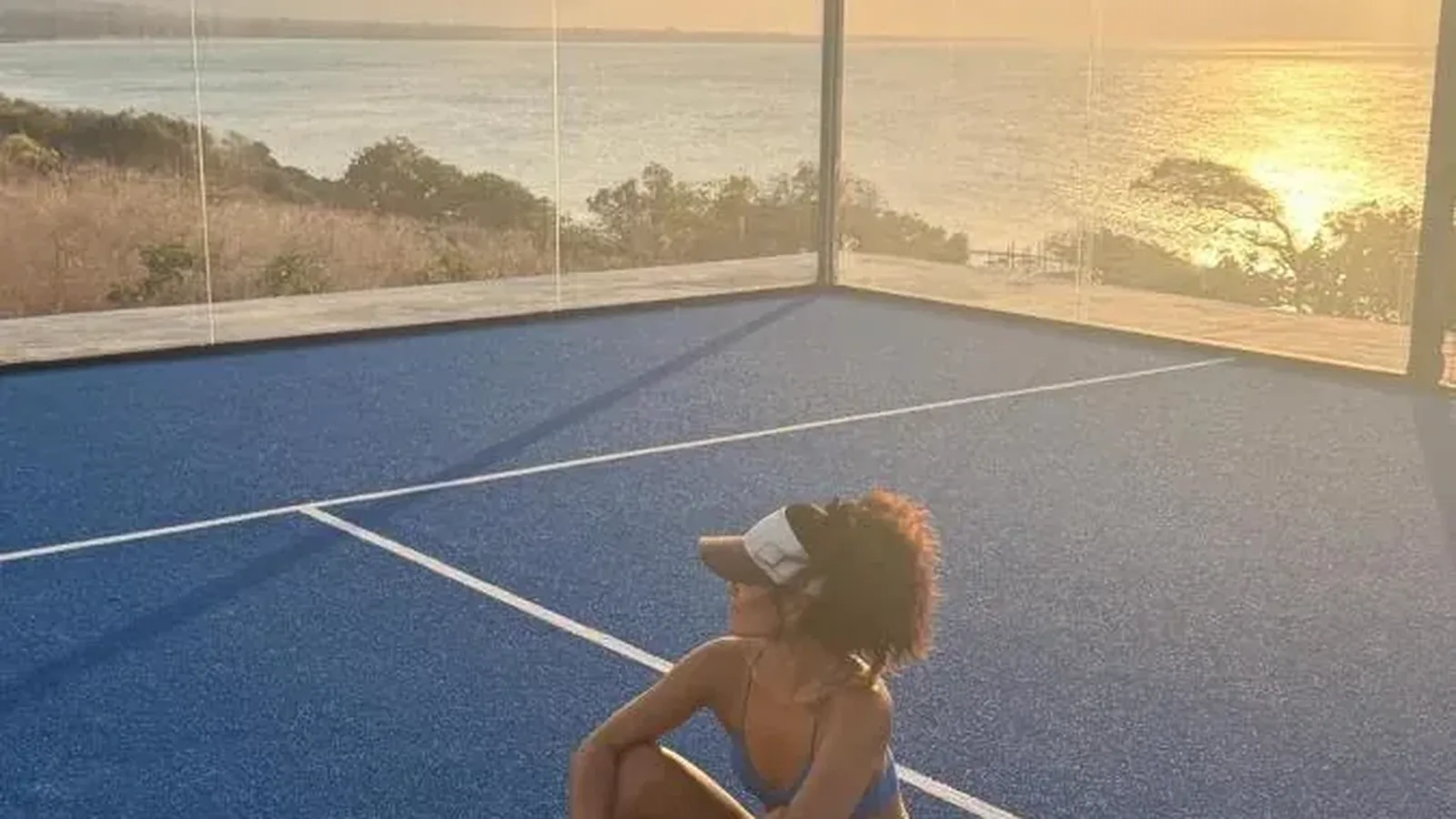
The light at eight degrees south of the equator has a certain architectural quality. It doesn’t spill, it builds. One moment, the pre-dawn is a wash of indigo over the reef; the next, the sun cuts a hard line across the limestone cliffs, turning the sea from ink to hammered silver. It’s a light that demands structure, a light that carves the world into definite shapes. I’m thinking about this because it helps explain, in some small way, why the most compelling new structures appearing on this landscape aren’t villas or yoga shalas, but glass-walled boxes measuring precisely 20 by 10 meters.
The spreadsheet I was staring at last night said one thing. The humid air, thick with the scent of frangipani and slow-burning coconut husks, said another. The per-square-meter cost of building one of these illuminated stages is a fraction of what it costs to pour the foundation for a luxury bungalow, yet the return—measured not in dollars, but in social gravity, in the sheer human magnetism they exert—is incalculable. It's a phenomenon I first felt not here, but 12,000 kilometers away, in the place where this modern ritual was perfected.
Twilight was falling on Málaga. Not the gentle, apologetic dusk of northern Europe, but a decisive Andalusian evening that drew a deep blue curtain across the sky. From a side street in the El Palo district, a sound carried, rhythmic and sharp: pop… pop… thwack. It was the sound of a four-way conversation, a percussive dialect spoken inside a glowing cube. Four figures moved in a fluid, hypnotic dance, their shadows stretching and contracting on the green turf. Outside the glass, waiting on cheap plastic chairs, a dozen more people were sipping small glasses of Cruzcampo, their laughter a soft counterpoint to the game’s staccato pulse. They weren't just waiting for a court. They were orbiting a new kind of hearth.
The Search for a Frame
What I saw in Málaga, and what I see being replicated from the reclaimed industrial lots of Stockholm to the sun-bleached coasts of Southeast Asia, is more than the proliferation of a sport. It’s the search for a frame. We live in an age of boundless digital plains and atomized social lives, our connections stretched thin across continents and screens. We scroll through infinite feeds in vast, anonymous gyms. We play sports on fields so large they feel isolating, our victories and failures witnessed by no one in particular. The padel court is the antidote to all that. It’s a deliberately contained space, a social terrarium where the action is not just played, but performed for an audience that is inches away, separated only by a sheet of tempered glass.
This intimacy is the sport's secret code. In the province of Málaga, the spiritual home of European padel, there are now over 1,200 courts, scribbled into the landscape like glowing postscripts on a city's map. They occupy forgotten corners of tennis clubs, rooftops of shopping centers, narrow plots of land once deemed useless. Each one is a small theater. Inside, four players are locked in a geometric puzzle of angles and rebounds. Outside, friends, family, and strangers lean against the glass, their faces illuminated by the court's glare, analyzing every shot, living every point. The boundary between player and spectator dissolves. The game becomes a shared experience, a public display of effort, strategy, and camaraderie.
I spoke to a man named Javier, a civil engineer in his fifties with a wiry frame and the easy grin of someone who spends his evenings doing exactly what he wants to do. He was waiting for his 9 p.m. slot, nursing a coffee. 'We started playing during the crisis,' he told me, gesturing with his chin toward the court. 'The financial one, then the health one. This was our escape. But it’s not just a sport, it’s our evening. We solve the world’s problems here, between the glass and the net. My partner on the court, I met him here. My wife plays with her friends on the next court over. It’s the village square, but you can book it for 90 minutes.'
The court’s design doesn't just contain the ball; it contains the energy. A tennis court is a declaration of space, a vast expanse that requires you to generate your own power, to shout across a net that feels miles away. A padel court is a conversation. It’s small enough to whisper, to laugh, to strategize with your partner between points without moving. It draws you in, physically and socially, framing the human need for connection in 200 square meters of artificial turf and transparent walls.
An Accidental Acapulco Genesis
The greatest revolutions often begin not with a grand vision, but with a domestic annoyance. So it was with padel. In 1969, Enrique Corcuera, a wealthy Mexican industrialist, decided to build a court for paddle tennis at his holiday home in Acapulco. His problem was simple: his property was flanked by dense vegetation, and every errant shot sent the ball into a botanical abyss, interrupting the flow of the game. His solution was pragmatic, not prophetic. He enclosed the court with walls—three meters high at the back and two meters on the sides.
In doing so, he accidentally changed everything. The game he created, which he initially called 'Paddle Corcuera,' was no longer just a miniaturized version of tennis. The walls became an integral part of the play. A ball that would have been out was now a strategic opportunity. The game slowed down. Rallies became longer, more complex. Brute force was replaced by cunning. It was a physical game, yes, but it was now also a game of geometry, of anticipating rebounds and using the enclosure to your advantage. The walls that were built to keep the ball in had the unintended effect of making the sport radically more accessible to everyone.
Like any good idea with a hint of glamour, it traveled. In 1974, Corcuera's friend, Prince Alfonso de Hohenlohe, the charismatic founder of the Marbella Club, visited the Acapulco villa and fell in love with the strange, walled-in game. He saw its potential immediately—not as a world-conquering sport, but as the perfect pastime for his discerning clientele. He built two of the first courts in Europe at his exclusive Spanish resort. Suddenly, this Mexican improvisation had a new, impossibly chic stage. Through the 70s and 80s, the Marbella Club was the playground of the international jet set, and padel became their private diversion. One can easily picture it: James Hunt, still buzzing from a Formula 1 victory, trying to master the back-wall-bandeja; the Duke of Windsor observing from a wicker chair, G&T in hand; film stars and aristocrats discovering the addictive rhythm of a game that was both casually social and intensely competitive.
This aristocratic incubation period was crucial. It gave the sport an aura of sophistication before its inevitable democratization. The dimensions Corcuera had paced out in his garden—exactly 20 meters long by 10 meters wide—became the gospel, a universal standard that would allow the sport to replicate itself perfectly from a Spanish beach club to a Paraguayan national stadium, which, incidentally, was the first of its kind, a testament to the sport's deep, often overlooked, roots in South America. The game had found its perfect form, a box built for pleasure that was about to be opened by the world.
Anatomy of an Addiction
To understand why padel has spread with the speed of a viral meme, you have to spend an hour inside the box. For the uninitiated, the first few minutes are a study in awkwardness. The racket—a solid, perforated paddle called a pala—feels like a clumsy extension of the hand. The court seems deceptively small. The first serve, which must be hit underhand, feels anticlimactic, a gentle lob rather than a concussive declaration of intent.
Then, the magic begins. A ball you thought was beaten, soaring past you towards the back wall, doesn't disappear. It hits the glass with a satisfying thud and floats back towards you, offering a second chance. This is the moment of conversion. The game is forgiving. The rallies, by design, are longer and more collaborative. Data shows that in an average amateur game, the ball is in play for 30% longer per rally compared to tennis. Less time is spent picking up balls and more time is spent in a state of play, a shared, rhythmic struggle. The barrier to entry isn't just low; it's practically subterranean. Within twenty minutes, a foursome of complete beginners can sustain a rally, laughing at their mis-hits and celebrating the occasional, fluky winner.
I watched a woman named Chloe, a French graphic designer on holiday, take her first lesson. Her first ten minutes were a comedy of errors—swinging at air, flinching when the ball came off the side fence, apologizing reflexively to her partner. Then, her coach fed her a slow ball to the backhand. She let it go past her, turned, and watched as it rebounded cleanly off the back glass. As it came back into play, she swung, connecting with the sweet spot of the pala. The ball flew low over the net for a clean winner. A look of pure, unadulterated joy washed over her face. It wasn't just a good shot; it was the solving of a puzzle. It was a flow state, achieved not after years of grueling practice, but in less than half an hour. That feeling is the sport’s primary psychological hook.
'It is the most attractive asset in sports right now. The capex-to-utilization ratio is off the charts. You build a box for €20,000 that’s booked 12 hours a day, and you sell €5 beers to the players afterwards. The math isn’t complicated.'
Beyond the forgiving physics is a mandatory social contract. Padel is played in doubles. You are never alone on your side of the court. Success is impossible without communication, partnership, and a shared understanding. Unlike the solitary pursuit of running or the head-to-head combat of tennis, padel forces connection. You succeed and fail as a team of two, within a wider team of four. This built-in social architecture is what transforms a simple sporting activity into a powerful community-building tool, a weekly ritual that feels less like exercise and more like a reunion.
| Feature | Padel | Tennis |
|---|---|---|
| Court Size | 20m x 10m (200 sqm) | 23.77m x 10.97m (~260 sqm + runoff) |
| Serve Style | Underhand, at or below waist level | Overhand or underhand |
| Key Skill | Strategy, patience, use of walls | Power, athleticism, technique |
| Racket | Solid, stringless pala | Strung racket |
| Social Format | Doubles only (socially enforced) | Singles or doubles |
| Learning Curve | Low; beginners can rally within 1 hour | High; requires significant coaching |
The Nordic Light: When Padel Met Introversion
Nowhere did the glass box find more fertile ground than in the most unlikely of places: the dark, cold, and socially reserved landscape of Sweden. The Swedish padel explosion was less a trend and more a collective fever dream. Between 2019 and early 2023, the number of courts surged by over 700%, from around 500 to more than 4,200. It was a phenomenon that baffled cultural observers but made perfect sense on a psychological level. For a culture that often prefers structured, activity-based socializing to spontaneous conversation, padel was a godsend. It provided a pre-packaged social event: a set time, a set place, a clear objective, and four participants. It was a social life with an instruction manual.
I spoke with Lars Björkman, a former IT consultant who, in 2020, sank his life savings into converting a defunct paper warehouse in a Stockholm suburb into a 12-court padel center. The place still smells of cold brick and damp concrete, a scent now overlaid with the strangely clean aroma of artificial turf and the faint, rubbery tang of new padel balls. 'I thought it would be a slow build,' he told me, his voice echoing in the cavernous space. 'A hobby business. Within three months, we were booked from 6 a.m. to midnight. We had waiting lists. People weren't just coming to play; they were hanging out for hours. It became their 'third place'—not home, not work. We had lawyers playing with plumbers, students with CEOs. The box, it flattens everything.'
This explosive growth, fueled by cheap capital and pandemic-era boredom, was unsustainable. The 'gold rush' led to a saturated market. Suddenly, there were too many courts, too many competing clubs, and not enough new players to fill them. The Swedish media dubbed it the 'Klarna-krasch,' a nod to the buy-now-pay-later mentality that had fueled the boom. Clubs went bankrupt. Investors lost millions. Lars’s club survived, but barely. 'We had two years of madness, and now we have reality,' he said, watching a foursome battle it out under the harsh fluorescent lights. 'The tourists are gone. The speculators are gone. But the people who love the game, the ones who built their friendships here? They stayed. The community is real, even if the business model was a fantasy.'
The Swedish boom-and-bust cycle stands as a stark warning for every new market padel enters. It demonstrates that while the demand for connection is immense, the economics of servicing that demand require discipline. The construction itself carries hidden complexities; the 12 kilograms of silica sand brushed into every square meter of turf, crucial for play, requires constant replenishment and raises questions about microplastic runoff—a detail often lost in the rush to build. The Swedish experience proves that the glass box is not a magic solution, but a delicate ecosystem that requires careful cultivation lest the community it fosters withers on the vine.
The Business of the Box
The financial logic behind padel’s global takeover is as clean and compelling as the court’s modernist aesthetic. For sports investors and entrepreneurs, it represents a potent combination of low capital expenditure and high utilization. The global market for court construction is projected to exceed €2 billion by 2026, driven by an average cost per court of between just €18,000 and €25,000. That’s a rounding error in the world of traditional sports infrastructure.
This accessible price point has ignited a 'gold rush' among a new class of investors. It’s not just venture capitalists and property developers; it's a global cohort of celebrity athletes who see padel as their post-career second act. Football icons like Zlatan Ibrahimović and Zinedine Zidane have launched their own branded chains of clubs, Padel Zenter and Z5 respectively. Tennis stars like Andy Murray have invested in UK-based padel startups. They aren't just lending their names; they are active evangelists, understanding instinctively the sport’s social appeal and its straightforward business model.
Consider this comparison:
- The Lisbon Padel Project: A group of investors leases a 1,000-square-meter warehouse on the outskirts of the city. They spend €250,000 all-in to install four courts, a small café, changing rooms, and acquire the necessary permits. Within six months, the courts are operating at 70% capacity, generating revenue from court hire, racket rentals, and post-match drinks.
- The London Tennis Dream: An investor wishes to build a single, new, open-air tennis court in a desirable suburb like Wimbledon. The acquisition of the land alone, a plot of roughly 650 square meters, could easily surpass £1,000,000 before a single shovel hits the ground.
The economics are starkly different. Padel is agile, capital-light, and perfectly suited for an urban infill strategy. It can be slotted into the world’s most expensive cities on plots of land previously considered commercially unviable.
This physical expansion is supercharged by a digital ecosystem, dominated by apps like Playtomic. This Spanish startup has become the de facto 'Uber for padel,' a global platform that standardizes booking, manages payments, and, most crucially, provides a universal rating system. A player from Stockholm can land in Bali, open the app, find a game with three strangers of a perfectly matched skill level, and be on court within an hour. This technology removes the final barrier to entry—the need to know people—and transforms a global network of disparate clubs into a single, interconnected community of over a million active users.
Urban Acupuncture, One Court at a Time
If you start looking for them, you see the glass boxes everywhere. They are insertions of vibrant, kinetic life into the city’s forgotten spaces. Architects and urban planners have a term for this: 'urban acupuncture.' It’s the idea that small, precise, strategic interventions can have a disproportionately large, revitalizing effect on the health of a neighborhood. A padel court is a perfect needle. With a footprint of only 200 square meters—meaning three courts can fit neatly into the space of a single tennis court—they are being used to reactivate urban voids with startling efficiency.
In Rome, I played at a club perched on a rooftop with a direct, breathtaking view of the dome of St. Peter's Basilica. The experience was surreal. The pop of the ball, the frantic scrambles, the shouts in Italian and English, all unfolded against a backdrop of ancient history. As the sun set, the golden light catching the Vatican, the sound of the game mingled with the distant peal of church bells and the constant, low hum of the Eternal City. It felt less like a sport and more like a conversation with the city itself.
This is the court's unique architectural power. Its clean, modernist lines and transparent walls allow it to contrast with or complement any environment. In Stockholm, they've built courts inside a historic gasometer, the industrial skeleton of the past framing the kinetic energy of the present. In the financial district of Dubai, pop-up courts appear for a few months at a time, their floodlights creating luminous beacons amidst the soaring, indifferent skyscrapers. Even in new, master-planned communities, the court is becoming a central feature. Ambitious projects like the proposed Eco Beach City on Sumba are designing their community hubs not around a pool or a clubhouse, but a central plaza of padel courts, acknowledging them as the new nexus of social life.
'You have to explain it a hundred times. No, it’s not pickleball. Yes, you use the walls. No, you don’t have to be good. Then one day, you see them. The same four people who didn’t know each other a month ago, now booking a court for every Tuesday. That’s when you know you haven’t just built a court; you’ve built a piece of a neighborhood.'
In this, the padel court functions as a modern-day piazza or agora. It’s a defined, semi-public square where commerce (paying for the court), sport, and social life visibly intersect. Like the forums of ancient Greece and Rome, it’s a stage where a part of the community’s life is performed, witnessed, and shared. It revitalizes space not just by filling it, but by turning it into a destination, a place to gather, a point of human connection in the often-anonymous urban grid.
The Third Half: Community Beyond the Walls
The game ends. Handshakes are exchanged at the net, compliments on a well-played bandeja or a cunning drop shot. But the ritual is not over. What happens next is what insiders call the 'third half,' and it is arguably as important as the first two. It’s the post-match beer, the shared plate of tapas, the espresso at the club's café. It’s the breathless analysis of the game’s turning points, the scheduling of the rematch, the seamless transition from on-court partners to off-court friends.
A recent survey by Playtomic found that a staggering 78% of players rank the 'social aspect' of padel as equally or more important than the physical exercise. The smartest club owners understand this intuitively. They are no longer just building sports facilities; they are designing social destinations. The most successful new clubs feature integrated bars with local craft beer on tap, high-quality restaurants, and even co-working spaces. The court is the lure, but the community is the anchor. The goal is to create an environment so compelling that players arrive an hour early and stay for two hours after their match has finished.
One Tuesday night in Lisbon, I sat at the bar of a sprawling club housed in a former factory. The air was a cacophony of languages: Portuguese, English, Spanish, French, German. A group of Brazilian software developers were buying a round for the Irish bankers they had just narrowly defeated. A couple on a first date, who had opted for a game of padel instead of a movie, were laughing over a glass of wine. At a long communal table, players from three different courts were merging, phones out, creating a new WhatsApp group to organize the weekend's games.
The scene felt less like a sports club and more like the idealized version of a neighborhood bar. This is the new networking. The golf course, for generations the sanctum of business deals and corporate bonding, feels slow, expensive, and exclusive by comparison. Padel is faster, more accessible, more egalitarian. It’s a four-person, 90-minute social and business incubator, and it’s forging connections that spill out from the court into professional and personal lives. The third half ensures that the relationships built inside the glass box are not contained by it.
The American Frontier and the Soul of the Sport
Padel has conquered Europe and is making deep inroads across the Middle East and Asia. But it now stands before its final, and perhaps greatest, challenge: the United States. For years, padel’s presence in America has been negligible, a curiosity confined to a few private clubs in Miami and country clubs in Houston. That is changing, and changing fast. The US Padel Association has set an audacious goal: 30,000 courts and 10 million players by 2030, a quantum leap from the approximately 350 courts that existed in 2023.
This expansion, however, brings with it a fundamental cultural tension. Padel’s soul was forged in the leisurely, social crucible of Spain and Argentina. It’s a sport where the post-match beer is sacrosanct and the quality of the game is secondary to the quality of the company. American sports culture, by contrast, has a powerful tendency to professionalize, to quantify, to monetize. The temptation will be to focus on elite performance, expensive coaching clinics, and televised tournaments, potentially at the expense of the grassroots, community-first spirit that made the sport a global phenomenon.
I spoke with a man named Brian, a former tech executive who is trying to build a padel culture from scratch in Austin, Texas. He built the city's first public-access courts in a repurposed industrial park. 'It's an education process,' he told me, leaning against the fence of a court where four beginners were joyfully hacking away. 'You have to explain it a hundred times. No, it’s not pickleball. Yes, you use the walls. No, you don’t have to be good.' He paused, watching one of the players execute a clumsy but effective shot off the glass. 'Then one day, you see them. The same four people who didn’t know each other a month ago, now booking a court for every Tuesday. That’s when you know you haven’t just built a court; you’ve built a piece of a neighborhood.'
Can this European model of social sport survive contact with the American market-driven machine? The risk is that in the rush to build 30,000 courts, the 'third half' gets forgotten. The danger is that clubs become sterile, efficient player-processing facilities rather than community hubs. The challenge is to sell not just a new sport, but a new way of spending time—one that values connection as much as competition. The soul of the sport hangs in the balance on this new frontier.
The glass walls of a padel court do not just contain a game; they frame a human need. In an age of digital dislocation and curated isolation, we are flocking to these transparent boxes not just to hit a ball, but to be seen, to connect, to argue and laugh and strive within a community of others. We are looking for a stage for our small, daily dramas. The world's fastest growing sport, it turns out, is a global search for a neighborhood you can book for an hour.