The Echo Chamber: How Padel Conquered Global Space
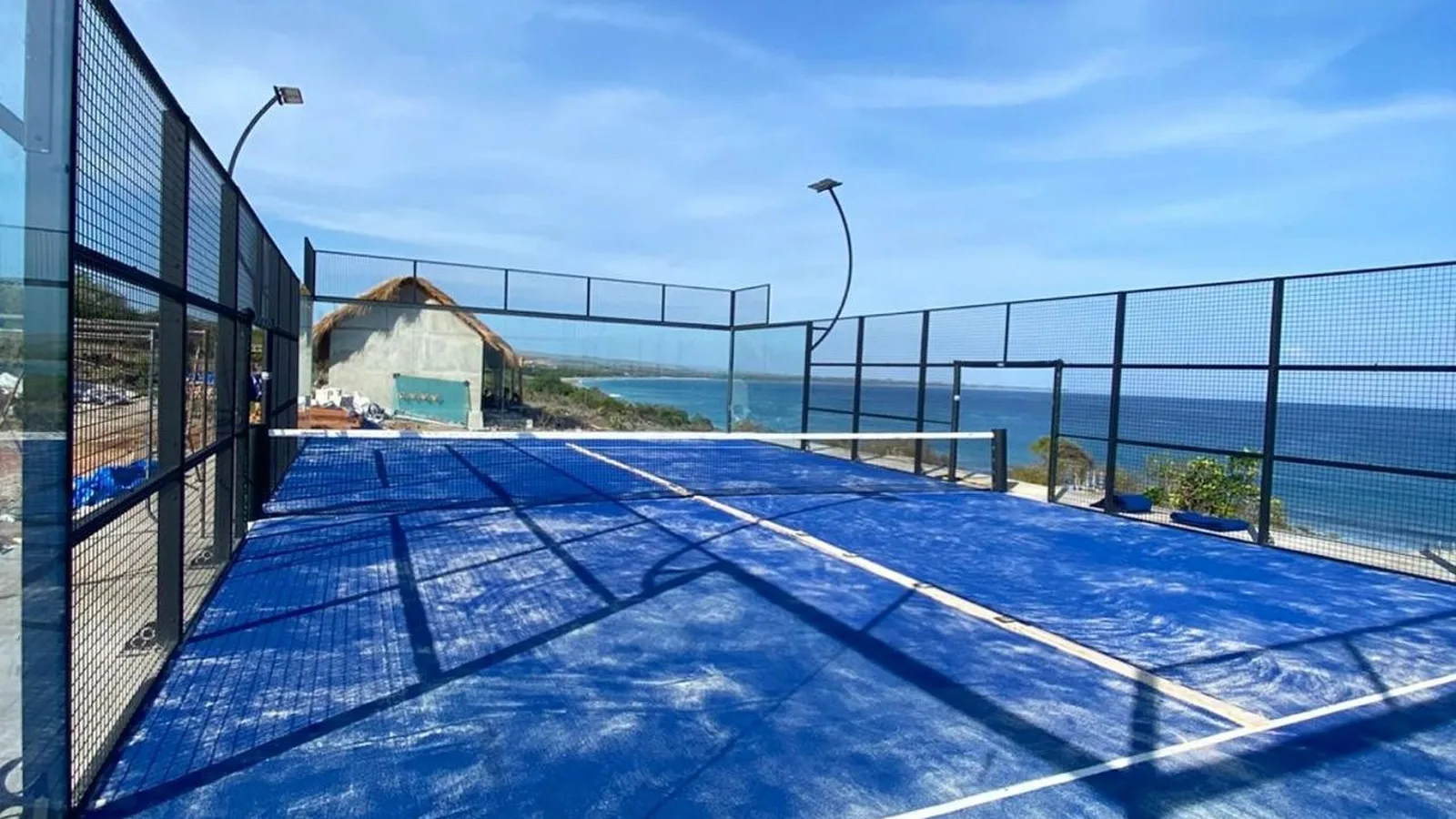
The dusk is a bruised purple over the hills of Andalusia. Down below, the Mediterranean has become a sheet of brushed steel, indifferent to the day’s end. Up here, on a manicured slope overlooking the coast, the real theatre is inside a collection of glowing glass boxes. Within one, four figures move in a fluid, four-way conversation of lunges and whispers, shouts and laughter. The sound is its own peculiar language, a percussive thwack of carbon fiber on a felted ball, followed a split-second later by the dull, resonant thump as the ball kisses a glass wall. It’s a sound you don’t just hear; you feel it in your sternum, the heartbeat of a new global tribe.
This sound, born on this very coast half a century ago, is now echoing. You can hear it in the repurposed industrial parks of Malmö, where it provides a rhythm to the long Nordic winter. You can hear it in the manicured compounds of Dubai, a counterpoint to the hum of perpetual air conditioning. You hear it in the historic sporting clubs of Rome, where it layers a new syncopation over the city's ancient cadence. It’s the sound of a game, yes, but it’s also the sound of a phenomenon: a form of social architecture masquerading as a sport.
It promises a strange kind of liberation through confinement. Within its transparent walls, strangers become partners, rivals become confidants. It has become a compass for a certain kind of person navigating the modern world—a person looking for community that is kinetic, for connection that is earned through sweat and strategy, for a small, defined space in a world that feels overwhelmingly vast and disconnected.
Acapulco, 1969: A Gentleman's Invention
Every global phenomenon begins with a local problem. For Enrique Corcuera, a wealthy Mexican industrialist, the problem was his garden. At his holiday home in Las Brisas, Acapulco, he had space for a tennis court, but not quite enough space. His property ran up against a steep hillside, and his wife, tired of chasing errant tennis balls down the overgrown slope, delivered an ultimatum. Corcuera, a man accustomed to engineering solutions, devised one not of expansion, but of containment.
He built a court that was a miniature of its tennis cousin—precisely 20 meters long by 10 meters wide—but enclosed it with high walls. The back walls were solid concrete, three meters high, while the side walls were a lower mix of concrete and wire mesh. His intention was purely pragmatic: to keep the ball in play. The accidental genius of his design was that the walls didn't just stop the ball; they returned it. They became a fifth and sixth player in the game, a silent, unpredictable partner that transformed the geometry, the rhythm, and the very soul of the sport. What began as an expedient solution to a domestic inconvenience became the game's defining feature. For years, it had no formal name, known simply as 'Paddle Corcuera' or 'Paddle-Tennis' among the friends who played it.
Imagine being a guest at that Acapulco villa in 1970. A Spanish aristocrat, perhaps, or an American film star, accustomed to the elegant sweep of a tennis court or the manicured perfection of a golf links. You are led past the pool to a strange, sunken cage. It looks like a squash court that has been left out in the sun. Corcuera hands you a short, solid-faced paddle, a 'pala', and coaxes you inside. The first few rallies are pure confusion. You hit a perfect cross-court winner, only to see it rebound off the back glass and float gently back over the net, where your opponent puts it away with a triumphant grin. The angles feel wrong. The space feels claustrophobic. But then, after ten minutes, something shifts. You begin to read the rebounds not as an interruption, but as an opportunity. The court ceases to be a box and becomes a three-dimensional chessboard. The delight is not in the power of the shot, but in the cleverness of the angle. You are hooked. It was this disorienting, then utterly addicting, experience that Corcuera's influential friends took home with them, the seeds of a revolution carried in their carry-on luggage.
The Marbella Migration: A Coastline Conquered
Among Corcuera's most captivated guests was a man who understood a thing or two about transplanting paradise. Prince Alfonso de Hohenlohe-Langenburg, the blue-blooded impresario who had practically willed the Costa del Sol into existence by founding the Marbella Club, saw the game in Acapulco and immediately recognized its potential. It wasn't just a sport; it was a social lubricant, perfectly suited to the languid, sun-drenched lifestyle he was curating for the international jet set.
In 1974, Hohenlohe built the first two padel courts in Spain at his exclusive hotel. They were, for a time, a curiosity. A diversion for his well-heeled guests—bullfighters, deposed royals, arms dealers, and Hollywood starlets—to pass the time between long lunches and longer nights. The game’s early life in Spain was insulated within the high-hedged walls of the Marbella Club, a private pleasure for those who could afford the membership. A veteran 'socio' I spoke with, a man named Javier with a face like a cured leather handbag, remembers those early days. “We played with wooden palas that weighed a kilo,” he told me, sipping a small beer by the very same courts, now pristine and surrounded by a dozen more. “There was no coaching, no proper technique. It was just an excuse to stay close to the bar. We’d have Manolo Santana, the great tennis champion, on one court, and a famous matador on the other. It was a scene.”
“It was just an excuse to stay close to the bar. We’d have Manolo Santana, the great tennis champion, on one court, and a famous matador on the other. It was a scene.”
But what starts with the elite rarely stays there, especially in a country as socially porous as Spain. The game’s DNA—accessible, intensely social, playable by all ages and skill levels—was too potent to be contained. Friends of the Marbella set built private courts at their fincas. Then clubs in Madrid and Barcelona caught on. By the 1990s, the slow burn had become a wildfire. Municipalities began converting underused public spaces into padel courts. It swept through the middle class, then the working class, becoming the default weekend activity, the new national pastime. What began as a whispered secret among aristocrats became a national obsession shouted from the public courts of every town and city. Today, the numbers tell the story of a complete conquest: Spain boasts over 20,000 padel courts and nearly 6 million active players, making it the country’s second-most practiced sport. Only football commands greater allegiance. From two courts in a luxury hotel to a national phenomenon, the Marbella migration was complete.
The Nordic Light: An Indoor Sun
Nothing about padel’s origin story suggests it should thrive in the dark. It is a child of the Mexican sun, nurtured on the Spanish coast. Its entire aesthetic is one of warmth, leisure, and outdoor living. So its explosive growth in Scandinavia, a region defined by its long, brutal winters and a cultural disposition toward quiet stoicism, seems like a profound category error. Yet, walk through any Swedish city on a Tuesday night in February, and you’ll find that the brightest, loudest, most populated places are not the bars or the cinemas, but the vast, luminous warehouses that have been converted into multi-court 'padel cathedrals'.
This is where the game revealed its true adaptability. In the south, it's a sport. In the north, it's a cure. I experienced this firsthand in Malmö. The wind coming off the Øresund was a physical assault, a biting -10°C that made my eyes water. The sky was the color of lead. I pushed open the heavy industrial door of a place called 'Padel Dome', a converted shipyard warehouse on the city's outskirts. The transition was a sensory shock. A wave of warm, dry air washed over me, carrying the familiar, echoing thwack-thump of the game, amplified twenty-fold. Before me lay a staggering vista: twenty identical glass courts, laid out in a perfect grid under a ceiling of powerful LED lamps that mimicked daylight with an almost aggressive cheerfulness. The space, which once housed hulking machinery, now teemed with human energy. Every court was occupied. People were laughing, sweating, calling out to each other. It was a vibrant, buzzing ecosystem of light and sound and movement, a meticulously engineered antidote to the monochrome gloom outside. It was less a sports facility and more a biosphere for social well-being.
In 2014, all of Sweden had a mere 18 registered padel courts. By the close of 2022, that number had surged past 3,500, a growth rate that defies simple sporting trends. Economists point to a perfect storm of factors: celebrity investors like footballer Zlatan Ibrahimović championing the sport, a robust post-COVID demand for indoor activities, and a mature economy with disposable income. But a Stockholm-based psychologist I spoke with, Dr. Anja Lindqvist, offered a simpler, more profound explanation. “We are a society that struggles with casual social interaction,” she explained. “Padel provides a framework. It’s four people in a box. You are forced to communicate, to collaborate. It’s structured, purposeful socialising. For a culture that can be reserved, it’s a release valve. And in the winter, when the darkness can lead to seasonal affective disorder, spending two hours in a bright, warm, social environment is not just recreation; it’s therapy.”
The Alchemist's Cage: Engineering Connection
The court is a paradox. It’s a cage that inspires freedom, an enclosure that fosters expression. At 200 square meters, it is an intimate stage, a human terrarium where the drama of sport is both contained and displayed for all to see. Unlike tennis, with its vast no-man's-land and isolating distances, padel forces proximity. You are never more than a few meters from your partner or your opponents. You can hear them breathe, see the flick of their eyes, share a joke between points without raising your voice. This intimacy is by design, amplified by the very material that defines the modern game: glass.
The 18 tempered glass panels that form the back and side walls of a standard court are marvels of engineering. Each is typically 12mm thick, designed to withstand impacts of over 250 kilograms per square centimeter while providing a perfectly true rebound. But their architectural function transcends their sporting purpose. The glass turns the players into performers and the spectators into voyeurs. It creates a unique dynamic where you are simultaneously a participant and an observer, watching the game unfold on the other side of the net while being acutely aware that you, too, are on display. An architect who specializes in sports facilities described it to me as “a permeable membrane between action and audience. It creates a sense of shared experience that a solid wall or a distant grandstand never could.”
And then there is the rebound itself, la pared. This is the game's secret language, the element that elevates it from a simple hitting contest to a chess match of ricochets and angles. A ball that would be a clean winner in tennis is just the opening statement in a longer conversation in padel. Let’s slow down a single, complex point—a puntazo. A hard smash from the opponent is driven low into your back corner. It rockets off the floor and kisses the back glass, slowing, rising into a gentle arc. You let it pass you, turning to face the wall. As it bounces off the side glass, you meet it with a soft, defensive lob, a high, looping shot designed to buy you time. The opponents retreat, their eyes to the sky. The ball lands deep in their court, bounces high off their back wall, and for a moment, it seems to hang in the air, a perfect target. Their smash comes, not with brute force, but with a sharp wrist-snap, an angled shot aimed at the corner where the side mesh meets the glass wall, creating a dead, unpredictable bounce that you can only watch, admiringly, as it dies on the turf. This ballet of surfaces—turf, glass, mesh, racket—is what gives the game its infinite strategic depth.
The Sound of Money: A Billion-Dollar Rebound
For decades, the sound of padel was just the ball and the glass. Now, a new sound has joined the chorus: the crisp, unmistakable rustle of money. Big money. The 'green rush'—a nod to the ubiquitous color of the artificial turf—has seen private equity firms, venture capitalists, and sovereign wealth funds descend on the sport with an intensity usually reserved for tech startups.
This influx of capital has ignited a civil war for the soul of the professional game. For years, the World Padel Tour (WPT), a Spanish-run entity, was the undisputed premier circuit. Then, in 2022, Qatar Sports Investments (QSI), the same state-backed fund that owns the Paris Saint-Germain football club, launched a rival tour called Premier Padel. Backed by the International Padel Federation (FIP) and the players' association, it arrived with a declaration of war fought with prize money.
| Tour Feature | World Padel Tour (Pre-2023) | Premier Padel (2022 Launch) |
|---|---|---|
| Primary Backing | Spanish Entrepreneurs (Estrella Damm) | Qatar Sports Investments (Qatari State) |
| Top Event Prize | ~€110,000 | €525,000 (Majors) |
| Broadcast Strategy | Pay-per-view / Regional TV | Global streaming (YouTube, etc.) |
| Player Allegiance | Contractually bound | Open, player-association backed |
This financial arms race has transformed the lives of top players, who went from earning a modest living to becoming multi-millionaire athletes overnight. It has also created a circus of agents, sponsors, and hangers-on that now populates the players' lounges at tournaments from Rome to Riyadh. I watched this new ecosystem unfold at the Rome Major at the historic Foro Italico. Inside the air-conditioned player hospitality, the atmosphere was a mix of intense athletic focus and high-stakes commerce. Young Argentine players with sculpted physiques scrolled through crypto portfolios on their phones while their agents took hushed calls in Italian and English. Veterans of the Spanish circuit, men who remember playing for a few hundred euros, looked on with a mixture of awe and bewilderment. The conversation was no longer just about tactics and technique, but about sponsorship deals, broadcast rights, and image licensing.
The game hasn't changed, but the business around it is unrecognizable. It's like we were playing in a local theatre, and suddenly a Hollywood studio bought the production.
This gold rush extends far beyond the professional tour. Celebrity investors like Zlatan Ibrahimović (with his 'Padel Zenter' chain), Andy Murray, and Francesco Totti are pouring money into court construction. Booking platforms like the Swedish unicorn Playtomic, which allows players to find and book courts, have achieved valuations approaching a billion dollars. The equipment market is booming, with every major tennis brand from Wilson to Babolat now scrambling to release high-performance 'palas' that can retail for upwards of $500. The simple gentleman's game from Acapulco has found itself at the center of a complex, global, and very lucrative business.
The Social Syntax: Four Players in Search of a Game
Why this game? Why now? In a world saturated with leisure options, what is the specific alchemy that makes padel so sticky? The answer lies in its unique social syntax. The sport’s true genius is its 'low floor, high ceiling' accessibility. An absolute beginner can have a fun, engaging rally within their first fifteen minutes on a court. The smaller court, underhand serve, and forgiving walls eliminate the frustrating barriers to entry that plague sports like tennis or golf. Yet, at the highest level, its strategic complexity is immense, a rapid-fire geometry problem that rewards craftiness over pure athleticism.
Crucially, the game is almost exclusively played in doubles. This isn't a minor rule; it's the social catalyst. You are bound to a partner. You cannot succeed alone. This mandatory collaboration fosters a constant stream of communication, negotiation, and shared experience. The loneliness of the long-distance runner or the isolating pressure of a singles tennis match simply doesn't exist here. It is inherently communal. This structure also makes it the great demographic equalizer. It’s common to see courts occupied by mixed-gender pairs, by parents playing with their teenagers, by a 25-year-old hotshot paired with a crafty 60-year-old. A recent analysis found that nearly 40% of recreational players are women, a rate of gender-balanced participation that far surpasses most other racket sports.
The global peak time for a game of padel, according to data from the booking app Playtomic, is Wednesday at 7 PM. This single data point is remarkably revealing. It’s not a weekend sport. It’s the quintessential mid-week ritual, the perfect activity to break up the monotony of the work week, a bridge between the professional and the personal. It has become the new 'third place'—that sociological concept of a place outside the home and the office where community is built. An investment banker I met in London, a man who plays three times a week, told me without a hint of irony, “I’ve gotten the contours of more M&A deals sorted over a post-padel beer than I ever have in a boardroom. The game disarms people. You spend an hour sweating and strategizing with someone, and the formal barriers just melt away.”
Roman Holiday: The Court as a New Piazza
If ever a sport was destined to conquer Italy, it was padel. It maps perfectly onto a culture that prizes style, sociability, and the performance of public life. In Italy, the padel court is not just a sports venue; it has become a modern-day piazza, a compact, purpose-built public square where the rituals of Italian life—gossip, argument, camaraderie, and commerce—can unfold under the guise of a game.
The explosion here has been breathtaking. In 2019, the country had fewer than 1,000 courts. By the start of 2023, that number had cleared 7,000, with the region of Lazio, home to Rome, leading the charge. The sport’s adoption was supercharged by the public embrace of former football gods. Icons like Francesco Totti, the eternal captain of AS Roma, not only became avid players but also opened their own high-end clubs, lending the sport an immediate, visceral credibility that no marketing campaign could buy.
To see a game in Rome is to see the sport filtered through a uniquely theatrical lens. I spent an afternoon at a historic circolo sportivo near the Tiber, a place where generations of Romans have played tennis on red clay courts under towering maritime pines. Now, tucked between two of the old courts, sat a brand new, gleaming glass padel court. The visual juxtaposition was striking—the slow, graceful slide of tennis next to the frantic, contained energy of padel. The sounds were even more distinct. The polite thwock of the tennis ball was drowned out by the expressive chaos from the glass box. The four men inside—all dressed with an effortless, coordinated flair—were engaged in a continuous, operatic performance. Every lost point was met with a dramatic gesture of disbelief, hands thrown to the heavens. Every winner was celebrated with a chest bump and a triumphant cry. An argument over a line call became a five-minute-long tribunal involving gesticulations, appeals to imaginary gods, and the passionate recruitment of opinions from spectators. But there was no real animosity. It was part of the performance. After the match point, sweaty hugs were exchanged, and the four men walked off court, arms draped over each other’s shoulders, already dissecting the game on their way to the cafe for an espresso. It wasn’t just a sport; it was an affirmation of a way of life.
Desert Bloom: A Mirage of Glass and Steel
There is a particular kind of surrealism to playing padel in Dubai at 2 PM in August. Outside, the world is a blast furnace, a shimmering 45-degree Celsius haze where metal burns to the touch and the air itself feels thick. Inside, you are in a different universe. At a private club in the city's center, I found myself inside a Philippe Starck-designed facility where the air was a crisp, clinical 21 degrees. The courts were black, the sand was white, and the lighting was worthy of a television studio. A silent army of staff delivered iced towels and electrolyte-infused water between games. It felt less like a sport and more like a luxury experience curated to the last detail, a hermetically-sealed bubble of athletic perfection.
This is padel in the Gulf. In the UAE and, increasingly, Saudi Arabia, the sport has become the new athletic currency of the elite, eclipsing golf’s staid pace and tennis’s high barrier to entry. It is fast, telegenic, and perfectly suited to the region's penchant for state-of-the-art, climate-controlled indoor spaces. The financial comparison is stark: renting a public court for an hour in Madrid might set you back €24 (€6 per person), while a 'Founding Membership' at a new celebrity-backed club in Dubai can command an annual fee north of €10,000. This is padel as a status symbol, a network, and a brand.
Yet, beneath the gloss of luxury, the sport is playing a surprisingly subversive role, particularly in Saudi Arabia. As part of the Kingdom's multi-billion dollar investment in global sports—which saw a Premier Padel P1 tournament hosted during the 2023 Riyadh Season—padel facilities are mushrooming. And they are becoming crucial new social spaces. I spoke with a young Saudi woman named Fatima, one of the Kingdom's first certified female padel coaches. “Before, there were very few places where men and women could interact in a casual, public way through sport,” she told me via video call from Jeddah. “And for women to socialize and exercise together, the options were limited to private gyms. Padel has changed that. We have women-only leagues, mixed family sessions. The court is an approved space. It’s seen as healthy, modern. It has given so many women a confidence and a community they didn't have before.” In the enclosed, transparent world of the padel court, a quiet but significant social evolution is taking place, a testament to the game's uncanny ability to adapt and find new meaning in every culture it touches.
From Enrique Corcuera’s walled garden, a solution to a lost ball, to a thousand glowing courts dotting the planet like a new constellation, the game's true genius was never the rebound. It was the enclosure. It was the creation of a small, defined, transparent world. In an age that feels ever more fractured and atomized, when our digital communities leave us feeling strangely alone, padel built a 200-square-meter sanctuary and invited us all inside, four at a time. It offered a common language, not of words, but of angles and echoes, a simple, satisfying conversation between a racket, a wall, and another human being.