The Ocean's Deep Breath: Ancestral Echoes in Modern Shores
The Ocean's Deep Breath: Ancestral Echoes in Modern Shores
The relentless churn of the modern world often leaves us searching for an anchor. A place where time bends differently, where the whispers of ancestors haven't been drowned out by the digital hum. Where the act of living is still a profound conversation with the land, or, more accurately, the sea. For many contemplating a life beyond the concrete canyons of global finance and tech hubs, this search isn't just for a change of scenery; it's for a deeper resonance, a return to something elemental.
I’ve spent fifteen years navigating the sprawling, kaleidoscopic archipelagos of Southeast Asia. I’ve seen islands swallowed whole by mass tourism, their unique souls flattened into generic resort experiences. I've also witnessed pockets of fierce, beautiful resistance – places where culture isn't a commodity but the very fabric of existence. It’s in these latter sanctuaries that the real stories reside, particularly for those looking to invest not just capital, but life into this region.
The Silent Hunters
The pre-dawn air is thick with the scent of salt and green things. A sliver of moon still hangs, a ghost against the paling sky. On a small, weathered wooden boat, Pak Wayan, his skin like cured leather, meticulously checks his gear. His speargun, a simple affair of wood, rubber, and sharpened steel, is an extension of his arm. He doesn't speak much, his gaze fixed on the horizon, an unspoken dialogue already beginning with the ocean. "It's not just hunting," he tells me later, his voice raspy from years of sea air. "It's a conversation. The ocean provides, if you listen."
We motor out, the rhythmic thump of the outboard motor competing with the gentle slosh of waves against the hull. The sun, a flamboyant painter, begins to streak the sky in oranges and purples. We’re heading for a particular reef, known only to a handful of local fishermen. This isn't a recreational dive; this is a centuries-old practice, a cornerstone of sustenance and culture.
"The ocean provides, if you listen."
In a world increasingly homogenised, the act of spearfishing, as it’s practiced here, is a powerful reminder of a symbiotic relationship with nature. It’s a stark contrast to the industrial fishing fleets that strip oceans bare, or the carefully curated 'eco-experiences' offered in more developed tourist destinations. Here, it’s raw, immediate, and utterly dependent on intimate knowledge of the marine environment. "My grandfather taught my father, my father taught me," Wayan explains, his eyes scanning the water for ripples, for signs. "We know where the fish sleep, where they feed. We know when they should be left alone."
Beyond the Instagram Filter: A Deeper Connection
For many of us who hail from cities where food arrives shrink-wrapped and anonymous, the concept of directly sourcing from the wild feels almost primal. It’s a connection to the food chain that’s been severed for generations. And it’s this very connection that draws a different kind of interest – not just from tourists, but from individuals seeking a more grounded existence, a place where the impact of their daily lives is visible and immediate.
Take Alex, a former investment banker from London, now living just a few kilometres from Wayan’s village. He’s in his late 40s, his face tanned and lined, a testament to a life lived outdoors. "I came here looking for… I don't know, authenticity, I guess," he confesses over a plate of freshly grilled fish, caught earlier by Wayan. "I found it in these interactions. Learning about the tides, understanding the moon phases, seeing the respect these people have for their environment. It makes you question everything you thought you knew about 'progress'."
Alex is one of a growing number of individuals who, having achieved conventional success, are now seeking something more profound. They're not just buying villas; they're investing in a lifestyle, often subtly integrating into local economies and conservation efforts. He's supported a local initiative to build a small community-run coral nursery, employing young villagers. "It's not about making a return on investment in the traditional sense," he clarifies. "It's about investing in the ecosystem that drew me here in the first place."
The Island's Name Whispers
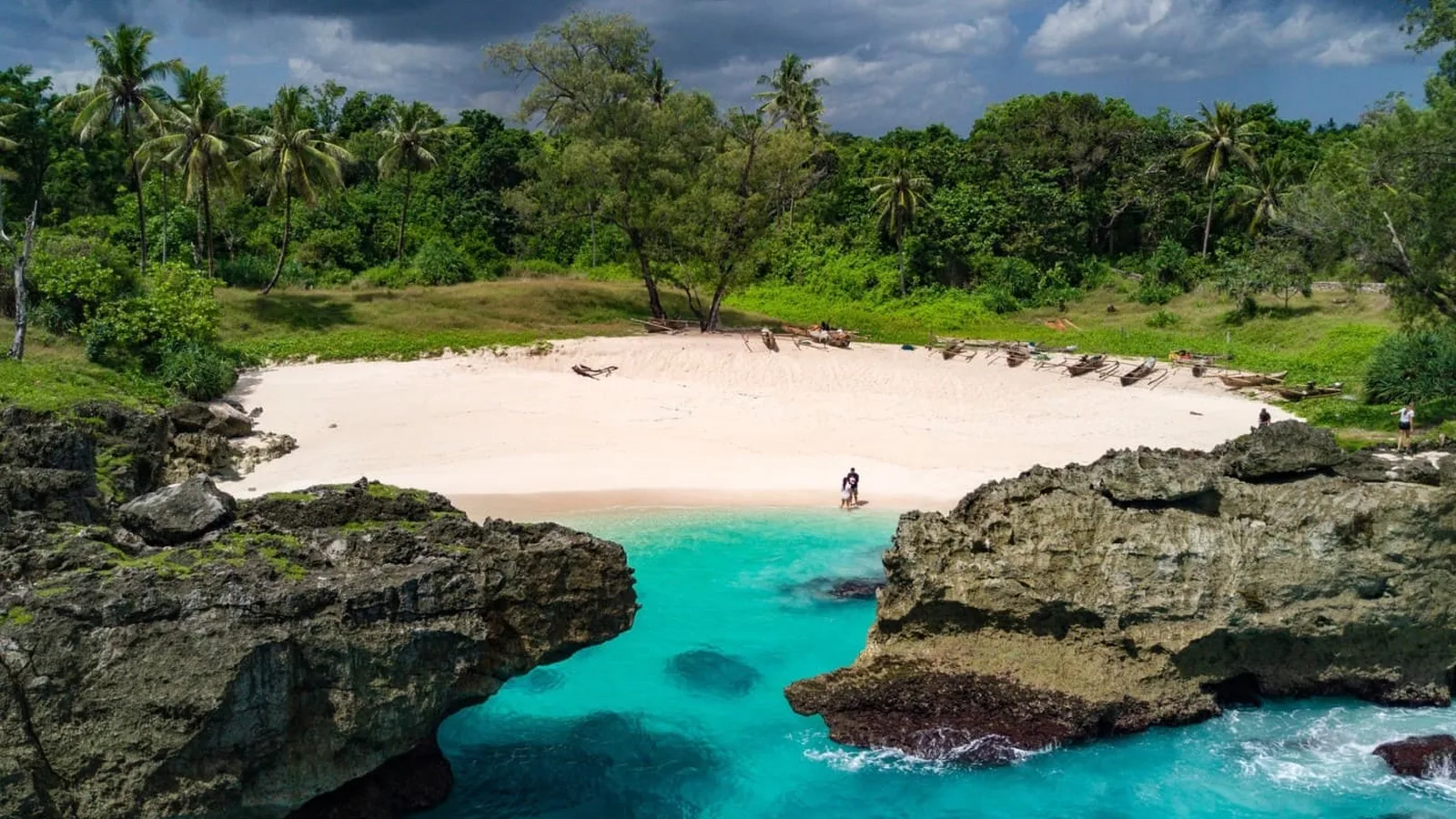
This particular island, with its rugged coastlines and rolling savannas, remains largely untouched by the mass tourism that has transformed its neighbours. It’s Sumba, an island in the East Nusa Tenggara province of Indonesia, roughly 400 kilometres east of Bali. While Bali sees over 6 million international visitors annually, Sumba recorded just over 25,000 in 2019, a fraction of which were international. This low density has preserved much of its unique culture, including the ancient practice of spearfishing.
Sumba's isolation, historically a barrier, is now its greatest asset. Its relative lack of infrastructure – paved roads are still a luxury in many areas, and internet connectivity can be sporadic outside of major towns like Waingapu or Waikabubak – has shielded it from rapid, often destructive, development. This isn't for everyone. For those accustomed to seamless connectivity and instant gratification, Sumba can be a challenge. But for others, it's precisely the point.
The Intricacies of Tradition and Taboo
Spearfishing here isn't a free-for-all. It's governed by unwritten rules, passed down through generations. Certain species are off-limits during spawning seasons. Specific reef areas are considered sasi, traditional conservation zones, where fishing is temporarily or permanently prohibited. Breaking these rules isn't just about environmental damage; it's about disrespecting the ancestors and risking the community's future.
I spoke with Mama Lena, a village elder, her hands gnarled from a lifetime of weaving the famous Sumba ikat fabric. "The sea is our mother," she says, her voice surprisingly strong. "You don't take more than you need from your mother. If you are greedy, she will stop giving." This philosophy permeates every aspect of their interaction with the natural world.
It’s a stark contrast to the often 'extractivist' mindset prevalent in many parts of the world. Here, sustainability isn't a buzzword or a marketing ploy; it's a deeply ingrained cultural imperative. The men don't use scuba gear; they free-dive, holding their breath for minutes at a time, their bodies adapted through years of practice. This limits their catch naturally, ensuring they only take what is easily accessible and not hiding in deeper, harder-to-reach areas.
The Entrepreneurial Spirit, Respectfully Integrated
While tradition holds sway, Sumba isn't a static museum. There’s a quiet entrepreneurial spirit, particularly among the younger generation. Pak Anton, a Sumbanese man in his early 30s who studied marine biology in Surabaya, returned to his home village with a vision. He saw the potential of his island, not for mass tourism, but for a different kind of engagement.
Anton has started a small, community-focused tourism venture. He partners with local fishermen like Wayan, offering guests ethical spearfishing experiences. "We don't just take people out to shoot fish," Anton explains. "We teach them respect. We teach them about the reef, about the species, about the sasi system. It's about education, not just a thrill."
His venture strictly adheres to local customs. Guests learn basic free-diving techniques, are taught which fish are sustainable to target (often smaller reef fish for local consumption), and are limited to one or two fish per trip. The proceeds go directly to the fishermen and their families, ensuring the economic benefit remains within the community. Anton also champions the use of traditional hand-line fishing for larger pelagic species, which has a significantly lower environmental impact than industrial trawling.
This model is appealing to a specific demographic: conscious travellers and potential investors who seek returns measured not just in rupiahs, but in positive social and environmental impact. For those looking to establish a presence in the region, understanding and respecting these local nuances is paramount. Ignoring them isn't just bad business; it's culturally insensitive and ultimately unsustainable.
The Future: A Delicate Balance
The question of Sumba's future is a complex one. How does it develop without losing its soul? There are real pressures. The Indonesian government, keen to distribute economic growth beyond Java and Bali, has designated Sumba as one of its "Ten New Balis" – an ambitious, and often controversial, tourism development programme. This designation has brought both opportunities and anxieties.
One project, Eco Beach City, a planned integrated resort complex on the island's southwest coast, aims to attract high-net-worth individuals and offer luxury amenities. While proponents argue it will create jobs and boost the local economy, critics fear it could lead to land displacement, environmental degradation, and the erosion of traditional culture, much like what has occurred in parts of Bali.
The challenge lies in finding a middle ground. Can Sumba attract investment and foster economic growth while preserving its unique cultural identity and pristine natural environment? "It depends on who comes," says Anton, thoughtfully. "If they come with open minds and respect, willing to learn and contribute, then it can work. If they just want to build big hotels and ignore us, then it won't."
He points to the success of a few small, locally-owned eco-lodges that have successfully integrated into their communities. These ventures, often owned or co-owned by Sumbanese families, employ local staff, source food locally, and offer experiences rooted in Sumbanese culture. For example, a three-night stay at one such lodge near Waikabubak might cost around IDR 7,500,000 (approximately USD 500) and includes cultural immersion, guided treks to traditional villages, and, crucially, a percentage of profits reinvested into local projects like water infrastructure or schooling.
These smaller, more responsible ventures demonstrate a viable path forward. They show that 'development' doesn't have to mean 'destruction.' It can mean thoughtful growth, guided by local wisdom and international best practices in sustainability.
Lessons from the Deep
The sun is high now, beating down on the sparkling water. Wayan emerges from a dive, a gleaming parrotfish impaled on his spear. It's a modest catch, enough for his family's dinner, perhaps a little extra to trade. He holds it aloft for a moment, a silent acknowledgment to the sea, before expertly dispatching it.
Watching him, I'm reminded of the profound simplicity and complexity of life here. The rhythmic ebb and flow of the tides, the ancient wisdom passed down through generations, the silent conversation between man and ocean. For those seeking to invest in a place with deep roots and a clear, albeit challenging, vision for the future, Sumba offers more than just pristine beaches and investment opportunities. It offers a chance to reconnect with something vital, something that the modern world has largely forgotten: the ocean's deep, steady breath.
It’s not just about what you can take from a place like Sumba. It’s about what you can learn.