The Metabolic Ledger: Auditing the Circular City
In a quiet control room overlooking the ReGen village in the Netherlands, the air hums not with the noise of servers, but with a low, biological thrum. Systems engineer Dr. Anya Sharma, who traded a career optimizing supply chains for Amazon to manage this one, taps a tablet displaying the methane output of Bioreactor Unit 3. It's reading a little high. Below her, a network of vacuum-sealed tubes, the silent arteries of this community, carries the organic remnants from 150 households—coffee grounds, carrot peels, the crusts of a child’s sandwich—not to a distant landfill, but into the digestive system of the village itself.
She isn't managing trash. She's calibrating a nutrient and energy feedback loop. A slight adjustment to the bioreactor's flow rate, a quick message to the community co-op about a surplus of nitrogen-rich greens expected this week. This isn't a job about disposal; it's a job about metabolism.
The spreadsheets and dashboards that once tracked global freight now track hyperlocal resource flows. The principles are shockingly similar. It’s about minimizing latency, maximizing efficiency, and eliminating loss. Only here, loss isn't a damaged shipment; it's a nutrient that escapes the loop, an errant kilowatt that dissipates as heat. Her work is the physical manifestation of a profound shift in thinking, one that treats a neighborhood not as a collection of passive structures, but as a single, engineered organism.
Redefining Waste: From Liability to Asset
The very concept of 'waste' is an artifact of a lazy, linear system: take, make, dispose. It’s a design flaw, not an inevitability. To understand the communities being built today—from the Dutch polders to the dry hills of Sumba—one must first adopt the language of systems engineering and view a community as a metabolic entity. It has inputs (food, water, energy, goods) and outputs (sewage, refuse, heat). The traditional city is a grossly inefficient organism, consuming vast resources and excreting toxic liabilities that must be hauled away at great expense. The average American, for instance, generates a staggering 2.2 kilograms of municipal solid waste (MSW) per day, of which a meager 32% is recycled or composted. That’s an efficiency rating that would get any factory manager fired.
The circular community, by contrast, is designed to be a closed loop. It seeks to digest its own outputs, turning them back into valuable inputs. This isn’t a new-age philosophy; it’s an engineering problem. It echoes the ideas of the Japanese architectural movement of the 1960s, aptly named 'Metabolism'. They saw cities as organic, plug-in megastructures that could grow and adapt. Their vision, though stylistically rooted in its time, was prescient. They understood that a truly resilient city must be able to regenerate itself.
“We don't see food scraps; we see kilowatt-hours and soil nutrients,” Dr. Sharma explains, pointing to a graph on her screen that tracks the calorific value of the previous day's inputs. “Waste is just a data-point signaling an inefficiency in the system. Our job is to close that loop. If it leaves the site, it’s a failure.”
This reframing is fundamental. A bag of trash on a curb is a liability, representing a cost for collection, transport, and landfilling. Inside a closed-loop system, that same bag's organic contents are an asset—a quantifiable volume of biogas for the microgrid and a measurable amount of phosphorus and nitrogen for the vertical farm. The plastics and metals are feedstock for the community’s fabrication lab. The calculus changes entirely when you stop paying to get rid of things and instead calculate their value as raw materials for the next cycle. It’s a shift from municipal expense to community asset management.
The Inflow Audit: Designing Pre-Cycle Procurement
The most efficient way to manage waste is to never create it. This is the logic behind 'pre-cycling'—a rigorous, data-driven audit of every single item that crosses the community's threshold. It’s the first and most critical stage of engineering the community’s metabolism. If you can control the inputs, you can radically simplify the processing of outputs. In the United States, packaging alone accounts for nearly 30% of all municipal solid waste by weight. It’s the low-hanging fruit.
This is where a community procurement manager comes in—a role that doesn’t exist in a conventional suburb. I spoke with David Chen, who manages procurement for a 70-unit co-housing project in Oregon. He’s less a grocer, more a logistics expert. “My job is to wage war on single-use packaging,” he tells me, standing in a storeroom that feels more like a laboratory supply depot than a pantry. Giant stainless-steel drums of olive oil, soy sauce, and honey line one wall. Grains, flours, and spices are stored in standardized, airtight, reusable containers. There’s almost no branded packaging in sight.
“It starts with the farmers,” Chen explains. “We went to our three main vegetable suppliers and told them we wouldn’t accept produce in waxed cardboard or plastic clamshells. It was a tough negotiation.” The solution was a shared investment in thousands of durable, stackable, and easily sanitized plastic crates. The farms pack directly into these crates, which are returned on the next delivery run. The initial capital outlay for the crates was $8,000, split between the community and the farms. “Within 18 months,” Chen says, pulling up a spreadsheet, “we had saved over $12,000 in what the farms would have spent on disposable packaging—a cost they were passing on to us. And we eliminated an estimated 1.5 tons of cardboard and plastic waste.”
This model scales to everything. Milk is delivered in sanitized glass bottles from a local dairy. Cleaning supplies are purchased in 50-gallon drums and decanted into household-sized reusable bottles at a central refilling station. This approach is modeled on the success of trailblazers like Germany’s Unverpackt grocery chain, which can eliminate over 1,000 kilograms of packaging waste per store, per month. It requires a behavioral shift from residents, who trade the convenience of grabbing a branded box off a shelf for the systemic efficiency of refilling their own containers. But the system is designed to make it easy. Standardized containers, clean refilling stations, and an app that tracks household consumption and bulk-order status all reduce the friction. It’s a system designed not around the whims of the individual consumer, but around the metabolic health of the collective.
The Organic Loop: From Plate to Power and Produce
Once the inputs are cleaned up, the next challenge is processing what’s left. Organics—food scraps, yard trimmings, and human waste—are the largest single component of municipal solid waste, often representing over 50% of the stream in residential areas. In a linear city, this is a smelly, methane-spewing problem. In a circular community, it’s the engine.
The core technology is often anaerobic digestion. It’s a surprisingly simple process: in an oxygen-free tank, microorganisms digest organic matter. Their 'output' is twofold. First, they release biogas, a mix of methane and carbon dioxide that can be captured and burned in a generator to produce electricity and heat for the community. Second, they produce a nutrient-dense liquid and solid slurry called digestate—a potent, pathogen-free fertilizer.
Let’s follow a carrot peel on its journey through the system. It’s scraped from a dinner plate into a small kitchen caddy. Instead of a plastic bag, this caddy has an opening that connects to a pneumatic tube, similar to the vacuum systems used in hospitals to transport documents. With the press of a button, the peel is whisked away through a network of underground pipes to the central processing facility. There, it joins its organic brethren in the anaerobic digester. Over the next 20-30 days, microbes convert its chemical energy. The result is astonishingly efficient: just one ton of food waste can generate between 250 and 400 kilowatt-hours of electricity. That’s enough to power an average U.S. home for nearly 10 days. The energy from that single carrot peel is returned to the grid, perhaps helping to power the very lights under which dinner is eaten the following night, or charging the phone of the resident. The biogas from one person's daily food and bodily waste could, in theory, charge their smartphone more than 40 times.
But the loop doesn’t end there. The digestate, rich in nitrogen and phosphorus, is piped to the community’s agricultural hub—perhaps a series of rooftop greenhouses or a vertical farm. Here, it’s used as a hydroponic or soil-based fertilizer to grow new food for the residents. Carrots, lettuce, herbs—the very nutrients from the peel are cycled back into the next generation of produce, which is then sold at the community co-op. This is the organic loop in its most elegant form: a closed-loop system where the community literally feeds itself, powers itself, and regenerates its own soil from its own organic “waste.”
The Inorganic Cascade: Materials as a Service
What about the hard stuff? The plastics, metals, glass, and textiles that can’t be digested? The linear economy treats these materials with a similar lack of imagination: they are used once and then either downcycled into a lower-quality product (like plastic bottles into fleece) or, more often, landfilled. The circular community treats them as a durable asset bank, a repository of valuable molecules to be maintained at their highest quality for as long as possible. This is the 'inorganic cascade.'
This begins with design. In a circular system, products and even buildings are created with their entire lifecycle in mind, a concept known as 'design for disassembly.' Components are screwed or clipped together, not glued. Materials are pure, not composites. Every major component, from a window frame in a building to the casing of a toaster, comes with a 'material passport.' This is a digital record detailing every substance it contains, its potential for reuse, and instructions for how to recover it. A building designed with such passports can achieve over 90% material recovery and reuse upon decommissioning, a stark contrast to the less than 30% recovery from traditional demolition, which mostly produces low-value rubble.
“We no longer specify materials; we specify services,” says Eva Jorgensen, a Copenhagen-based architect who specializes in circular projects. “A facade isn't purchased; it’s leased from the manufacturer, who remains the owner of those materials. They are responsible for taking it back in 30 years. This simple shift in ownership incentivizes them to design for durability, repairability, and ultimate recyclability. Their business model shifts from selling a product to providing a high-performance enclosure for a set period.”
At the community level, this 'material bank' is managed by a small-scale, high-tech workshop—a digital fabrication lab, or FabLab. When a resident’s vacuum cleaner breaks, they don’t throw it away. They bring it to the FabLab. The material passport is scanned, and a technician can 3D-print a broken gear or order a replacement part. If an item is truly at its end of life, it’s disassembled. The plastic casing is shredded and used as filament for the 3D printers. The copper wiring is stripped and stored. The aluminum is melted down. This stream of high-quality, pre-sorted materials becomes the feedstock for creating new products for the community—custom furniture, replacement parts, even architectural components for new buildings. The inorganic cascade ensures that valuable molecules are kept in play, cascading from high-value applications to lower-value ones only when absolutely necessary, but never leaving the loop entirely.
Closing the Water Cycle: From Sink to Soil
Water is one of the most critical and energy-intensive flows in any urban metabolism. A traditional city uses a brute-force approach: it imports vast quantities of potable water, uses it once for everything from drinking to flushing toilets, combines it all into a single toxic stream of sewage, and then spends enormous energy to pump it miles away for treatment. It’s an insane system, akin to using vintage wine to wash your car.
A circular community meticulously segregates its water streams. Blackwater, from toilets, contains pathogens and high concentrations of nutrients. It is piped directly to the anaerobic digester, where it co-mingles with food waste, contributing its own energy and nutrient value to the organic loop. Greywater, from sinks, showers, and laundry, is far less contaminated and represents a much larger volume. A typical four-person household can generate approximately 300 liters of recyclable greywater per day. Treating this on-site can cut a home's net municipal water demand by a staggering 50-70%.
One of the most elegant solutions for this is the 'Living Machine.' It’s a form of ecological wastewater treatment that looks and feels like a botanical garden. I walked through one at the center of a housing cluster in Findhorn, Scotland. What appeared to be a lush, thriving greenhouse was actually a series of tanks filled with gravel beds and specific plants—reeds, water hyacinths, calla lilies. Greywater flows slowly from one tank to the next. In each stage, a distinct community of microorganisms, algae, and invertebrates living on the plant roots consumes the organic 'impurities'—soap, dirt, oils. The plants themselves absorb nutrients. The water that emerges at the end of the series is clear, odorless, and clean enough for non-potable uses. It’s used to flush toilets, irrigate the community gardens, and recharge the local aquifer. There are no harsh chemicals, minimal energy inputs, and the by-product is a beautiful, thriving green space that serves as a community amenity. It’s infrastructure as landscape, a system that is both functional and beautiful, treating water not as a commodity to be consumed but as a vital element in a continuous, life-sustaining cycle.
The Economic Blueprint: Auditing the ROI of Circularity
This all sounds technologically complex and, therefore, expensive. But a hard-nosed audit of the economics reveals a compelling financial case. The return on investment for a circular community is multifaceted, appearing in saved costs, new revenue streams, and increased asset value. It’s an accountant’s dream, once you learn to read the new ledger.
The most immediate return comes from avoided costs. Landfill tipping fees in progressive municipalities are designed to be punitive. In San Francisco, the fee is over $220 per ton. Let’s do the math: a 200-home community generating a typical 400 tons of waste annually, but managing to divert 90% of it from landfill through these closed-loop systems, would save over $79,200 every single year on disposal fees alone.
Then come the revenue streams. The biogas generated by the anaerobic digester powers a generator. While much of this electricity is used on-site, reducing resident utility bills, any surplus can be sold back to the municipal grid, creating a steady income for the homeowners' association. The high-quality compost and liquid fertilizer from the digester can be sold to local farms or nurseries. Even the sorted, high-grade materials from the FabLab—like granulated PET plastic or pure aluminum ingots—have a market value.
Mark Fuhrman, a developer who now exclusively builds circular communities after a career in conventional real estate, walked me through a pro-forma on his laptop. “The upfront capital is higher, no question,” he admits, pointing to the line items for the digester and the water recycling system. “But the operating economics blow traditional development out of the water.” He flips to a 20-year cash flow projection. In a standard project, the homeowners' association budget is a litany of expenses: waste hauling, landscaping, water, electricity. In his model, many of these are zeroed out or even become revenue lines.
Here’s a simplified comparison for a hypothetical 100-unit development:
| Cost/Revenue Category | Traditional Development (Annual) | Circular Community (Annual) |
|---|---|---|
| Waste Hauling Fees | -$80,000 | -$8,000 |
| Municipal Water Costs | -$60,000 | -$20,000 |
| Common Area Energy | -$45,000 | +$10,000 (Surplus sales) |
| Fertilizer/Compost | -$5,000 | +$7,000 (Sales) |
| Net Operating Impact | -$190,000 | -$11,000 |
“We see a 7- to 10-year payback period on the initial green-tech investment,” Fuhrman concludes. “After that, the systems generate a net profit for the community, which can be used to lower fees, invest in new amenities, or be paid out as a dividend. The properties don't just hold their value; they generate a return. It's a fundamental shift from a cost-center model of living to a profit-center one.” This doesn't even account for the premium these properties command on the market, which studies have shown can be 10-15% higher than comparable conventional homes.
The Social OS: Behavioral Code for a Zero-Waste Culture
For all the talk of bioreactors and FabLabs, the technology is only half of the equation. The most elegantly engineered system will fail if the humans living within it don't participate. The 'social operating system'—the set of rules, feedback mechanisms, and community norms—is just as critical as the physical infrastructure. This is where design, data, and behavioral science intersect.
Some early experiments in zero-waste living have relied on high social friction. The Japanese town of Kamikatsu, for example, is famous for achieving an 80% recycling rate, but it requires residents to wash and sort their waste into 45 different categories. While admirable, this level of diligence is a tough sell for most. The challenge for today's engineers is to design systems that make the right choice the easy choice.
This is achieved through a combination of thoughtful physical design and digital feedback. The pneumatic tubes for organic waste are more convenient than hauling a leaky bag to an outdoor bin. The community co-op’s refilling station is designed to be a clean, pleasant social hub, not a chore. But the real driver of behavioral change is data. Each household has an app that acts as a real-time dashboard for its own metabolism. It shows electricity and water consumption, the weight of organic waste contributed, and even the nutrient value of that contribution. This creates a powerful feedback loop.
I spoke with a resident of a Danish co-housing project who was initially skeptical. “At first, it felt like a lot of rules,” she told me. “But then I saw our family's footprint on the app. I saw how much energy our food scraps were generating. It became a game.”
This gamification is a proven concept. The Opower model, which added behavioral nudges and peer comparisons to utility bills, demonstrably reduced household energy consumption by 2-4%. It's a small percentage, but it confirms the principle: people respond to clear data and social context. In these circular communities, residents compete to have the 'most efficient' month or the 'highest nutrient contribution.' The app translates abstract concepts like 'waste diversion' into tangible, personal metrics. By making the invisible visible, it 'codes' the desired behaviors into the daily life of the community, fostering a culture of conscious consumption not through guilt or force, but through transparent, engaging data.
The Scalability Problem: From Eco-Niche to Urban Network
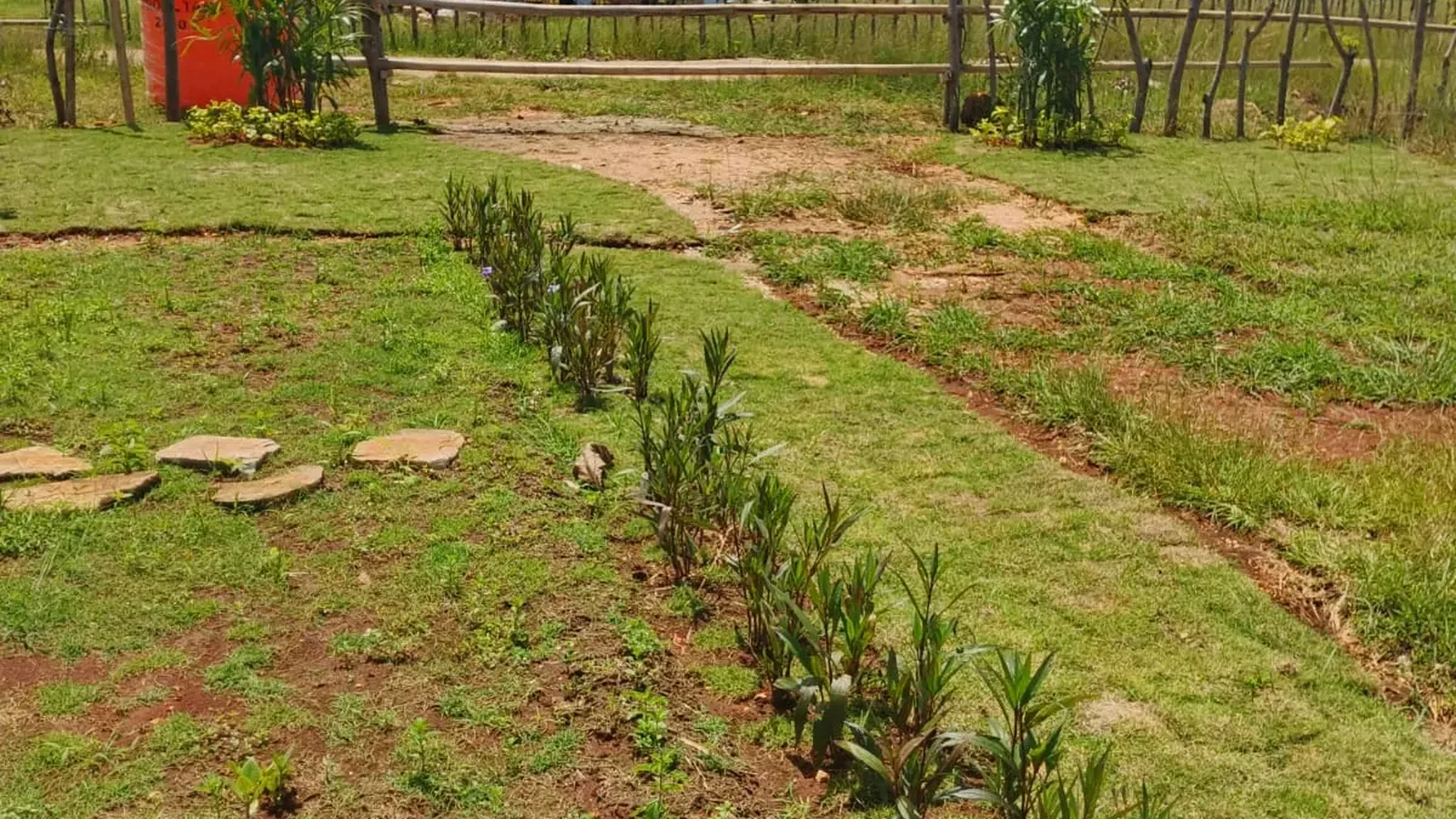
This brings us to the ultimate question: Can this model scale? Are these closed-loop communities destined to remain isolated, expensive eco-niches for the committed, or can these principles be applied to transform the sprawling, inefficient cities we already have? Building a new circular village on a greenfield site, like the pilot Eco Beach City project on Sumba, is one thing. Retrofitting a 700-year-old city like Amsterdam is another challenge entirely.
The upfront cost premium for a fully integrated 'circular' building is still estimated at 5-10%, a significant barrier for mainstream developers. The R50 co-housing project in Berlin managed to slash per-unit infrastructure costs by concentrating density and integrating systems, but that's an exception. Policy is the key to leveling the playing field. 'Fee-bate' systems, piloted in some European municipalities, tax wasteful construction methods and use the revenue to subsidize circular designs, neutralizing the initial cost difference.
For existing cities, the answer isn't to retrofit one house at a time, but to think at the district level. In Amsterdam's Buiksloterham district, a former industrial area is being redeveloped as a living lab for circular principles. The city isn’t mandating that every building have its own digester; instead, it's planning for district-level 'resource hubs' that can process waste and recycle water for a cluster of buildings. New building codes in Paris now require all new commercial construction to feature either green roofs for insulation and water management or solar panels, treating buildings not as isolated objects but as active contributors to the urban ecosystem.
“We can’t demolish the historic core,” a city planner from Amsterdam’s Circular City Strategy 2050 team told me over coffee. “But as we redevelop post-industrial zones, and as older building stock comes up for major renovation, we can integrate these systems block by block. We can create a network of circular districts that trade resources—one district's waste heat becomes another's energy source. It’s about building an 'internet of materials and energy' on top of the physical city.”
The ultimate vision is not a world of isolated, self-sufficient eco-villages, but a network of metabolically aware urban districts, each operating as a semi-closed loop, but also intelligently connected to its neighbors. The technology exists. The economic case is solid. The final frontier is the political will and the planning frameworks to move from the niche to the network.
The truly 'smart city' of the future may not be defined by flying cars or ubiquitous sensors, but by its metabolic elegance. It will be a city that has learned to feed itself, power itself, and regenerate itself from its own so-called waste—not as a utopian dream, but as the inevitable result of a cold, hard, data-driven calculus.