The Cargo Cult of Capital: An Island's Grand Illusion
Sofia Costa, a third-generation islander, took a slow sip of her ‘chinesa’ in the old Funchal café, the porcelain cup cool against her lips. The bitter coffee mirrored the taste of her morning. Another loan rejection. The email from the Lisbon bank was polite but firm, questioning the scalability of her tourism software-as-a-service startup. Her family had run hotels here for two generations; she knew the market intimately. But a local founder with a local idea, it seemed, wasn't a bankable proposition.
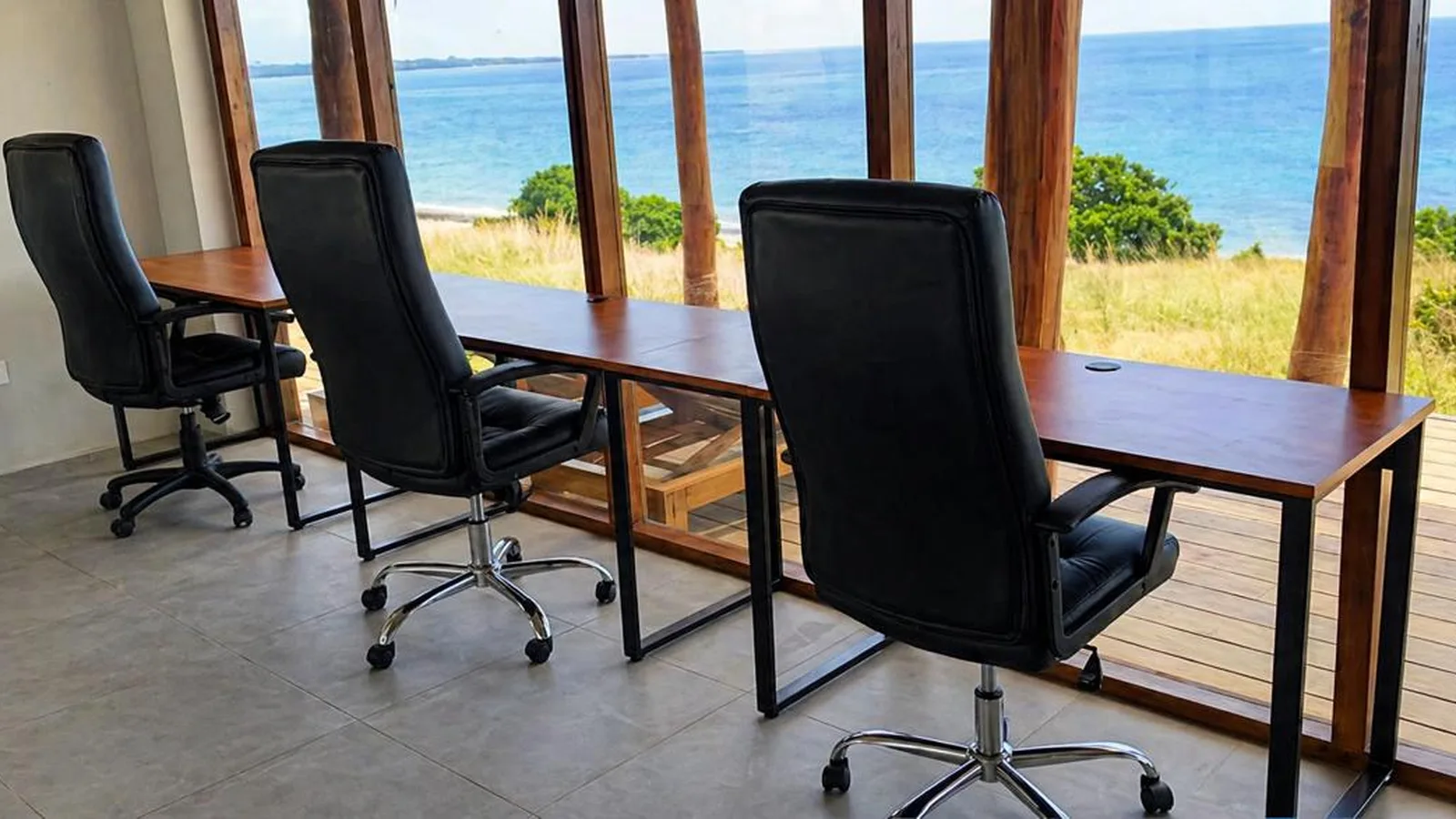
Through the large paned window, a different economy was on display. A group of German and Swedish developers, all impossibly young and healthy-looking, were laughing as they packed away their MacBooks. Their workday, which had begun after a morning surf session, was already finished by 3 PM. Their conversation, a polyglot of English, tech jargon, and talk of weekend hiking plans, floated through the open door. One of them mentioned the Non-Habitual Resident status—the golden ticket—and the others nodded with the quiet satisfaction of people who have successfully executed a life-arbitrage play.
They were living in a paradise engineered for them, a world of low taxes and high-speed internet, subsidised by a state desperate for their presence. Sofia was living in the same physical space, but in a different reality entirely: a place of rising costs, skeptical lenders, and the quiet struggle to build something that belonged to the island, not just on it. The spreadsheet on her laptop said one thing. The salt air, thick with the scent of bougainvillea and exhaust fumes, said another.
The Blueprint: Manufacturing an Ecosystem by Decree
There is a peculiar strain of magical thinking that infects governments of beautiful, peripheral places. It's the belief that an innovation economy, that elusive engine of modern prosperity, can be conjured from thin air. You can’t just will a Silicon Valley into existence, but that hasn't stopped many from trying. The strategy deployed on this Atlantic island is a masterclass in the genre, a meticulously crafted blueprint for importing a ready-made professional class.
The central pillar of this ambitious project was Portugal’s Non-Habitual Resident (NHR) tax scheme. For those who qualified—primarily individuals in “high value-added activities” like software development, design, and company management—the deal was almost too good to be true. It offered a flat 20% tax on many types of foreign-sourced income and a 10% tax on pensions. This stands in stark contrast to Portugal's standard progressive income tax rates, which can climb to 48% for top earners. It's not a tax break; it's a fiscal red carpet.
This incentive was then weaponised by a slick marketing machine. Projects like ‘Digital Nomads Madeira’ were launched, complete with a dedicated 'village' in Ponta do Sol, offering free co-working space and curated community events. The pitch was simple and intoxicating: bring your high-paying remote job from Berlin, London, or San Francisco, and enjoy sun, nature, European stability, and an absurdly low tax bill. Government-backed incubators like StartUP Madeira were burnished to attract not just footloose individuals but their fledgling companies, too.
“We are building the Singapore of the Atlantic,” a senior official from the regional investment agency told me, his enthusiasm genuine. “A stable, secure, high-tech hub that connects Europe, Africa, and the Americas. The talent is mobile, and we have created the perfect landing pad for it.”
It’s a seductive vision. But it prompts a foundational question that seems to be politely ignored in the official brochures. Are you truly building an ecosystem, or are you just building a very beautiful, temporary camp for high-earning migrants? The distinction is critical. A genuine ecosystem has deep roots. It fosters local talent, circulates capital within its own borders, and creates feedback loops of mentorship and reinvestment. A temporary camp, however well-appointed, exists only as long as the incentives remain. This recalls the ‘Cargo Cults’ of post-war Melanesia, where islanders built mock airstrips and wooden effigies of airplanes, hoping to summon the material wealth—the ‘cargo’—they had seen arrive with foreign soldiers. They mimicked the form, but missed the substance. By laying down the fiscal infrastructure and co-working spaces, one has to wonder if policymakers are doing much the same, waiting for a genuine, self-sustaining economy to magically land.
The Human Capital Arbitrage
The decision for a senior developer from Munich or a freelance UX designer from Amsterdam to relocate is not, as the tourism board might have you believe, purely a poetic quest for a better work-life balance. It is, first and foremost, a cold, rational economic calculation. A human capital arbitrage play of the highest order.
Let’s run the numbers. A senior software engineer earning a salary of €120,000 in Berlin will face Germany’s formidable tax and social contribution system. After all is said and done, they can expect a net take-home pay of approximately €69,600. Now, transplant that same individual and their remote-work contract to Funchal under the NHR scheme.
The 'Paradise Premium': A Financial Comparison
| Metric | Berlin, Germany | Funchal, Madeira (NHR) |
|---|---|---|
| Gross Salary | €120,000 | €120,000 |
| Applicable Tax Rate (approx.) | 42% (progressive + solidarity) | 20% (flat rate on foreign income) |
| Social Contributions (approx.) | Included in tax burden | Minimal on foreign remote income |
| Net Take-Home Pay (approx.) | €69,600 | €96,000 |
| Annual 'Arbitrage' Gain | - | + €26,400 |
This annual 'paradise premium' of over €26,000 is not a rounding error; it's a life-changing sum. It's the difference between saving modestly and accumulating serious capital. It pays for the high-end apartment with the sea view, the daily flat whites, and the weekend flights to explore the rest of Europe. The sun and the surf are merely the delightful packaging for a very attractive financial product.
“Look, I love it here,” explains Jan, a Dutch freelance data scientist I met at a beachfront bar. He asked that I not use his real name for fear of upsetting his ‘community manager’. “The nature is incredible. But was my decision to come here a lifestyle choice? Maybe 10%. The other 90% was a tax play. My accountant showed me the spreadsheet, and it was a no-brainer.”
Jan’s candor reveals the hidden fragility of the model. He plans his life, he says, in two-year increments—the typical length of a project or the validity period of a visa. His ties to the island are transactional. He feels no particular obligation to mentor local students or invest in a Madeiran business. Why would he? His clients are in Zurich and New York. His bank account is with a neobank headquartered in Lithuania. His loyalty is to the efficiency of his personal balance sheet. This is the archetype of the 'Madeira Nomad': highly skilled, highly paid, and highly transient. The 'Nomad List', a popular website for this tribe, pegs the monthly cost of living in Funchal for an expat at around $2,548. This exists in a different universe from the average local salary, which hovers around a mere €1,100 per month. They are two ships passing in the night, one a luxury cruise liner, the other a fishing trawler, momentarily sharing the same patch of ocean but heading in entirely different directions.
The Great Economic Leakage
When a tourist spends a dollar on an island, economists obsess over a concept called 'leakage'. It's the portion of that dollar that fails to stick, flowing immediately back out to pay for imported goods, foreign-owned hotel chains, and expatriate management. In many Caribbean economies, this leakage can be as high as 70 cents on the dollar. The arrival of a semi-permanent class of high-earning foreign residents creates a new, more insidious form of this same problem.
The money arrives, of course. A salary paid from a Berlin fintech lands in a digital bank account. But where does it go from there? The circulation of this capital within the local Madeiran economy is surprisingly shallow. The new arrivals, accustomed to frictionless global commerce, continue their existing consumption patterns. Groceries are supplemented with parcels from Amazon.de or other European hubs, delivered directly to their door. Clothing, electronics, and specialty goods are purchased from the same global brands they always used. Their banking is done via apps like Revolut or Wise, which excel at holding multiple currencies and facilitate seamless investment in US stocks or German ETFs, bypassing Portuguese financial institutions entirely.
This creates a strikingly visible two-speed economy. Walk through the Lido or the Old Town of Funchal, and you'll see the boom. New cafes sell €5 flat whites and avocado toast to a clientele typing on illuminated keyboards. Boutique hotels and high-end rental agencies thrive. Co-working spaces, often owned by other recent foreign arrivals, charge monthly fees that equate to a quarter of a local's salary. This is the 'enclave economy', a gilded cage servicing the needs of the new residents.
But walk two streets inland, and the story changes. I spent an afternoon with Ricardo, the 60-year-old owner of a traditional ‘mercearia’, a small grocery store his father opened in 1965. His shelves are stocked with local produce, ‘bolo do caco’ bread, and Madeiran wine. His revenue, he tells me, has been flat for five years. “They walk past,” he says, gesturing to the street outside. “They look in the window sometimes. But they don’t come in. They want things I don’t have. Oat milk. Kombucha. Things from their home.” Next door, the space that used to be a family-run bakery is now a minimalist coffee shop that roasts its own single-origin beans. The contrast isn’t just aesthetic; it’s a story of capital flow. The money is not trickling down; it’s circulating within a closed loop at the very top of the new economic pyramid, creating a veneer of prosperity that is perilously thin.
The Two-Tier Talent Market
The most persistent promise of attracting foreign talent is that of 'knowledge transfer'. The theory holds that these highly skilled individuals will, through a process of professional osmosis, mentor locals, share best practices, and elevate the entire domestic workforce. The reality on the ground, however, looks less like mentorship and more like a collision.
Instead of a single, integrated talent market, a stark two-tier system has emerged. On the top tier are the imported professionals, earning global salaries and working on world-class projects. On the bottom tier is the local workforce, often relegated to service roles supporting the lifestyles of the first group, or competing for a limited pool of local jobs that pay local wages. The bridge between these two tiers is flimsy at best.
A look inside the government’s own flagship incubator, StartUP Madeira, is telling. According to their own reports, less than 15% of the companies currently participating have all-Madeiran founding teams. The space is dominated by foreign entrepreneurs who have found the island to be an agreeable and low-cost place to build a business that is, in every other respect, German, British or American.
“We’re creating jobs,” one organizer insisted. But what kind of jobs? Are they creating roles for local graduates in engineering, finance, and product management, or are they hiring community managers and administrative assistants?
Let's return to Sofia Costa. After her SaaS idea was rejected by the bank, she attempted to pivot and build a smaller-scale agritech project. She needed a senior developer with experience in IoT sensors. “I found a few potential candidates,” she recounts, her frustration palpable. “One was Portuguese but living in London, the others were already here from Germany and Sweden. I was transparent about what I could afford to pay—about €2,500 a month, which is a very good local salary.” She pauses. “One of them wrote back and said my offer was ‘an insult’. He was already earning €7,000 a month, after tax, working remotely for a Swiss firm. How can I possibly compete with that?”
Her experience is the crux of the problem. By importing a top tier of talent without building pathways for locals to join it, the policy inadvertently creates a glass ceiling. Local founders like Sofia can't afford to hire the senior talent that has flocked to their shores. They struggle to attract the attention of venture capitalists who are more comfortable backing founders from their own networks. Meanwhile, the University of Madeira is producing hundreds of bright graduates a year, but it's unclear if their curriculum is adapting fast enough to equip them for jobs that demand skills in areas like machine learning or blockchain development, or if they are simply being trained for an economy that is rapidly ceasing to exist.
Venture Capital's Long Shadow
An ecosystem is not just people; it’s capital. The flow of venture funding is the lifeblood that allows sapling startups to grow into sturdy oaks. But when you examine the sources of funding for the island's celebrated new ventures, you discover that the roots of these trees don't go into local soil at all.
Of the five largest funding rounds announced by Madeira-based startups in the last 24 months, totaling over €45 million, four were led by non-Iberian investment funds. The capital came from venture firms in Berlin, London, and Stockholm. These VCs are not investing in 'Madeiran startups'. They are investing in German, British, and Swedish founders whom they know from their own networks, who just happen to be physically located in a favorable tax jurisdiction. The location is a feature, not the core identity.
This leads to the quiet, legalistic problem of corporate domicile. Many of these startups, while their teams sun themselves on the island’s black-sand beaches, are not Portuguese companies at all. For reasons of legal familiarity, investor preference, and tax efficiency, they are incorporated in Delaware, Estonia, or the United Kingdom. This seemingly trivial administrative detail has profound economic consequences. It means that when one of these companies has a successful 'exit'—an acquisition by a major tech firm or an Initial Public Offering—the vast majority of the financial windfall will bypass the Portuguese economy entirely. The capital gains will flow to founders and investors in their home countries and to the holding companies in business-friendly jurisdictions. The island that provided the low-cost, high-quality living environment that nurtured the company's growth will see almost none of the ultimate reward.
“We’ve looked at a few deals there,” a partner at a prominent Lisbon VC firm told me, on condition of anonymity. “But we’ve passed. It's not a real ecosystem, it's a co-working space with a beach. The founders are foreign, the capital is foreign, the intellectual property is registered elsewhere. We see no long-term anchor. What are we investing in? The view?”
This structure ensures that the island is a nursery, but never the forest. It is a place for early-stage growth, rented for its favorable climate, but the mature, valuable assets are destined to be transplanted elsewhere. It's an economic model that harvests the benefits of a place without ever truly investing in it. Projects like Eco Beach City in neighboring Indonesia, while also courting foreign capital, are at least attempting to tie development to tangible land assets and long-term local employment, creating a stickier, albeit different, model. The Madeiran approach, in its quest for weightless digital businesses, risks attracting companies with no gravity at all.
The Infrastructure Strain
Economists call them 'negative externalities'—the unintended, unpriced consequences of an economic activity. For this island, the primary externality of importing several thousand high-income residents is a severe and growing strain on local infrastructure that was never designed for this new demographic.
Housing is the most acute flashpoint. The sudden influx of residents earning multiples of the local average wage has poured fuel on the property market. Landlords, behaving as rational economic actors, have pivoted en masse from serving locals on long-term contracts to catering to the lucrative expat market, which can bear much higher prices. The numbers are stark.
Property Inflation vs. Wage Growth (Funchal, 2020-2024)
- Average Rental Price Increase: +41% (Source: Idealista Price Index)
- Average Local Wage Increase: +7.8% (Source: Portugal National Statistics Institute)
The gap between those two figures is a chasm into which local affordability has fallen. I spoke with Ana and Miguel, a young couple with a toddler. For ten years, they had rented a two-bedroom apartment in a quiet Funchal neighborhood. Last year, their landlord informed them the rent would be tripling from €600 to €1,800 a month to match the going rate for 'digital nomad' rentals. “We couldn’t believe it,” Ana said, her voice quiet. “Our salaries haven't changed. We had to move. We now live in a small village high in the hills, an hour's drive away. My parents are still in our old neighborhood. We feel like foreigners in our own city.”
This story is not an isolated anecdote; it's the defining social crisis of the boom. But the pressure extends beyond housing. The healthcare system, already stretched, now must cater to a new population, many of whom don't contribute significantly to the national social security system that funds it. Waste management, water consumption, and energy grids are all under increased load. The island's greatest asset—its pristine natural environment—faces the pressure of more people on its hiking trails and in its protected waters. The critical question, which few officials seem eager to answer, is who pays for the necessary upgrades? The burden, as it stands, falls squarely on the shoulders of the local taxpayer, the very person being priced out of the housing market. They are, in effect, subsidizing the erosion of their own standard of living. The new arrivals get the benefit of world-class internet, thanks to 15 submarine fiber optic cables connecting the island, but the locals are left to deal with the overflowing bins.
The Exit Clause: What Happens When the Music Stops?
The entire glistening edifice is built on a foundation of tax arbitrage. But what happens when that foundation cracks? All booms built on government subsidy are inherently fragile, hostage to the whims of finance ministers and the shifting tides of politics. And the music is, in fact, beginning to stop.
In its 2024 budget, the Portuguese government, facing pressure from the European Union and a housing crisis at home, announced the end of the NHR scheme for new applicants. Existing beneficiaries can keep their status, but the gate has been slammed shut for newcomers. This single legislative act creates a hard deadline, a real-world test for the ecosystem’s supposed 'stickiness'. Will the venture builders and senior developers who came for the tax breaks stay for the charm? Or will the great migration simply reverse itself?
The answer can be found in the frantic chatter of invite-only WhatsApp and Telegram groups. I was given access to one such group, titled 'Global Nomad Alpha'. The discussion is revealing. Madeira is already being spoken of in the past tense. Members are actively discussing 'the next Madeira'. Information is being shared about new visa schemes in Colombia, favorable tax rulings in the United Arab Emirates, and the burgeoning scene in Bali. These are financially sophisticated actors, constantly scanning the globe for the next arbitrage opportunity. Their allegiance is not to a place, but to an optimization strategy.
This presents a risk far greater than a simple departure. It's the risk of a 'brain drain' in reverse, combined with the worst kind of 'Dutch disease'. When the imported talent leaves, the positive externalities they brought—the demand for high-end services, the global perspective—evaporate overnight. But the negative externalities—the distorted property market, the inflated cost of living, the strained infrastructure—remain. This is the historical lesson from a dozen failed special economic zones and tax havens that saw their fortunes reverse when laws changed. The island could be left with Berlin property prices and Madeiran salaries, a devastating combination for the local population.
Like Costa Rica in the 1990s, which successfully attracted giants like Intel, the island bet that attracting big names would create a lasting cluster. But Intel’s investment was physical—a multi-billion dollar fabrication plant. When Intel scaled back years later, it left a hole, but also a generation of trained engineers and a network of local suppliers. The digital nomad economy, by contrast, is weightless. Its departure could leave behind little more than overpriced apartments and a lingering nostalgia for the days when the foreigners came.
Building from the Ground Up, Not the Sky Down
Is there an alternative? Must a peripheral economy choose between stagnation and becoming a transient playground for the global elite? History provides other models—strategies based on cultivating local strengths rather than importing foreign ones.
Consider the much-lauded Irish model of the 1990s. The Industrial Development Authority (IDA) also used tax incentives to attract multinational corporations. But there was a crucial difference. From the beginning, these incentives were explicitly tied to tangible, local commitments. Companies were required to create a specific number of high-quality jobs for Irish citizens. They were pushed to partner with local universities to develop relevant curricula and to source from a growing base of Irish suppliers. The goal wasn't just to have Apple's European headquarters in Cork; it was to ensure that Apple's presence benefited Cork in a deep, structural, and lasting way. It was a strategy of co-development, not just co-location.
A ground-up approach for this island would look radically different from the current one. It would mean redirecting funds from marketing to foreign nomads towards micro-loans for local entrepreneurs. It would mean creating a public venture fund dedicated to investing in Madeiran-founded companies. It might involve mandating that any foreign company receiving benefits must also participate in a structured mentorship and skill-transfer program with local schools and the university. It would be slower. It would be less glamorous. It would not generate breathless articles in lifestyle magazines. But it might build something real.
There are glimmers of this alternative path. I met Sofia Costa one last time before I left. The bank loan never came through. But she had managed to secure a small round of seed funding—€25,000—not from a VC, but from a collective of local business owners, the very hoteliers she had grown up among. They understood her vision because it was their world. It's a fraction of the capital being raised by the foreign startups in their glass-walled offices. It's not enough to compete for a developer demanding €7,000 a month. But it's local money, invested in a local vision, controlled by a local founder. It is a small, resilient root in an ecosystem that has become obsessed with ephemeral blossoms.
The new fiber optic cables gleam under the subtropical sun, promising limitless connection. But as the sun sets, casting long shadows across the terraced hillsides, they reflect a sharp division: a hyper-mobile global class logging off to enjoy paradise, and a rooted local class struggling to afford the home their parents built. The ultimate question is not whether you can attract the world's talent, but what remains of your world after they've gone.