The Geometry of Light, The Gravity of Stone
The dawn over London was a watercolor wash of pigeon grey and bruised purple, the kind of light that promises nothing but the day itself. Inside a minimalist flat overlooking the muted Thames, Anja traced a line on her laptop screen with a manicured finger. The screen was split. On the left was Florence: a 16th-century apartment where terracotta floor tiles, worn to the soft patina of river stones, promised the ghosts of conversations held over five centuries. A single arched window framed a sliver of Brunelleschi’s dome, a constant, magnificent reminder of what it means to be part of something immense and unending. The digital listing felt like an artifact, a page torn from a historical ledger.
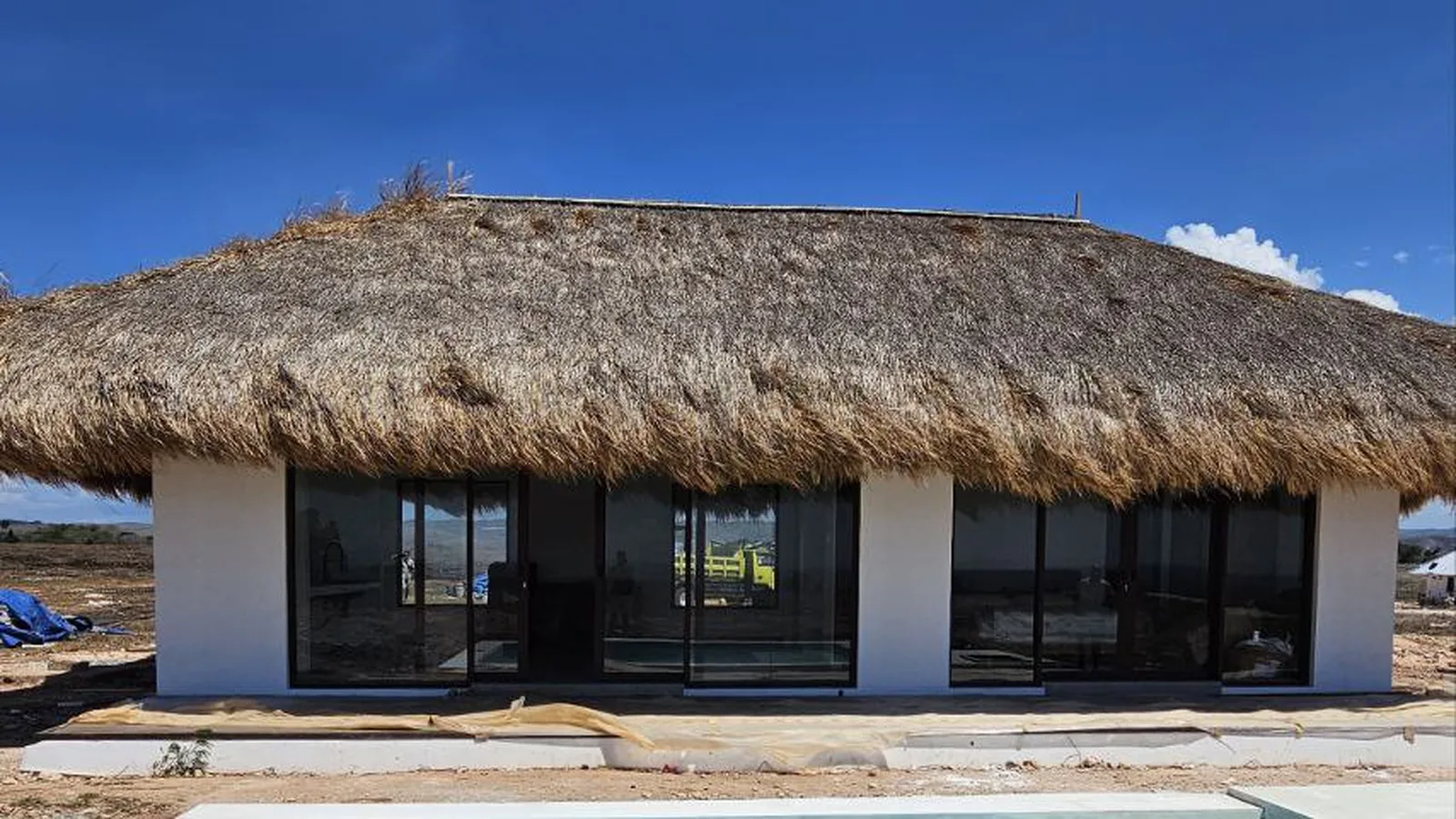
On the right was Santa Teresa, Costa Rica. Here, there were no walls, only sliding glass panels that dissolved into the view. An infinity pool bled into the Pacific horizon, its surface a perfect mirror for a sky that was just beginning to ignite with a furious, tropical fire. The sound, even through the laptop speakers, was of surf and the shriek of unseen birds. There was no history here, save for the tide’s daily erasure of the sand, a relentless act of forgetting. This wasn’t a ledger; it was a blank page.
Anja, a woman who had built a tech company on the cold, hard logic of predictive analytics, found herself caught not between two assets, but between two opposing theories of existence. The spreadsheet was useless here. This wasn't about yield, not really. It was about the geometry of her future. The tight, vertical angles of the European city, a life lived in the beautiful, compressing gravity of history? Or the wide, horizontal plane of the ocean, a life defined by an expanse of light and the terrifying liberty of the void? She was choosing the story her money would tell. More than that, she was choosing the story she would live inside.
The Cartography of Capital
We tend to think of investment as a cold science, a cartography of capital where lines of longitude are profit margins and latitudes are risk assessments. We follow the flow of money as if it were a dispassionate ocean current, seeking the warmest, most nutrient-rich waters. But capital is never truly dispassionate. It is human desire, distilled and given a price. The decision to place a significant sum of money into a piece of the earth, to claim a small rectangle of the planet as one’s own, is a profoundly philosophical act. We are not just buying square meters; we are buying a narrative. And the most compelling question for today's investor is what kind of story they want to buy into.
The choice Anja faces encapsulates this new calculus of wealth. It’s a tension between two archetypes of living. On one hand, there is the Custodian of History. This is the buyer who chooses Florence, or Lisbon, or a windswept cottage in the Cotswolds. They are purchasing a finished product, a story already written and revered. Their role is not to create but to preserve, to become a link in a long, unbroken chain. Their return is measured in the quiet satisfaction of belonging, the cultural osmosis that comes with living beside a Bernini fountain or walking the same cobblestones as Galileo. The Knight Frank Prime International Residential Index (PIRI 100) confirms the financial stability of this choice; cities like Florence offer a reliable, if unspectacular, appreciation, a testament to the enduring value of a masterpiece.
On the other hand, there is the Architect of a New Reality. This is the investor drawn to the tropical frontier, the 'sun belt' coastal markets from Costa Rica to Indonesia that surged in the wake of 2020. They are not buying a finished story; they are buying the ink and the empty pages. They are drawn to places still in the act of becoming, where the social fabric is being woven in real-time by a self-selecting tribe of pilgrims, entrepreneurs, and escape artists. Theirs is a bet on the future, on the idea that they can actively shape their environment, their community, and themselves. The potential for explosive financial return is there, but it is shadowed by an equally potent risk. The true ROI here is a 'Return on Narrative'—the chance to write a first draft of a life, unburdened by the accumulated weight of what came before.
An Inheritance of Stone: The Florentine Calculation
To understand the pull of the Old World, you must stand in the Oltrarno district of Florence at dusk. The bells of Santo Spirito begin their call and response, a sound that has marked the passage of time here for six hundred years. The air grows thick with the smell of roasting chestnuts and the faint, almost mineral scent of damp, ancient stone. You are not just in a place; you are inside a memory. To buy property here is to attempt to own a piece of that memory, to secure a foothold in the grand, unfolding drama of Western civilization.
'You do not own the stone,' Alessandro tells me, his voice a low gravelly hum that feels as old as the piazza we're sitting in. ‘You are merely its current guardian. The stone owns you.’
Alessandro is a ‘geometra,’ a uniquely Italian profession that is part architect, part surveyor, part bureaucratic shaman. For forty years, he has navigated the labyrinthine regulations—the ‘vincoli’—that protect Florence from itself. He sips his espresso, a dark, viscous thimble of energy, and explains the psychology of his clients. “They come here from New York, from London, from Shanghai. They have built empires. They can create anything they want from nothing. But they cannot create this,” he says, waving a hand at the ochre-hued buildings around us, at the worn fountain where pigeons drink, at the entire, glorious, imperfect tableau. “They don’t come here to build. They come here to belong.”
This is the core of Europe’s ‘cultural yield.’ It’s an intangible asset that never appears on a spreadsheet. It’s the value of being able to walk to the Uffizi on a Tuesday morning, of having your local baker greet you by name, of participating in the slow, shared ritual of the evening ‘passeggiata.’ The financial calculation is, by comparison, almost pedestrian. A well-appointed 70-square-meter apartment here in the Oltrarno might cost between €450,000 and €550,000. It will generate a long-term rental yield of around 3-4% annually, a figure whose remarkable stability over the past decade is its primary virtue. It's not a ticket to quick riches. It is a certificate of permanence. It’s the psychological comfort of investing in a ‘finished’ place, a masterpiece so complete that your only job is to live within its frame, not to alter the painting.
The Ledger's Hidden Toll
But the romance of the stone ledger comes with its own fine print, written in the dense, looping script of Italian bureaucracy. The same forces that preserve the city’s soul can also slowly crush an investor’s spirit. The inheritance of stone is heavy. For a non-resident purchasing a second home in Italy, the transaction costs alone can be staggering. The combination of registration tax (imposta di registro), mortgage tax (ipotecaria), and cadastral tax (catastale) can easily reach 9% of the property's value. On a €500,000 apartment, that’s €45,000 gone before you’ve even bought the first piece of furniture. Then come the annual property taxes, the IMU, which for a non-resident on a property of that value can run between €4,000 and €5,000 a year. Suddenly, the modest 3% yield looks even thinner.
Then there is the beautiful, expensive headache of history itself. I spoke with a British investor, Richard, who bought a magnificent ‘piano nobile’ apartment in a protected palazzo. “I fell in love with the frescoes on the ceiling,” he told me over a crackling phone line, “but I didn't fall in love with the 18th-century windows that let in the cold like a sieve.” Replacing them required navigating a gauntlet of approvals from the local council and the ‘Soprintendenza Archeologia, Belle Arti e Paesaggio’—the cultural heritage authority. The process took 18 months and cost him nearly €80,000. “You own it, but you don’t,” he said with a dry laugh. “You’re a custodian with a mortgage.” It’s the central paradox: you pay a premium for the history, but that history dictates that you cannot truly adapt the space to modern life. You can’t touch the walls, you can’t alter the layout, you can’t improve the abysmal energy efficiency. There's even an unusual revenue stream for owners during these lengthy restorations: in Florence, it's legal to rent the scaffolding space to advertisers, a practice known as 'scaffolding rent,' turning a period of dusty chaos into a bizarre, temporary billboard business.
This is the ledger’s hidden toll. Capital appreciation is slow, deliberate, and tethered to the cautious rhythms of a mature, heavily regulated market. The money you put in is safe, anchored by the immense cultural gravity of the place. But it is also partially frozen, trapped in the amber of preservation. You gain a story, but you lose a degree of freedom.
A Blank Canvas of Light: The Costa Rican Prospect
The flight into Liberia, the gateway to Costa Rica’s Nicoya Peninsula, is an act of sensory recalibration. You leave behind the muted tones and right angles of the northern world and descend into a chaotic symphony of green. The air that hits you on the tarmac is not air; it’s a living thing—warm, wet, and smelling of damp earth, salt, and fermenting blossoms. This is not a place of preservation. It’s a place of explosive, untamed growth. Here, on a peninsula designated as one of the world's five 'Blue Zones' for its residents' remarkable longevity, the primary investment is not in history, but in biology. You are buying into a lifestyle that prioritizes wellness, space, and a primal connection to the natural world.
I meet David, a former programmer from Silicon Valley, not in an office, but on the dusty track leading down to Playa Hermosa. He’s barefoot, board shorts slung low on his hips, carrying a surfboard waxed with the casual expertise of a lifelong local. He bought land here seven years ago, when it was still considered the wild frontier. “My friends back in Palo Alto, they talk about their ROI in basis points,” he says, squinting at the horizon, reading the subtle language of the swell. “My ROI is measured in sunsets watched. In mornings not spent on the 101 freeway. In the number of times my daughter has seen a howler monkey in our backyard.”
This is the essence of ‘lifestyle arbitrage.’ It’s the recognition that wealth can be translated into well-being at a far more favorable exchange rate here than in a major global city. The financial numbers are, in their own way, as dramatic as the landscape. Land prices in hot spots like Santa Teresa and Playa Hermosa have surged over 300% in the last five years. A prime ocean-view lot, which might have been had for a song a decade ago, now commands upwards of $500 per square meter. A €500,000 budget that buys a 70sqm apartment in Florence could here secure a 2,000sqm plot of land and the construction of a sleek, two-bedroom modern villa with a pool. It is an investment in a ‘becoming’ place, where the story is actively being written. To build here is to become a co-author of that narrative, to stake a claim not just on a piece of land, but on the formation of a new culture.
The Volatility of Paradise
But a blank canvas can be splattered with mud as easily as with paint. The allure of the tropical prospect is matched by the scale of its inherent risks. The very freedom from history and regulation that attracts investors is also the source of its volatility. Paradise is a fickle business partner. The local lawyer I spoke to in his open-air office in Nosara, a ceiling fan lazily stirring the humid air, put it best.
'In paradise, the most important investment is a good water well and a patient lawyer. The rules here are written in shifting sand, not stone.'
He was referring to the constant challenges that define life on the frontier: an electrical grid that flickers with every thunderstorm, internet service that is more a suggestion than a utility, and a legal framework that can feel maddeningly fluid. Costa Rica's Maritime Zone Law, for instance, dictates that the first 50 meters of land from the high-tide line is public and cannot be privately owned. This simple fact has spawned countless protracted and expensive legal battles for unwary foreign buyers who thought they were purchasing absolute beachfront property. Add to this the constant threat of currency fluctuations—your dollar-denominated investment can see its value eroded by a strengthening local colón—and the ever-present, if low-level, hum of political uncertainty that characterizes much of the region.
Then there is the environmental calculus. The value of these properties is inextricably linked to the health of the very ecosystems they inhabit. Rising sea levels, coral bleaching, and the increasing frequency of extreme weather events are not abstract threats; they are material risks to the asset class. The high-yield, high-risk nature of the vacation rental market further complicates the picture. A luxury three-bedroom villa here can be a cash machine, generating $10,000 to $15,000 per week during the high season, from Christmas to Easter. This four-month window can account for up to 70% of the entire annual rental income. The potential for an 8-12% annual yield is seductive. But during the ‘green season’ from May to November, when the rains come, occupancy can plummet below 30%, turning the cash machine into a costly drain. It's a feast-or-famine existence, a world away from the steady, predictable drip of rental income from a Florentine flat.
The Intangible Balance Sheet
Beyond the financials lies the intangible balance sheet where the true nature of each investment is revealed. The heading is ‘Community.’ In Florence, you are buying into an inherited, multi-generational community. It is a slow, complex process of integration. It is not about making friends; it is about earning a place. It’s the slow, almost imperceptible nod you eventually receive from the stern woman who sells vegetables in the market. It is the moment you understand the intricate, unspoken rivalries between the different ‘contrade’ or city districts. It is the shared ritual of the evening, when the entire neighborhood seems to decant onto the streets for the ‘passeggiata,’ a collective performance of being Florentine. It is deep, layered, and requires a surrender of self to the rhythm of the place. I watched an elderly couple on their balcony across the Arno, their conversation a quiet murmur, a dialogue that felt like it had been going on for fifty years, their presence as much a part of the building’s facade as the peeling paint and wrought-iron railings.
In Costa Rica, the community is something else entirely. It is a self-selecting, often transient, and instantly accessible tribe of fellow seekers. Friendships are forged with breathtaking speed over a shared surf session, a yoga class, or a brainstorming meeting at a bamboo co-working space. A recent sociological study noted that expat ‘friendship networks’ in such transient communities can form three times faster than in established home communities, but they also have a 50% dissolution rate within three years as people’s visas expire or they move on to the next frontier. The connections are horizontal, not vertical. They are based on shared present interests, not a shared past. I sat in a co-working space in Santa Teresa, watching a German bio-hacker, an Israeli graphic designer, and a Canadian crypto-trader sketch out a new app on a whiteboard over bottles of locally brewed kombucha. The energy was electric, creative, and utterly of the moment. It was a community built on the promise of what’s next, not the legacy of what was.
| Feature | Florence (The Custodian) | Costa Rica (The Architect) |
|---|---|---|
| Community | Inherited, multi-generational, deep, slow to integrate | Self-selecting, transient, entrepreneurial, fast to form |
| Pace of Life | Governed by seasons, history, and ritual | Governed by tides, WIFI signal, and personal projects |
| Social Risk | Cultural isolation, failing to 'fit in' | Loneliness from transient relationships, lack of roots |
| Social Reward | A deep sense of belonging to something timeless | Intense, immediate connection with like-minded peers |
The Custodians of a Distant Dream
The practical reality of owning an asset 10,000 kilometers away hinges on one crucial element: the person you trust to look after it. The 'ground game' in Europe and the tropics could not be more different. In Florence, property management is an established, professionalized industry. You hire a company, likely from an office in a respectable palazzo. You sign a detailed contract outlining services and fees, typically between 10-15% of rental income. Your interactions are formal, efficient, and largely automated. The monthly report that arrives in your inbox is a tidy PDF, itemizing utility costs, maintenance charges, and net yield percentages down to the second decimal point. The system is bureaucratic, reliable, and fundamentally impersonal. It works.
In Costa Rica, the model is built on relationships, not systems. Your property manager is unlikely to wear a suit or have a downtown office. I met one of the most sought-after managers in the area, a sun-burnt Australian named Craig, who runs his 20-villa empire from the driver's seat of his dusty Toyota pickup truck. His contract is a handshake. His communication is a stream of WhatsApp messages. The monthly report is not a PDF, but a photo of a toucan that landed on a client’s balcony, followed by a voice note explaining that the water pump broke again but his cousin Javier is on his way to fix it. The service is deeply personal, but it is also fragile. Your entire investment is often tethered to the health, honesty, and continued presence of that one person. If Craig decides to move back to Sydney, the entire operational structure of your investment could collapse overnight. It’s a model that offers the potential for genuine care and local insight, but it carries a risk that a spreadsheet can never quantify.
The Final Draft of the Self
And so we return to Anja, staring at the two browser tabs as the London morning finally solidifies into a flat, predictable grey. The choice before her has transcended finance. It has become an act of self-definition. A recent report on wealth psychology found that high-net-worth individuals are increasingly prioritizing 'transformational experiences' and 'personal legacy' over pure financial gain in their 'passion investments'. They are no longer just buying assets; they are acquiring the raw materials for a new or refined identity.
The Florentine apartment is an investment in a stable, known version of the self. It’s an affirmation of taste, of an appreciation for history, of a desire to connect with a grand, established story. To buy in Florence is to say, ‘I am the kind of person who understands the value of this.’ It is to accept a role in a play that has been running for centuries. The narrative is provided, and it is a masterpiece. The self is reinforced, not remade.
The Costa Rican villa is an investment in a fluid, future self. It is a bet on transformation. It is the purchase of a blank page, a deliberate step into a narrative vacuum where the protagonist—you—must invent the plot. To buy in Costa Rica is to say, ‘I do not yet know who I will become here, but I am open to the possibility of profound change.’ It exchanges the comfort of a known identity for the thrill of a potential one. It is riskier, wilder, and perhaps, more alive.
Anja closes both tabs. The glow of the distant worlds vanishes, leaving only the reflection of her own face on the dark screen. She looks out her window at the steady, predictable flow of the Thames below. The water moves in one direction, always. The choice has little to do with the property. It is about the architecture of her own soul—whether it craves the beautiful constraints of a walled garden or the terrifying freedom of the open sea.
The ultimate asset isn't the stone you polish or the sand you build upon. It is the version of yourself that will come to inhabit the space you choose.