The Soul's Ledger: Europe's Stone vs. Tropical Sand
The spreadsheet said one thing. The sixth-floor air, thick with the ghosts of coal smoke and Gauloises from decades past, said another. Antoine stood by the window of his chambre de bonne, a space so small the term ‘room’ felt like a grand overstatement. Below him, the rooftops of Paris formed a tight, grey grid of zinc and slate, a puzzle of interlocking geometries perfected by Haussmann and time. The city breathed its ancient, rhythmic sigh, a sound of distant sirens and the clatter of café life rising on the humid summer air. It was a beautiful prison, a vertical archive of ambition.
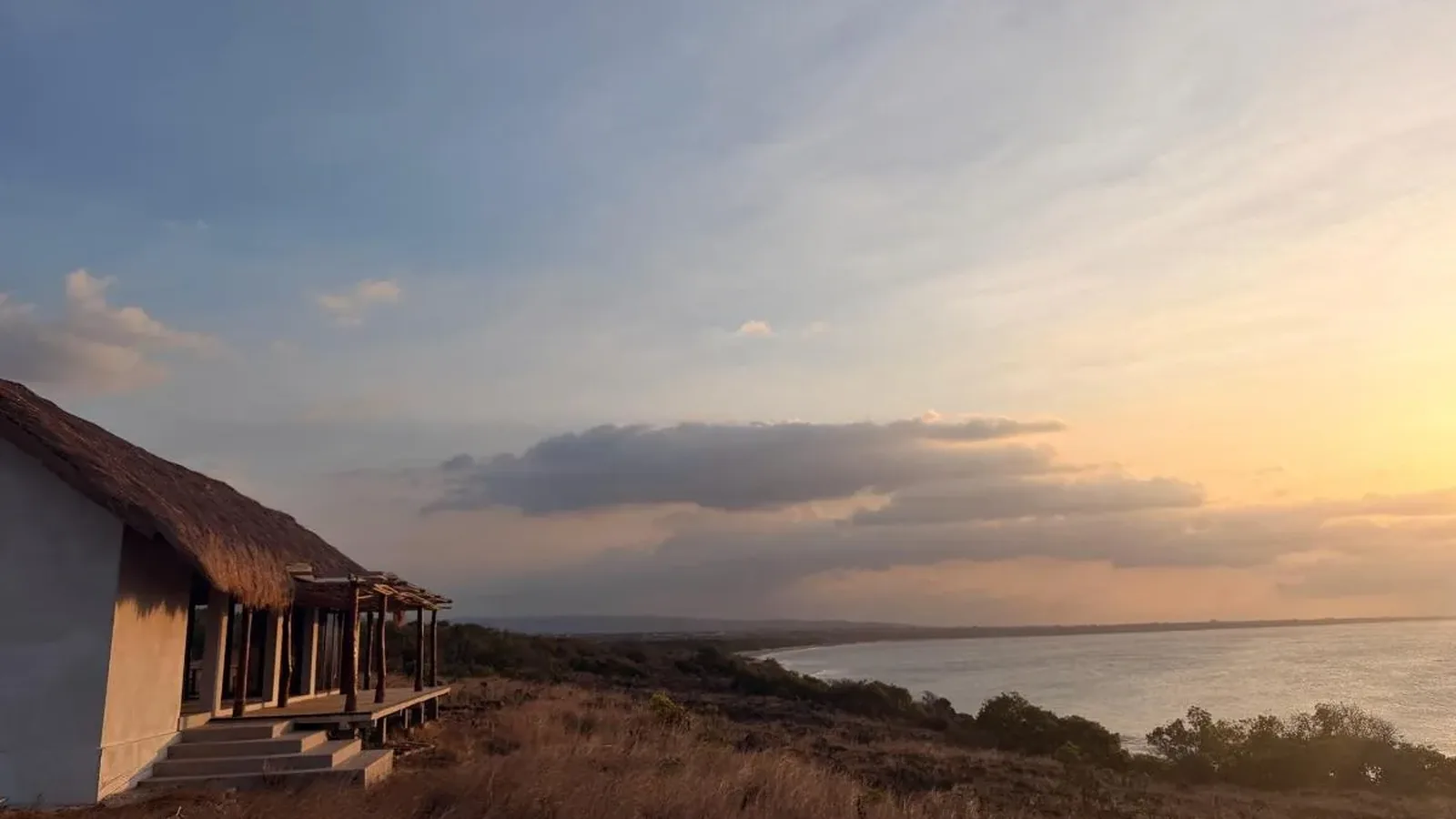
On his monitor, propped on a desk that doubled as his dining table, was another world. Not a photograph, but a blueprint. It wasn't a structure that stood so much as one that sprawled, breathed, and dissolved into the landscape it occupied. An open-air living room flowed into a deck, which gave way to a pool, which seemed to bleed into a tangle of palms and the suggestion of an unseen ocean. It was a villa plan for a plot of land 9,000 kilometers away, a place where rain fell warm and smelled of cinnamon. The lines on the screen were fluid, permissive, horizontal.
The cursor blinked over two numbers. One was the price for this Parisian shoebox, a figure that bought you history, proximity to genius, and the right to complain about the Métro. The other was the price for the land and construction of the tropical dream, a nearly identical figure. The question confronting Antoine, an architect who spent his days wrestling with the rigid constraints of this ancient city, was not merely one of square meters versus return on investment. It was a question of metaphysics. A choice between two geometries of desire, between a life stacked and a life spread.
The Two Blueprints: A Vertical Life vs. a Horizontal Dream
Every significant investment is, at its core, an act of self-definition. We acquire things not just for their function or their potential to appreciate, but for the story they allow us to tell ourselves about who we are. To purchase a piece of property is to purchase a backdrop for a future self. The debate between investing in a European urban core and a tropical coastline is therefore less about competing financial models and more about two fundamentally different blueprints for living. It’s a choice between the security of stone and the allure of sand; between a fortress of culture and a filter for nature.
The European city is a vertical proposition. It stacks history, culture, and millions of lives into a dense, super-conductive grid. Value is derived from compression. You pay for the layers beneath your feet—the Roman foundations, the medieval street plan, the Belle Époque façade. You pay for the proximity to the museum, the three-star restaurant, the university, the opera. An apartment in Paris or Rome is a subscription to a civilization. Its worth is underwritten by the collective belief in the enduring power of that civilization. The average apartment size in Paris is a compact 53 square meters. You live up, not out. Your life is measured in floors, in the climb of the staircase, in the view over other lives.
Contrast this with the horizontal dream of the tropics. Here, value is derived from expansion, from dissolution. The ideal is not to be sealed within a cultural container, but to merge with the environment. A villa in the green hills of Bali or on a coastal plot in Sri Lanka is designed to have its boundaries blurred. Walls are replaced with sliding glass doors, roofs are thatched with local grasses, and the shower is often outdoors, a place for communion with the sky. A standard new-build villa in a desirable part of Southeast Asia will often exceed 250 square meters for a price point that would secure you that modest Parisian flat. You aren’t buying a box; you are buying a curated parcel of the outdoors. You are buying a different relationship with the sun and the rain. Antoine, staring at his two screens, was choosing between owning a piece of the grid or a piece of the horizon. He was deciding whether his future self would be defined by the density of human history or the expanse of the natural world.
"We sell sunsets, not centuries. Our clients aren't buying a deed to the past; they're buying a license to live in the present moment, intensely and without apology." — A Bali-based property developer
The Fortress of Centuries: Deconstructing the Lisbon Flat
The European apartment is a repository of time. To own one is to become a custodian. I once had coffee with the Contini family in their third-floor apartment near Rome’s Campo de' Fiori, a space they had inhabited for four generations. The cool marble floors, worn into gentle concavities by a century of footsteps, held the day’s heat at bay. Signora Contini, a woman whose posture seemed to have absorbed the apartment's architectural dignity, spoke not of ownership but of responsibility. “This apartment does not belong to us,” she said, gesturing with a delicate hand at the high, frescoed ceiling. “We belong to it. We are a brief chapter in its life. Our job is to add our layer of laughter and arguments, and to not ruin the floors for the next ones.”
This is the silent contract of European property. The investment is not just in the bricks and mortar, but in the city itself—its legal stability, its infrastructure, its cultural magnetism. The financial model is one of predictability and appreciation through scarcity. You cannot build more Haussmannian Paris. You cannot replicate the Alfama district in Lisbon, where the labyrinthine streets are a protected patrimony. It’s this scarcity that props up values. In the Alfama, a renovated apartment with modern plumbing and a clean coat of paint can command a 25-30% rental premium over its un-renovated neighbor. Yet both benefit from the city-wide tourism boom that saw Lisbon host 15.4 million overnight stays in 2023. The rising tide of tourism lifts all boats, but the oldest, most character-filled boats rise highest.
This asset is a fortress. It defends against inflation. It weathers recessions with a stoicism learned over centuries. Its value is a slow, geological accretion. The risk is not collapse, but stagnation. The reward is not explosive, but it is solid. It is the financial equivalent of the building’s two-foot-thick stone walls: a bulwark against the chaos of the outside world. The ‘Golden Visa’ distortion, which saw Lisbon apartment prices jump over 17% between 2022 and 2023, shows how even these stable markets can be warped by fleeting legal loopholes, but the underlying asset—the city, the history, the stone—remains. You are buying into a system designed to endure.
The Living Villa: An Anatomy of Air and Teak
If the European flat is a fortress, the tropical villa is a filter. It is not designed to keep the world out, but to let the right parts of it in—the breeze, the light, the sound of geckos. I spent a week shadowing a property manager in Canggu, Bali, named Dewi, during the height of the monsoon. Her job was not one of passive rent collection; it was an active, daily battle against entropy. Her 8 AM checklist was a litany of tropical anxieties: check for roof leaks after the midnight deluge, inspect the base of the teak columns for termites, skim the frangipani blossoms from the pool before they could clog the filter, check for the tell-tale signs of mold in the bathrooms where humidity hovered near 90%. She was the general in a slow-motion war against the very nature her clients were paying a premium to be near.
This is the financial reality of the horizontal dream. The promise is of high yields, often an advertised 8-12% net from a booming short-term rental market. The appeal is visceral: your asset is a place people fantasize about, a backdrop for honeymoons and life-changing retreats. But this yield comes at the cost of constant vigilance. The annual maintenance budget for a luxury teak and bamboo villa, for instance, can easily reach 4% of the property's value. This is the “humidity tax,” a silent but corrosive force. In comparison, the service charge on a modern condominium in Berlin or Madrid typically hovers around 1%. The villa is not a passive asset; it is a living, breathing entity that requires constant care. It is less like owning a stock and more like owning a thoroughbred horse.
Vivid Sensory Scene: The Monsoon Audit
The rain came just after 3 PM, not as a drizzle but as if the sky had simply fallen. One moment, the sun was a hammer. The next, the world was a roaring wall of grey water. Dewi stood under the alang-alang thatched roof of the yoga shala at a $2 million villa, her phone pressed to her ear. She was talking to the owner, a tech investor in San Francisco. “Yes, the power is out again,” she said, her voice calm against the percussive drumming on the roof. “The generator kicked in. No, the wifi is down, the tower is probably hit.” Water wasn't just falling; it was seeping. A dark patch was spreading on the underside of the woven bamboo ceiling. She made a note. The scent in the air was a complex perfume of wet earth, ozone, and the sweet, cloying smell of temple incense from next door mingling with the first hints of mildew. This was the unseen labor behind the Instagram post, the physical reality of a digital nomad's paradise. The 8% ROI wasn't a number on a spreadsheet; it was the smell of damp bamboo and the hum of a diesel generator.
The very materials that give the villa its soul are its greatest vulnerability. Teak weathers to a beautiful silver, but it also attracts pests. Thatched roofs breathe, but they also leak and need replacing every 5-7 years at a cost that can exceed $15,000. The indoor-outdoor living concept is intoxicating until a family of macaques decides your kitchen is their new favorite foraging spot. You are not buying a static object; you are entering into a dynamic, and often demanding, relationship with an ecosystem.
The Currency of Time: Patina vs. The Perpetual Present
Nowhere is the difference between these two investment philosophies more apparent than in their relationship with time. In Europe, time is an appreciating asset. It bestows patina. The unevenness of a 200-year-old parquet floor in Le Marais, the crackle in the glaze of an original tiled fireplace in Barcelona—these are not defects. They are badges of honor, markers of authenticity that add quantifiable monetary value. A 2-bedroom apartment in that Parisian district purchased in 2004 for €400,000 is now worth approximately €1.1 million, a 175% increase driven not by renovation, but by the simple, elegant passage of time in a desirable, finite location. The French have a word for it: terroir. Just as the soil and climate give a wine its character, the history and culture of a neighborhood infuse a property with a value that transcends its physical dimensions. You are buying a story, and the older the story, the more it is worth.
In the tropics, time is a liability. It is a force of decay, a relentless antagonist to be managed, mitigated, and erased. The value of a villa is tied not to its past, but to its perpetual present. The most desirable properties are the newest, the freshest, the ones that feel untouched. A weathered deck is not charming; it’s a splinter-hazard that needs replacing. Faded paint isn't patina; it's a sign of neglect. The financial model is predicated on presenting a constant state of perfection for a transient clientele. The investment is in newness, in the illusion that paradise is effortless. This creates a strange paradox: you are in a land of ancient cultures and deep history, yet the economic logic of your asset demands you live in a perpetual 'now', constantly updating and renovating to keep the relentless jungle at bay.
The modern digital nomad circuit through places like Bali, Thailand, and Costa Rica is a fascinating echo of the 18th-century Grand Tour. Both are journeys undertaken by the privileged to acquire a certain kind of cultural capital. But where the young English aristocrat sought refinement in the stone-built institutions of Florence and Rome, the modern knowledge worker seeks transformation on sun-drenched shores. One sought to connect with the weight of history; the other seeks to shed it. This fundamental difference is reflected in the properties they inhabit. The Grand Tourist rented rooms with a view of the Pantheon. The digital nomad rents a villa with a view of the infinity pool. One is an investment in lineage, the other, in lifestyle.
The Regulatory Quicksand: Freehold vs. a 30-Year Clock
Here, the poetry of place gives way to the brutal prose of the law. The most critical, least romantic factor in this entire equation is the legal foundation of ownership. It is the invisible architecture upon which your entire investment rests, and in many tropical destinations, that foundation is built on sand.
In most of Europe, the concept of ‘freehold’ is king. When you buy a property, you buy the building and the land it sits on, in perpetuity. It is yours. Your name is on a deed held in a government land registry that has likely been operating continuously for centuries. This security is absolute. It is the bedrock of the entire market. It allows for generational wealth transfer and long-term financial planning. It is so fundamental that most European buyers don't even think about it.
In many parts of Southeast Asia, this concept is an alien luxury. In Thailand, for example, a foreigner cannot legally own land. The common structure for acquiring a villa is a 30-year leasehold on the land, often with a promise to renew for two further 30-year terms. In Indonesia, the ‘Hak Pakai’ (Right to Use) title or a similar leasehold structure is common for foreigners. This is not ownership as a European understands it. It is a long-term rental. And this rental agreement is on a timer. This introduces the terrifying concept of the ‘leasehold cliff’. A villa that costs $500,000 on a fresh 30-year lease is a desirable asset. But what is it worth when there are only 15 years left on the clock? Or five? Its resale value plummets. One analysis of the Phuket market suggests a property can lose over 40% of its value once the lease term drops below 15 years. You aren't just battling humidity; you're battling the inexorable ticking of a clock.
“The first question I ask a new client is not about their budget. It's about their risk tolerance for ambiguity. Are you comfortable with a legal structure that relies on trust and local relationships rather than inviolable code? Because out here, a contract is often just the beginning of a conversation.” — A property lawyer in Phuket, Thailand
This leads to complex and often murky nominee structures, where a local citizen or company holds the land title on the foreigner’s behalf. I met a German investor who had poured his life savings of $750,000 into what he believed was his ‘owned’ villa. He discovered, during a dispute, that the nominee arrangement was legally unenforceable. The dream asset he had been renting out for a 10% annual return was, in the eyes of the law, simply a property he had a precarious right to use, entirely at the discretion of his local ‘partner’. He hadn't bought a villa; he had financed its construction for someone else.
The Human Ledger: Tenants, Transience, and a Manager's Phone
The nature of your asset dictates the nature of your headaches. The return on investment is directly proportional to your tolerance for human drama and late-night phone calls. The human ledger—the tally of interactions with tenants, managers, and repairmen—is often the deciding factor in an investor’s sanity.
Consider the European model. Your tenant in a Berlin apartment is likely a professional on a one-year or multi-year lease. Their rent is paid by direct debit on the first of every month. The average occupancy rate for long-term rentals in the city hovers around a staggering 98%. Your interactions are minimal, procedural. A broken dishwasher prompts a single email to a management company, which is then resolved. The income is passive in the truest sense of the word. It is predictable, boring, and wonderfully reliable. You are a landlord.
Now, consider the tropical model. Your ‘tenants’ are a rotating cast of global travelers on a two-night, one-week, or, if you’re lucky, month-long stay. They are on vacation. Their expectations are high, and their tolerance for inconvenience is zero. The 90% occupancy you might achieve during high season in a destination like Ibiza or Seminyak can plummet to 40% or less in the off-season, requiring a completely different and more stressful cash-flow model. You are not a landlord; you are in the hospitality business. Your phone is the front desk. That 3 AM phone call is not an anomaly; it's part of the business model. It could be guests who have locked themselves out after a beach party. It could be a complaint about the wifi speed. Or, as one villa owner in Costa Rica recounted to me, it could be a panicked call from a honeymooning couple because a troop of howler monkeys had decided the villa’s roof was the perfect stage for their pre-dawn territorial dispute.
Financial & Lifestyle Comparison
| Feature | €750,000 in Amsterdam (Jordaan) | €750,000 in Bali (Canggu) |
|---|---|---|
| Asset | 60 sq. meter, 2-bed apartment | 400 sq. meter, 3-bed villa with pool |
| Ownership | Freehold, perpetual | 30-year leasehold, deprecating asset |
| Net Yield | Stable 3.5% (approx. €26,250/yr) | Volatile 8-12% (approx. €60-90,000/yr) |
| Maintenance | ~1% annually (€7,500) | ~4% annually (€30,000) |
| Management | Passive (long-term tenant) | Active (short-term rental, hospitality) |
| Primary Risk | Market stagnation | Legal ambiguity, currency fluctuation, tourism dependency |
The owner of that Costa Rican villa, a former software engineer from Austin, put it perfectly. “My friends who own condos in Europe, their asset works for them. My asset, I work for it. But,” he added, looking out at the Pacific, “I get to do that work from here.” This is the trade-off. The higher yield of the tropical villa is not free money; it is your salary for being a part-time hotelier, crisis manager, and monkey negotiator.
The Unseen ROI: A Return on Identity
If we move beyond the spreadsheets, beyond yields and leasehold cliffs, we arrive at the article’s central thesis: the real return is on identity. The property you choose doesn't just house you; it shapes you. It dictates the rhythm of your day, the nature of your community, and the thoughts that occupy your mind.
The intangible returns of the European apartment are rooted in intellectual and cultural stimulation. It’s the ability to walk to a different museum every weekend. It’s the serendipity of stumbling upon a street market that has run for 500 years. It’s the background hum of multiple languages and the easy access to world-class theater and cuisine. It’s a life of curated density. An expat I know in Florence, who traded a sprawling house in California for a compact apartment overlooking the Arno, told me, “I didn’t buy an apartment, I bought a front-row seat to the Renaissance. My daily walk takes me past Michelangelo and Dante. It has changed the very texture of my thoughts.” Her investment return is measured in historical resonance.
Conversely, the unseen ROI in the tropics is corporeal, elemental, and spiritual. It’s the wellness economy, which the Global Wellness Institute values in the billions for destinations like Bali and Costa Rica. It’s the practice of starting the day with a surf or a yoga session instead of a crowded subway ride. The typical resident of a place like Ubud might spend over $5,000 a year on yoga classes, meditation retreats, and organic food, quantifying a deep investment in personal well-being. It is a life of curated emptiness, of creating space for the self. A friend who sold his London-based design firm to build a small collection of villas in southern Sri Lanka explained it this way: “I didn't buy a plot of land, I bought a different relationship with the sun. I know its angle at every hour of the day. It dictates when I work, when I swim, when I see friends. I’ve traded a digital clock for a solar one.”
“I didn't buy an apartment, I bought a front-row seat to the Renaissance. My daily walk takes me past Michelangelo and Dante. It has changed the very texture of my thoughts.” — An American expat in Florence
Your social circle transforms. In Paris, you might befriend academics, artists, and diplomats. In a place like the planned community of Eco Beach City, your neighbors are more likely to be surf instructors, wellness coaches, and crypto investors. One life sharpens the intellect; the other soothes the soul. The choice of asset is a choice of tribe.
The Final Blueprint: Choosing Your Light
There is no 'winner' in this comparison because the two paths are not competing for the same prize. They are answers to two different questions. One asks, “How can I secure my capital and connect to the grand narrative of human achievement?” The other asks, “How can I maximize my lifestyle now and connect with the natural world?” The GFC-proof stability of German real estate, which plodded along at an average of 3.5% annual growth even during severe downturns, is a world away from the post-pandemic tourism boom that saw villa rental prices in parts of Bali jump 50% from 2021 to 2023. One is a bond, the other is a high-risk tech stock. One is a bet on the past continuing, the other is a bet on the future being different.
Let’s return to Antoine, the architect, standing in his Parisian garret. The city outside his window is a masterpiece of logic and order, a testament to the power of the right angle. The blueprint on his screen is a hymn to the curve, a surrender to the landscape. What does he do? Which blueprint does he choose to build?
The answer is a story he will tell himself. He might choose Paris, convincing himself that true creativity thrives on constraint, that the friction of the city is what generates the spark. He will buy the small apartment, feel the weight of its history in his hands, and spend his weekends in the Louvre, feeling connected to something vast and permanent.
Or he might choose the horizontal life. He will sell his few possessions, board a plane, and stand on a humid plot of earth that smells of rain and vegetation. He will supervise the pouring of concrete and the raising of teak beams, building not a fortress against the world, but a frame through which to view it. His days will be governed by the tide chart and the angle of the sun.
In the end, we see him sketching. He is drawing a single, large window. It is impossible to tell from the drawing alone whether that window is designed to look out upon a manicured Parisian courtyard or a wild tropical sea. The architecture is ambiguous. Because the final choice is not between two assets, but between two forms of light: the reflected, golden glow on a centuries-old parquet floor, or the direct, unfiltered sun that bleaches wood and tans skin. One illuminates the past, the other, a perpetual present.