The Archipelago's Audit: Calculating the Price of Paradise
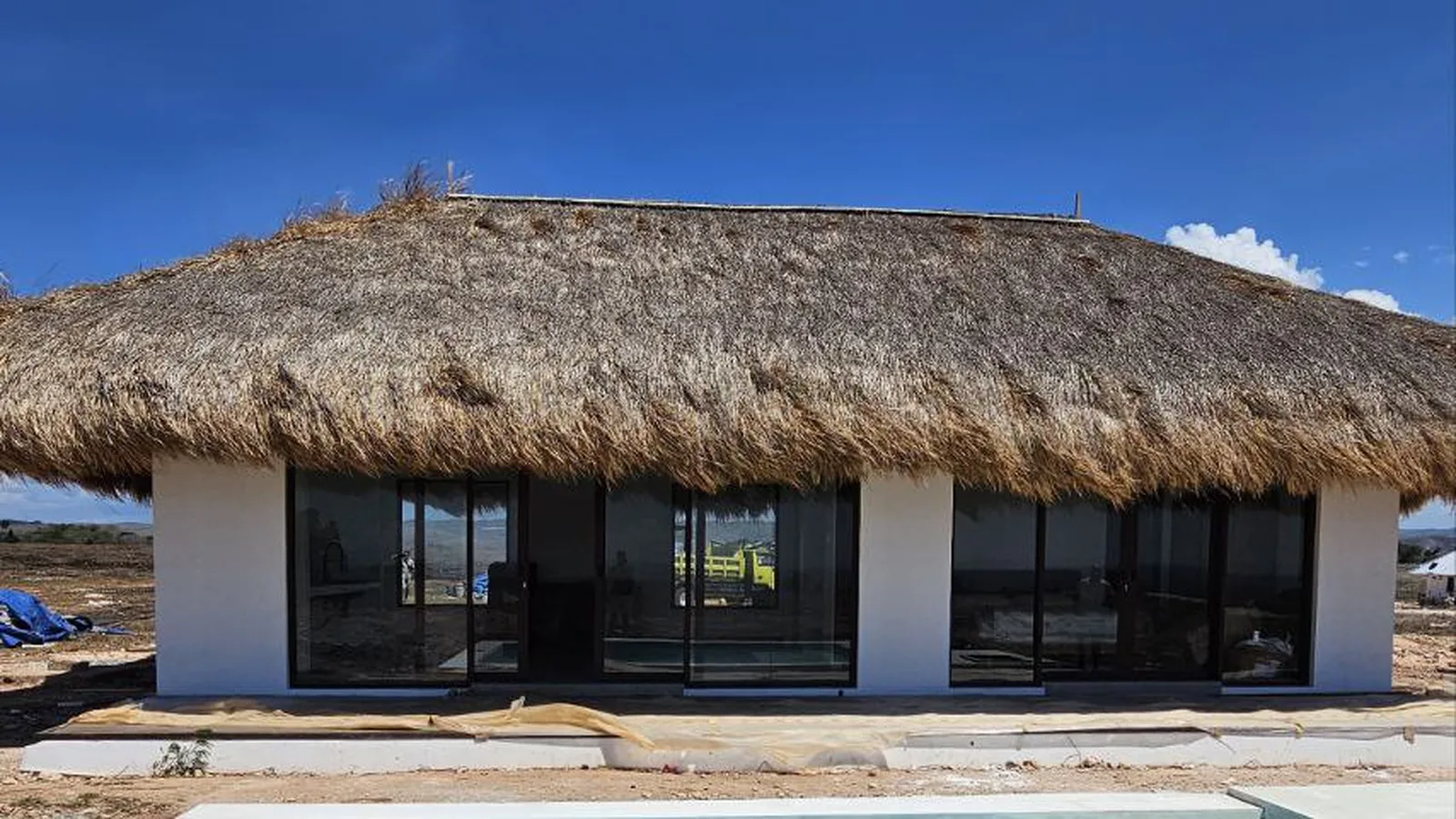
The spreadsheet said one thing. The clatter of ceramic on polished concrete said another. Markus, a German architect with the severe haircut and expensive spectacles to match, was staring at a dual-screen setup in a Canggu co-working space that charged by the hour what a local farmer might earn in a day. The air was chilled to a precise 22 degrees Celsius, a bulwark against the equatorial humidity just beyond the floor-to-ceiling glass. On his left monitor, a column titled 'BALI YIELD PROJECTION' glowed with figures that would make a Berlin property manager weep with envy. On the right, land prices in a neighboring province showed lower but steeper curves, beside a single astronomical figure for a protected coastal plot on an island further east.
He sipped a 45,000-rupiah flat white, the milk steamed to a perfect microfoam, and toggled between tabs. One showed rental ROIs, another charted tourist arrival statistics from the Ministry of Tourism and Creative Economy, and a third displayed satellite imagery of coastlines, pixelated green turning to the beige of construction sites over a five-year span. This wasn't a man choosing a lifestyle. This was a man calculating the arbitrage of paradise itself.
The global migration of capital and talent to these sun-drenched latitudes is a well-documented narrative. But beneath the Instagram gloss of infinity pools and smoothie bowls lies a complex and often brutal ledger. The cost of entry is no longer just the price of a plane ticket or a plot of land; it’s a far more intricate calculation involving strained infrastructure, social upheaval, and the quiet erosion of the very 'authenticity' that drew people here in the first place. For investors like Markus, and for the thousands of others following in their wake, the question is shifting from 'What does it cost to get in?' to 'What is the real carrying cost of staying?'
Bali: The Bill Comes Due in a Mature Market
The island has, for decades, served as the world’s fantasy of a tropical escape. It is no longer a frontier. It's a mature, and in many ways, saturated market where the cost of living is now inextricably linked to the 'cost of comfort.' The price of a villa isn't just for shelter; it's for a stable internet connection, a generator to counter frequent power outages, and a location that minimizes time spent in the island’s now-perpetual traffic jams. This is the invisible infrastructure tax, paid daily in time, money, and patience.
In hubs like Canggu and Uluwatu, the gentrification is hyper-accelerated. Areas that were quiet surf breaks a decade ago are now dense grids of concrete villas, boutique hotels, and F45 gyms. According to data compiled from local property agencies, the average 12-month lease for a standard two-bedroom villa in the Canggu corridor has surged by approximately 45% year-over-year, climbing from around IDR 250 million (roughly $16,000) in 2022 to IDR 360 million ($23,000) by the end of 2023. This isn't organic growth; it's a speculative fever dream fueled by a constant influx of new foreign capital.
This rapid monetization has created a new social stratification among the foreign population. There are the long-term residents, many of whom arrived a decade or more ago, who find themselves increasingly alienated. Then there are the transient 'digital nomads' and 'visa runners' who treat the island as a temporary consumption good, driving up short-term rental prices and contributing to a sense of impermanence. The tension is palpable.
'We used to complain about the price of a Bintang,' says Richard, a British designer who has lived in Kerobokan for 15 years. He gestures towards a half-finished construction site next to his long-term rental. 'Now we complain because our landlord wants to triple our lease to build a 'Luxury Scandi-Boho' Airbnb that will sit empty half the year. We're being priced out by the mythology we helped create.'
The UNESCO World Heritage-listed Subak irrigation system, a marvel of 9th-century cooperative engineering, is a case in point. This intricate network of canals and water temples, which represents a philosophical concept of balance between God, humanity, and nature, is now under direct threat. Water that once flowed to rice paddies is being diverted, legally and illegally, to service the insatiable thirst of the million-plus villas and hotels that have been built on or near the very landscapes the Subak is meant to sustain. The irony is sharp: the tourism industry, which monetizes the island’s beauty, is actively consuming its source.
Lombok: The Future Is for Sale, For a Price
If the first island represents a mature asset, its neighbor to the east is a speculative-grade bond. It is, in the parlance of developers, 'the next Bali'—a phrase uttered with a mixture of reverence and predatory glee. This future is being underwritten by the Indonesian central government's 'Ten New Balis' initiative, a cornerstone of President Joko Widodo's economic agenda aimed at decentralizing tourism revenue. The anchor project here is the Mandalika International Street Circuit, a high-spec MotoGP track and resort complex that has acted as a powerful accelerant for land speculation.
The effect has been dramatic. A plot of land—measured locally in 'are,' or 100-square-meter increments—with a sea view near the main southern town of Kuta that sold for IDR 20 million in 2017 was being marketed for IDR 250 million post-MotoGP announcement in 2022. That's a 1,150% increase in five years, a figure that has drawn a motley cast of characters to the island.
Step inside any dusty roadside Notaris (notary) office in South Lombok and you’ll find the entire drama of modern Indonesia playing out in miniature. On one side of a worn wooden desk sits an elderly farmer from the local Sasak tribe, his face a roadmap of sun and time. On the other, a young Australian surfer with a zinc-streaked nose and a business plan. Between them, a translator app on a cracked iPhone bridges the linguistic and cultural chasm. The air is thick with the scent of clove cigarettes, hope, and centuries of unspoken history. Here, ancestral land, often with unclear or communal titles, is being converted into individual leasehold contracts, a process fraught with both opportunity and profound risk of dispossession.
Many of the pristine white-sand beaches that now host boutique hotels were, until very recently, the exclusive domain of local seaweed farmers. Their entire livelihood, dependent on the ebb and flow of the tides, is being systematically displaced by concrete sea walls and private beach clubs. While the government heralds the development as progress, the cost of being 'the next Bali' is becoming apparent. Premature infrastructure projects stand half-finished, ghost developments line roads that lead nowhere, and a palpable tension exists between the master-planned tourism blueprint of Mandalika and the organic, slightly chaotic growth happening all around it. For an investor, the potential for a windfall is immense, but so is the risk of buying into a future that may never quite arrive as advertised.
Sumba: The High Cost of Untouched Wilderness
Further east lies an island that represents a completely different investment thesis. It is rugged, dry, and, to the untrained eye, empty. But here, emptiness is the asset. The development model is one of low-impact, high-cost exclusivity, pioneered by trailblazing resorts like Nihi, which famously branded itself as being on 'the edge of wildness.' This isn't about accessibility; it's about scarcity.
The cost of this manufactured scarcity is astronomical, both for the consumer and the operator. It’s a world built on a paradox: delivering a seamless, six-star Western luxury experience in one of the most logistically challenging corners of the archipelago. Consider the numbers: the cost of a single night in a signature multi-bedroom villa at a top-tier resort can exceed $2,500. This is roughly 14 times the official monthly minimum wage for the province of East Nusa Tenggara, which sits at approximately IDR 2.1 million (about $135).
'Our biggest challenge isn't marketing; it's logistics,' explains a resort manager who asked to remain anonymous due to company policy. 'Guests paying these prices expect burrata from Italy, not from a supermarket in Jakarta. They want organic kale from a specific farm in Java. We have to fly it all in. Our supply chain is a constant, high-stakes game of refrigerated trucks, chartered flights, and praying the inter-island ferry isn't delayed by weather.' This premium for imported goods, reliable internet, and skilled labor is passed on, creating an economic bubble that is almost entirely disconnected from the local reality just outside the resort walls.
This model raises an ethical conundrum. By creating an exclusive sanctuary, does ultra-luxury tourism 'preserve' a culture or simply place it under a beautiful glass cloche for high-paying observers? This island is home to one of the last remaining megalithic cultures on earth, where clan members still erect massive, hand-carved stone tombs for their prominent dead. This ancient Marapu belief system holds land as sacred and communal. An investor doesn't just buy a plot; they enter a complex network of clan obligations.
A tribal elder, or Rato, from the Kodi region explains it through a translator, his gaze fixed on the horizon. 'They come with maps and see a vacant plot for a villa. We see the ground where our ancestors' placentas are buried. We see the stone that marks a promise made five generations ago. How do you put a price on that?'
For a potential investor, this means the barrier to entry isn't just financial. It's cultural. Gaining access requires not just capital, but relationships, patience, and a deep understanding that the most valuable assets here aren't listed on any property website.
The Daily Ledger: A Commodity Cost Analysis
Beyond the headline figures for land and leases, the 'cost of living' is a granular daily calculation that varies dramatically depending on where you are and, more importantly, how you choose to live. The price of a product is often a direct reflection of its journey through the archipelago's fragmented supply chains and its position on the local-to-expat consumption spectrum.
A simple lunch of Nasi Campur (mixed rice with various small dishes) offers a clear metric. In a local warung in the highlands of Bali, it might cost IDR 25,000. In tourist-heavy Canggu, the same basic meal, plated for Western tastes, will be IDR 50,000. In Kuta, Lombok, you might find it for IDR 30,000. And in Waikabubak, the main town in West Sumba, it could be as low as IDR 20,000. The reverse is true for imported comforts. A flat white in Canggu is a standardized IDR 45,000. In a new cafe in Lombok, it's a slightly cheaper IDR 35,000. In Sumba, where high-quality espresso machines and trained baristas are a rarity, finding one at all is a victory, and it could cost upwards of IDR 60,000.
This 'convenience premium' applies to everything. Consider the journey of a single, perfect avocado. It begins its life on a small farm in the cool highlands of central Bali. It's sold to a distributor for IDR 5,000. Trucked down to the southern coast, it's sold to a high-end grocer for IDR 10,000. It lands on a cafe menu in Canggu as 'smashed avo on toast' for IDR 95,000. Another box of avocados makes the ferry crossing to Lombok. After transport costs and spoilage risk are factored in, it's sold to a new hotel for IDR 15,000 each. A precious few might be air-freighted to a luxury resort in Sumba, where, by the time it reaches a guest's plate, its embedded cost is closer to IDR 25,000. The fruit is the same; its value is a function of its location.
Here’s a snapshot of the cost divergence for common goods and services:
| Item / Service | Bali (Canggu) | Lombok (Kuta) | Sumba (Waikabubak) |
|---|---|---|---|
| Local Lunch (Warung) | IDR 50,000 | IDR 30,000 | IDR 20,000 |
| Flat White (Cafe) | IDR 45,000 | IDR 35,000 | IDR 60,000+ |
| Scooter Rental (Month) | IDR 1,200,000 | IDR 900,000 | IDR 1,500,000 |
| High-Speed Internet (50mbps) | IDR 750,000 | IDR 1,000,000 | (Largely Unavailable) |
| 1.5L Bottled Water | IDR 7,000 | IDR 8,000 | IDR 12,000 |
This data reveals a clear pattern: the cost of local life decreases as one moves east, while the cost of imported, 'expat-standard' life increases dramatically. The choice of island dictates which side of this ledger you will primarily be living on.
The Invisible Invoice: Ecological and Social Tolls
Some of the heaviest costs associated with this boom don't appear on any bank statement. They are entered on an invisible invoice, tallied in depleted water tables, frayed social fabrics, and cultural fault lines. These are the externalities that are seldom factored into an investor's ROI calculation but which will ultimately determine the long-term viability of these 'paradises.'
On the first island, the most critical item on this invisible invoice is water. The explosion of villas, each with its own swimming pool and lush garden, coupled with the demands of the hotel industry, is placing an unsustainable burden on the island's aquifer. According to research by local environmental NGOs like IDEP Foundation, the water table in the heavily developed southern regions is dropping by as much as 10 centimeters per year. Over 60% of the island’s watersheds are now considered to be in a state of crisis. Saline intrusion is creeping further inland, rendering wells undrinkable. This isn't a future problem; it's a present reality, masked by the fact that most affluent developments can simply drill deeper wells or pay for water to be trucked in, passing the cost on and further depleting the resource.
On the second island, the primary social cost is displacement. The land rush has created bitter disputes within families and communities, pitting those who want to cash in against those who wish to preserve their traditional way of life. The Indonesian legal system, with its overlapping jurisdictions and often-unclear land titling, provides fertile ground for exploitation. Families who have farmed land for generations can find themselves outmaneuvered by well-connected investors with superior legal resources. The modern influx of foreign capital presents a striking parallel to the Dutch East India Company (VOC) in the 17th century. Like the VOC's pursuit of spice, today's quest is for lifestyle and yield, reshaping local economies and extracting a different kind of resource—not cloves, but 'authenticity' and beachfront real estate.
On the third, the friction is more subtle but equally profound. The arrival of immense foreign capital into a largely pre-capitalist, clan-based society creates new and often disruptive power structures. The resort becomes the primary employer, the resort manager a de facto potentate. Traditional authority, once held by elders and clan leaders, can be challenged by the economic power wielded by outsiders. The very act of 'preservation' can feel like a form of quarantine, where the local culture is valued as an aesthetic backdrop rather than a living, evolving entity.
The Gatekeepers: Visas, Agents, and the Bureaucracy of Belonging
Facilitating this entire ecosystem of foreign investment and residency is a thriving, semi-formal industry of gatekeepers: visa agents, lawyers, notaries, and assorted middlemen. For any foreigner aspiring to stay longer than a tourist visa allows, navigating Indonesia's bureaucracy is a mandatory and often costly education. It's a system that one agent describes, with a wry smile, as 'calculated ambiguity.'
This ambiguity is a business model. Official government fees for visas and permits are often just the starting point. The real cost comes from the 'service fees' paid to agents who know which levers to pull, which documents require an extra 'facilitation fee,' and how to structure deals to fit within the country's complex and often contradictory legal framework for property. For instance, foreigners cannot technically own land freehold (Hak Milik). Instead, they use leasehold structures (Hak Sewa) or a right-to-use title (Hak Pakai) under the name of a trusted Indonesian nominee—a practice rife with risk.
'My job is not just to file paperwork,' an agent in Bali confides, speaking on condition of anonymity. 'My job is to provide peace of mind. The client pays me so they don't have to deal with the uncertainty. Is it expensive? Yes. But it’s cheaper than losing your entire investment because you trusted the wrong person or misunderstood one line of a contract.'
In a bid to attract more high-net-worth individuals, the Indonesian government has introduced policies like the 'Second Home Visa.' This 5- or 10-year visa offers a more stable path to residency but comes with a significant price tag: applicants must prove they have funds of at least IDR 2 Billion (approximately $130,000) and deposit them in a state-owned Indonesian bank. This policy effectively creates a two-tiered system for long-term stays, formalizing the distinction between the ultra-wealthy and the rest, and further driving up the perceived cost of 'belonging.' It’s a clear signal from Jakarta: we want your capital, and we are willing to sell you stability, for a price.
The Local Balance Sheet: Who Really Profits from Paradise?
When a tourist pays $10 for a cocktail at a foreign-owned beach club, where does that money actually go? Tracking the flow of capital reveals a stark disparity in who truly benefits from the boom. A significant portion of revenue is immediately repatriated offshore to foreign owners or spent on imported goods—premium alcohol, European furniture, Australian beef—creating a 'leaky' local economy.
A 2022 study conducted by the University of Mataram in Lombok provided a sobering analysis of the economic impact in the new Mandalika development area. It found that for every $100 spent by international tourists within the formal, high-end tourism sector, less than $15 was directly retained within the local, non-formally-employed community of shopkeepers, food stall vendors, and freelance guides. The rest flowed to Jakarta-based corporations, international hotel chains, and the complex supply chains that support them. One high-end project, an eco-resort aiming for sustainability, found that its initial construction costs were almost 80% directed to off-island contractors and suppliers.
This economic divergence is personified in the story of two brothers, Adi and Bayu, from a village near Gerupuk Bay in South Lombok. Their family owned a two-hectare plot of beachfront land. When a European consortium made an offer, Adi, the elder brother, pushed the family to sell. They received a life-changing sum of money. Today, Adi works as a security guard at the luxury hotel that now stands on his ancestral land. He has a steady salary, health insurance, and a new motorbike. Bayu, the younger brother, refused his share of the money. He used a small, undisputed corner of the remaining family land to build a simple surf shack. He runs a small, struggling but independent surf school. Adi sees progress, stability, and a future for his children. Bayu sees dependency and the loss of self-determination. 'He has a salary,' Bayu says, waxing a surfboard. 'I have a business. Even if it's small, it's mine.' Their conflicting views on what constitutes a 'better life' capture the central dilemma facing communities across the archipelago.
Exit Strategy: The Cost of Leaving
The final column on any investor's spreadsheet should be the exit strategy. The process of liquidating an asset in Indonesia is often far more complex and costly than acquiring it. The same fluid legal structures and relationship-based deals that can facilitate entry can become significant obstacles when it's time to sell. This is the 'sunk cost' fallacy played out on a tropical stage, where financial and emotional investments can make it feel impossible to leave, even when the market turns.
Let's consider a hypothetical $500,000 USD investment. In Bali's mature market, this might buy the remaining 20-year lease on a pre-existing four-bedroom villa in Seminyak or Canggu. The market is relatively liquid, but it's also flooded with similar properties. The average time to sell a leasehold property (oper-alih) in the current climate can exceed 18 months, with sellers frequently having to accept a 20-30% discount on their initial investment to secure a quick sale, especially if the lease has fewer than 15 years remaining.
In Lombok, the same $500,000 could purchase a larger plot of land with freehold potential (through a nominee) and fund the construction of a new, high-end villa from scratch. The potential for appreciation is far greater, but so is the risk. The market is illiquid. Finding a buyer is a speculative hunt, dependent on the continued hype around the island's development. An exit could take years, or it could happen overnight if another major investor decides your plot is strategic.
In Sumba, $500,000 might not even be enough to purchase a plot within the most exclusive, established luxury developments. It could, however, make you a dominant player in a smaller, more remote village, a move that comes with immense social responsibility. The exit strategy here is almost entirely illiquid and relationship-based. You can't just list your property on a website. Selling means finding a successor who is acceptable to the local community and clan, a process that can be as intricate as a dynastic succession.
The story of a retired Australian couple trying to sell their Bali villa to fund a quieter move to Lombok is now a common cautionary tale. They've found themselves entangled in a dispute with their original nominee's family over capital gains, while their agent shows the property to a stream of unserious buyers in a market where everyone is looking for a bargain. Their paradise has become a gilded cage.
The final calculation, then, is not about which island is cheapest, or which offers the highest yield. It's about which cost you are willing to bear, and which you are prepared to impose. Pulling back from the spreadsheets and the sun-drenched beaches, the archipelago reveals itself not as a menu of lifestyle options, but as a living ledger of global desire. Every entry—be it a yoga class, a land deed, or a liter of imported milk—leaves an indelible mark on the balance sheet of a place some call paradise, and others simply call home.