Indonesia's Unregulated Edge: The Laptop Class Frontier
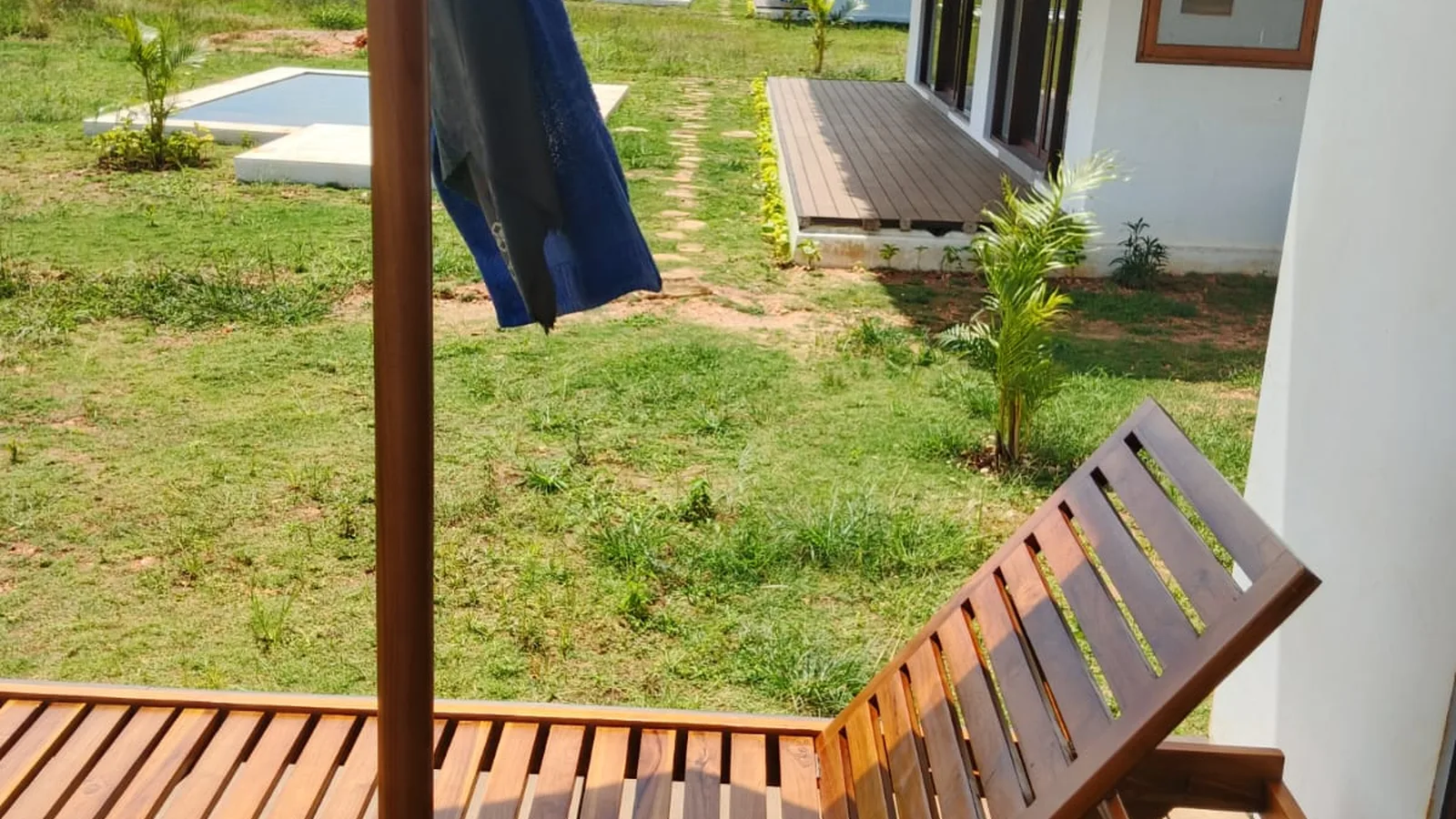
Christoph adjusts his footing on the raw concrete slab, the tropical sun already sharp at 9 a.m. Below, on what will one day be the ground floor of his minimalist villa, two Lombok men plaster a wall with slow, practiced strokes. They occasionally glance up at the German UX designer and the strange ritual he’s performing. He’s aiming a rectangular white dish, a piece of alien technology, at the empty blue sky. The Starlink unit, shipped circuitously via a friend in Jakarta, costs more per month than their combined weekly wages.
This single tableau, high in the hills overlooking the southern coast of Lombok, captures the entire ecosystem of Indonesia’s new digital frontier. It’s a collision of foreign capital seeking refuge from European winters and high taxes, futuristic tech that leapfrogs failed state infrastructure, and the stark economic disparity that underpins the entire fantasy. The spreadsheet that convinced Christoph to invest his Berlin savings spoke of exponential returns and a low cost of living. The salt air, thick with the smell of cement and clove cigarettes, tells a more complicated story.
When Indonesia's government speaks of attracting high-value remote workers, it conjures images of seamless visas and state-sanctioned co-working hubs. The reality on the ground is something else entirely: a high-stakes, unregulated race where private fortunes are being made and lost, and where the very definition of community, connectivity, and ownership is being rewritten in real-time by forces far beyond Jakarta’s control.
The Canggu Contagion: Why Bali's Playbook Is Failing
The exodus has a clear origin point. For over a decade, Bali—and specifically the coastal stretch from Seminyak to Canggu—was the undisputed global capital of the work-from-anywhere movement. It was a perfect formula: cheap living, reliable-enough internet, and an exotic cultural backdrop. But the formula has curdled. The island, particularly its southern pole, is choking on its own success.
Infrastructure, never designed for such a sustained influx, has buckled. According to analysis of Google Maps traffic data, peak travel times for key arteries in Canggu have increased by a staggering 45% between 2019 and 2024. A two-kilometer drive from a villa in Berawa to a beachfront restaurant in Batu Bolong can now frequently take over 30 minutes, a journey spent in a miasma of scooter exhaust and honking horns. Waste management systems are overwhelmed, with plastic-choked rivers becoming a grim fixture after every downpour. Water, the most basic of resources, is now a point of contention, with deep wells drilled for new luxury developments causing a precipitous drop in the water table, leaving local communities’ shallower wells to run dry.
Beyond the physical constraints, there's a growing sense of cultural dislocation. The 'Bali experience' that once drew people in—the scent of incense from a family temple, the intricate daily offerings, the genuine warmth of the local population—has been progressively paved over. In its place is a homogenous, Western-facing bubble. Today, the main street of Canggu feels less like Indonesia and more like a tropical strip-mall version of Santa Monica or Byron Bay, replete with pilates studios, cold-plunge facilities, and cafes selling US$7 oat milk lattes.
This has created an economic paradox. While tourism and investment revenues are nominally high, the benefits are concentrating at the top. The cost of living for Balinese families has skyrocketed. Landlords who once rented rooms to local workers can now get triple the price from a foreign surfer, pushing residents further inland, away from the jobs and ancestral lands that define their communities.
'It used to be about the surf and the spirits,' says Sarah, a British jewelry designer who first arrived in Ubud in 2010. We're sitting in a cafe where the menu is entirely in English. 'You learned the language, you went to the ceremonies. Now it's about the seed funding and the social media feed. I'm looking at Lombok, but I'm afraid we're the problem.'
This fear—that the very people seeking an escape are the agents of the destruction of that escape—is prompting a new wave of migration. The pioneers, the early adopters, and those simply priced out or fed up are now looking east, towards a string of islands that promise what Bali once did: space, authenticity, and a blank canvas. They bring with them their laptops, their capital, and a set of expectations forged in Canggu's crucible. And the cycle is beginning anew.
The Connectivity Arms Race: Fiber vs. Starlink
For the digital nomad, Maslow's hierarchy of needs is simple: Wi-Fi, coffee, and a power outlet. For years, the lack of the first item kept Indonesia's vast archipelago largely off the remote work map. Development was tethered to the slow, politically fraught rollout of terrestrial fiber optic cables by state-affiliated players like IndiHome and private companies such as Biznet. If your dream was to code from a pristine beach, you were confined to the few urbanized pockets where these companies had laid their lines.
That all changed in May 2024, when Elon Musk stood alongside Indonesian ministers in a Bali health clinic to officially launch Starlink in the country. While the official narrative focused on connecting remote schools and clinics, the service's primary early adopters have been foreign residents and tourism ventures in areas previously considered black holes for high-speed internet. It has, almost overnight, untethered development from geography.
Suddenly, the remote surf breaks of the Mentawai Islands, the secluded hills of North Lombok, and the dramatic coastlines of Sumba are viable locations for building a villa and running a global business. Starlink has effectively created a private, parallel infrastructure that local telcos, with their focus on population density and return on investment, failed to service. This created a vacuum that foreign-owned tech immediately filled, accelerating development in ecologically and culturally sensitive areas at a pace local governments are wholly unprepared for.
Consider the on-the-ground economics:
| Service Provider | Plan Name | Advertised Speed | Monthly Cost (IDR) | Monthly Cost (USD) | Key Limitation |
|---|---|---|---|---|---|
| Starlink | Residential | Up to 200 Mbps | 750,000 | ~$48 | High initial hardware cost (~$400) |
| Biznet | Home Internet 3C | Up to 300 Mbps | 675,000 | ~$43 | Limited to major cities; <5% coverage in outer islands |
| IndiHome | 100 Mbps | Up to 100 Mbps | 595,000 | ~$38 | Inconsistent speeds; bureaucratic installation |
This table illustrates the strategic disruption. For a small premium, a developer can now guarantee high-speed internet anywhere a dish can see the sky, bypassing local monopolies and geographical constraints entirely. This has spawned a cottage industry of fixers. 'I have a contact in Jakarta who can get the hardware kits faster than the official channel,' explains 'Made', a young Balinese entrepreneur who runs a Starlink installation side-hustle. He asked that his real name not be used as his business operates in a grey market. 'Foreigners building in remote places, they don't want to wait. They pay me to handle everything—delivery, installation, finding the best spot on the roof. They need it working yesterday.'
This 'connectivity arms race' is creating an instant digital class divide. A new luxury villa might have 200 Mbps speeds, while the local village school 500 meters away struggles with a single, unreliable 3G connection. It's a powerful tool for development, but one that is being deployed not by government plan, but by the ad-hoc demands of foreign capital. It raises a critical question: what happens when a nation's digital expansion into its most remote territories is effectively privatized and outsourced to an American aerospace company?
Lombok's Double-Edged Boom: A Case Study in Kuta
The island of Lombok, just a 30-minute flight east of Bali, is the primary laboratory for Indonesia's post-Bali development experiment. The central government has poured trillions of rupiah into the southern coast, centered on the Mandalika Special Economic Zone. The centerpiece is the Pertamina Mandalika International Street Circuit, a world-class MotoGP track intended to act as an economic engine, creating a 'halo effect' of prosperity for the surrounding areas, particularly the once-sleepy surf town of Kuta.
The halo effect has arrived, but it is not the orderly, state-managed boom that planners envisioned. Instead, there is a frantic, chaotic disconnect between the grand state projects—gleaming new roads, five-star hotels—and the small-scale, often-illegal construction boom driven by individual foreign remote workers and small-time investors. The hills surrounding Kuta are now scarred with building sites, a constellation of white-walled villas rising from the red earth.
This speculative fever has had a dramatic and destabilizing effect on the local land market. It is a market that operates on rumor, WhatsApp messages, and a complex interplay of local custom and national law. The result has been a jaw-dropping inflation of land prices. In 2018, a one-'are' (100 square meter) plot of hillside land with a view could be leased for around $400 USD per year. By early 2024, that same leasehold was commanding upwards of $1,500 USD per year—a 275% increase in six years. For the local Sasak people, whose families have farmed these hills for generations, the idea of buying land in their own community is now an impossible dream.
'The confusion is the business model,' a visa agent in Bali's Kerobokan neighborhood tells me, speaking on condition of anonymity. He sits in a small, air-conditioned office, a stack of foreign passports on his desk. 'If the rules were clear, we wouldn't have jobs. We are the unofficial immigration office. The government knows this. It’s a release valve.'
Attending a land transaction at a local notary's office in Praya, the regional capital, is an exercise in observing calculated risk. A German buyer, tanned and nervous, sits next to his Indonesian 'nominee'—a young woman from Jakarta hired for the occasion. The notary, a man of immense local importance, methodically stamps a thick sheaf of documents. The papers outline a 25-year leasehold agreement, supplemented by a complex set of side-contracts: a loan agreement, a power of attorney, a personal guarantee. It's a house of cards designed to circumvent the law, a structure full of legal grey areas and potential future conflicts. The German is paying for a dream. The nominee is being paid for her signature. The notary is being paid to look the other way. And the land, once ancestral farming ground, is being converted into a line item on a foreign investment portfolio.
The Visa Shell Game: Deconstructing the Digital Nomad Myth
For a country eager to attract high-earning, low-impact visitors, Indonesia's visa policy has been a masterclass in obfuscation. The banner headline, promoted by tourism ministers and countless online influencers, is the 'Digital Nomad Visa'. The reality is far murkier. The most commonly used visa, the B211a 'social-cultural' or 'business' visa, explicitly does not grant the right to work or earn income within Indonesia. While it allows for a stay of up to 180 days, any online work performed for foreign clients exists in a legal twilight zone, rarely prosecuted but never officially sanctioned.
This deliberate ambiguity has fostered a sprawling, lucrative shadow economy of 'visa agents'. These middlemen, operating from small offices in Bali and increasingly in Lombok, have become an essential part of the remote worker ecosystem. They navigate the labyrinthine bureaucracy of Indonesian immigration, manage extensions, and orchestrate the requisite 'visa runs' to nearby countries like Singapore or Malaysia when a visa expires. Their service is convenience, but their product is the management of legal uncertainty.
The cost of this uncertainty is significant. The official government fee for a single-entry B211a visa is IDR 2,000,000 (about $125 USD). Arranged through an agent, the price for the same visa, often bundled with a 'sponsorship' letter from an Indonesian company, ranges from $350 to $600 USD. This represents a profit margin of over 200% for the middlemen, a tax on confusion that thousands of foreigners pay without question.
This 'visa shell game' has a profound psychological and financial toll on the very people Indonesia claims it wants to attract. Living with the constant, low-grade anxiety of an uncertain legal status is draining. It prevents genuine integration. You can't open a proper bank account, get a local driver's license, or register a vehicle in your own name. Long-term planning becomes impossible, with life measured in 60- or 180-day increments. 'Every time I have to hand my passport and $400 over to my agent, I feel a pit in my stomach,' says a Canadian freelance writer who has been living this cycle for three years. 'Am I a resident? A tourist? A fugitive? It depends on the day.' This system, which the government tacitly allows to flourish, keeps the remote worker population in a state of perpetual transience, unable to put down real roots and always just one bureaucratic whim away from having their entire life upended.
Flores: The Conservation Collision in Komodo's Shadow
As Lombok follows Bali's trajectory, developers are already scanning the horizon for the next frontier. Many have set their sights on Flores, an island of dramatic volcanic landscapes and the gateway to the fabled Komodo National Park, a UNESCO World Heritage site. The small fishing town of Labuan Bajo, once a dusty outpost for intrepid backpackers, is now at the epicenter of a collision between high-end development and fragile conservation.
With its newly expanded airport and daily flights from Bali and Jakarta, Labuan Bajo is being aggressively marketed as a luxury destination. The logic is simple: if people will fly here to see the Komodo dragons, they will stay for the world-class diving and breathtaking scenery. This has attracted a new wave of investment aimed squarely at the affluent remote worker: cliffside villas with infinity pools, co-working spaces with panoramic views, and boutique hotels promising 'barefoot luxury'.
However, this development model is in direct conflict with the very environment it seeks to monetize. The water and electricity demands of these new constructions are placing an immense strain on Labuan Bajo's limited resources. More critically, they pose a direct threat to the delicate marine ecosystem. Construction runoff, laden with sediment and pollutants, clouds the water and smothers the coral reefs that are the primary attraction for divers and snorkelers. Sewage treatment remains rudimentary at best, with much of the waste from the burgeoning town flowing directly into the sea.
This tension came to a head with the government's controversial proposal to raise the Komodo National Park entrance fee for foreigners to a staggering IDR 3.75 million (around $240) per person. Though postponed after a fierce backlash from local tour operators, the intent was clear: to shift the park towards a high-yield, low-volume tourism model. In parallel, new luxury developments in and around Labuan Bajo have proposed 'private access' models, threatening to gatekeep swathes of coastline and marine areas for their wealthy clients.
'They come here for this view, for the pristine water,' says Anto, a local divemaster and marine biologist, gesturing from his small wooden boat towards a massive construction site carving up a coastal cliff. 'But the construction runoff is killing the coral that makes the water pristine. They are literally destroying their own view.'
Local communities, once reliant on sustainable fishing and small-scale tourism, are being systematically displaced. They are offered jobs in the new tourism economy, but these are almost exclusively low-wage service positions: cleaners, gardeners, security guards. They are becoming employees on their own ancestral land, servicing a transient population whose lifestyle is actively degrading the natural heritage that has sustained their community for centuries.
The Property Trap: Leaseholds, Nominees, and Nightmares
At the heart of every foreign investor's dream of a tropical villa lies a legal minefield: Indonesian property law. The foundational principle, enshrined in the Basic Agrarian Law No. 5 of 1960, is unequivocal: foreigners cannot own freehold (Hak Milik) land in Indonesia. This single, unyielding rule has given rise to a precarious and widely used system of legal workarounds, primarily the 'nominee structure'.
In this arrangement, a foreigner provides the funds to purchase a property, but the legal title is registered in the name of an Indonesian citizen—the nominee. This is often accompanied by a raft of side-agreements intended to give the foreigner control, such as a long-term lease agreement from the nominee back to the foreigner, a power of attorney to sell the property, and a loan agreement asserting that the original purchase was funded by the foreigner. It is a system built on trust and hope, but it is legally treacherous. The Indonesian Supreme Court has repeatedly ruled such nominee agreements to be invalid, a form of legal smuggling intended to circumvent the law. This means that in any dispute, the foreigner's claim to the property they paid for is effectively void. The land and any buildings on it belong, unequivocally, to the Indonesian nominee.
For thousands of investors, this works—until it doesn't. And when it fails, the consequences are catastrophic. The story of a French couple in southern Sumbawa serves as a chilling cautionary tale. They invested over $250,000, their life savings, to build a beautiful beachfront home on land registered to a trusted local friend who acted as their nominee. For five years, it was paradise. Then, their nominee died unexpectedly in a motorbike accident. His extended family, citing their inheritance rights under local customary law, immediately laid claim to the property. The French couple, armed with their stack of now-worthless side-agreements, were left with no legal recourse. They lost everything.
It's estimated that outside of large, professionally managed developments that use more secure (but still not foolproof) corporate structures, some 70% of foreign-'owned' villas are held through these vulnerable nominee agreements. This quiet reality is a far cry from the glossy marketing of property agents promising secure, high-return investments. It's a high-wire act with no safety net, a gamble that many are willing to take, blinded by the sun and the allure of a cheap paradise. This modern arrangement carries faint echoes of a much older enterprise, the Dutch East India Company (VOC). Like the VOC, today’s developers and tech firms act as quasi-sovereign entities, building private infrastructure for their own 'citizens' and commercial gain, operating parallel to a local government that is often overwhelmed.
The Social Ledger: When a Laptop Costs More Than a Livelihood
Beyond the legal and environmental risks, the most profound impact of this unregulated influx is on the social fabric of these island communities. The arrival of a critical mass of people whose income is benchmarked to euros, dollars, or pounds has a deeply inflationary effect on economies where the local currency is the rupiah.
A simple comparison lays the disparity bare. The average monthly minimum wage in West Nusa Tenggara, the province that includes Lombok, is approximately IDR 2.4 million (around $150 USD). A single dinner for two at a trendy, foreign-owned restaurant in Kuta, Lombok—a pizza, a pasta, a couple of Bintang beers—can easily exceed IDR 750,000 ($48). This represents nearly one-third of a local worker's monthly income spent on a single meal. This is more than a statistic; it's the engine of a two-tiered economy.
Slowly but surely, the local market is recalibrating to the foreign wallet. The price of a coconut on the beach, a plate of nasi campur from a local warung, or a simple room for rent is increasingly set not by what a local can afford, but by what a tourist will pay. Landlords evict local families to rent their properties for ten times the price on Airbnb. This creates invisible walls within the community. While there is surface-level friendliness, genuine interaction between the transient foreign population and the permanent local community becomes rare. They exist in different economic universes, meeting only at the point of a commercial transaction.
'My family has had this warung for 30 years,' explains Ibu Nur, an elderly woman whose small eatery sits on a road now lined with chic cafes in South Lombok. Her hands are constantly in motion, wrapping rice and side dishes in banana leaves. 'Now the owner of the land says my rent will be five times higher next year. He told me a 'bule' [foreigner] wants to lease the land to build a smoothie bowl cafe. Where do I go? My customers are the workers who build the villas. Soon they won't be able to afford to eat here, and I won't be able to afford to be here.' Her story is the quiet, human cost on the other side of the social ledger—a ledger where the profit of a few is balanced against the displacement of many.
A Tale of Two Budgets: The Financial Engine of Migration
The fundamental driver of this entire phenomenon is a stark cost-of-living arbitrage. A year of 'digital nomad' life in a European capital like Amsterdam versus a comparable, arguably higher, quality of life in a developing hub like Lombok:
- Amsterdam (approx. yearly cost): €39,600
- Rent (small apartment): €24,000
- Co-working space: €3,600
- Living expenses: €12,000
- Lombok (approx. yearly cost): €15,000 (~$16,200 USD)
- Rent (private villa w/ pool): €9,000
- High-speed internet: €550
- Living expenses: €5,450
This roughly 63% cost reduction is the financial engine underwriting all the risks—legal, social, and infrastructural—involved in the move.
The Next Domino: Sumba and the Uncolonized Coast
The cycle is predictable, and it is accelerating. As Lombok begins to show the strains of overdevelopment, the gaze of the most adventurous investors and remote workers is already fixed further east. The next domino poised to fall is Sumba.
An island twice the size of Bali but with less than a quarter of its population, Sumba is a world apart. It is known for its stark, savanna-like beauty, its powerful surf, its unique animist Marapu culture, and its fiercely traditional society, famous for its intricate ikat textiles and brutal, ritualistic Pasola horse-fighting ceremonies. It is also one of Indonesia's poorest islands, with infrastructure that is basic at best.
Yet, for developers, this is not a bug; it's a feature. Since 2022, property agents specializing in the outer islands have reported a more than 500% increase in inquiries from foreign-linked buyers for land in Sumba, particularly along its pristine and largely untouched southwestern coast. These are not casual inquiries. They are coming from high-net-worth individuals and sophisticated investment syndicates looking to acquire large tracts of beachfront land. They see an opportunity to get in on the ground floor, to secure the best locations before the roads are paved and the airport is expanded.
'Sumba is Bali 40 years ago,' a high-end property developer tells me over a crackling phone line from his scouting location on the island. He has already facilitated several multi-million-dollar land deals in the area, all using complex corporate structures to navigate the foreign ownership ban. 'We have a chance to get it right this time,' he claims, his voice filled with missionary zeal. 'To build with the community, to focus on sustainability from day one, to create low-impact, high-value projects like Nihi Sumba. But the clock is ticking before the masses arrive.'
This sentiment, both hopeful and deeply cynical, encapsulates the paradox of Sumba's future. The desire to 'get it right' is genuine for some, but it runs counter to the powerful economic incentives of speculative development. The model being deployed—acquiring land cheaply, often through opaque deals with local clans, and banking on future infrastructure to create massive returns—is the same one that has played out in Bali and Lombok. There is little evidence to suggest the outcome will be any different. Will a project like Eco Beach City, with its promises of sustainability, manage to break the cycle, or will it simply be a more aesthetically pleasing version of the same land commodification? The question hangs in the air, as heavy as the midday heat on Sumba's uncolonized coast.
The search for an untouched paradise in which to open a laptop is an inherent contradiction. With every Starlink dish installed, every cliffside villa poured from concrete, and every ancient path widened for an SUV, the very 'authenticity' these digital pioneers seek is incrementally erased. The true investigation is not about finding the 'next Bali', but about questioning whether the digital nomad's footprint, no matter how light it feels, is destined to pave paradise and put up another parking lot.