The Hydrangea Code: An Azorean Startup Genesis
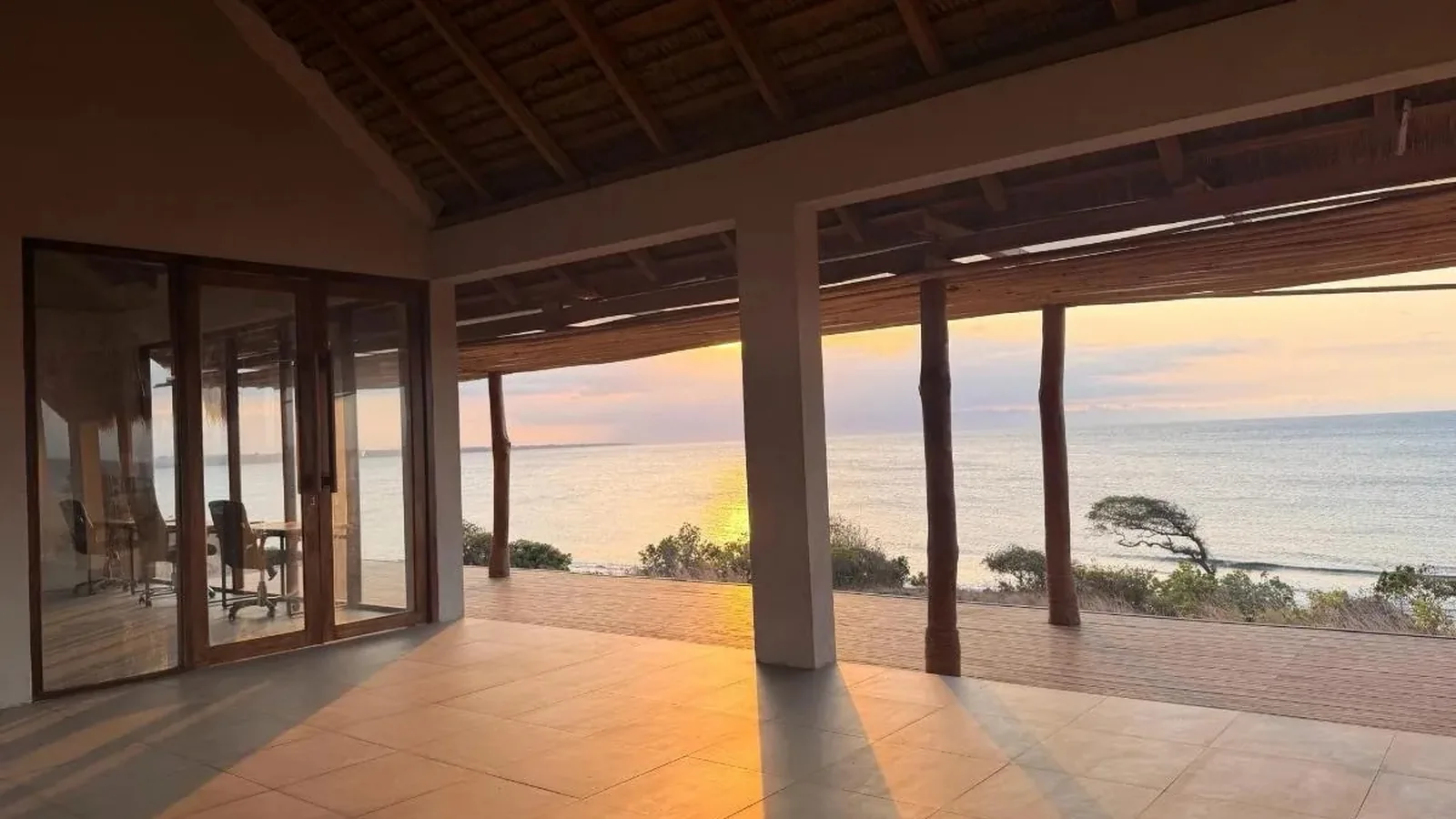
Elena stood on the black basalt patio, a place they called LavaLab. It was a repurposed distillery clinging to a cliff, and below it, the Atlantic was a churned slate grey, heaving against the rocks with a percussive rhythm that shook the floorboards. The air, thick with an impending squall, carried a scent that existed nowhere else: rain on hot volcanic stone, the sharp green of wild ginger climbing the walls, and the deep, metallic tang of the ocean itself. She wasn't looking at a pitch deck. She was looking at the horizon, a blurred line between water and sky, wondering if the 480 Mbps Starlink signal for her three o'clock investor call with Singapore would hold. A gust of wind snatched a purple hydrangea blossom from a nearby bush and sent it skittering across the dark stone like a dropped piece of silk.
Here, in the middle of the ocean, the metrics of success felt different. They were less about user acquisition costs and more about the simple, brutal binary of connection or no connection. The spreadsheet on her laptop, open inside, offered one version of reality—burn rates, runway, total addressable market. The ocean offered another, far older and less forgiving. It was a reminder that any venture here was a guest, tolerated by forces infinitely more powerful than a Series A funding round.
The entire enterprise—this fledgling cluster of software companies, design studios, and lonely dreamers perched on a volcanic archipelago—was built on a similar duality. It was an audacious bet on the future, tethered to a place steeped in a deep, melancholic past. They had come here seeking something the sprawling tech hubs of the world couldn't offer, a kind of cognitive quiet. But in their search for peace, they had invited the world in through fragile conduits of light and electricity, and now they had to hold their breath and hope the storm would pass.
The Pull of the Caldera
The decision, when it comes, rarely feels rational. It arrives as an image, a feeling, a sudden and inexplicable certainty. For Jakob, a backend engineer who had spent a decade ricocheting between Berlin’s humming co-working spaces, it was a photograph of Sete Cidades. He saw the twin lakes, one sapphire, one emerald, nestled in the collapsed mouth of a volcano. He saw the impossible green of the pastureland rolling down to the caldera’s rim. He booked a one-way flight from Brandenburg Airport that afternoon, telling his stunned co-founder he needed to “check the signal.” He never really came back.
This is a common refrain among the first wave of founders who chose the Azores. They were escaping a particular kind of modern exhaustion—the tyranny of the optional, the endless scroll of networking events, the low-grade hum of a million people all striving in the same direction. They traded the graffiti-laced concrete and screech of the U-Bahn on the island of São Miguel for the lowing of cattle and the startling quiet of a forest of Japanese cedar. They swapped a city of 3.7 million people for an island of just 137,228 souls, a place where you could drive for twenty minutes and feel as though you were the last person on Earth. This wasn't merely a relocation; it was a recalibration of the senses.
“You forget how loud the world is,” a French UX designer named Chloé told me over coffee in Ponta Delgada. “Not just with noise, but with information, with options. Here, the loudest thing is the wind. It strips everything else away. You’re left with just you and the work. And the wind.”
This romantic notion, however, collides daily with the logistical friction of existence on a rock nine hundred miles from the nearest continental port. The search for deep work is a noble pursuit, but it’s hard to feel profound when your Amazon delivery of a specific ergonomic keyboard has been stuck in customs in Lisbon for three weeks. This is the central tension of the Azorean experiment: the profound allure of a life simplified versus the maddening complexity of island isolation. They came for the caldera, for the peace it promised. They stayed, and built, in spite of the labyrinthine challenges it presented. The beauty was the hook; the grit was the anchor.
The First Five Lines of Code
Before there were term sheets, there was a ruined stone building with a collapsed roof and a floor thick with generations of pigeon droppings. This was the site of the first real co-working space, a former granary that two early founders, an architect and a coder, bought for a song and a promise. They spent six months not writing software, but hauling stone, sanding ancient wooden beams, and arguing with electricians in a mixture of broken Portuguese and frantic hand gestures. They were building their office, yes, but they were also building the first physical node of the network, a tangible point of arrival for the others they hoped would follow. This act of physical creation, of wrestling a space from decay, became the project's foundational myth.
The pioneers were a curious collection of digital castaways. There was Elena, with her fintech platform aimed at simplifying cross-border payments for freelancers. There was Marco, a quiet Italian building a niche data-visualization tool for marine biologists. There was a British couple designing bespoke travel apps that promised an 'authentic' experience, a concept they were interrogating and redefining every day. They were united not by a shared industry, but by a shared sacrifice. They had all abandoned the safety of established ecosystems, the easy access to capital, talent, and lattes. They had traded acceleration for a different kind of momentum, slower and more deliberate, like a tide.
Setting up shop was a lesson in itself. On paper, Portugal’s Empresa na Hora service allows one to register a business in under an hour for a fee of €360. It’s a point of national pride. But the real challenge, the one that separates the serious from the tourists, is finding a Contabilista Certificado—a certified local accountant who understands both the arcane Portuguese tax code and the strange, borderless nature of a SaaS business. This search becomes a founder's first true test of integration, a gantlet of referrals, coffees, and conversations that forces them out of their nascent bubble and into the real, paper-shuffling life of the island. It’s the first of many moments where the sleek, frictionless world of digital enterprise slams into the hard, textured reality of the old world.
“We weren't just writing software; we were writing the story of this place,” Marco told me, his gaze fixed on the harbor where fishing boats were unloading their catch. “If the story was good enough, we knew others would come. The code was secondary, in the beginning. The story was everything.”
The Infrastructure of Isolation
The entire dream is balanced on a handful of glass threads, thinner than a human hair, resting in the cold, crushing blackness three miles beneath the Atlantic. These are the submarine fiber optic cables, the unsung heroes of the remote work revolution. The most critical of these is the EllaLink, a multi-terabit system stretching from Sines in Portugal to Fortaleza in Brazil. A crucial branching unit sprouts from its main trunk to serve the Azores, making a theoretical latency of just 60 milliseconds to mainland Europe not just possible, but reliable. This single piece of infrastructure is the difference between a viable business hub and a glorified retirement community. It’s the invisible lifeline that allows a developer in Fajã Grande to seamlessly push code to a server in Frankfurt.
This digital umbilical cord creates a strange paradox. A founder can have a crystal-clear video conference with a Tokyo-based client while a herd of cows, the source of the island’s famous cheese, grazes just feet from their window. But the physical world remains stubbornly physical. Logistics becomes a silent, and often frustrating, co-founder. Shipping essential hardware, like a new server rack or a batch of company-branded notebooks for a team retreat, is an exercise in patience and prayer. I listened as one founder recounted a two-month saga to import a specific brand of fair-trade coffee beans, a quest that involved more paperwork than his last seed round. This friction forces a shift in mindset from “on-demand” to “in-good-time,” a philosophy that is either adopted or leads to madness.
Then there is the weather. The “Azores High,” a term familiar to any student of meteorology, describes the semi-permanent high-pressure system that dictates the climate of much of Europe. For the founders here, it’s a lived metaphor. Weeks of calm, stunningly clear days bring intense productivity—a high-pressure system of focus. Then, without warning, a storm barrels in from the west. During one such tempest last winter, the power grid for a small village went down precisely an hour before a major product launch. The team, a mix of locals and transplants, huddled around a single laptop powered by a sputtering backup generator, the wind screaming outside like a mythological beast. The launch was successful. The moment became lore, a testament to the kind of resilience forged in isolation. You can’t order that kind of team-building on an app.
A Collision of Cultures: Tech and Tradition
The Saturday morning market in Ponta Delgada is a sensory archive of the island’s soul. The air is thick with the smell of sweet, pineapple-like monstera deliciosa fruit, pungent local cheeses, and the earthy aroma of potatoes still dusted with rich, volcanic soil. Here, an old woman in a black shawl, her hands gnarled from a lifetime of work, might sell blood sausage next to a stall where a young farmer, who just took an online course in regenerative agriculture, is marketing his organic kale to a newly arrived German software engineer. The interaction is polite, transactional, yet it represents the complex cultural negotiation happening across these islands every day.
For centuries, the Azorean identity has been shaped by three pillars: farming, fishing, and faith. The new arrivals, with their gospel of disruption, remote-first work, and agile methodologies, form a fourth, often dissonant, element. The tech community largely operates in English, creating a linguistic and social bubble that can be difficult to penetrate, both from the inside and the out. At a popular cafe, you'll see one table of locals animatedly debating the latest football match in rapid-fire Portuguese, and another table of international founders quietly discussing churn rates and server loads in English. They are worlds apart, sharing the same space.
Yet, points of synergy are beginning to emerge from the fertile ground of this contrast. The islands sit at the junction of three tectonic plates—the Eurasian, African, and North American—a literal metaphor for their new role as a place of convergence. Startups are appearing that don't ignore the island’s heritage but build upon it. One company is developing sensors to help the dairy industry—which utilizes over 75% of the agricultural land—optimize grazing patterns and milk yields. Another is using AI to analyze whale-song data collected by local eco-tourism boats, transforming a multi-million-euro tourism industry into a massive data-gathering engine for marine science. The most compelling narrative, however, is that of the people who cross the divide. I spoke with Sofia, 28, who left her steady job as a hotel receptionist to retrain as a junior project manager at a tech firm. “My father… he didn’t understand,” she said, sipping an espresso. “He asked, ‘Why leave a safe job to work for a computer company that might be gone in a year?’ I told him it might be gone, but so might the hotel. This way, I am building something. For me. For here.” Her father, a fisherman, now proudly tells his friends his daughter works with people in California.
The Venture Capitalist's Voyage
How do you sell a dream from the middle of the ocean? You can’t. You have to make them come to you. The remote pitch is a particular art form honed by the Azorean founders. It’s a performance that must overcome the inherent skepticism a London or New York-based investor feels when looking at a map. The pitch deck has to be twice as sharp, the numbers twice as conservative. But the real masterstroke is getting them on a plane.
One story has already entered the local canon. A founder had been courting a London VC for months with polite, persistent emails that were largely ignored. Finally, knowing the VC was an avid surfer, he sent a simple, three-line email: “The winter swell is peaking next week. I’ve booked you a room at a place overlooking a perfect right-hand point break. If you have a spare hour between sessions, I’d love to buy you a coffee.” The VC, intrigued by the audacity, came for the surf. He stayed for the weekend, expecting little more than a pleasant diversion. The meeting didn’t happen in a boardroom. It happened on a windswept cliff trail after a morning in the water, the founder’s dog trailing behind them. They talked less about the business model and more about the founder’s decision to move here, about the low burn rate that isolation enforces, and about the fierce loyalty of his small, hand-picked team.
The VC, who ended up leading the seed round, later described the appeal as the island's “inhospitable charm.” It was the opposite of the coddled, catered environments of Silicon Valley. The grit was the feature, not the bug. It suggested a founder who wasn’t afraid of adversity, who had already passed a resilience test that no accelerator program could simulate.
Investors are also starting to see a more quantifiable appeal. Portugal's Non-Habitual Resident (NHR) tax scheme, which offers a 20% flat tax rate on income for a decade for individuals in “high value-added” professions, is a powerful magnet. It’s an incentive that speaks their language. An investor might be initially captivated by the story and the surf, but it’s the favorable tax code and the demonstrably lower operating costs that allow them to rationalize the investment to their partners. They come for the romance; they write the check because of the math.
The Talent Tide: Importing and Home-Growing
A nascent tech scene cannot survive on founders alone. It needs a steady influx of talent—the senior developers, the product managers, the marketing leads who bring experience and new perspectives. The global hunt for these individuals has become a constant preoccupation. The pitch is compelling: trade your two-hour commute for a ten-minute drive to the beach. Swap your cramped apartment for a house with a garden. But it’s a self-selecting process.
The Portuguese Digital Nomad Visa (D8) acts as both a gateway and a filter. Its requirement of a minimum monthly income of €3,280 (four times the Portuguese minimum wage) ensures that applicants are established professionals, not just itinerant wanderers. This creates a stream of experienced, self-sufficient individuals who can add immediate value. The financial proposition is stark and appealing:
| Metric | Amsterdam | Ponta Delgada | Advantage |
|---|---|---|---|
| Avg. Senior Dev Salary | €75,000 | €50,000 | -33% |
| Cost of Living Index | 73.7 | 42.5 | -42.3% cheaper |
| Apartment Rent (1-bed) | €1,600/mo | €700/mo | -56% cheaper |
| Effective Purchasing Power | Lower | Significantly Higher |
Yet, bringing talent in is only half the battle. The real challenge is retention. There’s a phenomenon known as the “two-year itch.” The initial novelty of the spectacular landscapes and the relaxed pace of life wears off, and the realities of island life—the limited social options, the distance from family, the occasional bouts of intense claustrophobia—begin to set in. The community has learned that it’s not enough to attract people; you have to actively work to keep them.
This is why the slow cultivation of local talent is so critical for long-term sustainability. Initiatives are sprouting. The University of the Azores is cautiously beginning to partner with startups for internships. A handful of locally-run coding bootcamps are taking root, training young Azoreans who might otherwise have left for Lisbon or London. The synergy is palpable in small moments. At a local cafe, I watched a newly arrived senior developer from Sweden, looking slightly lost, get a crash course in Azorean slang from a 22-year-old junior designer he had just hired. She was explaining the subtle, untranslatable meaning of saudade; he was trying to explain the architecture of their new cloud server. In that exchange, a transfer of knowledge was happening in both directions. That is how an ecosystem puts down roots.
An Ecology of Belonging
The most valuable infrastructure here isn't made of concrete or fiber optics. It’s woven from shared rituals and unplanned encounters. It’s the weekly trail run, open to anyone, that snakes up the side of a volcano, where conversations about funding rounds seamlessly blend with debates about the best trail shoes. It’s the impromptu surf session when the swell suddenly appears, a silent notification that spreads through the community faster than any Slack message, emptying the co-working space in minutes. It’s the potluck dinners in someone’s backyard, hydrangeas framing a view of the sea, where personal breakthroughs are shared with the same gravity as business pivots.
These are the “third places,” the unofficial boardrooms and therapy rooms that form the connective tissue of the community. There’s the cafe where the price of an espresso—a mere €0.70—buys you the right to occupy a table for two hours, turning it into a de facto office. There’s the specific viewpoint overlooking the coast where founders go, alone, to think through a difficult decision, staring out at the same vast emptiness that their seafaring ancestors once contemplated. This network of informal spaces is where the real work of community building happens, where the loneliness and intense pressure of startup life are mitigated by a shared sense of place and purpose.
I was invited on one such “founder’s hike,” a Saturday morning pilgrimage to the rim of Lagoa do Fogo, the “Lake of Fire.” As we ascended through the damp, moss-covered laurel forest, the air grew cooler and the conversation deeper. The talk started with business—user acquisition, technical debt, the nightmare of managing international payroll. But as we climbed above the treeline and the breathtaking crater lake came into view below, ringed by mist, the talk shifted. One founder spoke of his father’s recent illness and the guilt of being so far away. Another admitted a deep fear that her entire project was built on a delusion. There, on the edge of a volcano, surrounded by a beauty so profound it was almost violent, the pretense of the pitch deck fell away. It was a stark reminder that what they are building is not just a collection of companies, but an ecology of belonging, fragile and essential.
The Future Etched in Basalt
There is a risk inherent in success, a serpent that always finds its way into paradise. The story they have so carefully crafted is beginning to work. The world is noticing. And with notice comes demand. Real estate prices in Ponta Delgada have climbed by an estimated 15% in just the past two years, a harbinger of the gentrification that has hollowed out the soul of so many other beautiful places. The very affordability and authenticity that drew the pioneers are now under threat from their own success. Can a scene built on the virtues of intimacy and remoteness scale without becoming a parody of itself, a caricature of the “digital nomad lifestyle” sold on Instagram?
This is the question that now preoccupies Elena. I find her back on the same basalt patio at LavaLab, weeks after her investor call. The funding came through. The Singapore VCs were sold on the vision, on the numbers, and perhaps on the faint sound of the Atlantic they could hear in the background of the call. Her team is growing. She is hiring. But her gaze is fixed on that same churned, grey ocean with a new kind of anxiety. The challenge is no longer about survival; it’s about stewardship.
“We came here to escape the machine,” she says, her voice almost lost in the wind. “Now we have to be careful not to build a new one in its place.” The long-term vision is not to create another Bali or another Lisbon. The dream is more subtle, more difficult. It's to pioneer a sustainable model for a “boutique” tech hub, one that prioritizes a high quality of life over hyper-growth, that integrates with the local community rather than displaces it, and that remains small enough to remember why it started in the first place. They are navigating by a different set of stars than the Portuguese explorers who set sail from these same harbors centuries ago. Those men were driven by rumors of new worlds. These founders are driven by the promise of a new, more deliberate way of living.
The code being written in the Azores isn’t just for an app or a platform. It's a fragile, living script for a different kind of future, one debugged not in a sterile office or a climate-controlled server farm, but against the vast, indifferent, and magnificent beauty of the sea.