The Canvas Delusion: An Audit of the Glamping Asset Class
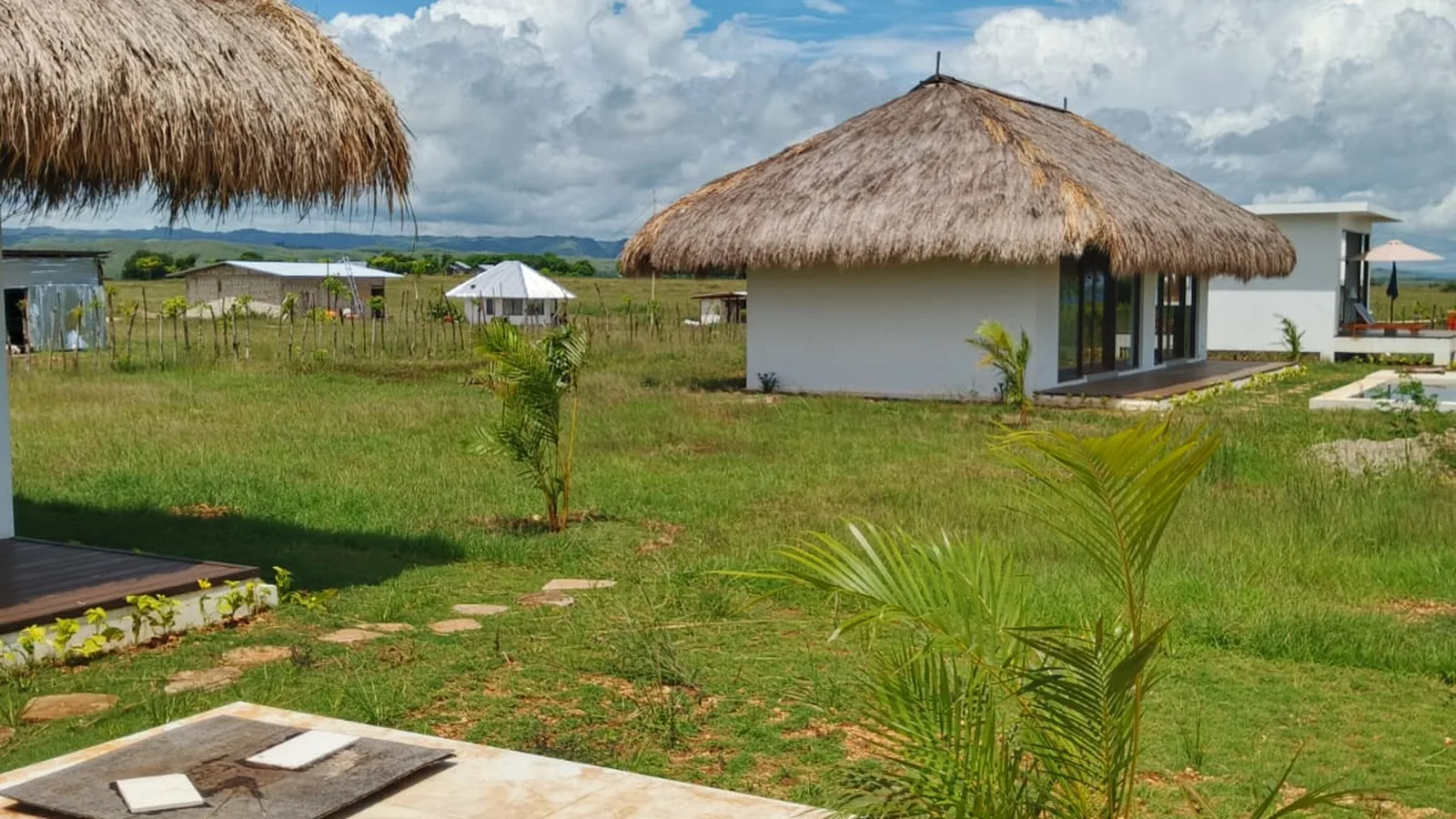
The spreadsheet said one thing. The smell of wet earth and diesel fumes said another. Mark, a 42-year-old software engineer in his previous life, stood on a plywood sheet laid over a sea of mud that was once a picturesque meadow in the Catskills. The skeletal frame of a geodesic dome, his first of three, gleamed weakly in the relentless November rain. It looked less like the beginning of a dream and more like the expensive relic of a miscalculation.
His initial budget, meticulously planned in a Google Sheet filled with optimistic projections gleaned from YouTube tutorials, was $250,000. That figure was supposed to cover three fully-furnished domes, a charming communal bathhouse, and enough marketing budget to ensure a fully booked first season. Today, with the first guest still a hypothetical concept, his costs had just crested $415,000. The culprit wasn't the sexy, Instagrammable dome. It was a recent county mandate for a commercial-grade septic system, a sub-surface leviathan of tanks and leach fields that had devoured more than $100,000 of his capital.
This wasn't the pastoral, profitable escape he had been sold. The videos that had seduced him featured sun-drenched drone shots and charismatic hosts talking about 'crushing it' with $400-a-night bookings and near-100% occupancy. One particularly slick production promised a '$150,000/year passive income from one dome.' Mark had watched it seven times. Now, standing in the rain, the only passive thing he could imagine was the slow, sinking feeling in his gut. He was discovering, the hard way, the vast and muddy chasm between the marketed fantasy of a fortune in a field and the operational reality of an asset class drowning in its own unglamorous logistics.
The Pitch: A Fortune in a Field
The siren song of glamping investment is orchestrated for a specific audience: the white-collar professional, often in tech or finance, who yearns for a tangible asset, a connection to the land, and an escape from the abstraction of their desk job. They are sold a narrative as compelling as it is simple. Buy a few acres of cheap rural land, erect a structure that’s more aesthetically pleasing than a traditional tent, and leverage platforms like Airbnb and Hipcamp to command hotel-like rates without the overhead of a hotel. It’s presented as real estate hacking, a lifestyle business where the primary labor involves art-directing a sunset and responding to glowing reviews.
Driving this perception is a cottage industry of turnkey 'glamping kit' companies and a legion of social media influencers. They market geodesic domes, safari tents, and A-frame cabins not as building materials, but as business-in-a-box solutions. Their websites are slick, filled with ROI calculators that conveniently omit line items for earthworks or permits. A typical pitch suggests a $30,000 dome can generate $50,000 in its first year. The math is intoxicating. You run the numbers: buy two, and you’ve replaced your six-figure salary. Buy four, and you’re a hospitality magnate. The investment feels both romantic and ruthlessly efficient.
The target investor, like Mark, is fluent in spreadsheets but naive about septic engineering. They are comfortable with digital marketing but have never had to negotiate with a rural electrical co-op to run 500 feet of buried cable. The pitch preys on this specific knowledge gap. It frames the investment as acquiring a product—the dome, the yurt—when the reality is that they are undertaking a small-scale commercial land development project, with all the attendant complexities and risks. The modern glamping gold rush has an uncanny echo of the American Homestead Act of 1862. That act promised 160 acres of 'free' land to settlers, but the grant was contingent on them 'proving up' the claim through five years of arduous labor and cultivation. Today's investors are promised a plot of digital gold on Airbnb, but they must first 'prove up' their claim through a different, yet equally grueling, kind of labor: navigating zoning boards, managing plumbing crises, and appeasing an endless stream of guests who expect hotel service in the middle of a forest.
The $100k Septic Tank: Deconstructing Upfront Costs
The most dangerous fiction peddled by the glamping industrial complex is the focus on the cost of the structure itself. A luxury safari tent might cost $15,000, a geodesic dome $30,000. These are the numbers that anchor the business plan, the tangible 'hard costs' that seem manageable. The true capital expenditures, however, are largely invisible and far more substantial. They are the costs of transforming a patch of raw land into a legally compliant, guest-ready hospitality business.
“Newcomers budget for the house, not the foundation,” says David Chen, a civil engineer in upstate New York whose firm has seen a surge in inquiries for rural hospitality projects. “Glamping sites are the most deceptively complex small commercial projects we handle. They look simple, but the moment you have paying guests, you enter a world of commercial code that doesn't care if your walls are canvas or concrete.”
This is where the budget bleeds. The process begins with site access. A gravel driveway capable of supporting a fire truck and enduring seasonal weather can easily run $20,000 to $50,000 per quarter-mile. Then comes utilities. If the grid is distant, trenching and running electrical cable costs between $50 and $100 per foot. Drilling a well for potable water can cost $10,000 to $30,000, depending on depth and geology, followed by filtration and testing. But the undisputed budget-killer is wastewater. A standard residential septic system for a three-bedroom house might cost $15,000. But a system for a three-unit glamping site, which a local health department will classify as a commercial operation, requires enhanced engineering, larger tanks, and extensive leach fields. The cost of a commercial-grade septic system for a small 4-unit site can easily exceed $100,000, a figure that shocks nearly every aspiring operator. In areas with poor soil or high water tables, the costs can spiral even higher, requiring advanced mounded systems or aerobic treatment units that approach $150,000.
| Item | 'Influencer' Budget | Reality (3-Unit Site, Regulated US County) | Notes |
|---|---|---|---|
| Structures (3 Units) | $90,000 | $90,000 | The only number that is usually accurate. |
| Land Acquisition | Not included | $100,000+ | Varies wildly, but rarely 'cheap'. |
| Site Prep & Access | $5,000 | $45,000 | Includes clearing, grading, and a commercial-grade access road. |
| Utilities (Well & Elec) | $10,000 | $60,000 | Assumes 500ft electrical run and a 300ft well. |
| Septic System | $15,000 (Residential) | $110,000 | Commercial-grade system required by health department. |
| Permits & Consulting | $1,000 | $25,000 | Includes survey, engineering plans, legal fees for zoning. |
| Furnishings & Decking | $30,000 | $45,000 | Includes outdoor furniture, hot tubs, fire pits. |
| Total CapEx | $151,000 | $475,000 | A 214% cost overrun before the first booking. |
This brutally expanded budget explains why so many glamping projects stall or fail. The initial capital, raised with a 20% ROI projection in mind, is exhausted merely achieving compliance, leaving nothing for operations or contingencies. The dream of a low-cost entry into hospitality dies in the harsh reality of a percolation test.
The Myth of the Full Moon: Navigating Seasonal Revenue
Once the site is built—often over budget and behind schedule—the investor's focus pivots to revenue. The spreadsheet, now scarred but not abandoned, is filled with projections based on two key metrics: Average Daily Rate (ADR) and occupancy. The promise is of hotel-level ADRs, typically ranging from $250 to $600 per night, with sustained high occupancy. While these rates are achievable, they represent only a sliver of the full revenue picture.
The reality for most operators is a dramatic revenue rollercoaster dictated by seasonality, day of the week, and local competition. A dome near a popular national park might command $500 a night on a Saturday in October, but struggle to get $150 on a Tuesday in March. This feast-or-famine cycle makes cash flow management a nightmare. According to data from AirDNA, a vacation rental analytics firm, the seasonal swings can be severe. In the Texas Hill Country, a popular glamping destination, average occupancy for glamping-style properties in October 2022 was a robust 85%. By the heat of August, that number had plummeted to just 22%. An operator's annual revenue isn't the peak weekend rate multiplied by 365; it's a complex blend of a few dozen hyper-profitable nights and hundreds of marginal or money-losing ones.
Market saturation further complicates the equation. In hotspots like Joshua Tree, California, or the area around Asheville, North Carolina, the number of glamping listings has exploded. A search on Airbnb reveals dozens of nearly identical domes and A-frames, all competing for the same pool of travelers. This inevitably leads to price wars. “When we started in 2019, we were one of three domes in the area,” says a host near Asheville who asked to remain anonymous. “We got $400 a night, no problem. Now there are thirty. Last week, I had to slash my Wednesday night rate to $125 just to get a booking. After paying the cleaner and the 3% Airbnb fee, I barely broke even. It just covered the electricity.”
The platforms themselves, while providing access to a vast market, are not free. Airbnb and VRBO take a commission, typically 3-5% from the host, but savvy operators know the real cost includes the much larger service fee passed to the guest, which makes their listing appear more expensive. To escape these fees, many hosts attempt to build a direct-booking strategy. This, however, introduces a new set of costs and labor: building and maintaining a website, paying for payment processing, and investing heavily in social media marketing and SEO to drive traffic. What was sold as passive platform income becomes an active, time-consuming job as a digital marketer.
The Unseen Ledger: Propane Tanks to Negative Reviews
The most insidious myth is that of 'passive income.' Once the capital is spent and the bookings start to flow, the work, in theory, should be minimal. The reality is that a glamping site is a high-touch, operationally intensive small hotel with none of the efficiencies of scale. The unseen ledger of operational expenditures (OpEx) is what truly separates profitable ventures from financial drains.
Daily and weekly costs quickly accumulate. Cleaning is the most significant. A reliable cleaner for a remote property commands a premium, often $75-$150 per turnover. Unlike a hotel with an in-house laundry, most glamping sites rely on external linen services, adding another $20-$40 per booking. Then there are the consumables, the small touches that justify the premium nightly rate. A bundle of firewood, a bag of local coffee, propane for the grill or fire pit, toiletries—these items must be restocked for every single guest. An analysis of a real profit-and-loss statement from a five-unit safari tent operation in California revealed that 'consumables and guest supplies' accounted for a staggering 18% of their gross revenue. Add in utilities, insurance, property taxes, and booking platform commissions, and the margin shrinks rapidly.
Even more taxing is the hidden labor. The promise of a hands-off investment evaporates with the first 2 AM text message from a guest. “I got a frantic call from a couple on their honeymoon because the Wi-Fi was out,” one owner recalls. “I spent an hour on the phone with the satellite internet provider, then had to drive 45 minutes in the dark to reset a router. That’s not passive.” This is a constant. Guests can’t figure out the smart lock. The hot tub temperature is wrong. The compost toilet is full. A bear has knocked over the trash can. Each issue requires immediate attention to prevent a negative review, the currency that can make or break a new listing.
“The only thing passive about this income is when I pass out from exhaustion at midnight after flipping the cabins myself for the next check-in because my cleaner cancelled.”
In more remote, 'off-grid' locations, the operational challenges multiply. Many sites are serviced by 'honey wagons' that pump out sewage holding tanks on a weekly or bi-weekly basis, at a cost of $300-$500 per visit—a recurring line item that can decimate profits. Managing propane deliveries, trash removal without municipal service, and pest control in a natural environment are relentless, time-consuming tasks. The owner becomes a de facto property manager, concierge, IT support specialist, and plumber. The 'passive income' dream is swiftly replaced by a second, often more demanding, full-time job.
Paper Trails and Property Lines: The War in the Zoning Office
For all the talk of budgets and bookings, the single greatest existential threat to a glamping project is often a file folder in a county clerk’s office. Local government regulation is the reef on which countless would-be glamping empires have been wrecked. The core of the problem is legal ambiguity: most municipal zoning codes, many written decades ago, have no specific category for 'glamping.' Is a luxury tent on a permanent deck a 'temporary structure,' or is it a 'building'? Is a collection of four yurts a 'campground,' which has one set of rules, or a 'hotel,' which has another, far more stringent set?
This ambiguity forces investors into a protracted and expensive process of seeking permits, variances, and special-use exceptions. This isn't a simple matter of filling out a form. It often involves hiring surveyors, engineers to draft detailed site plans, and lawyers specializing in land use. The story of a project in Rappahannock County, Virginia, is illustrative. The founders spent over $60,000 in legal and consulting fees and endured an 18-month-long approval process to get zoning permission for just four yurts. They were required to conduct traffic studies, water usage analyses, and present to a planning commission multiple times.
Fueling the regulatory fire is often fierce local opposition, a phenomenon known as NIMBYism ('Not In My Back Yard'). Existing residents, who moved to a rural area for peace and quiet, are rarely enthusiastic about a new commercial enterprise appearing next door. A transcript from a town hall meeting in rural Colorado regarding a proposed five-dome site captures the typical sentiment. “We don’t want the traffic. We don’t want the noise from their late-night parties,” one resident stated. “Our wells are already struggling; what will a dozen new tourists a day do to our water table? This isn’t a campground; it’s a hotel masquerading as a tent.” This public pressure can sway local officials, who are often elected, to deny permits or impose costly conditions, such as paving roads or installing expensive sound barriers.
Even if an investor successfully navigates this maze and receives approval, a final financial shock awaits: property tax reassessment. A parcel of raw agricultural or forested land might be taxed at a very low rate. But once it is converted into a commercial hospitality business, the county assessor will re-evaluate its value based on its income-generating potential. It is not uncommon for property taxes on a parcel of rural land to increase by as much as 500% after being rezoned and assessed as a commercial 'hotel' or 'campground' business, according to a 2022 report by the Lincoln Institute of Land Policy on rural land use changes. This permanent increase in fixed costs is a final, bitter pill for the investor who thought they were buying cheap land.
Case Study 1: The Joshua Tree Jackpot
Despite the formidable headwinds, success is not impossible. It is, however, born of foresight, operational discipline, and a healthy dose of luck. Consider the case of Elena, a former architect who purchased 10 acres of land near Joshua Tree National Park in 2017, long before the current boom.
Her project, 'Desert Geometries,' consists of two custom-designed cube-like cabins and one renovated Airstream. Success didn't come from using a turnkey kit. Instead, she leveraged her design background to create unique, highly photogenic structures that stood out in a sea of homogenous domes. “I saw what was coming,” she says, sitting on the deck of one of her cabins, the desert stretching out behind her. “The goal wasn’t to be the cheapest; it was to be the most memorable. The structure itself is the destination.”
Her initial all-in investment in 2017-2018 was approximately $350,000, which included the land, construction of the two cabins, and the purchase and renovation of the Airstream. By being an early mover, she avoided the inflated land and labor costs that plague later entrants. She also secured her permits before the county became inundated with similar applications. Her operational strategy is ruthlessly efficient. She has a small, trusted team: a cleaner who has been with her for four years and a local handyman for repairs. She manages all bookings herself, having weaned her business off Airbnb to a 90% direct-booking model through her own website and a carefully curated Instagram presence. This saves her over $10,000 a year in platform fees.
“People see the Instagram photos and the nightly rates and think I’m just collecting cash. They don’t see me coordinating a septic pump-out on a holiday weekend or spending four hours responding to booking inquiries.”
Her numbers are impressive, but they are not passive. In 2022, the three units grossed approximately $210,000. After all operational costs—cleaning, maintenance, insurance, taxes, supplies—her net operating income was around $95,000. From that, she pays the mortgage on the property. Her final net profit, or seller's discretionary earnings, was about $52,000. That’s a 25% profit margin on gross revenue—a healthy figure. But she is quick to point out the labor involved. “I calculate that I work an average of 30 hours a week on this business,” she says. “If you factor that in, my ‘passive income’ comes out to about $33 an hour. It’s a great job that I love, but it’s a job.”
Case Study 2: The Vermont Washout
For every Elena, there are countless others like Ben. A former marketing director from Boston, Ben poured his life savings and a $200,000 Small Business Administration (SBA) loan into what he called 'Green Mountain Stays,' a planned five-bell-tent glamping site on 15 acres in central Vermont.
His story is a case study in cascading failure. He was undercapitalized from the start. His budget, based on online tutorials, allocated $100,000 for the entire setup. The reality of site work and getting power to the remote location consumed that before the first tent platform was even built. He took out the SBA loan to cover the shortfall. He underestimated the brutal seasonality. His business plan projected 60% average occupancy year-round. The reality was a frantic three-month peak season from July to September, followed by a precipitous drop. By November, the snows came, and his revenue dropped to zero. The bell tents were not four-season structures, a fact he hadn't fully appreciated. “The ads show them in a light dusting of snow, looking magical,” he says quietly. “They don’t show them collapsing under two feet of wet, heavy New England powder.”
By the time he opened in late spring 2021, two other, better-funded glamping sites had opened within a 20-mile radius, one of them with hard-sided, four-season cabins. The competition was fierce. He found himself in a price war during the crucial peak season, his projected $300/night rate falling to an average of $180. The operational burdens were crushing. He was driving two hours from his home every other day to manage turnovers, fix issues, and meet guests. He burned out quickly. In its first and only full year of operation, the business generated a total of $35,000 in gross revenue. His annual loan payment alone was $28,000. The math was unforgiving. He shut down the site in the fall of 2022.
Today, the remnants of his dream are slowly being reclaimed by the Vermont forest. The wooden platforms are warping. The canvas of the one remaining tent he didn't have the heart to pack away is stained dark green with mildew. The financial fallout has been devastating. He is personally liable for the SBA loan and is in the process of personal bankruptcy. The land is for sale, but its value is hampered by the unpermitted electrical work and the now-useless tent platforms. It’s a physical manifestation of a failed spreadsheet, a monument to a dream that couldn't survive contact with reality.
Selling the Dream: The Illiquidity of a Canvas Kingdom
The final, and perhaps most overlooked, chapter in the glamping investment story is the exit. Unlike a publicly traded stock or even a traditional long-term rental property, a glamping business is a profoundly illiquid asset. The path to cashing out is narrow and fraught with challenges.
“Selling a glamping business is tough. It’s a niche within a niche,” explains Susan, a business broker who specializes in hospitality properties. “Your buyer pool is incredibly small. It has to be someone who not only wants to buy a business but also wants to live this specific, demanding lifestyle. And crucially, they have to be able to get financing.” Banks are notoriously wary of lending against these businesses. They struggle to classify them. The real estate value of the land may be modest, and the primary assets—the tents or domes—are depreciating structures with a limited lifespan. The business's value is tied up in its brand, its booking history, and the operational systems created by the owner, all of which are considered 'goodwill' and are difficult for a bank to collateralize.
As a result, a well-documented, profitable glamping business might sell for a 3x to 4x multiple of its Seller's Discretionary Earnings (SDE). This is significantly lower than the 5x to 10x multiples seen in more established industries like manufacturing or professional services. For an investor comparing asset classes, this is a critical distinction. An investor might spend €350,000 to acquire land and set up three luxury safari tents in Portugal's Algarve, projecting a 15% ROI. That €350,000, if invested in a simple dividend-stock portfolio yielding 4% annually, would generate €14,000 per year with near-instant liquidity and zero operational duties. The glamping investment must not only outperform that passive €14,000 return but also compensate the owner for thousands of hours of high-stress labor and the immense risk of holding an illiquid, niche asset.
To overcome these hurdles, many sellers are forced to get creative, often by offering significant seller financing. “I had a seller last year who had to offer a 50% vendor financing deal just to offload their business,” Susan notes. “They essentially became the bank for their own exit, carrying the risk for five more years.” This is the final irony: after years of hands-on labor, the 'passive income' dream is only realized by financing the next person’s active-income reality.
“You're not just selling a property; you're selling a job. And the buyer has to really, really want that job.”
The glamping thesis is a bet on a very specific, romanticized future. But the ledger shows this romance is often financed by unglamorous realities—septic permits, laundry logistics, and the 24/7 demands of hospitality. The final accounting reveals the true asset isn't the canvas tent, but the investor's own resilience against the harsh mathematics of the dream.