The Gilded Radish: Paradise Dining's Invisible Ledger
The spreadsheet said one thing. The humid, frangipani-scented air said another. I was looking at a menu printed on thick, recycled-card stock, its edges artfully deckled, and trying to reconcile the numbers with three decades spent analyzing asset classes. The physics of value seemed to warp at eight degrees south of the equator.
On the plate in front of me, a single, perfect marigold sat atop a tower of seared scallops. The chef, a man with a severe haircut and the kind of starched white coat that costs more than a local family’s weekly food budget, had personally snipped that flower a few minutes ago. I watched him do it. He’d emerged from his air-conditioned kitchen into a perfectly manicured 'chef's garden,' a plot of land so aesthetically pleasing it looked like a film set. He selected his flower with the gravity of a bomb disposal expert, then retreated.
The marigold was local. The scallops, the menu quietly conceded in eight-point font, were flown in from Hokkaido that morning, nestled in a chilled polystyrene sarcophagus. And yet, the entire experience was sold, and sold at an astonishing premium, under the banner of local, sustainable, and authentic. The presence of that one marigold, and the half-acre of photogenic herbs it came from, performed a kind of financial alchemy. It was a 'terroir tax' levied on the well-meaning, a surcharge for virtue that, I suspected, rarely reached the soil from which it was supposedly drawn.
This isn't a new trick. From the Dutch bidding up the price of a single tulip bulb with no intrinsic value to the current frenzy for non-fungible tokens, markets have always been susceptible to the powerful narrative of scarcity and uniqueness. What's different here is that the narrative is wrapped in the unimpeachable language of ethics. Sustainability. Community. You’re not just having dinner; you're participating in a virtuous circle. My job, as I drained my ludicrously expensive glass of mineral water, was to audit that circle—to follow the money and see just how virtuous it really was.
The Gilded Menu: Deconstructing the Promise
The language is a masterclass in suggestive marketing. It’s a lexicon of virtue, deployed with surgical precision. 'Hyper-local.' 'Radically seasonal.' 'Estate-grown.' These aren't just descriptions; they are incantations designed to justify a price point that would be unthinkable back home. They create a 'halo effect,' where the perceived goodness of a few hand-picked herbs anoints the entire food and beverage program with an unearned sanctity.
Let’s dissect the menu I was holding at ‘The Azure Sanctuary,’ a name as generic as its marketing is specific. The star appetizer: 'Our Garden Greens & Macadamia'. The description reads like a pastoral poem: 'A selection of leaves, herbs, and flowers picked this morning from our organic gardens, tossed with roasted macadamia nuts from a nearby village and a light calamansi vinaigrette.' The price is $38. A salad.
I did the math later, with the help of the resort’s refreshingly candid purchasing manager. The actual cost of goods for that plate is illustrative. The imported lettuce base, the nuts (which, it turns out, were from a bulk supplier who sources from all over the archipelago), and the olive oil for the dressing base cost the hotel about $4.50. The handful of 'garden leaves' and flowers cost, in terms of labor and inputs, perhaps another $3.00 to produce, if one is being generous. The guest pays $38. This isn't a markup; it's a recalibration of reality.
Menu Item Cost Analysis: 'Our Garden Greens' Salad
| Component | Source | Cost to Resort (USD) | Implication |
|---|---|---|---|
| Mixed Lettuce Base (50g) | Imported (AUS/EU) | $2.50 | The 'bulk' of the salad is not local. |
| Macadamia Nuts (15g) | Regional Supplier | $1.00 | 'Nearby village' is a marketing narrative. |
| Vinaigrette Base (oil) | Imported (Italy) | $1.00 | Core ingredients are part of global supply chain. |
| 'Garden' Leaves/Flowers | On-site Garden | ~$3.00 (est. input) | The high-value 'story' ingredient. |
| Total Cost of Goods | $7.50 | ||
| Menu Price | $38.00 | ||
| Markup on COG | ~407% | The premium is for the narrative, not the product. |
When I put this to the resort's Director of Marketing, a sharp Australian woman named Chloe, she didn't flinch. "We're not selling lettuce, are we?" she said over an espresso. "We're selling a story. We’re selling the feeling that you are part of something better. Our guests choose us because we have that commitment. They see the garden, they might do a tour with the chef. That experience has a value that’s entirely separate from the wholesale price of arugula."
She's not wrong. I spoke to a German couple by the pool, who had chosen this resort specifically for its advertised ecological credentials. "In Frankfurt, we try to buy organic, to know where our food comes from," the husband told me. "To be able to do that here, in paradise? It feels complete. It justifies the expense." The transaction is complete. The feeling has been purchased.
The Potemkin Garden: An Audit of the 'Farm'
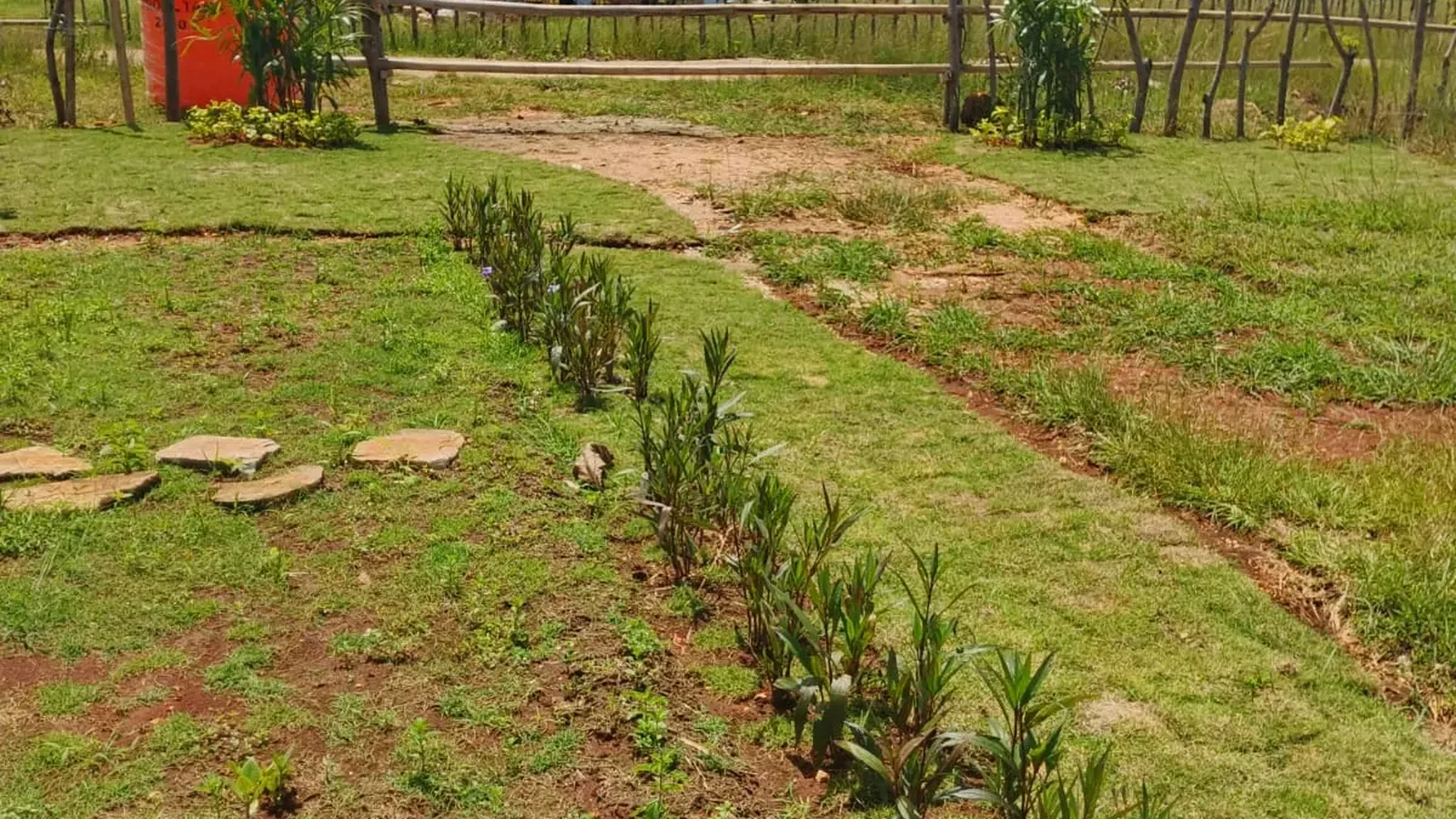
Catherine, the head gardener, is a passionate advocate for permaculture. A transplant from Northern California with sun-bleached hair and dirt permanently etched into the lines of her hands, she walks me through her domain. It is, undeniably, a work of art. Spiral herb gardens, beds of vivid marigolds, and esoteric vegetables like winged beans and purple mizuna are laid out with geometric precision. Bees drone. Everything is lush, green, and ready for its close-up.
"We practice companion planting, no-till methods, we make our own compost tea," she explains, her enthusiasm genuine. "The goal is to create a closed-loop system, a showcase for what's possible in this climate."
'Showcase' is the operative word. These gardens are the modern equivalent of Potemkin villages—the plausible, beautiful facades erected by Grigory Potemkin to impress Empress Catherine the Great during her journey to Crimea in 1787. They create an impressive illusion of agricultural self-sufficiency that masks a far more prosaic reality.
I asked Catherine for the numbers. She sighed, the zealot momentarily replaced by the weary functionary. Her garden at The Azure Sanctuary covers 0.5 acres (about 2,000 square meters). It is intensively managed by her and three local staff. Its weekly yield is impressive for its size: roughly 40 kilograms of high-value, fast-growing specialty produce. This consists almost entirely of delicate herbs, edible flowers, and leafy greens that wilt a few hours after picking.
"My job isn't really to feed the hotel," Catherine confided, lowering her voice. "It's to provide the garnish. The story. The photograph. The kitchen needs a metric ton of onions a month. I could dedicate this entire garden to onions and I still couldn't meet that demand."
Now, let's look at the other side of the ledger. The resort, with three restaurants and 150 rooms, has a total weekly produce consumption of over 800 kilograms. This includes the workhorses of any professional kitchen: onions, potatoes, tomatoes, carrots, bell peppers, and staple fruits. The math is brutal. The beautiful, celebrated 'farm,' the cornerstone of the resort’s entire marketing identity, supplies just 5% of its total vegetable needs. Five percent.
The economics of this showcase are even more skewed. The initial investment in the garden, including hiring a landscape architect and importing specific soil amendments, was over $120,000. Catherine’s expat salary and the wages for her team represent an annual operating cost of nearly $100,000. In purely economic terms, the resort is spending a fortune to produce a few handfuls of basil and nasturtiums. It's a loss leader of staggering proportions, unless you stop viewing it as a farm and start viewing it as what it is: a marketing department asset, as crucial to the brand as the infinity pool or the spa.
The Invisible Supply Chain: The 95% Problem
So where does the other 95%—the 760 kilograms of produce per week—come from? The answer arrives twice a week in a cavalcade of refrigerated trucks. I hitched a ride with one, driven by a man named Wayan who has navigated the island’s narrow roads for 15 years. He views the luxury resorts with a wry detachment.
"They talk about the garden," he chuckled, expertly dodging a procession of school children on scooters. "But I bring them the real food." His truck, chilled to a precise 4°C, is a microcosm of the global food system. Its contents are a stark rebuttal to the 'hyper-local' fantasy. There are boxes of beef from Australia's Kimberley region, wheels of Parmesan from Emilia-Romagna, sacks of flour from the United States, crates of avocados from Mexico, and pallets of UHT milk from New Zealand. Even the 'local' chickens are often from industrial farms on Java, hundreds of miles away.
This phenomenon creates what economists call 'economic leakage.' It’s the portion of spending that, rather than circulating within the local economy, immediately flows out to pay for imported goods and services. For many tropical destinations, the leakage from the food and beverage sector is a gaping wound in the local economy. A widely cited study on Maldivian tourism, for instance, found that a staggering 88% of the F&B budget at a typical high-end resort is spent on imported goods. For a large resort, this can represent an annual outflow of over $3.5 million from its kitchens alone, money that never touches a local farmer, fisherman, or market vendor.
The carbon footprint of this invisible supply chain is, of course, immense. Flying French wine, Italian cheese, and Scottish salmon to a remote speck of land in Southeast Asia so that a guest can enjoy the familiar comforts of home, all while being told they are having an 'eco-conscious' holiday, is an irony of spectacular proportions. The carbon cost of flying in the box of heirloom seeds, peat moss, and specialized fertilizer for the Potemkin garden can often exceed the carbon savings of the produce it yields.
It’s a system of dependencies that recalls the trading posts of the Dutch East India Company, which prized European control over local integration. These modern resorts are not ecosystems; they are self-contained outposts of a global luxury economy, provisioned from afar. A logistics manager for a major hotel supplier put it to me bluntly: "My clients are selling an experience of being in Indonesia, but they require the supply chain of Singapore. My job is to bridge that gap. It's complex, it's expensive, and it has almost nothing to do with the guy growing cassava down the road."
The Labor Ledger: Gardeners vs. Growers
The disparities are not just in the produce; they are written into the payroll. The new agricultural economy created by these resorts has a distinct and unequal structure. At the top sits the expatriate consultant, the 'Director of Agronomy' or 'Permaculture Designer'—people like Catherine. They are brought in for their specialized knowledge and their ability to speak the language of sustainability that appeals to the target clientele. Their compensation packages are generous.
In Costa Rica, a popular destination for this brand of eco-luxury, I reviewed the staffing for a comparable project. The numbers are telling.
Comparative Agricultural Wages (Costa Rican Eco-Lodge)
| Role | Nationality | Compensation (Annualized) | Notes |
|---|---|---|---|
| Director of Agronomy | Australian | $75,000 salary + housing + benefits | Designs garden, leads guest tours, manages brand. |
| Local Field Hand (x3) | Costa Rican | ~$5,110 ($14/day, 7 days/week) | Performs manual labor: digging, weeding, watering. |
| Independent Farmer (Regional) | Costa Rican | ~$4,000 - $6,000 (Variable) | Sells to local markets, no resort contract. |
This isn't to denigrate the work of the expatriate expert. They are often true believers. But the financial structure reveals the priority: the highest value is placed on the curator of the story, not on the local practitioners of agriculture itself. The three local men who do the back-breaking work of maintaining the aesthetic perfection of the garden are paid the regional agricultural wage, a number set by the market for commodity crops, not the luxury goods market their work now supports. The most economically significant 'local' input for many of these resorts is not produce, but labor—an asset whose value is rarely celebrated on the menu.
Two kilometers down a dusty track from The Azure Sanctuary, I met a farmer named I Made. He is 65 years old and has been farming the same plot of ancestral land his entire life. His hands are like root vegetables. He grows cassava, bananas, sweet potatoes, and chillies. His entire operation—the real, un-manicured, productive heart of local agriculture—is invisible to the resort. He has never sold a single chilli to its kitchens. He sells his produce at the local market, where a kilogram of cassava fetches about 8,000 Indonesian Rupiah, or 50 US cents.
"The hotel?" he said, smiling a toothless grin. "They have their own beautiful farm. I have seen it. Very clean. The soil here," he grabbed a handful of his own dark, lumpy earth, "is not for show. It is for my family."
He operates in a parallel economy. While the resort spends tens of thousands of dollars to create a simulacrum of local farming, the real thing struggles to compete for land and labor, and is entirely bypassed by the lucrative tourist economy it is supposedly a part of.
The Agronomy of Appetite: Displacing Local Tastes
The influence of this model extends beyond economics; it begins to reshape the very soil and culture of a place. The demand from tourists is not for traditional, resilient local crops. Few travelers paying $800 a night are clamoring for a dish of boiled cassava leaves or taro root stew. They want the 'global comfort' food they see in wellness magazines: kale smoothies, arugula salads, quinoa bowls, and heirloom tomato bruschetta.
This creates an agronomic mismatch. Growing kale, a cool-weather brassica, in a hot, humid tropical climate is an act of horticultural warfare. It requires immense inputs: more water, more pest control, and often specially prepared, imported soil mediums, because the native soil is not suited to it. You are fighting the environment, not working with it. Developers of new master-planned communities, from the ambitious desert projects in the Gulf to the emerging Eco Beach City on the Indonesian coast, are grappling with this tension. They know that to achieve any real sustainability, the menu must follow the farm, not the other way around. Yet the demands of the global luxury consumer often push in the opposite direction.
In the highlands around Chiang Mai, Thailand, this shift is already measurable. A 2019 study by a local agricultural university noted that over the preceding five years, land dedicated to growing trendy crops like kale and rocket for the tourist and expat market had increased by over 300%. In the same period, land used for cultivating native greens like phak wan (a resilient, nutritious local vegetable) had decreased by 20%. The market was signaling its preference, and farmers, ever the rational economic actors, were responding. They were abandoning diverse, resilient, low-input traditional crops in favor of fragile, high-input monocultures to satisfy a transient palate.
This is the cultural cost. I spoke with a village elder and cook in Bali, a woman named Ibu Agung, who runs a small warung (local eatery). She lamented what she sees as a shift in the younger generation. "They see the tourists eating these green salads and they think our food, the food of their grandmothers, is poor people's food," she told me, stirring a pot of jackfruit curry. "They don't want to learn how to forage for fern tips or cook with banana stems anymore. They want to work in a hotel and learn how to make a Caesar salad. We are losing our taste."
This isn't progress. It's a form of agricultural gentrification, where local foodways are displaced by a more commercially viable, globally homogenous alternative. The biodiversity of the fields and the biodiversity of the menu are both diminished.
The Cooperative Counterpoint: When It Actually Works
It doesn't have to be this way. The cynical model of the Potemkin garden is not the only one. In a handful of places, a more genuinely symbiotic relationship between tourism and local agriculture has taken root. These are often less glamorous, less Instagrammable, and require a fundamental shift in power from the hotel to the community.
Consider the 'Pueblo Unido' cooperative in a rural part of the Philippines. I spent a week there a few years ago. It was founded not by a hotel, but by a community organizer with the support of a local NGO. The cooperative brings together 45 smallholder farming families. They didn't change what they grew; instead, they convinced three nearby boutique hotels to change what they bought. The hotels agreed to long-term purchasing contracts, and their chefs committed to designing their menus around what the cooperative could reliably supply: breadfruit, winged beans, sweet potato tops (camote tops), calamansi, and native chickens.
The hotel chefs I spoke to admitted it was a challenge. "I couldn't just order 10 kilos of asparagus," one told me. "I had to call the co-op manager and ask, 'What looks good this week?' Some weeks we had a mountain of wing beans, some weeks a lot of pumpkins. It forced us to be more creative, more genuinely seasonal."
The economic results are transformative. The cooperative model eliminates the middlemen who typically capture the lion's share of the value. According to their own meticulously kept books, the Pueblo Unido cooperative returns a full 70 cents of every dollar of revenue directly to its member farmers. This stands in stark contrast to the estimated 5-10 cents on the dollar that reaches an independent farmer selling into the conventional supply chain.
The entire dynamic is different. I attended a weekly meeting between the co-op's board (made up of farmers) and the purchasing managers from the hotels. It was a negotiation between peers. They discussed pricing, forecasted yields, and planned for the next season. There was no talk of 'stories' or 'experiences.' There was only talk of produce, quality, and price. It was a business transaction, and because it was, it was honest.
This model is less common because it requires the resort to cede control. It must subordinate its culinary whims to the reality of the local ecosystem and growing seasons. It's a trade-off: a little less marketing glamour for a lot more genuine economic impact. For an investor, this can look like operational risk. For a community, it looks like a lifeline.
The Investor's Return on Authenticity
Let’s be clear. For the hotel operator and the private equity fund behind them, the 'farm-to-table' program is not an exercise in charity. It is a capital investment, analyzed with the same cold calculus as a room renovation or a new swimming pool. The 'authenticity premium' is a quantifiable financial metric.
I was shown internal documents from a Southeast Asian hotel group that laid out the business case for their 'Sustainable Gastronomy Initiative.' The numbers were illuminating. The initial capital outlay for the garden construction, soil importation, and hiring of an international consultant was approximately $500,000 for their flagship property. A significant sum.
But the returns were swift and substantial. The marketing buzz generated by the initiative was credited with a 5% increase in direct bookings, reducing reliance on commission-based travel agents. More importantly, it allowed the hotel to create and sell new 'Wellness-Focused' packages at a 15% premium over their standard rates. The F&B department saw the average check size in their signature restaurant increase by 22%. The calculated return on that half-million-dollar investment? Just 18 months.
I had a drink with a fund manager in Hong Kong who specializes in hospitality assets. His take was refreshingly devoid of sentimentality. "A well-executed farm-to-table story isn't about ethics, it's about asset value," he told me, swirling his whisky. "It's one of the most cost-effective ways to elevate a property from four-star to five-star perception and pricing. It pays for itself in ADR [Average Daily Rate] lift within two years. It's a better return than a spa extension. Don't let them tell you otherwise."
This is the financial engine driving the trend. It's not a grassroots movement bubbling up from the soil; it's a top-down strategy flowing from the balance sheet. It shares a lineage with the early days of Dubai, where entire mythologies were constructed with breathtaking speed to build a global brand, or even the manic speculation in 1990s Costa Rica, where any property with a monkey in a tree could brand itself an 'eco-lodge' and triple its prices. The product being sold is the story itself, and the garden is merely the stage.
The Final Reckoning: Beyond the Balance Sheet
So, we are left with a ledger of invisible costs and carefully manufactured benefits. A new form of economic colonialism in a chef's apron? The accusation feels strong, but the evidence is unsettling. We see money flowing out of the local economy, traditional foodways being displaced, and local farmers being reduced to gardeners on their own land, or bypassed entirely.
The final, damning comparison is this: The $150,000 it costs to establish a single, one-acre, Instagrammable resort garden—an aesthetic asset that feeds almost no one—could, if channeled through a micro-finance initiative, provide the start-up capital for 30 traditional smallholder farms at $5,000 each. Those 30 farms, focused on productive, locally-adapted crops, could collectively produce over 100 times more food by weight, create an estimated 80 sustainable jobs, and build genuine resilience in the local food system.
One choice builds a pretty story for the few. The other builds a local economy for the many.
The real question for the sophisticated traveler, the conscientious investor, is what lies beyond the marketing copy. It’s a challenge to look past the gilded menu and ask where the other 95% comes from. To question the true cost of authenticity.
As dusk falls, the resort’s garden is artfully illuminated by carefully placed spotlights, empty and pristine, a silent theatre of virtue. A few miles away, the local night market is coming alive. It’s a riot of chaos and color, sound and smell. Mountains of produce I never saw on the resort menu—snake fruit, jackfruit, water spinach, banana blossoms—are piled high under the glow of bare fluorescent bulbs. This is the real harvest. This is the food of this place. And almost none of it will ever make it past the gates of paradise.