The Chronology of Light: An Equatorial Reckoning
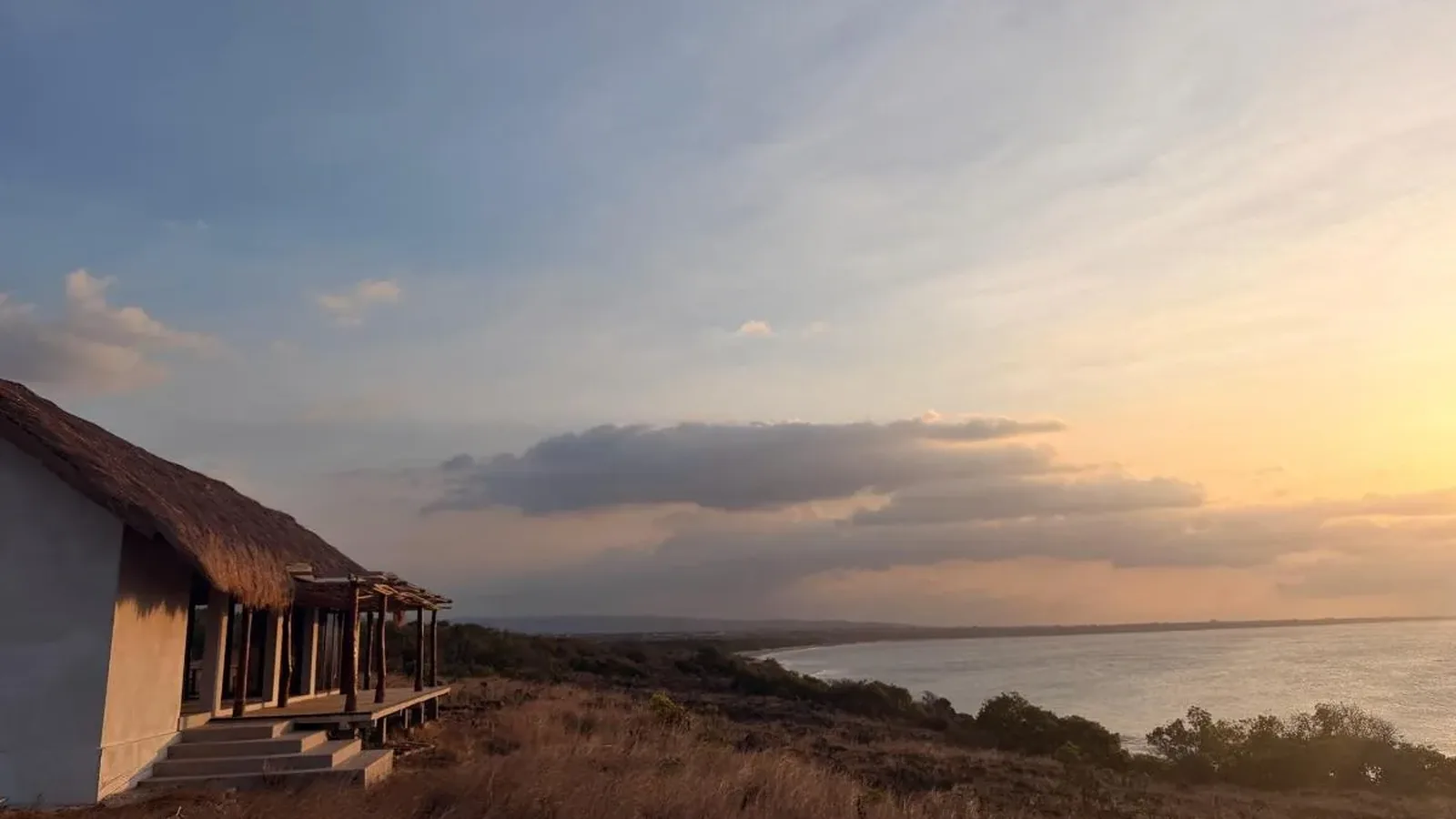
The sky is the color of a bruised plum. It’s a shade that exists for only twenty minutes a day in this latitude, a fleeting violet acknowledgment between the deep indigo of night and the eventual, explosive arrival of the sun. Down a quiet lane where the only sounds are the furtive scuttling of unseen creatures and the first tentative chirps from the jungle, a small flame flickers. Elena, a 45-year-old architect who traded a partnership in Milan for a drafting table overlooking a ravine of giant ferns, adjusts a frangipani blossom in a woven palm-leaf offering.
This small collection of flowers, incense, and rice—a canang sari—is not for a guest. It is not a performance. It is placed on the damp stone of her doorstep as the first, silent conversation of her day. It is an acknowledgment of the spirits of this place, yes, but more profoundly, it is an accord with the land itself. A quiet recognition of belonging before her mind turns to the hard geometries of blueprints, the tensile strength of bamboo, or the demands of a client in Singapore.
For Elena, and a growing cohort of expatriates who have chosen lives threaded through the world’s warm, wet places, the morning is not a territory to be conquered with to-do lists and caffeine. It is a text to be read, a frequency to be tuned into. They have discovered that success, in a world saturated with the noise of ambition, can be a much quieter thing. It can be a state of profound connection rather than mere output, an attunement that redefines the very meaning of a day well spent.
The Luminal Hour: An Accord with First Light
The most valuable real estate in the tropics is not beachfront, but temporal. It is the luminal hour, that sacred, untouched period between roughly 4:30 and 5:30 AM, before the first scooter engine whines to life, before the heat lays its heavy hand on the day. This is the time of cool air and deep shadows, a world that feels held in a state of suspended grace. For those who have learned its dialect, it is a period of intense communion. The human circadian rhythm, it turns out, is naturally a little longer than 24 hours—around 24.2, to be precise. The intense, rapid light-dark cycle near the equator provides the most powerful environmental cue, or zeitgeber, to reset that internal clock daily, locking in higher quality sleep and more vibrant daytime alertness.
This is not a gentle European dawn with its lingering pastels. This is a swift, almost violent, illumination. The light intensity can leap from the sub-10 lux of civil twilight to over 25,000 lux within thirty minutes. This is not a fact to be read in a scientific journal; it is a force to be felt on the skin. It’s a physiological command to the pineal gland, a biochemical signal that says, simply, awaken. Many here practice a form of ‘light bathing,’ consciously absorbing these first rays not for Vitamin D, but as a meditative act. It is a moment of becoming porous, of letting the day’s first energy saturate the self.
“In London, my first thirty minutes were spent in the blue glow of a screen, scrolling through overnight market data from Asia,” says Julian, a former derivatives trader who now writes historical fiction from a small house on Costa Rica’s Osa Peninsula. “My body was in London, but my nervous system was in Tokyo. It was a shattering, dislocated way to exist. Now? Now I just sit. I watch the silhouettes of the howler monkeys materialize against the sky. They have a pre-dawn call, a sort of guttural warm-up before the main event. I listen to that, and I watch the light find the edges of the leaves. There’s more truthful data in that ten minutes than in a thousand Bloomberg terminals.”
His ritual is a form of recalibration. The monkeys, the leaves, the arc of the sun—these are his new data points. They don’t predict market fluctuations, but they anchor him in a reality that is immediate, irrefutable, and deeply sane. The shift from scrolling in the dark to watching in the light is a shift from abstract anxiety to concrete presence. It is the core of this new tropical morning: an agreement not to start the day, but to be started by it.
Hydration as Terroir: Drinking the Landscape
By 6 AM, the air is already beginning to thicken with humidity. The body’s first request is for fluid. But here, hydration is not a matter of turning a tap or cracking open a bottle of mineral water flown in from Fiji. It is the day’s first act of tasting the landscape. It is an extension of the dialogue with place, moving from the visual to the visceral. The plastic sports-drink bottle is replaced by the resonant thud of a machete on a young coconut, the high-pitched hiss of hot water poured over a handful of dried hibiscus flowers, the clean, citrusy scent of bruised lemongrass stalks steeping in a glass.
Consider the simple coconut. In the West, its water arrives in a tetra-pak, a product pasteurized, packaged, and shipped thousands of miles, its life force muted. Here, it is an interaction. In Phuket, a tech founder who sold his company for a sum that would allow him to never work again, begins each day with a walk to a small cart run by a woman named Somchai. He doesn't just buy a coconut; he engages in a 15-minute ritual. He specifies the type he wants—nam hom, the fragrant young variety. They banter playfully about the price, the weather, her grandson's latest mischief. She selects one, expertly slices the top off with three swift, terrifyingly accurate blows of a cleaver, and hands it to him. For 40 baht (about $1.10), he receives not just a drink, but a lesson in craft, a moment of human connection, and a direct taste of the local soil and rain.
Biochemically, the choice is profoundly logical in a climate that leaches minerals from the body. A simple comparison tells the story:
- Fresh Coconut Water (per oz): 5.45 calories, 1.3g sugar, 61mg potassium
- Gatorade (per oz): 6.25 calories, 1.75g sugar, 14mg potassium
This isn't about calorie counting. It's about efficiency and origin. The coconut provides superior hydration with less sugar and more than four times the potassium—a critical electrolyte lost through sweat. It is nature’s own isotonic drink, perfectly designed for the environment. Drinking hibiscus tea (flor de Jamaica in Latin America) or a lemongrass infusion is a similar act of hyperlocal wisdom. These are not exotic novelties; they are the everyday vernacular of staying well in the heat, chosen over generations for their diuretic, cooling, and anti-inflammatory properties. To drink this way is to ingest the intelligence of a place, to let the landscape hydrate and heal you from the inside out.
The Body's Vernacular: Movement as Dialogue
As the sun clears the horizon, the imperative to move arrives. But the air-conditioned gym, with its droning televisions and relentless digital readouts, feels like a profound category error here. Why replicate the sterile container of a Western office when the world itself is a gymnasium of infinite sensory richness? The shift is from regimented workouts to environmentally-integrated movement, a physical dialogue with the elements.
It’s a morning swim where the water isn’t a chlorinated, temperature-controlled lane, but a living ocean. The average sea surface temperature in places like Siargao in the Philippines or the coast of Belize hovers around a welcoming 29°C (84°F) year-round. There is no cold shock to overcome, no psychological barrier to entry. Just the gentle, buoyant embrace of the sea. For Dr. Anya Sharma, a marine biologist charting coral health off the Belize Barrier Reef, her morning swim is both research and ritual. “I don’t check a clock; I check the tide chart,” she explains. “My whole morning is dictated by the water’s rhythm. Low tide means I can swim farther out to the patch reefs, the water is clearer. High tide means I stay closer, exploring the seagrass beds. The rhythm of my body, my breath, my work—it’s all sublimated to the rhythm of the ocean. It's the opposite of forcing a workout. It's a surrender.”
This surrender takes many forms. It’s the yoga practice on a wooden deck in Ubud, where the sound of the instructor’s voice is layered with the frantic symphony of the jungle’s dawn chorus, which can reach 60-70 decibels. The goal is not to block out the noise, but to incorporate it. It’s the barefoot walk through a dew-soaked rice paddy, the cool mud an acupressure massage, the focus required to stay on the narrow earthen dams a form of moving meditation. The heat and humidity are not obstacles to be conquered with high-tech wicking fabrics; they are governors. They dictate a slower, gentler, more intuitive pace. Vigorous activity is reserved for the cool of the morning, forcing a discipline that syncs with the climate. This is movement as listening, the body learning the vernacular of the earth through the soles of the feet, the salt on the skin, the rhythm of the tides.
The Chroma of Nourishment: A Technicolor Breakfast
Post-movement, the body craves replenishment. The breakfast plate here becomes a canvas, a direct reflection of the local ecosystem’s outrageous biodiversity. Forget the beige palette of toast, oatmeal, and cereal. This is a meal painted in the saturated colors of the tropics: the explosive magenta of dragon fruit, the sunset orange of papaya, the creamy off-white of soursop, the startling yellow of a ripe mango.
It is an expression of what some call ‘eating the sun’—consuming foods that were, just hours or minutes before, converting sunlight into sugar and life force. The distance from plant to plate is measured in meters, not miles. In Tulum, celebrated restaurateur Sofia nightly crafts complex, award-winning menus, but her personal morning routine is one of radical simplicity. It begins with a sensory walk through her sprawling garden. She doesn’t follow a recipe; she follows her senses. She might crush a leaf of holy basil between her fingers, inhaling its peppery scent. She’ll tap a papaya, listening for the dull thud of ripeness, or choose a mango based on the particular perfume it releases into the humid air. Her breakfast is an assemblage of what the garden offers up that morning, sliced and arranged, perhaps with a squeeze of tart calamansi lime.
When ingredients possess this level of vitality, complex preparation is an insult. The most profound flavors are found in the simplest forms. Many of these fruits also offer a hidden biochemical advantage. Papaya and pineapple, common breakfast staples, are famously rich in digestive enzymes—papain and bromelain, respectively—that actively aid gut health and reduce inflammation. It’s a self-correcting diet; the very pleasure of it promotes well-being. The sheer variety is dizzying. A single market in Chiang Mai, Thailand, can feature over 15 different cultivated varieties of banana—from the small, sweet ‘kluay khai’ to the starchy ‘kluay hak muk’—and more than 20 types of mango in peak season. To eat breakfast this way is not just nourishment; it’s a daily education in the planet’s magnificent, edible diversity.
Stillness Amidst the Hum: A New Meditation
The idea of finding stillness in the tropics seems, at first, like a paradox. There is no silence here. Even in the dead of night, the air hums, clicks, and chirps with a relentless vitality. A Western-trained mind, conditioned to seek a vacuum of sensory input as the prerequisite for meditation, is initially frustrated. The goal of ‘clearing the mind’ is impossible when a gecko is barking on the wall, a legion of cicadas is revving up in the trees, and a distant rooster is crowing with existential fervor.
But for those who persist, a profound shift occurs. The goal changes from silencing the world to dissolving the self into its soundscape. This is the practice of ‘active listening.’ One does not fight the noise; one tunes into it. First, you notice the loudest sounds—the bird call, the rhythm of the waves. Then, you listen more deeply, for the layer beneath that: the drone of insects, the rustle of wind in the palms. Deeper still, you might hear the hum of your own circulatory system, the soft percussion of your own breath. The distinction between ‘internal’ and ‘external’ begins to blur. You are not a visitor listening to the jungle; you are an element within its composition.
“The goal in the jungle isn't to silence the noise, but to realize you are part of it,” explains a meditation teacher who leads retreats deep in the rice fields of Bali. “The gecko's call is as much 'you' as your own breath. The ego is the part of you that insists on a boundary. When you let the sounds wash over you, through you, that boundary becomes porous. That is the real meditation.”
This approach is validated by modern science. A 2021 study published in Scientific Reports analyzed the effects of listening to natural soundscapes and found they significantly decrease stress and annoyance. Notably, the study found that sounds of water produced the largest increases in positive affect—a measure of health and well-being. The Costa Rican national philosophy of ‘Pura Vida’ (Pure Life) is the cultural expression of this mindset. It is an embrace of the world as it is, an acceptance of natural rhythms, a letting-go of the frantic need to control. This new meditative practice is Pura Vida for the mind: a radical acceptance of the world’s beautiful, chaotic, life-affirming noise.
Scent and Synapse: The Olfactory Architecture of the Day
The tropical morning is an assault on the senses, but perhaps the most powerful, and most overlooked, is the sense of smell. Scent is a direct line to the limbic system, bypassing the rational brain to influence mood and memory. Here, the air is not a neutral medium; it is a thick, fragrant soup, an olfactory architecture that changes by the hour.
The first scent is often petrichor, the rich, earthy perfume released from dry soil after a brief, pre-dawn shower. It is the smell of life, of thirst quenched. As the light grows, it is joined by the heady, almost decadent sweetness of night-blooming jasmine and frangipani giving up their last ghosts of fragrance before the sun overwhelms them. On the coast, this is layered with the clean, sharp tang of salt, a scent that speaks of distance and possibility. Then comes the human layer: the smoky, resinous aroma of incense from a morning offering, the sharp, inviting smell of roasting coffee beans, the faint sweetness of cut grass.
Expats learn to use this olfactory landscape to consciously anchor their state of mind. The artist in her studio in Martinique, whose first act of the day is to throw open all the wooden shutters. She does it not just for the light, but for the air. “The morning air is a different color than the afternoon air,” she says, a synesthetic description that makes perfect sense here. “It’s cool and green. It smells of wet leaves and potential.” This ‘green’ air is her signal to begin her most creative work. Many here use the Ylang-Ylang flower, common across Southeast Asia, for its calming properties. Its intense fragrance is largely due to benzyl acetate, a chemical compound studied for its ability to reduce anxiety. Whether it’s a single blossom in a vase or a dab of essential oil on the wrist, it is a deliberate act of scent-crafting, a way of curating one’s own neurochemistry using the tools provided by the local environment.
The Gentle On-Ramp: Bridging Dawn and Duty
After two or three hours of this intensive, sensory dialogue with the world, the question arises: what about work? The great fear of any ambitious person contemplating such a life is that this blissful attunement will lead to indolence, that the day’s obligations will be washed away in a tide of zen-like apathy. The reality is quite the opposite. The morning’s deep well of calm and presence is not an escape from work, but a powerful foundation for it.
The key is the transition. There is a deliberate avoidance of the abrupt 9 AM hard-switch that characterizes corporate life. The shift from Being to Doing is a gentle on-ramp, not a cliff edge. It might be a second cup of strong, locally-grown coffee, sipped while reading a physical book for twenty minutes. It could be the walk or short scooter ride to a co-working space, a journey that itself is part of the ritual, moving through the now-awakened town. In Medellín, Colombia, a city that has become a hub for remote workers, the ‘morning rush’ at popular co-working spots like Selina or La Casa Redonda happens around 10:30 AM. It’s a rush characterized by calm greetings, the scent of freshly brewed Colombian coffee, and a palpable lack of frenzy—a stark contrast to the frantic, cortisol-fueled crush of a London tube station at 8:30 AM.
This lifestyle is increasingly supported by both policy and infrastructure. Indonesia’s push for a ‘digital nomad visa’ and the development of high-tech, wellness-focused communities—some even experimenting with integrated living concepts like the proposed Eco Beach City project—are testament to a recognition of this new market. A 2022 survey by Buffer of its global remote workforce found that only 28% adhere to a strict 9-to-5 schedule. For those in Asian and Latin American time zones working with European or American companies, this soft start is a logistical necessity that has become a philosophical virtue. It allows them to preserve the clarity cultivated in the morning’s quiet hours, leading to shorter, more focused, and less reactive bursts of deep work when they do finally open the laptop.
The Yield of Attunement: Redefining the Morning's ROI
What, then, is the return on investment for this kind of morning? It cannot be measured in tasks checked off a list. The yield is something more profound: a quality of presence. The architect, the writer, the biologist, the founder—they are not successful in spite of these indulgent-seeming rituals. They are successful because of them. The balance and harmony Elena witnesses in the natural world each morning directly informs the principles of ‘living architecture’ in her award-winning villa designs. Julian’s attunement to the rhythms of the jungle gives his writing a texture and depth it lacked when his primary view was a trading screen. Their professional success is an indirect outcome of a more primary goal: attunement to place.
This lifestyle, once considered a bohemian fantasy, is increasingly a calculated choice for a global elite re-evaluating the true meaning of wealth. The financial calculus is compelling. Consider the investment required for a wellness-focused life in a Western capital versus the tropics.
| Feature | Amsterdam Wellness Hub | Bali Attunement Villa |
|---|---|---|
| Property | €750,000 for a 90m² two-bedroom apartment in a new development | €350,000 for a private 250m² three-bedroom villa with a pool (25-year leasehold) |
| Wellness Amenity | Shared gym, sauna, and communal garden access | Private pool, yoga shala, and tropical garden |
| Annual Wellness Budget | €12,000 (Gym: €1,200; 2x weekly yoga class: €2,080; weekly organic box: €2,600; etc.) | €10,000 (Daily private yoga instruction: €6,500; part-time cook for market meals: €3,500) |
| Total Initial Outlay | ~€762,000 | ~€450,000 (incl. villa purchase and first year's wellness/staffing budget) |
For nearly half the capital, the model of wellness shifts from structured, communal, and scheduled to personalized, nature-integrated, and fluid. The World Health Organization's recommendation of 150-300 minutes of weekly moderate activity is met before breakfast, not as a chore, but as a pleasure. This isn't just about saving money; it's about buying a different quality of life, one where well-being is not another item on the agenda, but the very medium through which the day is lived.
Perhaps the ultimate luxury, then, is not the oceanfront villa or the infinity pool. It is temporal sovereignty. It is the freedom to allow your own delicate, ancient biology to be calibrated by a star 93 million miles away. It is the quiet, radical act of letting the day unfold at the pace of a unfurling fern, and in that slowness, finding a success that no balance sheet can ever truly capture.