The Rhythm Section: An Expat's Atlas of Island Frequencies
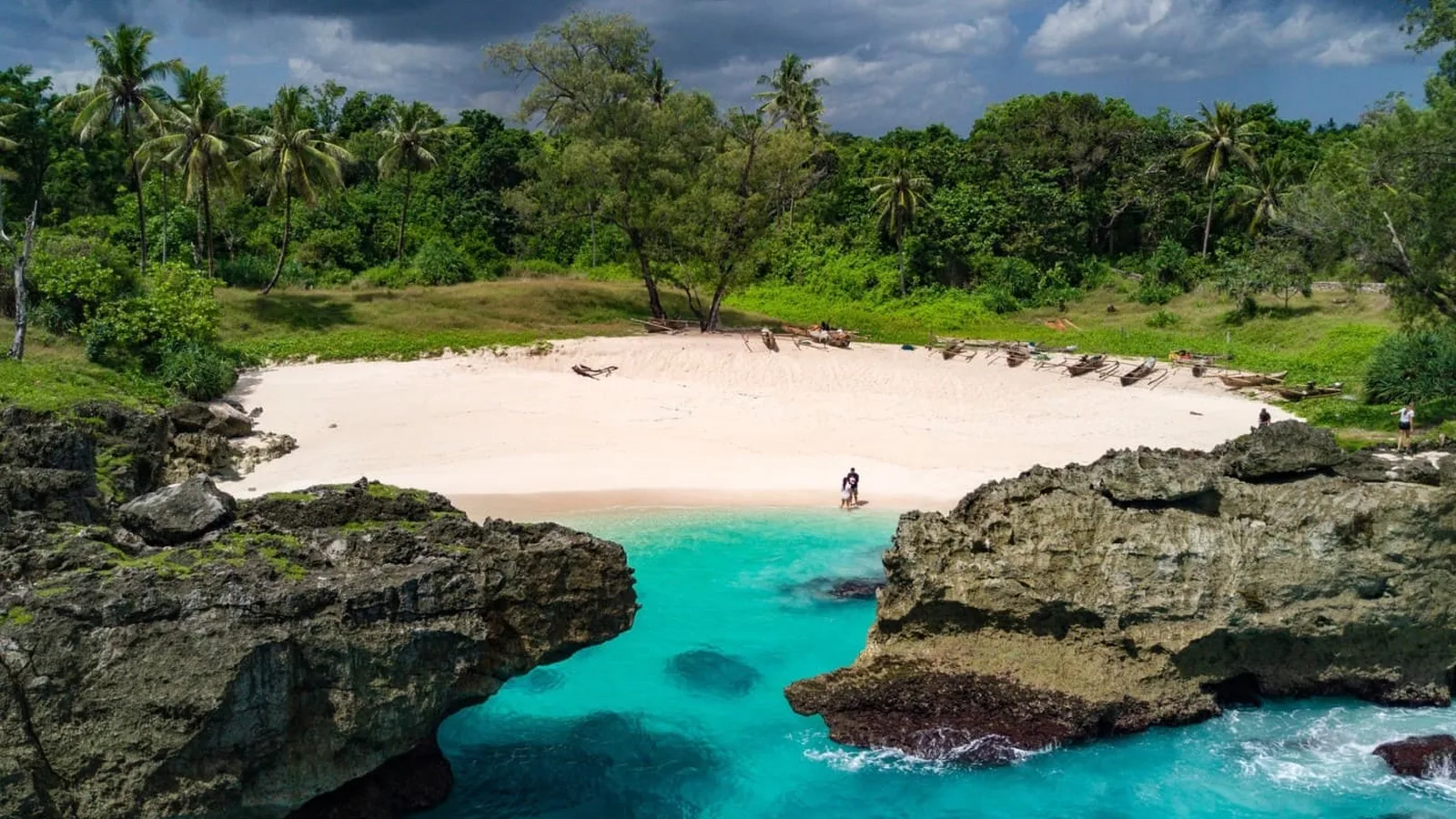
Chloe, a Dutch architect with the kind of bone structure that seems engineered to look good even when slick with tropical humidity, snapped her laptop shut. The click was definitive, a punctuation mark on a day spent wrestling with zoning regulations for a client in Rotterdam, but it was completely lost in the surrounding din. Through the floor-to-ceiling glass of the co-working space—a temple of polished concrete and artfully distressed wood that felt more like a venture capital incubator than a beach town office—the real soundtrack of her afternoon asserted itself. It was the high-pitched, furious scream of a modified Honda Vario, its engine bored out to within an inch of its life, fighting for sonic dominance with the soulless lo-fi beats piped through the cafe’s speakers.
She looked around. To her left, a German drop-shipper was loudly closing a deal on noise-cancelling headphones. To her right, an American life coach was storyboarding an Instagram Reel about authentic living. Everyone was furiously, performatively, optimizing. This place, sold to the world as a laid-back paradise, was anything but. It had the same frantic energy, the same relentless hustle she’d fled in Amsterdam, only now it was hotter, louder, and seasoned with the faint, sweet smell of two-stroke exhaust and clove cigarettes.
Eight months ago, she’d packed her life into two suitcases, trading grey North Sea skies for the promise of something else. She wasn’t sure what, exactly. A new perspective? A better work-life balance? What she found was a carbon copy of the life she’d left, just with better smoothie bowls. She had come here seeking a new life rhythm, a different frequency to tune her days into. Instead, she’d found a faster, sweatier version of the same old song. She pushed her chair back, the realization landing with the weight of a tropical downpour: the search wasn't for a place, but for a pace. And this wasn't it.
The Great Unplugging: Auditing the Canggu Cliché
There’s a moment, for many of us who’ve washed up on these shores, when the dream curdles. For me, it happened eight years ago in a Seminyak traffic jam, watching a man in a Bintang singlet try to sell me a DVD of a movie still in cinemas. For Chloe, it was that afternoon in the co-working space. The place she was in, Canggu, has become a global shorthand for the digital nomad lifestyle, a brand name as much as a location. It offers a life of frictionless convenience: you can get vegan sushi, a CrossFit class, or a visa extension delivered to your villa with a few taps on an app. It’s a terrarium for a certain kind of twenty-first-century life, hermetically sealed from the messier, more complicated island just outside its borders.
But the terrarium is getting crowded. In 2023, Bali’s Ngurah Rai airport recorded over 2.4 million arrivals from just Australia and Europe, a 150% jump from the year before. A significant, if unquantifiable, number of these weren’t two-week tourists but long-stay remote workers masquerading under tourist visas, drawn by the siren song of a life lived in board shorts. The result is a kind of hyper-saturation. The 'scene' that was once a niche subculture of surfers and soul-searchers has metastasized into a mainstream, monetized phenomenon. The traffic is now legendary, a slow-moving metallic river of scooters and SUVs. The rice paddies, once the area's defining feature, are an endangered species, hunted to extinction by boutique hotels and minimalist-brutalist villas.
“We used to know everyone,” says Jean-Paul, a French photographer who has lived on the island for fifteen years and watched the transformation with a mix of wonder and despair. We’re drinking lukewarm Bintangs at a scruffy beach bar, one of the last of its kind. “You’d go for a surf and see maybe ten people in the water. Now? It’s a hundred. And half of them are filming it for their TikTok. The search for community has been replaced by a search for content.” His observation cuts to the heart of the new exodus. The next wave of nomads aren't just fleeing Canggu's traffic; they're fleeing its ethos. They are embarking on a deliberate search not for more networking, but for more silence. They crave a productive monotony, a sustainable rhythm that integrates work and life instead of just placing them in a more photogenic setting. The great unplugging isn't from the internet; it's from the cliché.
The Deep Worker's Sanctuary: Nusa Penida's Cliffs
Twenty-five minutes and a world away by fast boat, the cliffs of Nusa Penida rise from the sea like a dragon’s spine. The water here is a violent, churning blue, the kind that reminds you the ocean is not your friend. For years, Penida was a macabre day trip, a place tourists came to snap a selfie at the famous T-Rex-shaped Kelingking Beach before retreating to the comforts of the mainland. The island’s infrastructure was a joke, the power sporadic, the internet a dial-up-era memory. It was, in short, unworkable.
Then came Elon. The arrival of Starlink, offering reliable, high-speed satellite internet for a manageable 750,000 IDR (about $45) a month, has been nothing short of revolutionary. It's the single piece of technology that has unlocked the island's potential as a sanctuary for a different kind of remote worker: the Deep Worker. These are the writers wrestling with a novel, the coders building complex architecture, the researchers who need hours of uninterrupted focus. They don't need a scene; they need solitude.
I met one of them, a programmer from Toronto named Anya, not in a cafe, but on a dusty track overlooking the sea. She was finishing her day, which, for her, meant closing her terminal window, hopping on her scooter, and being at a world-class viewpoint in under ten minutes. “In Toronto, my ‘reset’ was walking to a coffee shop and spending five dollars,” she told me, shielding her eyes against the setting sun. “Here, it’s this.” She gestured to the epic vista of cliffs and crashing waves below. “I can get more done here between 7 AM and 2 PM than I could in a full week back home. There are no distractions. No useless meetings. No one trying to sell me on their crypto project.”
“The trade-off is stark. You give up easy access to oat milk lattes and a social life, and in return, you get head space. You get the kind of quiet that’s so profound you can actually hear yourself think.”
This is the Penida proposition. It’s a monastic existence, but a beautiful one. Life is stripped back to its essentials: work, nature, and a small, self-selecting community of others who have made the same deliberate choice. There’s a quiet camaraderie among the Penida nomads. They nod to each other on the winding, potholed roads, a shared acknowledgment of the price of their peace. They are the modern-day anchorites, trading the temptations of the digital city for a cell with a million-dollar view.
The Community Architect: Gili Air's Car-Free Cadence
If Nusa Penida is the monastery, Gili Air is the village green. One of three tiny islands floating in the strait between Bali and Lombok, Gili Air’s defining characteristic is what it lacks: motorized traffic. There are no cars, no scooters, only bicycles and the gentle jingle of the cidomos, the local horse-drawn carts. This single design feature, or lack thereof, dictates the island's entire rhythm.
Life slows down to the speed of a bicycle. Journeys are measured in pedal strokes, not minutes. You can’t rage-honk your way through a traffic jam; you can only dismount and walk your bike past the herd of cows blocking the path. This forced deceleration creates a unique social fabric. You don't just see people; you encounter them. The fleeting, anonymous interactions of a city are replaced by repeated, meaningful contact. You buy your fruit from the same woman every morning. You greet the same divemasters on their way to the boats. You see the guy who overcharged you for laundry yesterday, and you both know that you know.
“Here, your reputation is your currency,” says Alex, the wry British owner of a co-working space that runs on a mix of grid power and sheer optimism. “You can’t just disappear into the crowd. We see each other at the market, at the jetty, at the Friday night party. It makes for better neighbors and, honestly, better clients.” This isn't the high-volume, transient networking of Canggu. It's slower, deeper, and built on accountability. The island's small scale—you can walk its circumference in about 90 minutes—fosters a level of trust and interdependence that is rare in the nomad world.
This idyllic setup is, however, punctuated by the island's own timetable. The power grid is notoriously fickle, with planned outages averaging two to three hours, twice a week. At first, it's infuriating. Then, it becomes part of the rhythm. Laptops slam shut in unison. People emerge, blinking, into the sunlight. They go for a swim, grab a coconut, actually talk to one another. The island forces you to work on its schedule, not just your client’s. It demands a flexibility that, over time, feels less like an inconvenience and more like a gift—a mandatory pause, a built-in mechanism for work-life balance.
The Explorer's Basecamp: Labuan Bajo, Flores
Head east, keep going until the tourists thin out and the landscapes turn prehistoric, and you’ll find Labuan Bajo. This dusty, chaotic port town on the western tip of Flores is not, in itself, a paradise. It’s a frontier town, a jumble of half-finished concrete buildings, dive shops, and travel agencies all clinging to a hillside overlooking a spectacular harbor. The energy is raw, opportunistic, and alive with the hum of generators and ambition. No one comes to Labuan Bajo to be in Labuan Bajo. They come here for what it represents: a launching pad.
This is the basecamp for the Explorer Nomad. They are marine biologists tracking manta ray populations, photographers documenting life in the Coral Triangle, entrepreneurs building liveaboard fleets, and freelance creatives who fund their adventures with clients thousands of miles away. They are drawn by the magnetic pull of the Komodo National Park, a UNESCO World Heritage site that lies just a short boat ride away. Their work-life balance isn't a metaphor; it's a literal split between a laptop screen and one of the most biodiverse marine environments on the planet.
Take Sarah, a freelance graphic designer from California. She lives in a simple 500-square-foot apartment overlooking the harbor, its balcony offering a front-row seat to the daily ballet of fishing boats and phinisi schooners. From Monday to Thursday, she’s deep in Adobe Suite, designing branding packages for tech startups in Silicon Valley. But on Friday afternoon, she packs a dry bag, walks ten minutes to the jetty, and steps onto a boat. For the next three days, she’s an underwater photographer, diving with dragons, sharks, and turtles.
“My clients think I live this glamorous island life,” she tells me over a crackly WhatsApp call from her apartment. “They don’t see the power cuts or the fact I have to buy drinking water in giant plastic jugs. But then, on Monday morning, I can send them a photo of a Komodo dragon I took yesterday, and it shuts them up. It’s my ultimate reset button.”
This reset is surprisingly accessible. A standard 3-day, 2-night liveaboard trip, the quintessential Bajo experience, can cost anywhere from 2.5 million to 5 million IDR ($150-$300). It’s an escape hatch, a way to wash off the stress of deadlines and client feedback in saltwater. The tension in Labuan Bajo is palpable—the clash between rapid, often ugly development and the pristine, untamed wilderness it services. For the explorer nomad, living in that friction is the whole point.
The Sustainable Producer: Lombok's Southern Shore
For years, Lombok was Bali’s perpetual ‘next big thing,’ an understudy waiting in the wings. A direct flight from my home in Singapore, it has always been on the radar. The development, when it came, was different. Slower. More deliberate. Shaped by the mighty Mandalika Circuit a bit too much for my liking, but the island’s southern coast, around the hub of Kuta (not to be confused with its notorious Balinese namesake), is attracting a new archetype: the Producer.
These aren't just consumers of paradise; they are co-creators. They are drawn by a landscape of rolling green hills that tumble down to impossibly white sand beaches, and by the sense that there is still space here to build something. The vibe is less about consuming and more about contributing. You see it in the rise of eco-lodges built with locally sourced materials, permaculture farms supplying restaurants, and small-batch businesses that turn local produce into marketable goods.
The financial calculus is a powerful lure. Where a tiny plot of land in Canggu is priced for oligarchs, the hills overlooking Lombok’s south coast are still within the realm of dreams. A yearly lease for a sizable plot can be had for as little as 30 million IDR ($1,800), a tenth of the Bali equivalent. This affordability attracts not just transient renters, but long-term builders.
I spent a week with a couple, a British web developer and a German yoga teacher, who embody this spirit. They work their respective remote jobs in the morning. In the afternoon, they tend to their chili patch. They started making a fiery hot sauce, at first just for themselves. Then for friends. Now, their “Lombok Lava” is sold in a dozen cafes and warungs along the coast, a tiny side hustle that connects them to the land and the local economy in a way their digital work never could. “It feels real,” Mark, the developer, told me, his hands stained red from the peppers. “My code exists in the cloud. This,” he said, holding up a bottle, “exists right here. You can taste it.” The rhythm here is governed by the surf. The entire social and work schedule of the coast, from Gerupuk to Selong Belanak, bends around the tide charts and the swell forecast. It’s a grounding force, a daily reminder that you are part of a powerful natural system, not just an observer of it.
The Immersionist's Gambit: The Austere Beauty of Sumba
There are islands you go to for convenience, and then there are islands you go to for a challenge. Sumba is the latter. This is the far frontier, the final boss of the Indonesian archipelago for the remote worker. If the other islands are about finding a new rhythm, Sumba is about submitting to a very old one, a culture so powerful and distinct it can feel like time travel. To even consider working from here is an act of supreme confidence or blissful ignorance.
The obstacles are not trivial. Sumba has one of the lowest electrification ratios in the country; only 63% of households are on the grid. Solar panels and a diesel generator aren't a luxury; they are your lifeline. The internet is a phantom, a flickering mirage you chase with a mobile hotspot held aloft in the air, hoping to catch a stray bar of 4G. There are few cafes, fewer restaurants, and no co-working spaces. You are, for all intents and purposes, on your own.
So who comes here? The Immersionist. The novelist who needs to be utterly severed from the world to create a new one. The anthropologist studying the island’s unique Marapu animist beliefs. The artist for whom the raw, windswept landscapes and stoic, horse-riding locals are an endless source of visceral inspiration. It is not a place for a ‘workation’; it is a place for a reckoning. You can’t skim the surface of Sumba; the island demands your full attention. Learning a few phrases of Bahasa Indonesia isn't enough; you're expected to try and understand the complex social hierarchies and local customs.
I once watched a French journalist, on assignment to cover the annual Pasola festival—a ritual battle between two villages fought on horseback with blunted spears—try to upload his files. He sat on the veranda of a traditional thatched-roof home, laptop balanced on his knees, while in the valley below, a scene of beautiful, terrifying violence unfolded. His face was a mask of digital-age frustration, a stark contrast to the timeless ritual happening just a few hundred meters away. He was a node of modern anxiety in an ancient ceremony. Sumba is a mirror. It shows you everything you rely on, everything you think you need, and then takes it away, leaving you with only what you brought inside yourself. For the right person, that is the ultimate prize.
The Digital Visa & The Devil's Details
No matter which island frequency you tune into, one static-laced broadcast cuts through them all: the visa run. For eight years, I’ve navigated this peculiar purgatory, and it remains the great, unifying headache of expat life in Indonesia. We are a community of temporary residents, our lives measured out in 60-day increments, our futures tethered to the whims of immigration officials and the competence of our visa agents.
It’s a confusing alphabet soup. There’s the B211A, the standard social-cultural visa that is the entry point for most. Then there are whispers of the KITAS (a temporary residency permit), a coveted but elusive prize. And on the horizon, the much-touted ‘Second Home’ visa and ‘Digital Nomad’ visas float like bureaucratic unicorns—beautiful in theory, but perpetually just out of reach. The old hands here navigate this landscape like the Bugis sailors of ancient Sulawesi, who crossed the archipelago not with precise maps but with an intuitive feel for winds and currents. We rely on whispers, on shared intel in WhatsApp groups, on the one true indispensable professional in our lives.
“My visa guy is more important to me than my doctor, my lawyer, and my therapist combined,” a friend, a veteran of a dozen visa cycles, told me recently. He wasn't joking. A good agent is a shaman, a fixer who can interpret cryptic regulations and placate unseen forces. The process is also a significant and often un-budgeted expense. A one-year, agent-assisted B211A renewal process can run between 25-30 million IDR ($1,500-$1,800). It’s the cost of admission, the 'sunshine tax' you pay for the privilege of working from paradise.
This bureaucratic uncertainty has a profound psychological effect. It keeps you slightly off-balance, preventing you from ever feeling fully settled. It’s why so many of us rent, not buy; why we hesitate to ship our furniture or adopt a dog. The government’s new ‘Second Home’ visa attempts to address this, offering a 5- or 10-year stay. The catch? You need to park 2 billion IDR (around €120,000) in an Indonesian bank account.
| Investment Path | Capital Required (EUR) | What You Get | Location |
|---|---|---|---|
| Indonesia Second Home Visa | €120,000 | 5-10 Year Residency Rights | Indonesia |
| Paris Studio Apartment | €120,000 | ~25 sq. meter studio | 18th Arr., Paris |
The comparison is stark. That same €120,000 would barely get you a cramped studio in a less-fashionable Parisian arrondissement. Here, it buys you time, space, and a decade of potential belonging. It's a clear signal of who the country wants to attract: not the shoestring backpacker, but the established professional, the investor, the one who is ready to commit. The question is how many are willing to make that bet.
The Archipelago of the Self
Six months after I first saw her in that Canggu cafe, I found Chloe again. Not in one perfect place, but in a state of intentional motion. She was on Gili Air. Her laptop was open, but at 4 PM, she closed it, not because of a power cut, but because the tide was right for a swim with the turtles that graze on the seagrass just off the beach. The frantic, anxious energy I’d seen in her was gone, replaced by a calm alignment. She’d spent two months on Penida finishing a major project, and now she was on Gili for a month of social reconnection before heading to Lombok to explore a land plot.
She hadn't found the island. She had found her archipelago. She was learning to match her work to the frequency of the place. Deep, focused work for the silent cliffs of Penida. Collaborative projects and social networking for the village-like atmosphere of Gili Air. She was curating her life, season by season, island by island. “I stopped looking for one place to be everything,” she said, as we walked our bikes down a sandy lane. “No place is perfect. But you can design a life that is, by moving between the imperfect pieces.”
Her journey mirrors a larger evolution. The Indonesian government, with its projected billion-dollar windfall from the forthcoming Digital Nomad visa, is betting on this very quest. But the story is shifting. The first wave of nomads were consumers, extracting lifestyle value from a place. The new wave, the ones who last, are learning to be contributors, participants, weavers of their own thread into the local fabric. They are discovering that these islands are more than just a backdrop for a Zoom call. They are mirrors. Penida reflects back your need for focus. Gili Air your need for community. Sumba your capacity for resilience.
There are over 17,000 islands in this archipelago, more than 60% of them still unnamed on any official map. A vast, uncharted frontier of potential hermitages and communities. The search for the right one is, in the end, an internal expedition. The ultimate Indonesian island isn't a place you find on a map. It's the version of yourself you finally have the quiet to meet, long after the laptop is closed and the tide has washed your footprints away.