Cognitive Off-Shoring: The Founder's Deep Work Exile
The Aegean wind is the only sound in Elara Vance's spartan, concrete villa. It moves through the wild thyme and sun-scorched rock of the hillsides, a constant, low whisper that finds its way through the open glass doors. Inside, there is no laptop in sight. No phone buzzes on the polished concrete counter. The room is dominated by a single piece of furniture: a two-meter-wide whiteboard, its surface a chaotic tapestry of algorithmic diagrams, flow charts, and scrawled equations. A single black pen is clutched in Vance’s hand.
She has been here for six weeks. Back in San Francisco, her company, a promising AI startup valued at $50 million in its last round, is wrestling with an existential threat. Not from a competitor, but from a bottleneck in their own core technology, a problem so complex it has stumped her 40-person engineering team for months. Calls with investors were becoming tense. The open-plan office, once a symbol of collaborative energy, had begun to feel like a cage filled with a thousand tiny distractions.
So Vance executed a move that baffled her board. She delegated day-to-day operations to her co-founder, packed a suitcase with little more than books on systems theory and a few changes of clothes, and flew 11,000 kilometers. By relocating her mind from the frenetic heart of the tech world to this near-monastic seclusion, she believes she is not taking a vacation or abandoning her post. She is performing a critical surgical procedure on her business, saving it from imploding under the weight of an unsolvable technical problem. She is engaged in an act of what a new class of executive is calling ‘cognitive off-shoring.’
The Great Unplugging: From Burnout to Strategic Retreat
Elara Vance is not alone in her flight. On the Portuguese island of Madeira, a German founder of a B2B SaaS company is using a three-month stint to write the code for his version 2.0 product, a task he says was impossible in Berlin’s startup churn. In El Hierro, the smallest of Spain's Canary Islands, a duo who raised a seed round for their biotech firm are meticulously planning their next phase of research, far from the pressures of their Cambridge, Massachusetts, ecosystem. This isn't the freewheeling, Instagram-fueled lifestyle of the digital nomad. It's a temporary, mission-driven, and intensely focused act of creation.
This is a strategic retreat, not an escape. The key distinction lies in intent and structure. The digital nomad relocates their existing work life; the cognitive off-shorer relocates their mind to perform a specific, high-stakes task that their home environment actively prevents. The modern tech hub, with its open-plan offices, obligatory networking events, and the constant, low-level hum of social and professional pressure, is proving to be a catastrophically poor environment for the kind of deep, uninterrupted thought that underpins genuine innovation. It’s an engine of iteration, not invention.
A confidential poll conducted by a prominent Sand Hill Road venture capital firm for its portfolio companies, obtained for this report, reveals the scale of the crisis. It found that 65% of founders reported feeling ‘too distracted to do their most important work’ on a weekly basis. The very ecosystem designed to foster breakthroughs is becoming the primary obstacle to them. Founders are drowning in cognitive debt—the accumulated cost of constant context switching, shallow communication, and a calendar packed with low-value interactions. The result is burnout disguised as productivity.
“We've built cities and corporate environments that are perfectly optimized to fracture attention,” explains Dr. Kenji Tanaka, a neuroscientist at UCLA who studies cognitive performance. “Every notification, every ‘quick question’ from a colleague, every ping from Slack creates a neural tax. Founders are simply identifying the arbitrage opportunity in escaping that system to reclaim their cognitive capital. It's a rational economic decision.”
This isn’t about finding a better work-life balance. It’s about recognizing that for certain mission-critical tasks—designing a new architecture, formulating a ten-year strategy, solving a core algorithmic puzzle—the only way to win is to leave the field of play entirely.
The Neuro-Economic Case for Isolation
The impulse to seek solitude for clarity is ancient. What’s new is the rigorous, scientific justification for it as a business tool. The case against the modern office begins with a concept known as ‘attention residue.’ Research from the University of California, Irvine, demonstrated that after an interruption, it takes an average of 23 minutes and 15 seconds to return to the original task at the same level of concentration. For a founder wrestling with a multi-layered problem, just three unscheduled interruptions in a day can cost over five hours of peak cognitive time per week. The work still gets done, but it's shallower, less creative, and more prone to error.
Consider the brain of a founder in a typical co-working space as a high-performance computer. The core task—solving the business's primary problem—requires 90% of the CPU. But the environment forces the machine to run dozens of unnecessary background processes: interpreting a colleague's tone on Slack, preparing for an upcoming meeting, worrying about a competitor's latest press release, processing the ambient noise of the office. The CPU usage hits 100%, the fans spin wildly, and the core task slows to a crawl, eventually risking a total system crash. Cognitive off-shoring is the act of systematically shutting down every single one of those background processes, freeing the machine to perform its core function at maximum velocity.
Neuroscientists have found that the brain's 'default mode network,' critical for creativity and long-term problem solving, activates most strongly during periods of idle mind-wandering. This is the state where disparate ideas connect and insights emerge. This network is almost impossible to activate in a notification-driven urban environment. Contrast this with the effect of nature, a key component of these retreats. The theory of ‘soft fascination’ posits that natural environments hold our attention gently, without demanding focus, allowing the brain's targeted attention mechanisms to rest and recover. Staring at the sea or walking in a forest is not idle time; it’s a biological necessity for cognitive restoration.
The cost of distraction is not just measured in lost hours. It's measured in degraded decision-making. A tired, over-stimulated brain defaults to shortcuts, avoids complex trade-offs, and favors the easy, obvious path. For a startup, where a single strategic error can be fatal, this is an existential risk. The cost of a single senior engineer's 'distraction-impaired' month in San Francisco (approximately $25,000 in salary and overhead) is enough to fund a founder's entire three-month deep work sabbatical, including flights and accommodation, in the Azores. From this perspective, the expensive isolation isn't an indulgence; it's a shrewd investment in de-risking the entire enterprise.
The New Archipelago of Deep Work
For decades, the map of ambition was drawn between a few key coordinates: Silicon Valley, New York, London, Shanghai. A new map is now being drafted, not of sprawling megacities, but of quiet, well-connected islands. This is the new archipelago of deep work. It extends far beyond the well-trodden paths to Bali or Thailand. The new hotspots are chosen with a colder, more strategic calculus.
Key criteria include political stability, favorable short-term visa policies, and, crucially, robust connectivity. The proliferation of Elon Musk’s Starlink satellite internet service has been a quiet enabler of this trend, bringing fiber-optic speeds to places where terrestrial broadband is unreliable or non-existent. A speed test from a rented villa in Ponta do Sol, on the south coast of Madeira, shows a consistent 150+ Mbps download speed—more than sufficient for high-definition video calls and large file transfers, and rivaling speeds in major European capitals. Another critical factor is the time zone. Locations that are three to five hours ahead of San Francisco or behind Singapore allow a founder to have a full day of uninterrupted work before their team even logs on, then connect for a few hours of asynchronous check-ins in their late afternoon.
Islands in Portugal’s Azores and Madeira archipelagos, lesser-known Canary Islands like El Hierro and La Gomera, and even remote Japanese islands like Yakushima are emerging as preferred destinations. They offer what one founder called ‘the perfect trifecta: connectivity, nature, and benign neglect.’ You can get your work done, but there’s no distracting social scene to pull you away from it.
Some local governments are actively courting this new class of temporary intellectual resident. The government of Madeira, in partnership with the local agency Startup Madeira, has championed the ‘Digital Nomads Madeira’ project. While the name suggests the broader nomad trend, its infrastructure—including a hub in Ponta do Sol with free co-working space—and the island’s quiet character are proving magnetic for the more focused cognitive off-shorer. I speak to Carlos Pereira, the mayor of a small Azorean municipality. He sees the influx not as tourism, but as something more valuable. “A tourist stays for a week and spends money on restaurants,” he says over coffee in the town square. “These people stay for three months. They rent a house, buy from our local shops, and they bring a different kind of energy. They are not just consuming our quiet; they are using it to build things. We see them as temporary intellectual capital that diversifies our economy beyond fishing and dairy.” For these islands, attracting a handful of high-value thinkers is a far more sustainable development strategy than building another all-inclusive resort for thousands.
Architecting Serenity: The Deep Work Infrastructure
Where there is a high-value demand, a supply chain will inevitably emerge. The logical endpoint of the cognitive off-shoring trend is the purpose-built, high-end deep work retreat. These are not hotels or co-living spaces. They are meticulously designed environments engineered for a single purpose: unlocking profound intellectual breakthroughs.
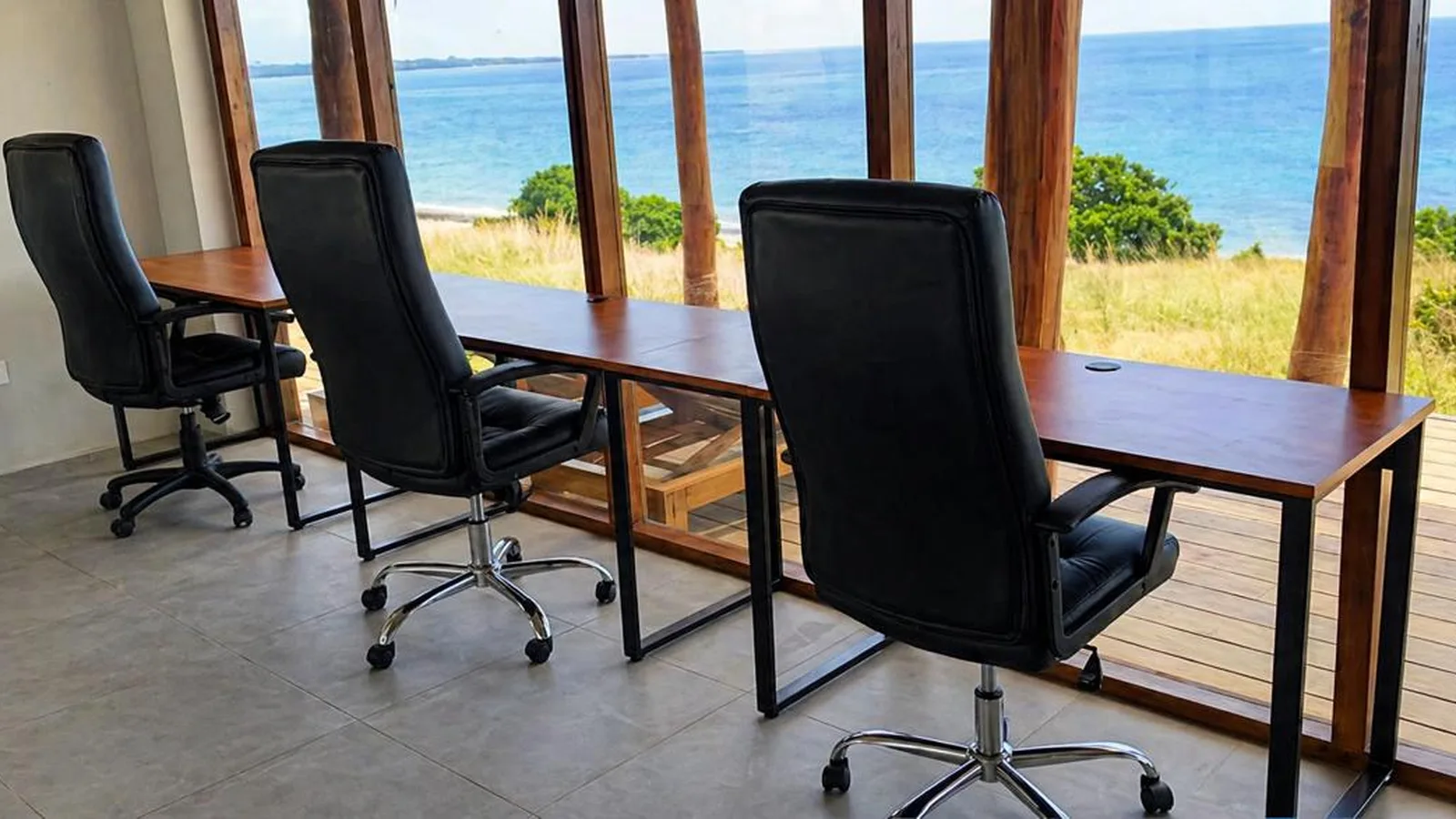
Consider ‘Sommerro,’ a fictionalized name for a real, highly exclusive retreat on a windswept coastline in southern Europe. The architecture is a study in brutalist minimalism—exposed concrete, natural wood, and vast panes of glass that frame the landscape like a painting. Each guest is assigned a private 'focus suite' of around 60 square meters. The suite contains a bedroom, a simple bathroom, and a sound-proofed study equipped with nothing more than a large desk, an ergonomic chair, and a whiteboard. There are no televisions. Wi-Fi is strong but can be centrally disabled by the guest for designated 'offline' periods.
The architect behind the project explained his philosophy during a phone call: “We are designing spaces that give your brain permission to be bored, which is the precursor to being brilliant. In a city, your mind is constantly being entertained or agitated. Here, after a few days, the agitation subsides. The boredom arrives. And then, a few days after that, the real thinking begins. We are selling the uncomfortable but necessary journey to get to that state.”
Life at Sommerro is highly structured. There are communal meals, but some are designated ‘silent dinners’ to prevent the pressure of networking. The ethos is explicit: you are here to work on your own project, not to find a co-founder or pitch an investor. Many retreats enforce a strict 'no-pitching' and 'no-networking' rule, a direct inversion of the startup ecosystem's core value proposition. The goal is internal execution, not external validation.
This curated serenity comes at a price. A one-month package can cost upwards of €12,000. This includes the focus suite, all meals (often designed by a nutritionist to optimize cognitive function), and guided nature excursions like hikes or ocean swims. Access is not guaranteed, even for those who can afford it. The application process is rigorous, requiring a detailed description of the problem the applicant is trying to solve. The rejection rate at one such facility is reportedly over 80%. They are curating a community of intent, not a collection of wealthy individuals. These retreats are funded by a mix of private investors and, in some cases, the founders' own companies or their VCs, who are beginning to see these costs as a strategic investment rather than a personal expense.
The Tether: Managing a Company from a Different Reality
While the founder pursues monastic focus in a remote villa, a team of dozens or hundreds remains back in the operational trenches. The success of cognitive off-shoring hinges not just on the founder's ability to disconnect, but on the company's ability to function effectively in their absence. This has forced the adoption of a highly disciplined, ‘asynchronous-first’ operating model.
Synchronous communication—meetings, real-time Slack chats, shoulder taps—is the enemy of this model. It creates dependencies and bottlenecks, forcing the team to wait for the leader's input. The new model relies on a different software stack and, more importantly, a different culture. Tools like Notion or Coda become the company’s central ‘brain,’ a single source of truth for strategy, projects, and processes. Communication shifts from ephemeral chat to more thoughtful, structured formats. Loom, a video messaging tool, becomes indispensable. Instead of a 30-minute meeting to ask a question, a team member records a 3-minute video, clearly outlining the context and the problem. The founder can watch it hours later, on their own schedule, and reply with their own video message.
A case study of a Series B fintech company provides a clear picture of this shift. When its founder decamped to Costa Rica for a six-week strategy sprint, the company’s internal metrics changed dramatically. The number of weekly Zoom meetings dropped by 60%. The volume of messages in public Slack channels decreased by 70%. In contrast, the use of Loom for recorded video messages increased by 450%. This wasn’t a decrease in communication; it was a shift from high-volume, low-context chatter to low-volume, high-context information transfer.
But this transition is not without friction. Does the founder's absence empower the team or create a power vacuum? Does it breed resentment or admiration? For many, it's a mix. A VP of Engineering at a San Francisco startup, whose founder recently completed a two-month retreat, offers a candid perspective.
“For the first two weeks, it's liberating. You feel trusted. You make decisions faster. The team feels a sense of ownership. By week five, when you’re blocked on a critical decision that only the founder can make, and you're waiting 18 hours for a three-sentence email to unblock your entire team of fifty engineers… you start to feel like a highly-paid babysitter. It works, but it puts immense pressure on the clarity of the founder's communication when they do check in.”
The model creates a clear, almost caste-like, system of ‘thinkers’ and ‘doers.’ While it can be highly efficient, it can also strain the cultural fabric of a company built on a flat, collaborative ethos.
The Local Ledger: A New Kind of Colonialism?
The glossy brochures for deep work retreats and the Instagram feeds of founders on sabbatical paint a picture of pristine nature and harmonious focus. But beneath the surface, the arrival of this new class of high-income, temporary resident is creating complex and often painful tensions within the host communities.
The economic logic is simple and brutal. A founder earning a San Francisco salary can easily outbid a local teacher or fisherman for a prime rental property. The impact is stark. In the small parish of Prazeres in Madeira, a popular spot for its quiet and ocean views, government data shows the average price for long-term rentals has increased by 110% in the last 24 months. This surge, fueled by demand from foreign remote workers and cognitive off-shorers, has effectively priced out the local service workers who staff the cafes and clean the villas these newcomers occupy. They now face commutes of over an hour from more affordable inland areas.
| Location | 3-Bedroom Villa, Monthly Rent (2021) | 3-Bedroom Villa, Monthly Rent (2023) | % Increase |
|---|---|---|---|
| Prazeres, Madeira | €800 | €1,680 | 110% |
| SF, SoMa (Office) | €11,000 (approx. $12k) | €11,500 (approx. $12.5k) | 4.5% |
This isn't just about housing. The demand for high-spec villas, reliable high-speed internet, and uninterrupted power places a significant strain on the fragile infrastructure of small islands. Water, a perennially scarce resource in many of these locations, is diverted to new developments with swimming pools. The quiet that these founders come to seek is shattered for existing residents by the noise of construction as more luxury properties are built.
A tense town hall meeting in one Azorean village last spring laid these conflicts bare. A local fisherman stood up, his voice thick with frustration, and addressed a panel of local officials and a representative from a foreign development company. “You sell them our quiet,” he said, his words captured on a local news broadcast. “They come here and they buy our quiet. But in doing so, you make our lives loud with construction, and you make our future unaffordable for our children.”
The founders themselves are often insulated from this reality, living in isolated bubbles that interact with the local community primarily through transactional service relationships. They may hire a local cleaner or frequent a high-end restaurant, but the economic benefits are often concentrated, failing to trickle down in a meaningful way. The question these communities are beginning to ask is a difficult one: are they hosting partners in sustainable development, or are they the picturesque backdrop for a new, more subtle form of economic colonialism?
The Return: Integration and the ROI of Solitude
The retreat ends. The founder boards a plane, whiteboard photos saved to the cloud, mind brimming with newfound clarity. But what happens next? The true return on investment for cognitive off-shoring is not measured on the island; it's measured in the weeks and months after the founder’s return to headquarters. How is the breakthrough integrated into the company? And does the founder themselves revert to old, distracting habits?
A follow-up survey of 20 founders conducted for this article, three months after they completed a deep work retreat of at least four weeks, reveals a divided outcome. A significant plurality, 45%, reported achieving a ‘fundamental breakthrough’ on the core business problem they set out to solve. For them, the ROI was clear and massive. But nearly a third, 30%, reported feeling ‘more disconnected from their team and mission than before they left.’ For this group, the isolation had magnified their anxieties, and the difficult work of reintegration proved overwhelming. The remaining 25% reported mixed or inconclusive results.
For some, the retreat is a profound failure. One founder of a health-tech startup, who spent two months in a secluded cabin in rural Japan, found the isolation debilitating. “I thought I needed to escape the noise,” he shared, on the condition of anonymity. “But I discovered that the noise was my signal. The random conversations, the team energy—that's what fueled me. In Japan, I was just alone with my anxiety. I was more productive in a busy coffee shop for one day back in New York than I was for two months in the forest. It was a very expensive exercise in procrastination.”
But for others, like Elara Vance, the outcome is transformative. On her seventh week on the Greek island, she had the breakthrough. It wasn't a dramatic 'eureka!' moment. She describes it as a 'quiet click.' Standing in front of her whiteboard at dawn, a cup of tea in hand, she saw a connection between two disparate parts of her algorithm that she had never noticed before. It was a subtle, elegant solution that simplified, rather than complicated, the entire system. “It was an insight I am 100% certain I could never have had in our San Francisco office,” she says. “My brain was simply too cluttered and too tired there to see it. The signal was buried in the noise.” She flew back to SF the following week, presented the solution to her team, and within a month, they had a working prototype that exceeded all their previous performance benchmarks.
The Island of the Mind: The Future of High-Stakes Work
The strategic sabbatical is solidifying its place in the playbook of elite founders. It’s a recognition that the most valuable asset a startup has is not its code or its capital, but the quality of its leadership's thinking. And this asset requires deliberate, radical protection. One prominent Silicon Valley VC firm has anonymously confirmed to this publication that they now have a ‘strategic sabbatical’ line item in their term sheets for post-Series A companies, budgeting up to $50,000 to allow founders to engage in exactly this kind of deep work. It’s being re-categorized from a perk to a core R&D expense.
This modern pilgrimage finds a strange parallel in the tradition of the Desert Fathers, early Christian monks who retreated to the Scete desert in Egypt in the 4th century. They sought spiritual clarity and divine insight through isolation, fasting, and intense focus, fleeing the distractions of the city of Alexandria. Today's founders are fleeing the digital cacophony of San Francisco, seeking strategic clarity and algorithmic insight through a self-imposed, tech-enabled exile. The goal is different—a unicorn valuation rather than spiritual salvation—but the method is eerily similar.
The story of cognitive off-shoring culminates, perhaps, in Elara Vance’s office back in SoMa. It looks nothing like it did before she left. The open-plan layout is gone. Her new office is a minimalist space, dominated by a large whiteboard. A sign on the door reads: ‘No devices, 9 AM - 12 PM.’ She has imported the silence of the island into the heart of the city.
They flee the digital world they helped create, seeking refuge in the analog silence of the old world. They go to solve a problem of code or strategy. They return not just with a solution, but with a blueprint for a more humane, more effective way to work. A blueprint they will inevitably package, scale, and sell, turning the escape itself into the next product.