The Shore's Slow Ledger: Reading Land Beyond the Deed
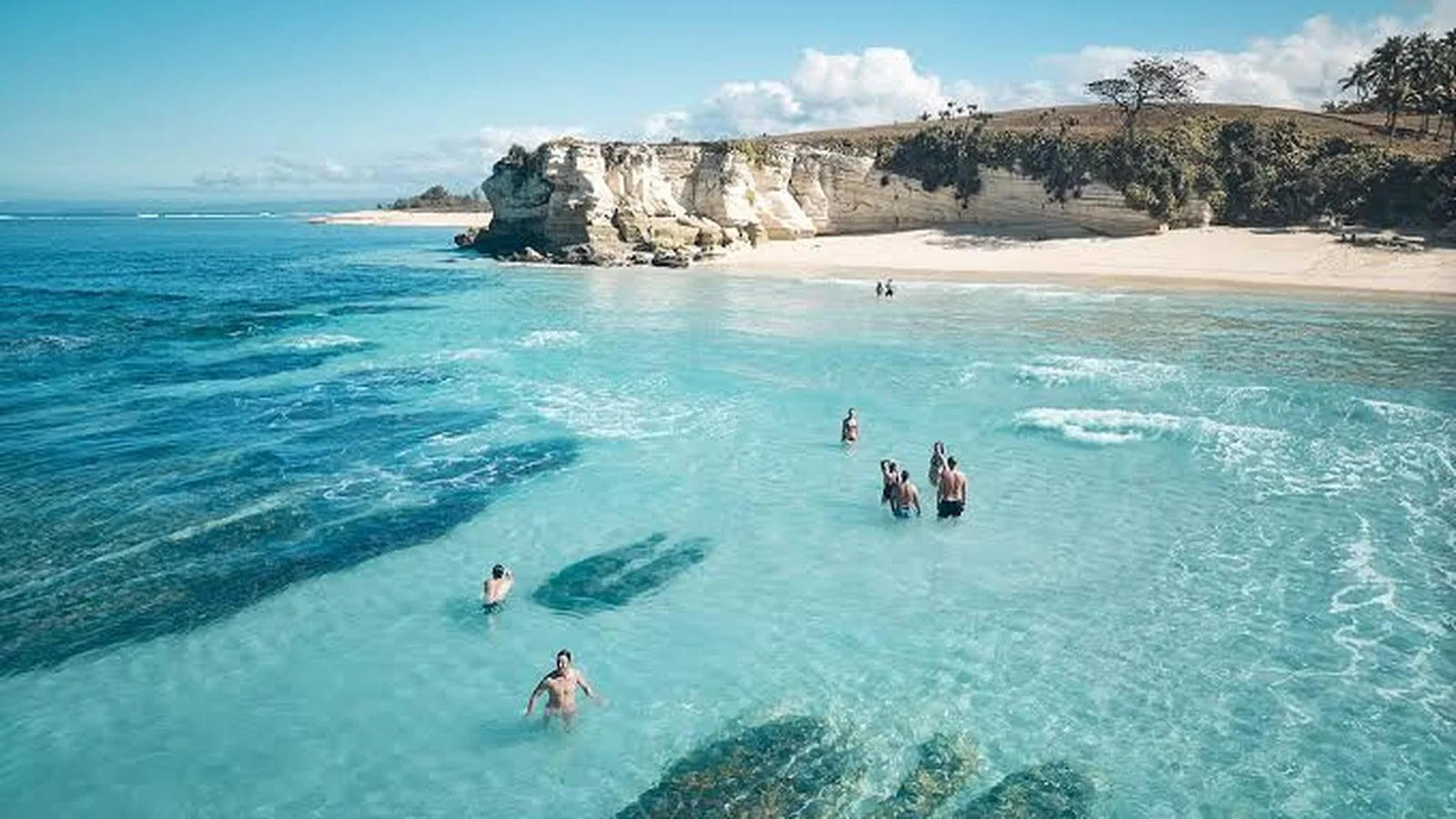
The old man ignored the cliffs. Tourists came for the cliffs, for the way the sun bled out across their bruised and ochre faces at the end of the day. They framed them in their viewfinders, these grand pronouncements of geology along Portugal’s Costa Vicentina. But Rui, a fisherman whose face was a tidal chart of wrinkles, knelt on the sand, his back to the spectacle. He was watching the beach. He let a handful of pale, fine grains run through his fingers, then dug down, just a few inches, revealing a darker, coarser stratum, littered with the confetti of broken shells.
‘The ocean remembers its winter anger here,’ he murmured, not to me, but to the sand itself. He drew a long, curving line with his finger, some fifty meters inland from where the gentle summer waves were collapsing with a sigh. ‘This is the true high-tide line, not the one on any map. This is where the sea comes when it is hungry.’
I had a surveyor’s map in my rental car, a crisp document with neat lines and GPS coordinates that declared a certain parcel for sale. It showed a generous building envelope, a safe distance from the official high-water mark. But Rui’s finger, tracing a line dictated by memory and storms past, sliced that buildable area in half. The spreadsheet on my tablet spoke of price per square meter and potential yield. The salt air, carrying Rui’s wisdom, spoke of something else entirely: the difference between an asset and an anchor, between a home and a future ruin.
The Tidal Ledger: Decoding the Water's Memory
The most fundamental truth of any coastline is its impermanence. The line between land and sea is not a border; it’s a perpetual negotiation, and the ocean always holds a casting vote. To invest here is to step into that dialogue, and the first lesson is learning to read the water’s memory, a history book written in sand and salt. Rui’s 'hungry tide' line, what coastal geologists call the debris line, is the most honest survey you’ll ever get. After the first big storm of the season, or during the highest spring tides, walk the beach. See where the ocean has tossed its ragged collection of seaweed, driftwood, and plastic flotsam. This is its high-water mark, its statement of intent. Any structure built seaward of that line is not a home; it's a temporary installation, a hostage to the next surge.
This lived knowledge can be cross-referenced with the cold eye of technology. Google Earth Pro’s historical imagery function is a time machine for the prudent investor. By toggling back through satellite photos from the last five, ten, twenty years, you can watch the coastline breathe. You can see the slow, inexorable theft of a beach on one headland, or the surprising accumulation of sand in a neighboring cove. These multi-decade patterns of erosion and accretion tell a far more reliable story than a single-season snapshot. You begin to see that the world's beaches are 'drowning in place.' As sea levels rise, the natural inland migration of the coastline is blocked by our hardened developments in over 50% of documented cases, creating a 'coastal squeeze' that can simply erase a beach, and the value of everything fronting it, to nothing.
A 1-meter rise in sea level can cause beach erosion of 50 to 100 meters, according to the Intergovernmental Panel on Climate Change (IPCC). This isn't a distant, abstract threat; it's a measurable risk that can functionally expropriate an entire beachfront parcel within the term of a 30-year mortgage.
Finally, read the plants. They are the land’s first responders. Notice where the lush, salt-intolerant grasses give way to the tough, leathery leaves of sea purslane or the spiky resilience of coastal spinifex. These low-lying, hardy species are nature’s surveyors, marking the zones where saltwater washes over during storms and where it pools, poisoning the subsoil. A patch of dying vegetation a hundred meters from the shore isn’t a landscaping problem; it’s a warning flare from the earth itself, signaling a place where storm water will gather and linger, turning your dream garden into a saline swamp.
The Whispers of the Wind: Exposure and Atmosphere
The ocean’s reach is the first chapter, but the wind writes the rest of the story in a language of corrosion and sound. Before falling for a view, one must understand the invisible forces that will shape life there. Prevailing winds are the property’s most dominant, and often unlisted, characteristic. A gentle onshore breeze may be a caress in July, but that same exposure could mean it becomes a battering ram in January, driving horizontal rain against every window and door, testing every seal, and howling with a force that shreds nerves.
I once met a coastal architect, a man who built starkly beautiful homes from Oregon to New Zealand. He spoke of the 'invisible architecture' of a site—the way a small dune, a stand of tough coastal pines, or a slight curve in the headland could create a pocket of stillness, a sanctuary from the dominant wind. Siting a house just fifty meters to one side or another could be the difference between a tranquil terrace and a wind-blasted deck where a conversation is impossible and a glass of wine requires two hands. His greatest contempt was reserved for developers who ignored these nuances. 'They build for the brochure photo,' he said, sipping an espresso, 'and they condemn the owner to live in a salt-caked cage with maintenance costs that could fund a small navy.'
That salt is the wind’s most potent weapon. The fine, aerosolized mist that feels so refreshing on your skin is a relentless corrosive agent. It works its way into every crevice, pitting glass, devouring metal, and fading paint. This has direct, quantifiable financial consequences. Standard galvanized steel fixtures—nails, screws, brackets—that might last a lifetime inland can show signs of serious corrosion within a few years on the coast.
- Inland Location: Standard galvanized steel lifespan: 20-50 years.
- Coastal Location (within 1km of sea): Standard galvanized steel lifespan: 5-15 years.
- The Solution: A mandatory upgrade to 316-grade (marine-grade) stainless steel is required for all exterior metalwork. This isn't an aesthetic choice; it's a financial imperative, and it comes at a 200-300% price premium for materials. Ignoring this detail during construction is simply pre-paying for a massive, expensive retrofit a decade down the line.
Beyond corrosion, there is the sound. Acoustic ecology is a new and vital lens for property valuation. The constant, low-frequency roar of crashing waves has been shown to improve sleep and reduce stress. It's the sound of primal safety. But if the wind also carries the drone of a nearby port, the shriek of jet skis, or the thumping bass from a beach club that's just opened down the coast, the therapeutic benefit is annihilated. The wind giveth, and the wind taketh away.
The Unseen Foundation: Geology Below the Sand
The most expensive mistakes are often buried. We fall in love with what’s above ground—the view, the light, the graceful curve of the bay—while the financial fate of the project lies silent and unseen beneath our feet. The substrate, the ground upon which everything rests, is a primary determinant of cost and risk. Is it solid bedrock, offering a stable but expensive foundation? Is it deep, well-draining sand? Or is it unstable marine clay, which can shift, settle, or even liquefy during an earthquake?
In Baja California Sur, I spent a day with a well-driller named Hector, a man who read the desert floor like a novel. He explained, wiping dust from his brow, how he could hit a sweet, potable aquifer at 50 meters on one side of a large sand dune, and then drill to the same depth just 200 meters away, on the other side, only to find unusable saltwater. The dune, he said, acted as a barrier, protecting a pocket of trapped rainwater from the intrusion of the nearby sea. Someone buying the 'wrong' side of that dune wasn't just buying a different view; they were buying a future of expensive, trucked-in water or a multi-thousand-dollar reverse osmosis system.
This issue of water quality is inextricably linked to waste disposal. Most remote coastal properties are off-grid when it comes to sewage, requiring a septic system. The viability of this system depends entirely on the soil's ability to absorb and filter effluent. A standard soil percolation ('perc') test, which typically costs between $750 and $2,000, is one of the most crucial and non-negotiable steps. Sandy soils often drain too quickly, failing to filter contaminants before they reach the water table. Clay soils drain too slowly, causing effluent to back up, creating a foul-smelling, boggy mess in your yard. In sensitive coastal jurisdictions like the Florida Keys or parts of the Caribbean, a septic system failure due to unsuitable soil isn't just an inconvenience; it's an environmental crime that can lead to fines exceeding $50,000 and orders to install an advanced, miniature treatment plant costing six figures.
Even the magic of a place can be a warning sign. The ethereal glow of bioluminescence, the 'sea sparkle' that lights up the waves at night, is a breathtaking sight. But many of these events are caused by dinoflagellates which, in high concentrations, create Harmful Algal Blooms (HABs). These blooms can be toxic to marine life, contaminate shellfish, and cause respiratory irritation in humans. A shoreline that frequently 'sparkles' might also be a shoreline that frequently stinks of dead fish, a detail rarely mentioned in the sales brochure.
The Cartography of Law: Reading the Invisible Lines
Beyond the physical world of sand and stone lies a world of invisible lines, ancient rights, and bureaucratic tripwires that can be just as treacherous. Owning coastal land is rarely as simple as a deed suggests. Most nations, in a wise act of self-preservation, have declared the immediate shoreline a public trust. In Mexico, this is the Zona Federal Marítimo Terrestre (ZOFEMAT), a 20-meter strip measured from the mean high-tide line that is inalienable federal property. You can't buy it. You can only lease the right to use it via a concession, with annual fees that can range from a modest $500 to over $10,000 USD for a prime residential plot. Failing to pay doesn't just result in a lien; it can result in the federal government reclaiming the land and anything you've built on it.
Similar public access rights exist globally, from the 'Queen's Chain' in New Zealand to public right-of-way laws in much of Europe. These are paired with legal setbacks—mandated distances from cliff edges, dunes, or waterways where no construction is permitted. A seemingly spacious half-acre plot can quickly shrink to an unbuildable sliver once these invisible legal boundaries are drawn. I met a frustrated German investor in Greece who discovered his 'dream plot' was rendered useless by a combination of a 30-meter archaeological setback from a forgotten Byzantine ruin and a 50-meter coastal setback, leaving him with a sliver of land barely wide enough for a goat path.
A real estate lawyer in Athens once told me the biggest challenges are the 'ghosts in the title.' He was referring to ancient, unrecorded easements—an olive-picking right for a neighboring family, a shepherd's traditional path to a spring, a fisherman’s right to dry his nets. 'These are ghosts,' he said, 'that can walk right through your new privacy wall, and the law is often on their side.'
This legal due diligence must also be forward-looking. A visit to the local municipal planning office is essential. That empty field adjacent to your quiet cove might be zoned for a 200-room hotel. The tranquil country lane could be scheduled for widening to accommodate a new public parking lot for the beach you thought was your own. In a developing area near a place like Indonesia's Eco Beach City, infrastructure plans can change rapidly. A new wastewater treatment plant is a civic good, but you may not want to be living downwind of it. The cartography of law is not static; you're buying into a future that is already being drafted in offices miles away from the sound of the surf.
The Rhythm of the Community: Access and Isolation
A property is not an island, even when it's on one. It exists within a web of infrastructure and community, and the resilience of that web determines the quality of life there. The allure of remote beauty must be weighed against the practicalities of access. That single, winding dirt road is charming in the dry season, but does it become an impassable river of mud for three months during the monsoon? A 45-minute drive to the nearest town on a quiet Tuesday in May can easily become a two-hour gridlocked nightmare on a Saturday in August.
I remember a story about a couple from Brussels who bought a spectacular plot on a remote Philippine island. They built a beautiful villa, a true escape. What they failed to fully internalize was that the bi-weekly supply boat that brought everything from diesel for the generator to fresh vegetables was their lifeline. During typhoon season, 'bi-weekly' often became 'bi-monthly.' They were stranded for weeks at a time, their paradise transformed into a luxurious prison, rationing food and praying for the weather to break. They sold it two years later at a considerable loss.
Access to emergency services is the most critical and least romantic consideration. In medicine, the 'golden hour'—the first 60 minutes after a traumatic injury—is critical for survival. A property located more than an hour's drive from a hospital with surgical capabilities carries a statistically significant increase in mortality risk for everything from a serious car accident to a heart attack. You must map the true travel time, not in ideal conditions, but during a storm or in peak traffic. That stunning cliff-top retreat loses its appeal when you realize a broken leg could be a life-threatening event.
Finally, one must read the social fabric. Is the local community welcoming to outsiders and new investment, or is there a quiet, deep-seated resentment toward the changes it brings? Spend time in the local market. Sit in the local café. Do people make eye contact? Is the laughter easy or guarded? These are not trivial observations. A resentful community can manifest its displeasure in a thousand small ways, from petty vandalism to obstructionism with permits to a general sense of being unwelcome. You are not just buying land; you are asking to be grafted onto a living organism. It’s wise to see if the host is willing to accept you.
The Ecological Contract: Your Role in the Food Web
To build on a coastline is to sign an unwritten contract with a fragile ecosystem. Your property becomes a part of the local food web, and your actions have consequences that ripple out far beyond your boundary stakes. The most astute investors understand that ecological health and long-term property value are one and the same. The first step is to identify the critical habitats you are becoming the custodian of. Are there turtle nesting grounds on your beach? Is the water offshore clouded with precious seagrass beds that serve as a nursery for fish? Is there a mangrove forest at the edge of your property?
Clearing even a small section of these habitats can be catastrophic. For instance, chopping down just 100 square meters of mangrove forest to get a 'better view' isn't just vandalism; it's financial suicide. Mangrove roots are one of nature's most effective forms of coastal defense, dissipating up to 90% of wave energy. Removing them destabilizes the entire shoreline, potentially leading to 2-3 meters of land erosion within five years—your land, washing out to sea.
I was on a dive boat in a quiet bay in Indonesia with a marine biologist. She pointed to the kaleidoscopic reef below us, then to a new villa being carved into the hillside above. ‘That reef,’ she said, ‘is their leading financial indicator. If they allow too much construction runoff to cloud the water, or if their septic systems leak nutrients, the coral will bleach. A white reef is a dead reef. And nobody will pay a million dollars to look out over a marine graveyard.’
Your responsibility extends beyond what you clear. It includes what you emit. Light pollution from a brightly lit house can disorient nesting sea turtles and disrupt the hunting patterns of nocturnal predators. Runoff from your driveway and garden, carrying pesticides or fertilizers, can poison the very reef that makes the location so special. And the sustainability of your utilities is paramount. Is the local power grid reliable, or will you need a complex and expensive off-grid solar and battery system? Is water plentiful, or are you drawing from an aquifer that is already over-stressed? Answering these questions honestly is part of calculating the true cost of your footprint.
The Final Reckoning: Weaving Art and Asset
So how does one make a final decision, standing on a windy bluff with a surveyor’s map in one hand and a handful of coarse, storm-tossed sand in the other? The process becomes one of layering. You take the hard financial data—the comparable sales, the potential rental income, the construction costs—and you overlay it with the poetic data, the ledger written by the tide, the wind, and the community.
This process is not unlike the ancient Roman practice of 'augury,' where priests would divine the future by observing the flight of birds and the entrails of animals. To evaluate a coastline today is to be a modern augur, reading the portents in the lean of the trees, the health of the reef, and the zoning map at the municipal office to foresee the future fortune of a place.
This deeper literacy allows you to calculate the true 'cost of paradise.' It’s not the purchase price. It’s a budget that includes a significant line item for specialized insurance, which can be 200-400% higher than for an equivalent inland property. It includes a 'named storm' deductible, often set at 5% of the home's insured value—a potential $50,000 out-of-pocket expense on a $1 million home before the first insurance check is cut. It includes the premium for marine-grade steel, the maintenance of a complex water filtration system, and the recurring fees for a federal land concession.
For the €500,000 that buys a 60-square-meter apartment in Lisbon's chic Chiado district, one could acquire a 2,000-square-meter plot of titled beachfront land on the quieter Alentejo coast. It seems like an easy choice, until you factor in the true cost. The annual holding cost for the Alentejo plot—specialized insurance, septic maintenance, salt-proofing, and access road upkeep—can easily reach €15,000, nearly triple the typical city condo fees. The city offers simplicity and predictability; the coast offers soul, but at a price.
Ultimately, the wisest choice comes from creating a personal scorecard, one that weights 'return on investment' alongside 'quality of solitude,' that scores 'buildability' next to 'natural beauty.' Looking at a plot of land, the educated eye no longer sees just a view. It sees the history of the tide, the force of the wind, the health of the water table, the ghosts in the legal code, and the rhythm of the village. It is a decision based not just on what a place is, but on what it is becoming.
To buy a piece of the coast is not to conquer it, but to enter into a long and demanding conversation. The wisest investors are not those with the deepest pockets, but the most attentive listeners, who learn that the shore's true value is written not on a deed, but in the shifting, living script of the sand.