The Bandwidth of the Bungalow: A Startup's New Frontier
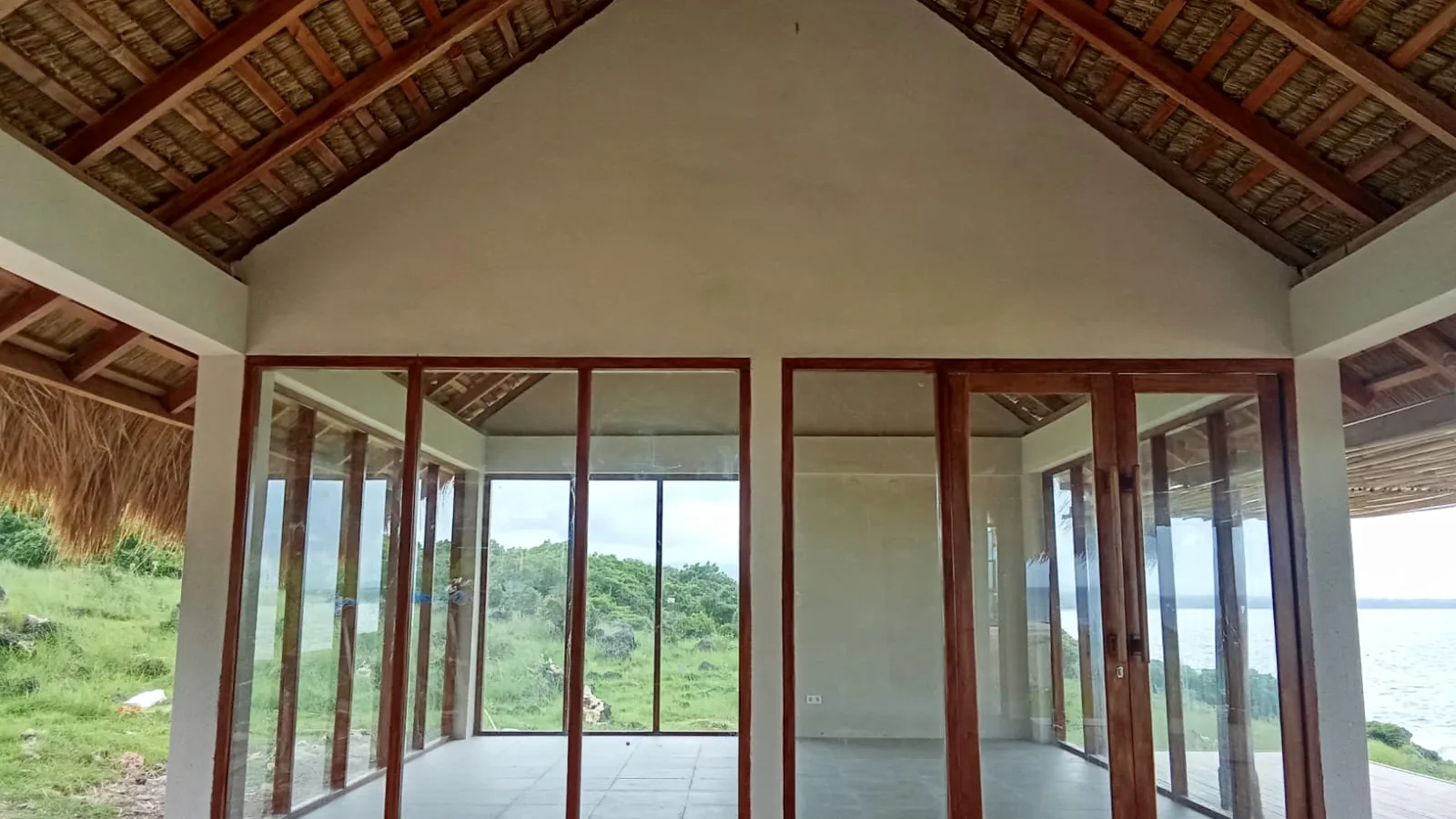
It's 3 AM, and the pitch is dying. From a rented villa on the Indonesian coast, Marco Richter is toggling frantically between a sputtering Starlink terminal and a weak 4G signal, trying to keep his Series A presentation to a room of Silicon Valley venture capitalists alive. The video feed freezes, then pixelates. His voice, pitching a multi-million dollar AI-driven logistics platform, dissolves into digital static. Outside the window, the pre-dawn silence is broken not by roosters, but by the frantic, rhythmic beeping of a failing backup generator. That sound, a mechanical heartbeat skipping, has become the unofficial soundtrack to his tropical dream.
This isn't the footloose backpacking coder of a decade ago, funded by freelance gigs and a loose grasp of visa regulations. This is the new frontier of global commerce: capitalized, serious, and fundamentally fragile. A few years ago, the idea of running a venture-backed company from a remote beach was a fantasy. Today, it’s a spreadsheet calculation. But as a new class of entrepreneur attempts to build the next unicorn from post-pandemic outposts, they are discovering that the distance between a Bay Area boardroom and a bungalow is measured not just in timezones, but in kilowatts, gigabits, and the sheer, grinding friction of reality.
When Indonesia's Ministry of Public Works and Housing quietly approved a 42 billion rupiah infrastructure allocation for a cluster of islands most Jakartans couldn't locate on a map, it barely registered in the capital's business press. But property analysts at JLL's Southeast Asia desk noticed. So did a handful of European family offices who had been tracking Indonesia's 'ten new Balis' initiative with the kind of attention usually reserved for central bank announcements. They weren't looking for holiday homes; they were following the founders. They were mapping the fault lines of a new, experimental business ecosystem being built on the fly, one generator and one satellite dish at a time.
The Accidental CEO: From Burnout to Boardroom Bungalow
The founder decamping to the tropics is no longer a fringe character. He—and increasingly, she—is a new archetype, distinct from the transient 'digital nomad' and the buttoned-down corporate 'expat' on a two-year assignment. This is the mid-career professional with capital, experience, and a profound case of burnout. They're not just escaping, they're arbitraging. They're trading the exorbitant cost of living and cutthroat competition of a place like San Francisco for the promise of a lower burn rate and a higher quality of life. The calculus is deceptively simple. A startup with five employees in San Francisco can expect an annual burn rate on salaries and office space of roughly $1.2 million USD. The same team, strategically structured in a hub like Chiang Mai or Florianópolis, could operate for a quarter of that, buying them an extra three years of runway on a typical $1 million seed round.
Marco Richter, 41, is the archetype manifest. A former senior engineer at a FAANG giant, he walked away with vested stock options worth a low-seven-figure sum after watching his colleagues—and himself—succumb to a level of stress he deemed unsustainable. “I saw people my age having their first heart attack,” he says, speaking from his villa a few days after the ill-fated pitch. “The money was incredible, but you’re a cog. I wanted to build something that was mine.” His idea, an AI platform to optimize last-mile delivery in emerging markets, could have been born in a Palo Alto garage. Instead, he chose a three-bedroom villa with an infinity pool overlooking a rice paddy. “I called it the arbitrage of sanity,” he explains. “Why burn $30,000 a month in California to live in a shoebox and eat takeout when I could spend $5,000 here for a team, an office, and a lifestyle that—on paper—was supposed to keep me creative and sane?”
This migration of capital and talent is creating new demographic patterns. Data from Estonia’s much-lauded Digital Nomad Visa program, a bellwether for this movement, reveals the average applicant is 38 years old. These aren't fresh-faced graduates; they are seasoned professionals, founders, and small business owners looking for a more sustainable operating base. They are less interested in beach parties and more concerned with cap tables. They form a 'middle layer' of global business—more permanent than a nomad, but far less integrated than a traditional immigrant. They bring their money, their businesses, and their expectations of first-world efficiency to places that are often unprepared for the collision. And it's this collision, between the promise of a frictionless life and the reality of frayed infrastructure, that defines their daily existence.
Paradise, Interrupted: The Starlink and Generator Economy
The sleek, minimalist aesthetic of the modern remote startup—all bamboo desks and panoramic ocean views—belies a frantic, behind-the-scenes battle against infrastructural chaos. For every serene Instagram post of a founder taking a call from a hammock, there is an unseen tableau of tangled extension cords, humming diesel generators, and multiple internet bills. The primary challenge isn't inspiration; it's uptime.
A simple comparison of connectivity lays the problem bare. While San Francisco boasts an average fixed broadband speed of over 230 Mbps, the average in many of these tropical hubs hovers around 25 Mbps. This isn't just an inconvenience; it's a competitive disadvantage. “We’re moving huge datasets for our AI models,” Marco says. “A 25 Mbps connection is a death sentence. It’s like trying to run a Formula 1 team on bicycle paths.”
This has given rise to a robust secondary economy catering specifically to the needs of the globally-connected but locally-stranded. Co-working spaces have become the new corporate HQs, marketing themselves not on kombucha taps but on infrastructural resilience. At a high-end co-working cliffside club in Uluwatu, the manager, a former hotelier from Australia named David, walks me through his 'fortress of connectivity.'
“We have four layers of internet redundancy,” he explains, pointing to a server room that looks more like a military command center than a surf-town office. “Two dedicated fiber lines from different providers, a commercial-grade Starlink array as the third-level backup, and a 4G/5G cellular bonding device as the fail-safe. If one goes down, the system switches automatically. Our clients don't even notice.” This peace of mind comes at a price. A dedicated desk costs over $400 a month, and the club’s internet bill alone exceeds $2,000. During a 72-hour power outage caused by a monsoon last year, their two diesel generators burned through nearly $1,500 in fuel to keep the lights on and the Zoom calls flowing. It's a private, expensive, and atomized solution to a public infrastructure problem. Companies are not just locating here; they are being forced to build their own miniature, privatized utility grids to guarantee the operational stability that a traditional tech hub provides as a given.
- Internet Speed Comparison
- San Francisco, USA (Average Fixed Broadband): 230.55 Mbps
- Bali, Indonesia (Average Fixed Broadband): 25.15 Mbps
The irony is that the most reliable internet in the 'digital nomad' world is often found not on postcard-perfect islands, but in places like Bucharest, Romania, a city whose post-Soviet infrastructure upgrades have resulted in faster average speeds than most of the United States. But the pull of the tropics—the lifestyle, the climate, the brand—remains potent, forcing founders to pay a premium to patch the holes in paradise themselves.
The Visa Shell Game: Operating on a Prayer and a Passport
If unreliable infrastructure is the daily tactical challenge, legal status is the looming strategic threat. The entire edifice of the tropical startup is often built on a foundation of legal ambiguity, a precarious arrangement of tourist visas, creative corporate structures, and a tacit understanding with local authorities to look the other way—until they don't.
Governments have been slow to catch up. While some nations have launched 'digital nomad visas,' these are often poorly designed for the new class of founder. They cater to solo freelancers, not incorporated businesses with employees and payrolls. Thailand's new 'Long-Term Resident' (LTR) visa is a case in point. It offers a 10-year renewable visa for 'Wealthy Global Citizens' and 'Work-From-Thailand Professionals,' but comes with a significant catch. Applicants must prove an annual income of at least $80,000, yet the regulations explicitly prohibit them from working for a Thai-based company. This creates a legal minefield for a founder who needs to manage local staff or run an entity that serves local clients. Are they working in Thailand or merely working from Thailand? The distinction is everything, and the law is silent.
This legal vacuum has created a thriving, if shadowy, industry of 'visa agents' who offer a menu of solutions, their legality ranging from questionable to nonexistent. In a noisy cafe in Phuket, I meet with one such agent, a man in his fifties with a British accent and the weary air of someone who has seen it all. He agrees to speak on the condition of anonymity.
“You have three options, really,” he says, stirring his coffee. “The cheap-and-nasty is the border run. Every 30 or 60 days, you fly to Kuala Lumpur for lunch and fly back. It works until you get a grumpy immigration officer who sees a dozen of these stamps in your passport and denies you entry. It’s a ticking clock.”
“The next level up,” he continues, “is the education visa. You enroll in a Thai language school or a Muay Thai camp. You pay the school, they process the paperwork. The problem is, immigration is cracking down. They’ll show up at the school and ask you to conjugate a verb. If you can’t, you’re out. Most of these guys never attend a single class.”
The third option, the 'premium package,' involves setting up a Thai company, a costly and bureaucratic process that requires local partners and navigating a thicket of regulations designed to protect local industries. Often, it means creating a shell company that performs no real business, existing only to sponsor a work permit. “It’s a game,” the agent concludes. “You're operating on a prayer and a passport. Everyone knows it’s a gray area. The government gets your tourist money, you get to stay. It works, until the day a new official decides to enforce the rules. Then, your whole world can get shut down overnight.”
The Talent Paradox: A Local Ceiling in a Global Village
The promise of a global talent pool, accessible from anywhere, is a core tenet of the remote-work gospel. The reality on the ground is far more complex. While founders can theoretically hire the best engineer from Berlin or the best designer from São Paulo, building a cohesive, in-person team in a tropical hub presents a stark dilemma: hire expensive, transient expatriates or attempt to cultivate a local talent pool that is often hamstrung by educational and economic gaps.
The wage disparity is staggering and creates an immediate two-tiered system. In Bali, the official minimum wage is approximately IDR 3.2 million per month, equivalent to about $200 USD. An experienced expatriate software developer, on the other hand, will command a salary competitive with Western markets, often between $5,000 and $8,000 per month. This creates a 35x wage gap within the same company, under the same roof. The result is often an unspoken glass ceiling for local hires. They are valued for operational roles—administration, customer service, social media management—but senior positions in product, engineering, and leadership are almost exclusively filled by foreigners.
This isn't necessarily due to overt discrimination, but to a skills mismatch. Decades of underinvestment in specialized technical education mean that finding a senior DevOps engineer or a machine learning specialist with five years of experience in a place like Siargao or Lombok is nearly impossible. This forces startups into a hybrid model anyway, with a core leadership and technical team composed of high-earning expats and a distributed network of even more expensive specialists working remotely from established tech hubs. The dream of a fully self-contained, low-cost island headquarters quickly dissolves.
Consider the tale of two employees at a FinTech startup in Florianópolis, a popular startup hub in southern Brazil. Anna, a local graphic designer, earns her salary in Brazilian Reais. It's a good local salary, affording her a comfortable apartment and lifestyle. But across the open-plan office sits Michael, an American product manager, who earns his salary in US dollars, wired to his US bank account. Their situations are a study in contrasts.
| Feature | Anna (Local Designer) | Michael (Expat PM) |
|---|---|---|
| Salary Currency | Brazilian Real (BRL) | US Dollar (USD) |
| Effective Income | Subject to local inflation and currency fluctuation. | Pegged to a strong currency, high purchasing power. |
| Career Trajectory | Limited upward mobility beyond local management. | Global mobility; can move to any hub or return to US. |
| Social Integration | Deeply integrated, family and friends nearby. | Social life primarily within transient expat bubble. |
| Legal Status | Citizen, full legal and employment rights. | Dependent on temporary visa, precarious legal standing. |
Anna's career path is likely confined to the Brazilian market, while Michael's is global. He can leverage his experience into a job in London or Singapore. She can't. This talent paradox creates internal tensions and limits the ultimate scalability of the local operation. The company is in Brazil, but it's not truly a Brazilian company. It's a foreign entity temporarily located on Brazilian soil, creating a local ceiling in what is supposed to be a global village.
The 12-Hour Lag: Why VCs Don't Trust a Zoom from the Beach
For a startup, the most critical relationship outside the company is with its investors. And here, the tropical model faces its highest hurdle: the deep-seated skepticism of venture capital. Despite a pandemic-induced flirtation with remote investing, the heart of the VC world remains profoundly local. A 2023 PitchBook analysis is telling: over 75% of all venture capital funding was deployed to companies located within a 50-mile radius of the VC's home office. The spreadsheet might justify the move to paradise, but the VCs aren't buying it.
The friction is both practical and psychological. Operationally, the 12-hour time difference between Southeast Asia and California is a killer. It means that real-time communication happens in narrow, inconvenient windows. For founders, it translates to a life of nocturnal meetings and pre-dawn pitches. For investors, it means board meetings at 9 PM and a nagging sense of being disconnected from the daily pulse of their investment. Due diligence becomes a logistical nightmare. How can an investor truly assess team cohesion, morale, and company culture from 8,000 miles away?
It’s the psychological barrier, however, that proves most formidable. Venture capital is a business of pattern recognition and network effects, both of which are geographically concentrated. An on-background conversation with a partner at a prominent Sand Hill Road firm reveals the ingrained bias.
“We invest in teams, first and foremost,” he told me over a video call, ironically from his home office in Atherton. “I need to be able to have dinner with the founders. I need to see how they interact, how they handle pressure. I can’t get a real feel for a team from a Zoom call where one guy has a surfboard in his living room and it’s midnight his time. It screams ‘lifestyle business,’ not ‘venture-scale ambition.’ It's a psychological barrier we just haven't crossed yet.”
This perception problem forces founders into a state of cognitive dissonance. They are working grueling hours, often harder than their Bay Area counterparts, to overcome infrastructural and logistical hurdles. Yet, the very environment they’ve chosen as a strategic advantage is interpreted by their potential backers as a lack of seriousness. The surfboard in the background, meant to signify a balanced life, is read as a lack of commitment. The dream of attracting Silicon Valley money without living in Silicon Valley’s shadow remains, for most, just a dream.
The Performance of Paradise: Burnout on the Beach
The most insidious challenge of the tropical startup model may be the one that's hardest to quantify: the unique psychological pressure of living and working in a manufactured Eden. On top of the universal stress of building a company from scratch, founders and their employees face the relentless demand to 'perform paradise.' Their social media feeds are a curated gallery of sunset yoga sessions, laptop-by-the-pool workdays, and weekend surf trips. This constant projection of an idyllic life creates a jarring disconnect with the stressful reality of 18-hour workdays, investor rejections, and technical emergencies.
This pressure is compounded by a phenomenon of social fragility that defines these expatriate communities. Unlike a traditional city where communities are built over years, these tropical hubs are characterized by constant churn. Friendships are intense but temporary. Team members come and go with the visa seasons. This 'community collapse' leads to a profound sense of isolation, even when surrounded by people. A 2022 study by a remote work think tank found that 65% of remote workers in 'non-traditional' locations reported higher levels of loneliness than their counterparts in major hub cities, despite being in ostensibly vibrant social environments.
During a visit to Madeira, Portugal—another burgeoning hub for remote founders—I had a candid conversation with the spouse of a startup CEO. “We’ve been here two years, and I can count on one hand the number of friends who are still here from when we arrived,” she said, looking out over the Atlantic from their modern apartment. “You have these incredible, deep connections for six months, and then their visa runs out, or their project ends, and they’re gone. You’re constantly starting over. It feels like being a perpetual freshman in college.”
“The worst part,” she added, “is the feeling that you’re not allowed to be unhappy. You’re living in paradise! What could you possibly have to complain about? So you suppress the stress, the loneliness. You post the photo of the beautiful sunset. It’s like a permanent vacation that’s actually just someone else’s incredibly stressful work trip you’re trapped in.”
This social burnout is a primary driver for founders leaving these hubs, often more so than infrastructure failures. They come seeking balance and find a new, more isolating form of burnout, one that lacks the familiar support structures of home and demands a constant performance of happiness.
The Rent Rises with the Tide: A Local Reckoning
While founders wrestle with connectivity and VCs, the ground beneath their rented villas is shifting. The influx of well-capitalized foreigners, even in small numbers, has a dramatic and often destabilizing effect on the local community. The arrival of the global tech economy in these small, often fragile local economies creates a phenomenon best described as 'gentrification by passport.'
Hyper-localized inflation is the most immediate impact. A two-bedroom villa in the Canggu area of Bali that rented for $7,000 a year in 2019 now commands upwards of $30,000, a more than 300% increase in five years. During that same period, local average wages rose by less than 15%. The result is predictable: local families, whose ancestors may have lived on the land for generations, are being priced out of their own communities. They are pushed further inland, away from the coast and the tourist economy that increasingly dominates their world, forced into long commutes to service the very people who displaced them.
I spoke with Wayan Suarsa, a community leader and small business owner in Siargao in the Philippines, an island that has seen a similar influx. He described the emergence of 'two economies' operating in parallel. “There is the peso economy, where we locals live, buy our food, pay our rents,” he explained. “And then there is the dollar economy of the foreigners. The new cafes, the yoga studios, the co-working spaces—they price everything in dollars, or the peso equivalent that no local can afford. They have created a bubble.”
This bubble is more than just economic; it’s cultural. The modern tropical startup hub often bears a striking resemblance to the 'factories' of the 19th-century East India Company: self-contained, foreign-run commercial enclaves operating under their own rules on the periphery of a larger, local economy. They extract value—in this case, lifestyle and low operating costs—but their integration with the host culture remains superficial and transactional. The relationship is one of service, not partnership. The foreign founder might learn to say “thank you” in the local language, but they rarely understand the complex social and economic currents they are disrupting.
This creates a simmering resentment. While governments may welcome the foreign currency, local communities are left to deal with the consequences: soaring costs, strained public services, and a sense of cultural erosion. The beautiful beach that drew the founder in the first place is now fronted by a row of expensive cafes he can afford, but the fisherman who used to launch his boat there can no longer afford to live nearby.
The Exit Strategy: Integration or Island-Hopping?
What happens when the scrappy bungalow startup succeeds? What is the upgrade path when a team grows from five to fifty, or from fifty to 150? The very factors that make a tropical hub attractive in the seed stage—the small scale, the informal structures, the low overhead—become liabilities at scale. You can't run a 150-person enterprise on a patchwork of tourist visas and backup generators. The question of an exit strategy becomes paramount, and it’s not about selling the company, but about graduating from the island.
The pressure inevitably comes from investors and the demands of global corporate governance. A Series B or C round requires a level of legal and financial formalization that is impossible to achieve in most of these locations. The conversation shifts to establishing a 'real' headquarters, typically by incorporating in Delaware for its friendly corporate laws and establishing a commercial nerve center in a global hub like Singapore, London, or Dubai. This is not just a legal maneuver; it's a capitulation to the reality that serious global business still runs on rails laid through major financial centers.
Of course, there are outliers. GitLab, a fully remote company with no physical headquarters and a multi-billion-dollar market capitalization, is the poster child for scaled remote work. However, its model is one of true distribution, not concentration. Its 1,800+ employees are spread across more than 65 countries, preventing the kind of infrastructural and social strain that a hundred employees descending on one small town creates. The GitLab model proves scale is possible, but it dismantles the myth of the single, cohesive tropical HQ.
We revisit Marco in his Bali villa. His frantic, 3 AM pitch, despite the technical glitches, ultimately succeeded. A European VC firm, more comfortable with distributed teams than their Sand Hill Road peers, agreed to lead his Series A round. But their term sheet came with conditions. The first was that he immediately incorporate the parent company in Delaware. The second was that he establish a small commercial office in Singapore. The third was that he, as CEO, spend one week per month in either Singapore or San Francisco for investor and partner meetings.
I watch him packing a suitcase. In it are the beach-appropriate linens he has worn for two years, and next to them, the crisp business shirts and trousers he thought he had left behind. His expression is not one of triumph, but of weary resignation. He won the investment he needed to make his dream a reality, but the price was the dream itself.
The ultimate question isn't whether you can build a startup from a beach, but what gets washed away when you do. For this new wave of global founders, the tide is still coming in, bringing with it capital, talent, and ambition. But every tide must eventually go out, revealing exactly what was built on the sand, and what was simply swept away.