The Cathedral and the Carpenter: Bamboo's Billion-Dollar Paradox
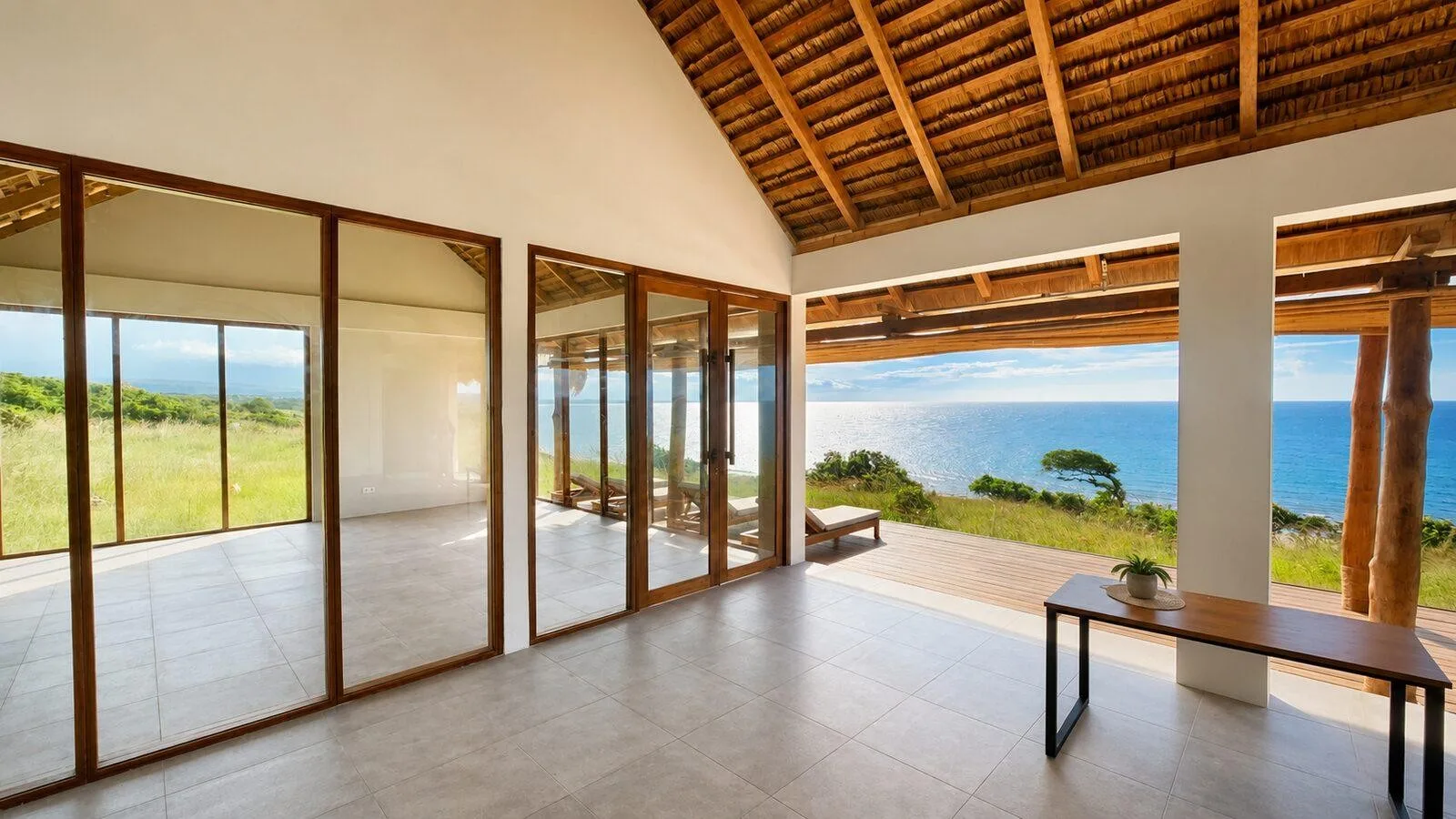
The spreadsheet said one thing. The scent of sweet, sun-baked dust and frangipani said another. I’d been living south of the equator for eight years, long enough to know that the most interesting stories are found in the gap between the two.
Today, that gap was a chasm half a kilometer wide. On one side, in a workshop open to the humid air, Pak Wayan ran a thumb, calloused and mapped with the fine lines of a life's work, over a bamboo joint he'd just carved. The floor was a soft carpet of shavings, each one a comma in a long, run-on sentence of tradition. He was a fifth-generation bamboo carpenter, a tukang pring, and his tools were extensions of his hands: a small, wickedly sharp chisel, a well-worn saw, a length of rattan for binding.
On the other side of the chasm, in an air-conditioned cafe where the wifi password is a small novel, a German architect named Klaus Richter stared at a different kind of bamboo. His glowed on the screen of a 15-inch MacBook Pro, a hypnotic 3D model of a six-bedroom “tree-palace” that swooped and curved with a bio-morphic confidence that defied gravity. He clicked, dragged, and zoomed, refining the line of a roof that resembled the wing of a giant, fossilized bird. The final villa, once built, would be listed for $2.1 million. The raw material at the heart of both Wayan's joint and Klaus's digital dream was identical. The worlds they inhabited could not have been more different.
This is the story unfolding across the hot, fertile belt of the planet. Bamboo, long the humble scaffolding of Asia, the poor man's timber, is being reborn. It's being rebranded as 'green steel,' a miracle material for an age of ecological anxiety. The global market for bamboo products, from flooring to fabric, is projected to rocket to $82.90 billion by 2028. Here, where its cathedrals rise from the rice paddies, it has become the stuff of architectural legend. But as I sat there, sweating through my linen shirt, smelling the distant smoke of a kretek cigarette and the nearby whir of Klaus's cooling fan, a question began to form, sharp and uncomfortable as a splinter: who, exactly, is this revolution for? Are we witnessing the dawn of a sustainable new architecture, or the appropriation of an ancient craft on a scale so grand it’s almost invisible?
The New Gospel of Green
I met Lars Jensen on the skeletal second floor of what he called his “living pod.” Lars, a Dane with the kind of sun-bleached hair and messianic zeal that seems to flourish in the tropics, is a key apostle in the new church of bamboo. He sold his Copenhagen firm a decade ago, trading sensible Scandinavian modernism for something far more unruly. “Concrete is a dead material,” he told me, sweeping an arm across a vista of emerald jungle. “It has no life, no story. You pour it, it sets, it dies. Bamboo… bamboo is a conversation.”
His conversation, in this case, was a three-story villa that resembled a cluster of enormous, intersecting seed pods, all held aloft on stilts. It wasn't so much built on the land as it was hovering just above it, breathing with the landscape. This is the new aesthetic, a radical departure from the post-and-beam logic of traditional construction. The structures designed by Lars and his contemporaries—firms like Ibuku in Bali or Vo Trong Nghia in Vietnam—don't have straight lines. They have flows. They have arcs. They have moments. They look less like houses and more like organic sculptures you can sleep in.
“We had to forget everything we learned in architecture school,” Lars explained, tapping a colossal, curving beam that formed the spine of the main living space. “The schools teach you to dominate the material. To force steel and concrete into submission. With bamboo, you must listen. It tells you how it wants to bend.”
This philosophy has produced some of the most startling buildings of the 21st century. The 'Arc at Green School' on Bali, a masterpiece of engineering, features a series of 19-meter-long bamboo arches that create a vast, column-free space, a feat previously considered impossible. These structures are not just houses; they are statements. They are physical arguments for a different way of living, a rebuke to the carbon-heavy construction that dominates the globe. Lars’s ‘eureka’ moment came during a trip to Colombia, where he saw the work of Simón Vélez, the godfather of modern bamboo architecture. “I saw a bridge he built, elegant and strong, made from nothing but grass and a little bit of concrete in the joints. I realized we in the West had it all wrong. The solution wasn't new technology. It was ancient technology, understood in a new way.” But as he spoke of his global epiphany, I couldn't help but notice the team of local workers below us, silently drilling and lashing poles together, their faces impassive, their ancient knowledge now filtered through a Danish architect's laptop.
The Carbon Calculus
To understand the almost religious fervor of converts like Lars, you have to understand the numbers. And the numbers, on paper, are staggering. I spent a morning with Dr. Ania Sharma, a materials scientist from Mumbai who now consults for environmental NGOs, walking through a managed bamboo forest that supplied many of these ambitious projects. The air was cool and still under the dense canopy. It felt like being inside a giant green lung.
“Forget everything you think you know about forests,” she said, her voice echoing slightly in the immense quiet. She slapped a thick culm of Dendrocalamus asper, or giant bamboo. “A typical pine forest, a young one, might sequester about 15 tons of CO2 per hectare per year. This,” she patted the bamboo again, “this can sequester up to 62 tons. It’s four times more efficient.”
And unlike a tree, you don't kill the organism when you harvest it. Bamboo is a grass. The root system, or rhizome, remains in the ground, constantly sending up new shoots. Some giant species can grow up to 91 centimeters—nearly a meter—in a single 24-hour period. This isn't just sustainable; it’s hyper-renewable. A single bamboo clump can produce up to 15 kilometers of usable pole over its lifetime. It’s less like forestry and more like farming a material that happens to build houses.
Ania picked up a stick and drew in the dirt. “Here’s the enemy,” she said, sketching a simple block. “A bag of cement.”
The Environmental Cost: Concrete vs. Bamboo
The contrast is almost comically stark. Cement production is the third largest source of industrial pollution and carbon dioxide emissions on the planet. It alone is responsible for a shocking 8% of global CO2 emissions. If the cement industry were a country, it would be the third-largest emitter in the world, behind only China and the United States.
- Carbon Footprint: Manufacturing one ton of cement produces nearly one ton of CO2. A typical bamboo structure is carbon-negative, sequestering more carbon in its culms than is used in its harvesting and transport.
- Resource Depletion: Concrete requires vast amounts of sand and water, both increasingly scarce resources. Bamboo grows on marginal land, requires no irrigation after its first year, and actively prevents soil erosion.
- Lifecycle: A concrete building is a permanent carbon liability. At the end of its life, a bamboo building can be composted, returning its nutrients to the soil.
“So when you see one of these bamboo villas,” Ania concluded, wiping the dirt from her hands, “don’t just see a pretty building. You’re seeing a carbon sink. You’re seeing a water-saving device. You’re seeing a soil-regeneration machine. The question is whether the social and economic math works as well as the environmental math.”
The Master's Hands
Back in Pak Wayan’s workshop, the air is thick with the scent of cut grass and history. He doesn’t talk about carbon sequestration. He talks about his grandfather. “He taught me this cut,” Wayan said, holding up two pieces of bamboo that fit together with a satisfying, seamless click. “Not with words. With his hands on my hands. He would say, ‘Feel the way the knife wants to go. It knows the path.’”
This is a world away from CAD files and laser cutters. Wayan’s family has been building with pring, the local word for bamboo, for as long as anyone can remember. It’s not just a material; it's woven into the fabric of life itself. It’s the roof over their heads, the basket for their offerings, the handle for their tools, the enclosure for their pigs. His knowledge isn't academic; it's ancestral, passed through a lineage of touch and repetition. He showed me the system his great-grandfather used, a pre-digital parametric system of astonishing simplicity. When preparing the poles for a house, they carve a simple matching mark—A1 on one pole, A1 on the connecting one; B7 to B7—a physical code that allows a complex structure to be assembled by anyone in the village, with no paper blueprint required.
“The new designs are… interesting,” he said, choosing his words carefully. He was working on a small component for a luxury villa, a complex joint that would be one of hundreds in the final structure. “Very beautiful. Like a dream. But sometimes, the architect, he does not understand the bamboo. He draws a curve that the bamboo does not want to make. He asks for a connection that is weak. We have to tell him, ‘Bapak, this is not strong. The wind will find this place.’”
This is the silent, often uncredited, collaboration at the heart of the bamboo boom. The foreign architect provides the headline-grabbing vision; the local artisan provides the deep, tacit knowledge that keeps the whole thing from collapsing. Wayan and his team are brought onto the big projects, admired for their skill with the material. But there's a subtle shift in the dynamic. He is no longer the master builder, the central authority. He’s a specialist contractor, a highly skilled pair of hands executing a plan conceived thousands of miles away. His son, Ketut, watched him work, his own hands still clumsy with the tools. “I want him to learn,” Wayan said softly. “But I don’t know what I am teaching him for. Will he be a Master, like my father? Or will he just be… labor? They pay well,” he conceded, gesturing vaguely towards the main road. “But respect is different from money.”
From Village Post to Vector Truss
The leap from Pak Wayan’s village hut to Lars Jensen’s $2 million villa wasn’t just aesthetic; it was chemical. For centuries, bamboo’s great weakness was its sweetness. Rich in starch and sugars, an untreated culm of bamboo is a five-star buffet for powderpost beetles and termites. In the tropical humidity, rot is a constant threat. A traditional, untreated bamboo structure might last three to five years, a temporary grace. The game-changing innovation was a simple, non-toxic salt solution.
The process is now standard for all structural bamboo. Freshly harvested culms are drilled, and then submerged in or pressure-treated with a solution of boron salts—essentially borax and boric acid, the same stuff found in contact lens solution and household cleaners. The boron makes the bamboo indigestible to insects and impervious to fungus. Suddenly, the lifespan of a bamboo pole jumped from five years to over fifty. Temporary architecture became permanent. ‘Green steel’ was born.
This chemical bath, however, created a new barrier to entry. The boron solution itself is cheap—less than $50 to treat enough bamboo for a small house. But the treatment facilities, with their long vats, pumps, and drying sheds, require capital and space. This is where the process begins to shift from the village to the factory. I visited one such facility, a cavernous hangar on the outskirts of Denpasar. The smell was a strange mix of organic and industrial: the earthy scent of bamboo overlaid with a clean, faintly medicinal tang. At one end, trucks unloaded freshly cut green poles. At the other, stacks of pale, treated culms were being loaded onto flatbeds, destined for construction sites. Inside an air-conditioned office, a young Indonesian engineer was manipulating a model in Rhino 3D, a program beloved by architects like Zaha Hadid. He was creating a cut-list for a CNC machine, ensuring every one of the 1,200 unique poles for a new yoga shala would be cut to a precise millimeter, its connection points drilled with robotic accuracy. This is how the wild, organic shapes become buildable. It’s where the architect's algorithm meets the artisan's material. The efficiency is undeniable. So is the distance from Pak Wayan’s world, where the only computer is the one behind his eyes.
The Investment Mirage
For a certain class of investor, the bamboo villa is the ultimate trophy asset. It telegraphs wealth, taste, and a very 21st-century brand of eco-consciousness. I had a beer with ‘Davey,’ a fast-talking Australian real estate agent who has made a fortune selling these properties. “Mate, it’s not just a house,” he said, gesturing at a listing on his phone for a property in a place like Eco Beach City. “It’s a story. My clients, they’re not just buying a view. They’re buying a philosophy. They fly in from Hong Kong, from Zurich, from San Francisco. They’ve made their money in tech or finance, and now they want… meaning.”
What they also want is a solid return. And the numbers are intoxicating. The initial allure is often the perceived low cost of the material. But the economics of luxury bamboo are complex and often top-heavy.
| Cost Component | Traditional Concrete Villa (150m²) | Luxury Bamboo Villa (150m²) |
|---|---|---|
| Construction Cost | ~$350,000 USD | $500,000 - $750,000+ USD |
| Land Lease (25-yr) | ~$200,000 USD | ~$200,000 USD |
| Key Materials | Cement, Steel, Bricks | Treated Bamboo, Alang-Alang, Stone |
| Artisan/Labor Share | ~15-20% of construction cost | ~5-10% of construction cost |
| Architect/Design Fee | ~5-8% | ~15-25% |
| Nightly Rental Rate | $300 - $500 USD | $800 - $1,500+ USD |
The table reveals a startling truth. While the raw material is cheap, the intellectual property—the architectural design, the engineering, the brand—is not. A high-concept bamboo villa from a star architect costs significantly more to build than a conventional concrete one. The value is not in the grass; it’s in the audacity of the design.
“My clients want the aesthetic of sustainability,” Davey told me, with a frankness lubricated by his second Bintang. “Without the inconvenience.”
This economic model creates a stark disparity. A skilled bamboo worker like Pak Wayan’s cousin might earn $15, maybe $20 a day on one of these high-end projects. The villa he helps build will rent for $1,200 a night. He would have to work for more than two months, without a single day off, to afford one night’s stay. The money flows in from a foreign investor, to a foreign-owned development company, which hires a foreign architect, who then sub-contracts the local builders. It’s an economic ecosystem that looks less like community empowerment and more like a prettier version of the old colonial plantation model.
When the Storms Come
For all the utopian marketing, a bamboo house is not a set-and-forget proposition. It's a living building, and it demands a relationship. Eight years in Southeast Asia has taught me that the tropics are relentless. The sun is a hammer, the rain is a solvent, and the insects are a standing army. Bamboo, for all its strength, is vulnerable.
“The biggest problem? The brokers,” a cynical French hotelier told me over coffee. “They sell these things like they’re condos in Miami. They’re not.” He took me to see a project up the coast, a small resort of bamboo bungalows built about ten years ago by an optimistic, underfunded European couple. It was a cautionary tale written in decay.
The beautiful, pale-gold bamboo had weathered to a blotchy, leprous grey. At the base of the columns, where rain had splashed up from the ground, the wood was soft and punky. I could see the tell-tale tiny holes and fine powder of termite infestation. A faint, musty smell of mould hung in the air. The owners had clearly cut corners—likely using untreated or improperly treated bamboo—and the jungle was simply reclaiming its own.
Even with perfect execution, challenges remain. In most Western countries, there is no official building code for structural bamboo. This forces architects to have every project individually engineered and certified as a ‘non-conventional structure,’ a process that can add months of bureaucracy and increase insurance premiums by up to 40%. Getting a mortgage for a bamboo house is still a laughable proposition in most parts of the world. Then there's the maintenance. The stunning alang-alang grass roofs need to be replaced every seven to ten years. The bamboo itself needs to be periodically cleaned and re-sealed. It's a commitment. A bamboo building breathes and moves. It has a higher tensile strength than many steel alloys and dances through earthquakes that would shatter a concrete building, but it requires care. It’s a partnership, not just an ownership.
The Bridge of Grass
So where does this leave us? Is bamboo a miracle material or a mirage? Is Klaus Richter a visionary or a colonizer in a linen shirt? Is Pak Wayan a master craftsman or an endangered species? The answer, like everything in this part of the world, is complicated.
The tension is not in the bamboo itself, but in the economic and cultural systems we build around it. The material is not inherently exploitative. The current dominant model, however, often is. It concentrates wealth and credit at the top, with the foreign architect and investor, while the local farmers and artisans who are the true stewards of the material remain low-wage laborers.
But there are other models emerging. In the Philippines, a new co-op gives bamboo farmers a 15% equity stake in the final sales of the processed, treated poles, transforming them from mere suppliers into business partners. Here, some younger architects are experimenting with open-source designs and smaller-scale projects, training local builders in treatment techniques to foster genuine local entrepreneurship rather than dependency. They are trying to build not just structures, but systems. A bridge of grass, not just to look at, but to walk across.
I visited Pak Wayan one last time. He was sitting on the floor of his workshop, sharpening the blade of a small knife on a whetstone. His son was beside him, practicing a simple V-cut on a piece of scrap bamboo. I asked Wayan what he hoped for the future, for his son's future.
He looked up, not at me, but through me, toward the shimmering green rice fields. “I hope he learns the strength of the bamboo,” he said, his voice quiet but clear. “But I also hope he learns the price of it.”
The finished villa, somewhere up the hill, will no doubt be magnificent, a cathedral of grass against the tropical sky. But its true strength won’t be measured by its resistance to earthquakes or typhoons. It will be measured by whether the bridge it built between two worlds—the artisan's hand and the architect's algorithm—can bear the weight of that simple, searing hope.