The Villa That Fights the Rain
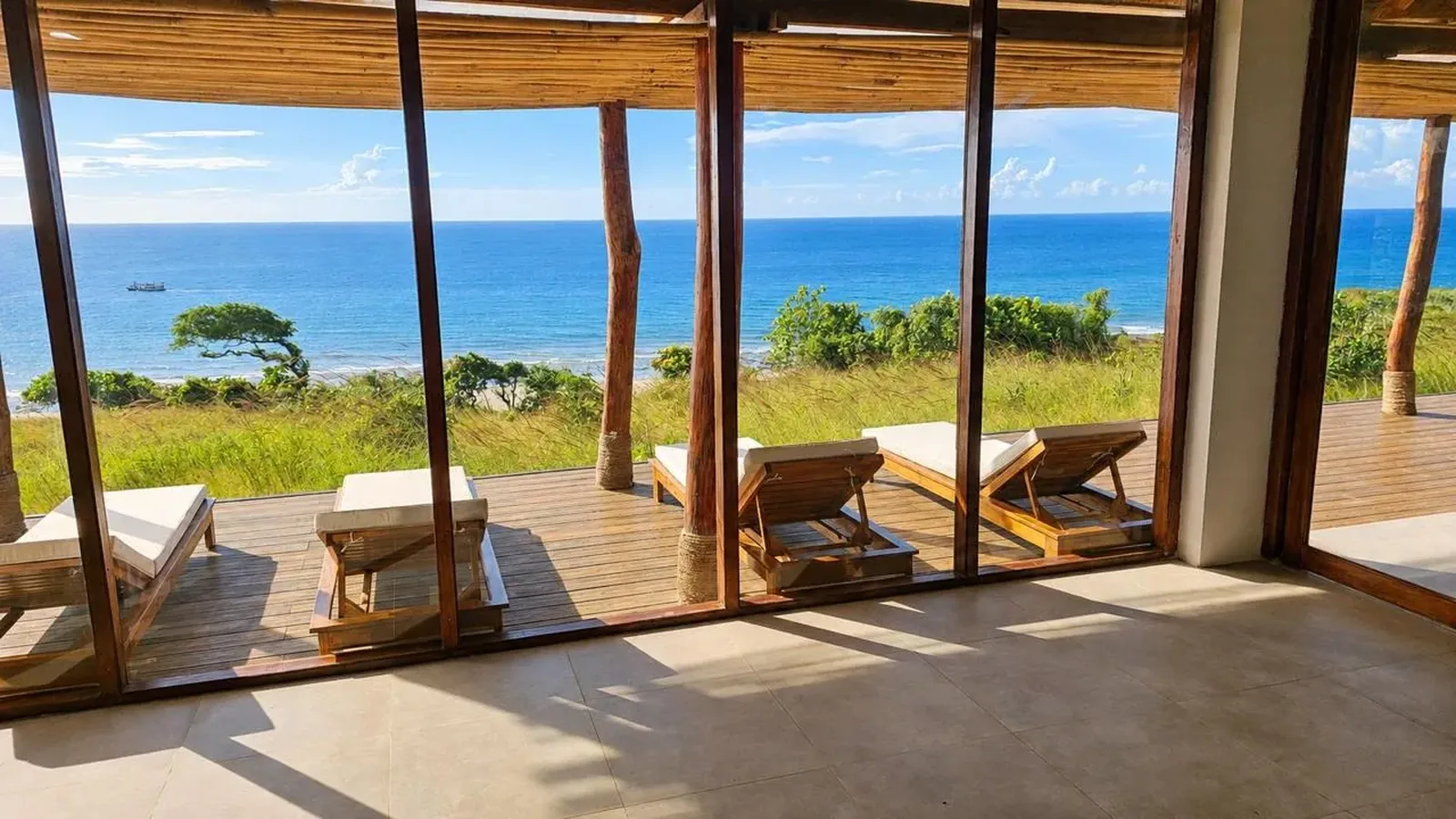
Marcus stands in the cavernous living room of what was, six months ago, his masterpiece. A monument to a successful career in Hamburg software engineering, rendered in concrete and glass on a small plot of land eight degrees south of the equator. The air, thick with the afternoon’s post-rain humidity and the cloying sweetness of a neighbor’s incense offering, can't quite mask the other smell. It’s the smell of decay. A damp, musty odor that clings to the back of the throat, emanating from a Jackson Pollock-esque splatter of black mold creeping its way up a brilliant white wall.
He had fallen for the same siren song that lures thousands of Europeans here. A promise of perpetual summer, cheap living, and a certain kind of architectural pornography peddled on Instagram. You’ve seen the photos: a minimalist box, a turquoise pool, a woman in a linen dress laughing with a coconut. The aesthetic is clean, severe, and utterly transportive. It whispers of a life scrubbed of complexity, of Northern European winters, of tax returns and train schedules. It’s a powerful fantasy. It’s also, as Marcus is discovering, a very expensive lie.
After just one rainy season, his minimalist temple feels less like paradise and more like a high-maintenance patient on life support. The air conditioning units, all six of them, hum with the desperation of overworked engines, fighting a losing battle against the oppressive heat that radiates from the unshaded, single-pane glass walls. The polished concrete floor, so chic in the architectural renderings, is perpetually slick with a thin film of condensation. And then there’s the mold. It’s not just on the living room wall. It’s blooming in the back of the wardrobes, colonizing the grout in the bathrooms, and ghosting the edges of the ceiling in the master bedroom. Marcus, a man who built a career on logic and elegant systems, finds himself in a house that defies both. It’s a beautiful box, perfectly designed to fail in its environment. “They sell you a look, a photo for Instagram,” he tells me, running a hand over his face. He’s tired. Not the relaxed, sun-kissed fatigue of a retiree, but the bone-deep weariness of a man fighting a war of attrition against water. “They don’t sell you a home that can survive a Tuesday afternoon downpour.”
The Concrete Box Paradox
The island, and others like it from Phuket to the Philippine coast, is in the midst of a construction fever dream. Look anywhere in the boomtowns of Canggu or Uluwatu, and you’ll hear it: the whine of angle grinders, the rhythmic clang of hammers on rebar, the guttural roar of cement mixers. A new villa seems to materialize from the rice paddies every week. The driving force behind this explosion is a simple, seductive number. The advertised construction cost for a ‘standard’ modern villa can be as low as $700 per square meter. For a European investor accustomed to paying ten times that for a drab city apartment, the figure is intoxicating. It makes the dream of a tropical escape feel not just possible, but financially prudent.
This is the paradox. The very thing that makes the investment so attractive—the low-cost, fast-build model—is what seeds its eventual decay. These villas are, by and large, replicas of a Western architectural ideal, air-dropped into one of the most demanding climates on Earth without any meaningful adaptation. They are sealed boxes designed to be refrigerated, built with the cheapest possible materials—thin concrete walls, minimal roof overhangs, vast west-facing windows—that act as magnificent heat traps. Their aesthetic purity depends on being perfectly white, perfectly smooth, and perfectly dry. The tropics, with their torrential rains, 90% humidity, and relentless insect life, are none of these things.
Marcus learned this the hard way. His builder, a fast-talking Australian with a great tan, promised him “international standards.” The reality was a construction crew that used beach sand in the concrete mix, a common and disastrous cost-cutting measure that introduces corrosive salt. The sleek, flat roof, a non-negotiable part of the minimalist vision, was improperly sealed. Within months, hairline cracks appeared in the walls, not from settling, but from the brutal daily cycle of thermal expansion and contraction as the sun beat down. The house wasn’t aging gracefully. It was failing. “I thought I was buying a finished product,” Marcus says, pointing to a water stain on the ceiling that looks disturbingly like a map of Scandinavia. “But what I really bought was a full-time maintenance job.” The dream wasn’t a place; it was a picture. And the picture was starting to peel.
The Hidden Ledger of ‘Cheap’
Every foreign investor keeps a spreadsheet. It’s the sacred text, the source of comfort on sleepless, jet-lagged nights. It contains the purchase price, the visa fees, the projected rental income. What it rarely contains is a line item for ‘existential damp.’ The true cost of owning a poorly designed tropical villa isn't in the initial build; it’s in the slow, relentless bleed of the hidden ledger.
“My job is 90% fighting the climate, and 10% dealing with clients,” says Dewi, a sharp, unflappable Balinese woman who manages a portfolio of over thirty rental villas in the Pererenan area. We’re sitting in a warung, the air thick with the smell of clove cigarettes and grilled fish. She scrolls through her phone, a gallery of domestic disasters. “This one, the water pump failed during high season. No water for three days. The guests, from France, were… not happy.” She swipes. “This one, black mold so bad in the kids’ bedroom we had to move the family to a hotel for a week and gut the entire room. The cost for professional remediation? 45 million rupiah.” That’s nearly $3,000 for one room.
“The tourists come for the fantasy, right? Clean lines, white walls, air-con blasting so cold you need a blanket. But the island makes you pay for that fantasy, every single month, on the electricity bill.”
Dewi breaks down the costs with the weary pragmatism of a field medic. First, there’s electricity. A typical three-bedroom concrete villa with floor-to-ceiling glass and overworked air conditioners can easily rack up an electricity bill of 8 million rupiah—over $500—a month. “The owners see that bill and they scream,” Dewi says, sipping her iced tea. “I tell them, ‘Your house is a greenhouse. What did you expect?’” Second is water. Municipal water is unreliable, so nearly every villa relies on a well. But the explosion of construction has put immense strain on the water table. Wells are running dry or, worse, becoming contaminated with saltwater intrusion or septic tank leakage. This means propriétaires are forced to buy water from tanker trucks, at a premium, or invest in expensive deep-well drilling. Then there is the endless cycle of maintenance. Painting over the mold, re-sealing the cracking concrete, replacing rusted-out fixtures, fumigating against the termites that see a wooden door frame as an all-you-can-eat buffet. Each line item is a small leak in the financial boat, but together, they can sink an investment.
This hidden ledger transforms a property from an asset into a liability. The projected 8% annual return on investment evaporates, consumed by monthly battles against heat, water, and biology. The owner is trapped. They can’t afford the constant upkeep, but they can’t afford not to do it, because a moldy, dysfunctional villa is impossible to rent out. “They call me, angry, from Germany or Singapore,” Dewi says, shaking her head. “They say the house has ‘problems.’ I want to tell them, the house doesn’t have problems. The house is the problem.”
An Antidote Written in Wood and Wind
Fifteen kilometers inland from the coastal chaos, in a quiet studio surrounded by towering bamboo groves, Alexis Dornier is sketching a roof. It’s not the flat, minimalist plane so popular on the coast, but a complex, high-pitched form with deep, dramatic overhangs. To the untrained eye, it’s an aesthetic choice. To Dornier, a German-born architect who has become one of the island’s most influential proponents of climate-responsive design, it’s a machine for cooling.
“We forgot what people here knew for a thousand years,” he says, his pencil tracing the flow of air. “The most powerful air conditioner is the wind, and it’s free. The most effective shade is a roof, not a curtain.” Dornier is part of a growing counter-movement of architects and builders who are looking not to the latest Western trends, but to the past. They are rediscovering the principles of vernacular architecture—the traditional wisdom embedded in structures that have comfortably housed people in this climate for centuries.
At the heart of Balinese design is a philosophical and architectural guide called Asta Kosala Kosali. It’s a complex cosmology that dictates everything from the sacred placement of the family temple to the ideal proportions of a sleeping pavilion. But woven into its spiritual fabric is a deep, practical understanding of physics. Traditional buildings, like the Javanese Joglo with its iconic, multi-tiered roof, are masterpieces of passive ventilation. The high, central roof creates what’s known as the stack effect: hot air inside rises and escapes through vents at the peak, drawing cooler ambient air in through the open sides of the pavilion. The effect is profound. A well-designed Joglo can maintain an internal temperature up to 8°C cooler than the scorching afternoon sun outside, without a single watt of electricity.
It’s a philosophy of working with the environment, not against it. Buildings are oriented not for the best sunset photo, but to capture prevailing breezes and minimize exposure to the harsh western sun. Living spaces are not sealed boxes but porous pavilions that blur the line between inside and out. Walls are often just screens, letting air pass through while providing privacy and security. “The modern concrete box is an act of aggression against the climate,” Dornier argues. “You declare war, you seal the perimeter, and you turn on the AC. It’s an energy-intensive, high-cost, and ultimately futile battle. The traditional approach is more like jujitsu. You use the energy of the sun and the wind to create comfort. You yield, you channel, you breathe.” This isn't about recreating dusty historical replicas. It’s about abstracting the logic—the deep, climate-specific intelligence—and applying it in a contemporary context.
The Material Difference: Beyond the Gray Box
A few miles from Dornier’s studio, a different kind of architectural revolution is taking place, layer by patient layer. On a bustling construction site, a team of local workers isn’t pouring concrete. They are building a wall out of the earth itself. This is rammed earth, an ancient technique seeing a modern resurgence. A mix of soil, clay, sand, and a small amount of cement for stability is poured into wooden forms and compacted down with pneumatic tampers. The result is a wall that is not only immensely strong but also stunningly beautiful, with sedimentary layers of color like a cliff face.
Its real magic, however, is thermal. The material difference is stark:
- Standard Concrete Wall: A typical 15cm concrete block wall has a thermal resistance (R-value) of about 0.8. It absorbs heat quickly and radiates it back into the house long after sunset.
- Rammed Earth Wall: A 30cm thick rammed earth wall has an R-value of around 2.2, almost three times the insulating power. It possesses high thermal mass, meaning it absorbs heat very slowly during the day and releases it gradually overnight, acting as a natural temperature regulator.
This shift away from the gray box of conventional construction is gaining momentum. Architects are exploring a palette of materials that are not just more sustainable, but fundamentally better suited to the climate. Bamboo, once dismissed as ‘the poor man’s timber,’ is now being used in breathtakingly sophisticated structures, its tensile strength rivaling steel. Reclaimed teak and ironwood from decommissioned Javanese homes bring a sense of history and soul, their decades of seasoning making them stable and pest-resistant. There are even experimental projects in places like Eco Beach City on Sumba using bricks made from recycled ocean plastic. The Japanese philosophy of Wabi-Sabi, which finds beauty in imperfection and the graceful patina of age, offers a powerful antidote to the brittle perfection of the white modernist box. A rammed earth wall doesn’t get ugly with age; it settles, it deepens. A teak beam doesn't crack; it silvers. These materials don’t fight the environment; they enter into a dialogue with it.
“Concrete gets dirty. It cracks, it stains, it grows mold. It shows its age with ugliness. Wood, earth, stone… they show their age with character.”
This isn’t about eco-puritanism. It’s about long-term value. While the upfront cost of some of these materials can be higher, their lifecycle cost is significantly lower. A rammed earth wall will never need painting. A well-built bamboo structure is naturally flexible, making it more resilient in the earthquakes that are a fact of life in this part of the world. By choosing materials that age gracefully and require minimal upkeep, you are effectively pre-paying your maintenance bills for decades to come, swapping a hidden ledger of recurring costs for a single, transparent, upfront investment.
Liquid Assets: Designing for Drought and Deluge
On this island, water is everything. It’s the lifeblood of the emerald rice paddies, the sacred substance used in daily temple offerings, and the shimmering centerpiece of every luxury villa’s swimming pool. It is also, increasingly, a source of conflict and cost. The dry season seems to get longer and drier each year, while the wet season arrives with biblical deluges that overwhelm inadequate drainage systems, turning roads into rivers.
While Marcus and his neighbors fret about their wells running dry and pay for water trucks to fill their pools, a few kilometers away Elena, a retired textile designer from Milan, is watching a thunderstorm from her veranda with a sense of profound satisfaction. The rain isn't a threat; it's a harvest. As the water cascades off her roof, it’s not running into a flooded ditch but being channeled through a series of pipes into a massive, 80,000-liter underground cistern. “In the dry season, my neighbors were rationing,” she tells me, gesturing towards a lush garden of heliconias and ginger flowers. “Their gardens were brown, they were told not to fill their pools. My pool was full. My garden was green. My showers were long.”
The math is simple yet transformative. A 200-square-meter roof in a location with 2,000 millimeters of annual rainfall—a conservative figure for much of Bali—can harvest 400,000 liters of water per year. That’s over 1,000 liters a day, more than enough to make a family of four completely self-sufficient. This system, which adds maybe 5% to the total build cost, permanently removes one of the biggest operational headaches and expenses of villa ownership. It’s a liquid asset in the most literal sense.
But the strategy goes beyond simple harvesting. Elena’s villa also incorporates a greywater recycling system. Water from her showers and sinks is filtered through a simple sand-and-gravel system and then used to irrigate her garden. Her blackwater, from the toilets, flows into a ‘living wastewater garden’—a constructed wetland filled with native plants like canna lilies and vetiver grass whose root systems naturally purify the water. The result is zero sewage runoff. This isn't just ecologically virtuous; it's a powerful form of risk management. By creating a closed-loop water system, the villa is insulated from municipal failures, drought-induced shortages, and the rising cost of a dwindling resource. During a flash flood, her property absorbs the deluge while others are inundated. It turns a systemic vulnerability into a source of resilience and abundance.
The Zero-Dollar Upgrade: The Physics of Passive Cooling
When investors hear ‘sustainable design,’ they often think of expensive, high-tech add-ons: solar panels, geothermal pumps, smart-home systems. But the most impactful and, crucially, the most cost-effective element of a resilient tropical home is completely free. It’s called passive design, and it’s not a feature; it’s a fundamental intelligence baked into the home’s DNA from the very first sketch.
“The most important decisions are made before you even pour the foundation,” explains Arif, the architect, back in his studio. He pulls up two satellite images on his monitor, showing adjacent plots of land. “Look at these two houses. Built by the same company, same materials, same size. Villa A is a classic hotbox. The long side, with all the glass, faces directly west. At 3 p.m., the sun pours in, superheating the interior. The AC runs 24/7. The owners complain it’s never truly comfortable.”
He then points to Villa B. “This one, we just rotated it 90 degrees. The short side now faces west, presenting a minimal surface area to the hottest sun. The long sides face north and south, catching the prevailing cross-breezes. We added deep roof eaves—about 1.5 meters. This is a zero-dollar upgrade. It’s just geometry.” That simple change has a staggering effect. Properly designed eaves and shading can block up to 90% of direct solar radiation from entering a building during the hottest parts of the day. Without that solar gain, the need for air conditioning plummets.
This is the core of passive design: using the building's own form and orientation to do the work. It’s a checklist of common-sense principles that have been forgotten in the rush to build generic boxes. Build tall spaces to let hot air rise. Use louvered windows and breezeways to encourage cross-ventilation. Plant shade trees to the west of the property. Use light-colored roofing materials to reflect heat. In the process of researching biomimicry, some architects are even studying the structure of termite mounds, which use a complex network of vents to maintain a stable internal temperature even as outside conditions fluctuate wildly. These aren't expensive upgrades. They are simply smart decisions, made at the design stage, that pay dividends for the entire life of the building. The tragedy of the concrete box isn’t just that it’s poorly suited to the climate; it’s that it would have cost absolutely nothing extra to make it comfortable, efficient, and resilient from the start.
Case Study: The Villa That Breathes
To see how all these threads weave together, I visited ‘Umah Hujan,’ or ‘Rain House,’ a three-bedroom villa tucked away in the hills near Ubud. Owned by a French-Australian couple with two young children, the home is a living testament to the principles of resilient design. There are no vast, sun-baked walls of glass. Instead, the main living area is a soaring, semi-open pavilion, oriented to catch the valley breezes. The roof, clad in traditional ironwood shingles, has a deep 2-meter overhang that keeps the living spaces cool and shaded all day.
Instead of AC, a series of large, silent ceiling fans turn lazily, making the 31°C day feel like a comfortable 25°C. The walls are a combination of warm, reclaimed teak and cool, pale-grey rammed earth. The owners, Claire and Ben, walk me through the home. “The builder of our friend’s villa quoted them 15% less than our cost,” Ben explains. “They went with him. Now, six years later, they’ve spent more than that 15% saving on mold removal, AC repairs, and re-painting the whole exterior twice.”
The financial argument is compelling when laid out clearly:
| Feature | 'Standard' Concrete Villa (180m²) | 'Umah Hujan' Resilient Villa (180m²) | Financial Impact |
|---|---|---|---|
| Upfront Cost | ~$180,000 USD | ~$216,000 USD | +20% 'Green Premium' for better materials/design (+ $36,000) |
| Monthly Utilities | ~$650 (AC, water, electricity) | ~$60 (Fans, solar hot water, own water) | Saving of ~$590/month |
| Annual Maintenance | ~$2,500 (Painting, repairs, mold) | ~$300 (Minor upkeep) | Saving of ~$2,200/year |
| ROI on Premium | N/A | ~4.9 years | The initial $36,000 investment is paid back in under 5 years through savings. |
We’re having coffee when the sky darkens and the daily downpour begins. In Marcus’s villa, this would be a moment of anxiety, a check for new leaks. Here, it’s a spectacle. The family gathers on the veranda. The rain, instead of being an enemy, is a provider. It fills the visible channels leading to the cistern, it self-waters the wastewater garden, creating a cascade of blossoms. The roof, thanks to a layer of vegetation (a 'green roof') that protects the underlying membrane from UV damage, will likely last twice as long as a conventional one. The sound is a gentle drumming, not a deafening roar. “This is our favorite time of day,” Claire says, smiling. “The house comes alive. It feels like it’s breathing with the rain.”
From a House to a Habitat
It’s tempting to view Umah Hujan as an inspiring but isolated success story, a bespoke luxury for the enlightened few. But the stakes are higher than the comfort of a single homeowner. Each concrete box, multiplied by thousands, puts an unsustainable strain on a fragile island ecosystem. The over-taxed electrical grid flickers and fails. The water table drops, threatening the viability of the rice farming that forms the island’s cultural and literal bedrock. And the waste from both construction and daily life piles up, creating environmental disasters like the Suwung landfill, a smoldering mountain of garbage that regularly exceeds its 1,200-ton daily capacity.
Building a house that generates its own power, captures its own water, and processes its own waste isn't just a private financial win; it’s a civic act. It removes that household from the stressed system. The critical question is one of scale. Can this way of building become the new standard, or is it destined to remain a niche? The answer may lie in simple economics. As the long-term costs of the ‘cheap’ model become more apparent, and as climate change makes weather patterns more extreme, the financial case for resilience becomes undeniable. A villa that is cheaper to run, more durable, and more comfortable will inevitably command a higher resale value and attract better rental clients. The market itself will begin to punish the poorly designed and reward the intelligent.
I think back to Marcus, standing in his beautiful, damp, expensive box. He didn't set out to buy a liability. He, like thousands of others, just wanted his piece of the sun. The tragedy is that he could have had it, for less money in the long run, with a home that worked with this place instead of against it.
“The choice is simple,” the architect Arif told me, looking out over a valley dotted with both gray boxes and new, breathing structures. “Do you build a monument to your ego that the jungle will reclaim in twenty years? Or do you build a partner for the jungle that will stand for a hundred?”
The most expensive house you can own is the one that fights its environment every single day. The truly luxurious investment is not the one that looks best on social media the day it’s finished, but the one that quietly thrives, year after year, with the rain, the sun, and the wind as its allies, not its enemies.