The Quiet Reckoning: Asia's Unscripted Wealth
The heat was oppressive, even at 6 AM. Not the dry, sharp heat of a desert, but a thick, humid blanket that clung to your skin, promising a day of relentless sunshine. I watched a young man, no older than 12, deftly navigate his motor-scooter through a chaotic morning market, a towering stack of plastic buckets strapped precariously to the back. He wore no helmet. His face, etched with a seriousness beyond his years, was smeared with dust. He paused briefly at a stall, exchanging a handful of rupiah for a warm packet of nasi campur – rice with a medley of curried vegetables and a sliver of fried fish. The transaction was swift, practiced. He ate standing, the scooter idling, before kicking off again into the cacophony of beeping horns, shouting vendors, and the insistent buzz of a thousand conversations.
That image, burned into my memory from a humid street in Jakarta fifteen years ago, often resurfaces when I speak to friends back in London or New York. They talk of mortgages, of crushing taxes, of the relentless hamster wheel of consumption. They marvel at the idea of a simple, hot meal costing less than a cup of coffee in their cities. And I find myself thinking: they just don't get it, do they?
It's not about escaping. It's about recalibrating. It’s about understanding that wealth isn't solely denominated in bank balances or asset portfolios, but in the freedom to command one's time, to live without constant financial anxiety, and to experience a richness of life that often eludes those trapped in the Western economic centrifuge. For many, Southeast Asia offers this profound recalibration, not as a retreat, but as a strategic advance.
The Unseen Currency: Time and Value
When I first moved to the region, I did so with a journalistic assignment and a backpack. The intent wasn't permanence. But the insidious charm of the place, coupled with a growing awareness of its financial advantages, kept me rooted. My early days were a blur of cheap kopi and even cheaper mie ayam, meticulously tracking every expense in a small notebook. I quickly realised that the perceived 'low cost of living' wasn't just a gimmick for backpackers; it was a fundamental economic truth that could profoundly alter one's financial trajectory.
Consider the daily friction inherent in most developed economies. The 45-minute commute. The $18 avocado toast. The spiralling childcare costs. The constant pressure to keep up with the Joneses – a pressure often manifesting as relentless work hours and a dwindling personal life. Here, the friction is different. It's the traffic, yes, or the occasional power outage. But it's rarely the existential angst of financial precarity if you've entered with a reasonable nest egg or a stable remote income.
"Wealth is not about having a lot of money; it's about having a lot of options. And in Southeast Asia, your options expand exponentially for the same capital."
Let's talk numbers, because that's where the conversation usually veers. A decent, modern two-bedroom apartment in a desirable neighbourhood in, say, Canggu, Bali, might rent for IDR 15,000,000–25,000,000 per month (approximately $950–$1,600 USD). Compare that to London or New York, where a similar dwelling could easily set you back $4,000–$6,000 USD. That's an immediate monthly saving of $3,000–$5,000 USD, before you even consider food, transport, or leisure.
The Cost of Living, Unpacked
It's not just rent. My monthly grocery bill for fresh produce, meats, and staples rarely exceeds IDR 3,000,000 (around $190 USD). Eating out at a local warung? A full meal for IDR 25,000–50,000 ($1.60–$3.20 USD). Even a very nice dinner at a mid-range restaurant with a glass of wine might cost IDR 200,000–350,000 ($13–$22 USD). Healthcare, while requiring careful navigation, can also be significantly less expensive. A doctor's visit at a reputable clinic might be IDR 300,000–500,000 ($19–$32 USD), often without the opaque billing practices of Western systems.
Utilities, once you're settled, are also manageable. My electricity bill for a three-bedroom villa with AC running generously during the hottest months hovers around IDR 1,500,000 ($95 USD). High-speed fibre optic internet: IDR 300,000–500,000 ($19–$32 USD) for 50-100 Mbps. These aren't just savings; these are opportunities to redirect capital. That $3,000–$5,000 freed up each month can go towards investments, experiences, or simply building a larger safety net. It can accelerate financial independence by years, even decades.
Beyond Bali: The Next Frontier
For years, Bali has been the poster child for this Southeast Asian dream. And for good reason. Its infrastructure, its community, its sheer beauty. But as any seasoned resident will tell you, the secret is out. Traffic is heavier, prices are creeping up, and what was once laid-back is now, in certain pockets, undeniably bustling. The astute investor, the discerning expat, is always looking for the next Bali – not a replacement, but an evolution.
I remember a conversation with a developer friend, a shrewd Dutchman who'd made his fortune building villas across Bali. We were sipping lukewarm Bintang by a newly-finished infinity pool overlooking rice paddies, the sun setting in a riot of orange and purple. "You know, this island," he gestured with his bottle, "it's almost done. The value, it's still here, but the upside... it's diminishing. You have to go further afield. Find the raw. The unpoluted."
He was talking about places like Sumba.
It’s not for everyone. Sumba isn't a place with Starbucks on every corner or Michelin-starred restaurants. It's wild. It's raw. It's an island where ancient animist traditions still hold sway, where horses roam freely, and where the rhythmic ikat weaving is a spiritual practice as much as a craft.
Why Sumba? The Investment Thesis
My first trip to Sumba was an eye-opener. I flew into Tambolaka (TMC), a small, relatively new airport, on a Wings Air flight. The landscape that unfolded beneath the small propeller plane was unlike anything I'd seen in Indonesia – vast grasslands, dramatic limestone cliffs plummeting into turquoise seas, and a distinct lack of the volcanic peaks that dominate other islands. The air was crisp, the sky an impossibly deep blue. It felt like stepping back in time.
What makes Sumba so compelling, particularly from a financial and lifestyle perspective, is its scarcity and potential.
- Undervalued Land: Compared to Bali, land prices are a fraction. Prime beachfront land in Sumba might fetch IDR 250,000–500,000 per square meter (approximately $16–$32 USD/sqm). In Bali, comparable beachfront could be IDR 15,000,000–30,000,000 per square meter ($950–$1,900 USD/sqm). This isn't a typo. We're talking orders of magnitude difference. For a comparable investment, you can acquire significantly larger parcels, often with more dramatic ocean views and direct beach access.
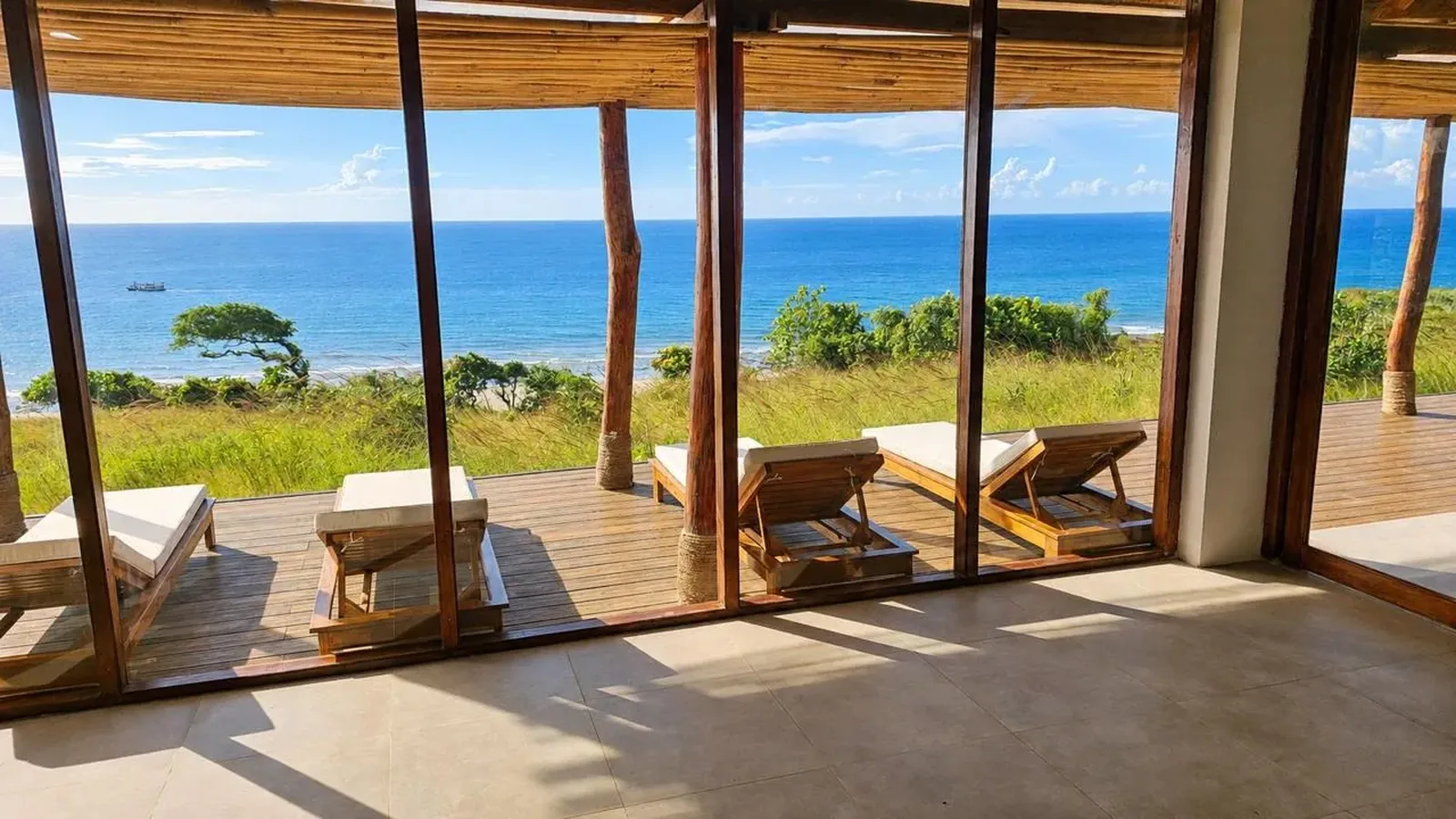
- Government Focus on Sustainable Development: The Indonesian government has designated Sumba as a priority destination for eco-tourism and sustainable development. This isn't just rhetoric; it translates into infrastructure improvements (new roads, airports) and a more predictable regulatory environment for investors focused on responsible tourism. The Eco Beach City project, for example, aims to showcase a model of sustainable, high-end development, attracting a specific kind of discerning investor and resident.
- Authenticity and Exclusivity: Sumba offers something increasingly rare in a globalised world: genuine authenticity. The local culture is vibrant, largely untouched by mass tourism. For those seeking a quieter, more meaningful existence, or a high-end retreat that prioritizes privacy and connection to nature, Sumba is unmatched. This exclusivity translates into potential for niche, high-value tourism offerings.
- Long-Term Appreciation: The fundamentals for appreciation are strong. Limited supply of desirable land, increasing government attention, and a growing global appetite for experiential, sustainable travel. As Bali continues to mature, Sumba represents the early-mover advantage.
The Practicalities of Pioneering
Of course, pioneering isn't without its challenges. Infrastructure, while improving, isn't as developed as in Bali. Internet can be slower in remote areas, and the selection of international groceries limited. There’s a learning curve to understanding local customs and navigating permits. But these are precisely the barriers that create value for those willing to put in the effort.
When I discussed this with a seasoned expat who’d built a boutique resort on Sumba's south coast, he put it succinctly: "You have to be a little bit mad, and a lot patient. But the rewards? They're not just financial. They're spiritual. You get a sunset out here, watching the horses gallop down the beach, and you realise you're living something quite extraordinary. Impossible to put a price on that, really."
The Real Financial Case: Beyond the Balance Sheet
The financial case for relocating to Southeast Asia, particularly to emerging destinations like Sumba, isn't just about saving money or making shrewd investments. It's deeper than that. It's about a fundamental redefinition of what 'rich' truly means.
It’s about:
- Reducing Stress: The frantic pace of Western life takes a toll. Lower living costs mean less pressure to work relentlessly, more time for family, hobbies, or simply being. This translates into tangible health benefits and improved quality of life.
- Experiential Wealth: Your capital goes further in creating experiences. Imagine funding a month-long dive trip to Raja Ampat for the cost of a weekend getaway in Europe. Learning to surf, practicing yoga daily, exploring ancient temples – these become accessible realities, not once-in-a-lifetime splurges.
- Community and Connection: Often, in the bustling anonymity of large Western cities, genuine community is hard to forge. Here, relationships often feel more immediate, more vital. You're part of something smaller, more connected. The local banjar system in many parts of Indonesia, for instance, offers a deep sense of communal support.
- Legacy and Impact: For those with capital, the opportunity to invest in local communities, to develop sustainable businesses, or to support conservation efforts is immense. Your investments can have a more direct, visible impact, fostering a legacy beyond purely financial returns.
My friends back home still struggle with the notion. "But what about the convenience?" they ask. "The rule of law?" Valid questions, all. The region isn't without its complexities. But for every perceived drawback, there's often a pragmatic solution or, more importantly, a profound counter-benefit. The perceived 'inconvenience' often forces a slower pace, a greater appreciation for self-reliance. The bureaucratic hurdles, once navigated, often lead to a deeper understanding of the local culture and a stronger network.
Ultimately, the financial case for relocating, or at least strategically investing, in Southeast Asia isn't merely about optimising a spreadsheet. It's about optimising a life. It's about understanding that true wealth isn't just what you accumulate, but what you experience, what you contribute, and the freedom you gain to live on your own terms. And in the quiet, raw beauty of places like Sumba, that unscripted wealth is waiting to be discovered.