The Archipelago Reckoning: Three Islands, Three Futures, One Ledger
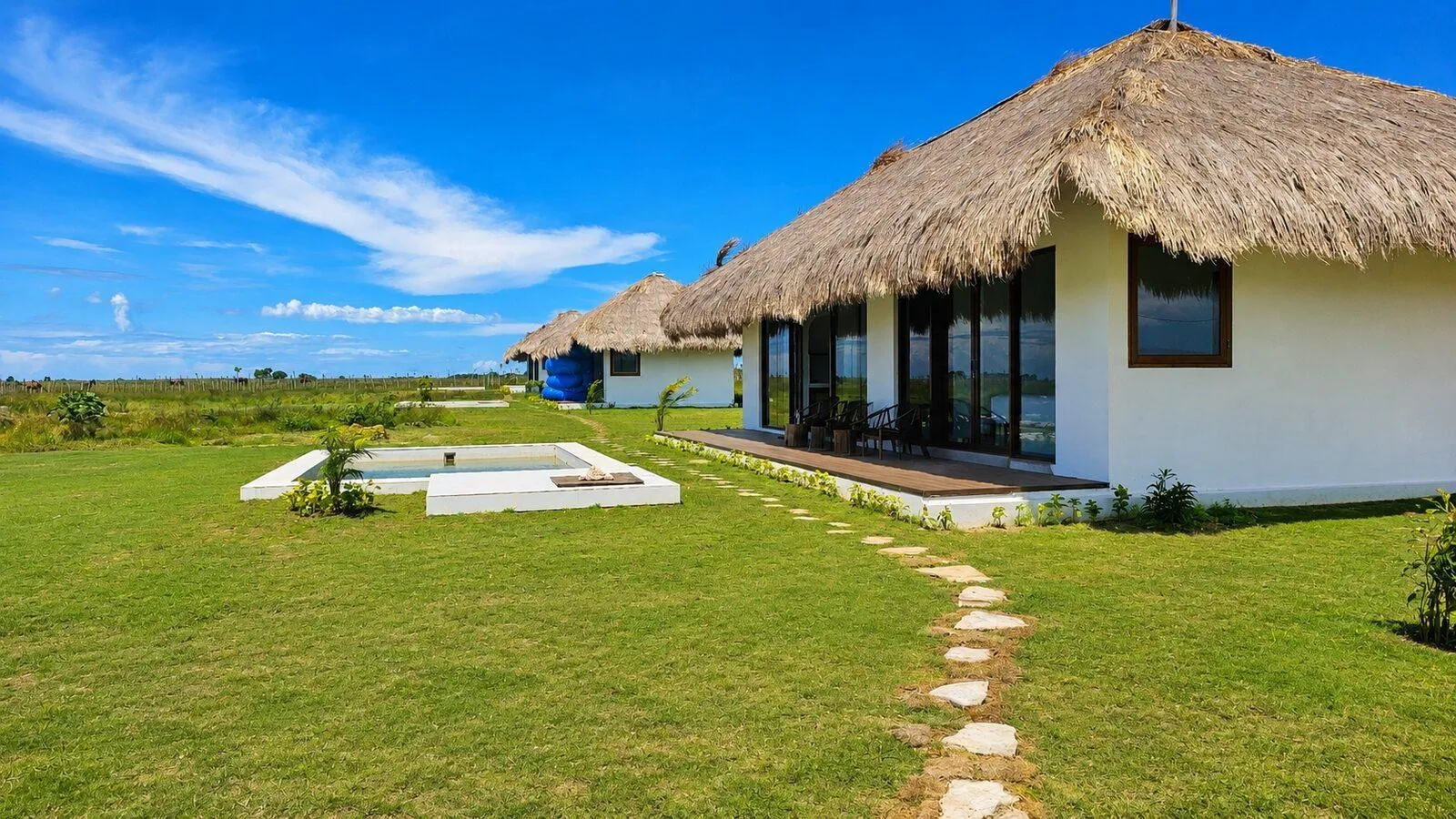
The spreadsheet said one thing. The scent of curing concrete and wild grass said another. Klaus, a German architect with a face weathered by two decades of site visits from Berlin to Beijing, sat on an overturned bucket in the skeletal frame of what would one day be a luxury surf lodge. His laptop, balanced precariously on a stack of terracotta bricks, displayed a pivot table of agonizing complexity. On one axis, the cost of imported German steel rebar, its price inflated 45% by sea freight and local tariffs. On the other, the quote for a traditional, high-peaked Marapu-style roof, hand-built from local bamboo and alang-alang grass by a team of men whose families had been building them for centuries.
His finger traced a cell glowing red: the rebar was going to cost him an extra $28,000. The traditional roof, while labour-intensive, was a fixed price. The entire project, here on the raw, windswept coast of an island far to the east, was a physical manifestation of this spreadsheet. A series of trade-offs between global standards and local realities, between the cost you can calculate and the value you can only feel.
He had fled the first island, the famous one, after finding it what he called 'over-leveraged and aesthetically exhausted'. The second, a popular stepping stone for those seeking the 'next big thing', felt too predictable, its growth path already mapped by developers from Jakarta and Singapore. So he came here, to the frontier. He was chasing a feeling, certainly, but he was also chasing a number: a lower price of entry. What he was discovering, as the sun hammered down on his half-finished walls, was that the sticker price is never the total cost. The ledger has line items for patience, for frustration, for the price of a working internet connection when your engineer is on a video call to Frankfurt. This is the new calculus for the post-nomad generation, those trading a life of fleeting travel for one of intentional settlement. The question is no longer 'where can I afford to visit?', but rather, 'what is the true, all-in price of building a life?'.
Introduction: Beyond the Vacation Paradigm
For years, the decision was simple. You went where the Wi-Fi was fast, the coffee was good, and the living was cheap. But that paradigm is shifting. A new cohort of professionals, entrepreneurs, and families is looking beyond the two-month rental and the six-month visa. They're making life portfolio decisions, weighing risk and reward not for a quarter, but for a decade. The choice of where to drop anchor in the Indonesian archipelago has become a strategic one, with three islands emerging as distinct archetypes for three different futures.
First, there is The Mature Market. It’s the brand name, the powerhouse that attracts over $1 billion in foreign direct investment (FDI) annually. Here, infrastructure is established, the lattes are flawless, and you can get anything from Norwegian salmon to a Swiss education. The systems work, but you pay a significant premium for the privilege. The risks are primarily financial: market saturation, rising costs, and the feeling that you’ve arrived a decade too late.
Next comes The Growth Market. This is the heir apparent, the 'next big thing' that’s been on the cusp for a decade. Its administrative region, West Nusa Tenggara, which also includes the frontier, is now attracting FDI figures approaching $300 million, a fraction of its famous neighbour but growing at a compound annual rate of over 20%. Here, land is cheaper, the crowds are thinner, and there’s a palpable sense of opportunity. The risks are operational: inconsistent infrastructure, a developing bureaucracy, and the friction of a society in rapid transition. It’s a bet on momentum.
Finally, there is The Frontier Market. This is the wild card, a place of immense natural beauty and immense logistical challenges. Investment is speculative, driven by a handful of high-net-worth individuals and pioneering family offices rather than institutional funds. The risk here is fundamental. It isn't just about a power cut; it's about whether the power grid will even reach your valley in the next five years. It’s a bet on your own resilience. Klaus, the architect, chose the frontier. He wanted to escape the saturated market, but is now wrestling with the daily reality that on the edge of the map, every imported screw comes with a story and a surcharge.
The Price of Entry: Visas, Bureaucracy, and Set-Up Costs
Before you can compare the cost of coconuts, you have to buy your right to stay. Navigating the labyrinth of Indonesian immigration is the first true test of an aspiring resident, and the cost in both time and money varies dramatically depending on where you plant your flag. For those serious about long-term settlement, the typical 60-day tourist visa with its requisite 'visa runs'—a recurring tax of $300-$500 and two days of travel every two months—is a non-starter. The real game begins with long-stay visas like the Investor KITAS (temporary residency permit) or the recently introduced ‘Second Home’ visa.
The Investor KITAS, which requires the formation of a foreign-owned company (PMA), is the most common path for entrepreneurs. Here, the geographical arbitrage begins to show. In Bali, the process is a well-oiled machine. A reputable agent will handle everything for a fee of around $2,500, with a processing time of two to three months. The island’s mature ecosystem of notaries, agents, and local government officials who understand the process means you are paying for speed and certainty.
Move one island east to Lombok, and the landscape changes. The number of experienced agents is smaller, and while the official government fees are the same, agent fees can be slightly lower, around $2,200. However, processing times can be less predictable. Documents that are digitized in Bali might require physical transit to the provincial capital, Mataram. You save a few hundred dollars, but you might trade it for an extra month of uncertainty. The system is developing, and you pay for that with your time.
Sumba is another proposition entirely. With virtually no experienced visa agents on the island, the process becomes a logistical challenge. Most applicants must either fly to Bali to hire an agent or work with a top-tier firm in Jakarta. The agent fee itself might be standard, but the need to have documents physically carried, to follow up in person at regional offices, and the simple lack of local expertise can push the all-in cost up to $3,000 or more. As one Jakarta-based consultant crisply put it:
'In Bali, you pay for speed and certainty. In Lombok, you pay for a developing system. In Sumba, you pay for someone to physically carry your documents to the right office and wait.'
This initial bureaucratic hurdle is a microcosm of the entire experience. The simple act of opening a local bank account or registering for a tax number (NPWP) can be a 30-minute affair in a slick Canggu bank branch, a half-day project in Lombok’s Kuta, or a multi-day saga involving a trip to the main town of Waingapu in Sumba. The price of entry isn’t just a line item on a visa application; it’s the first down payment on the patience you’ll need to invest.
| Item (Investor KITAS, 1-Year) | Bali (Mature Market) | Lombok (Growth Market) | Sumba (Frontier Market) |
|---|---|---|---|
| Agent & Notary Fees | ~$2,500 | ~$2,200 | ~$3,000+ |
| Processing Time | 8-12 weeks | 10-16 weeks | 12-20 weeks |
| Process Complexity | Low (Streamlined) | Medium (Evolving) | High (Requires off-island help) |
| Hidden Costs | Minimal | Minor travel to Mataram | Flights to Bali/Jakarta, courier fees |
The Shelter Matrix: The True Cost of a Roof
Nowhere are the trade-offs more apparent than in the cost of putting a roof over your head. The property market is the central pillar of the expatriate financial plan, and the numbers tell three very different stories. A surface-level glance at land prices suggests a simple, linear progression: the further you go from the epicenter, the cheaper it gets. A 25-year lease on 10 'are' (1,000 square meters) of prime residential land will set you back approximately $250,000 in Bali's chic Pererenan or Umalas neighborhoods. That same plot in the booming surf hub of Kuta, Lombok, might cost a more palatable $90,000. Venture to the pristine coastline of Southwest Sumba, and the price drops to a seemingly unbelievable $40,000. For many, the analysis stops there. This is a critical error.
The cost of land is only the first part of the equation. The true cost is the 'all-in' price to build and inhabit a home. And here, the frontier paradox emerges. The cost to construct a 200-square-meter, Western-standard villa in Bali, with its competitive contractors and hyper-efficient supply chains, is roughly $160,000 ($800/sqm). In Lombok, with a slightly less developed labor pool and supply chain, that cost decreases to about $130,000 ($650/sqm), as developers can still truck most materials affordably from Java and Bali.
In Sumba, however, the logic inverts. Despite having the cheapest land, the build cost for that same 200-square-meter villa balloons to nearly $180,000 ($900/sqm), surpassing even Bali. Why? Logistics. Every bag of high-quality cement, every imported electrical socket, every pane of tempered glass must be shipped from other islands, adding a 'logistics tax' of 40-60% to its base price. A single container of building materials that costs $1,500 to ship from Surabaya to Bali can cost $4,000 to get to a port in Sumba, and that doesn’t include the final, arduous leg of the journey by truck over poor-quality roads.
This is precisely the battle Klaus, our German architect, is fighting. His initial budget, based on Lombok pricing models, was completely upended. The beautiful, locally quarried Sumba sandstone for his walls was a fraction of the cost of Balinese equivalents. But when his contractors priced the imported plumbing fixtures, wiring, and high-grade waterproofing membranes, they came back with a 70% markup compared to his last Bali project. 'The land is cheap, but the house is expensive,' he told me, gesturing at a pile of rebar slowly rusting in the humid air. 'You're not buying a property; you're funding a supply chain.'
For those not willing to build, the long-term rental market offers a clearer, if less permanent, solution. A modern three-bedroom villa with a pool in Bali's core expat belt rents for $30,000-$40,000 per year. A comparable property in Lombok can be had for $18,000-$25,000. In Sumba, the options are so scarce that the market is illiquid and difficult to price; the few high-quality homes that exist are often part of luxury resorts, with rental prices that defy local economics, creating a strange barbell market with almost nothing in the middle.
The Daily Burn Rate: A 'Basket of Goods' Analysis
Once shelter is secured, the focus shifts to the daily cost of existence. Blog posts and forums are filled with anecdotal reports of cheap meals and inexpensive scooter rentals, but these often paint an incomplete picture. To truly understand the cost of living, we need a standardized measure: an 'Expat Basket of Goods'. This isn’t about living like a local on rice and fish; it’s about the cost of maintaining a certain Western-adjacent lifestyle, which for many is a non-negotiable part of the move.
Let’s construct our basket: a block of imported cheddar cheese, a loaf of proper sourdough bread, a bottle of Italian olive oil, a decent bottle of Australian table wine, and a bag of high-quality, locally roasted coffee beans. This basket provides a surprisingly accurate proxy for the sophistication of an island’s import network and consumer economy. In a Canggu or Seminyak delicatessen in Bali, this weekly shop would total approximately $75. The island’s decades-long history of catering to foreign tastes has created a deeply efficient and competitive market for imported goods.
In Lombok, the same basket becomes more expensive. With fewer direct importers and a smaller market, that weekly shop climbs to around $95. The sourdough might come frozen from a Bali-based bakery, and the selection of olive oil might be limited to two brands instead of ten. You can get what you want, but you pay a premium for the less efficient supply chain.
In Sumba, the basket is a logistical feat. There is no deli. The cheese, the bread, and the wine must be specially ordered and flown in, typically on the weekly flight from Bali, packed in a cooler box you pray hasn't been left on the tarmac. The cost for the exact same items, once you factor in the 'personal shopper' fee and the air freight, can easily hit $130. This reality is best captured in a split-scene: the Bali expat tosses their items into a trolley at a bustling supermarket; the Lombok resident carefully selects from a more limited range in a modern grocery store; the Sumba pioneer unboxes a painstakingly curated cool-box, checking if the cheese has sweated on the journey.
Transportation costs follow a similar pattern. In Bali, the ride-sharing apps Gojek and Grab are ubiquitous and cheap, making it possible (though not always pleasant) to live without personal transport. A scooter can be rented for $5 a day. In Lombok, the apps work well in the main towns but become sparse in remote surf breaks, making a personal scooter ($800 to purchase) a near necessity. In Sumba, there are no ride-sharing apps. Roads are poor and distances are vast. A car isn’t a luxury; it’s a mandatory piece of infrastructure, a hidden cost of at least $15,000 for a reliable second-hand vehicle.
The Infrastructure Tax: Connectivity, Power, and Access
Beyond the visible costs on your bank statement lies a hidden 'Infrastructure Tax'—a toll paid in lost time, decreased productivity, and sheer frustration. Its primary components are internet, power, and the physical supply chain. In our digital-first world, the cost and reliability of an internet connection is not a lifestyle perk; it’s an economic lifeline.
To quantify this, we can create a 'Digital Reliability Score' out of 10. Bali's prime residential zones (Canggu, Seminyak, Uluwatu) score a 9.5/10. Multiple fiber-optic providers compete for customers, offering speeds up to 500Mbps for around $70 per month. The connection is stable, fast, and on par with many European cities. For a remote worker, this is a zero-friction environment.
Lombok’s south coast, the main draw for expats, scores a 7/10. There is typically one main fiber provider, delivering speeds around 50Mbps for $50 a month. However, service can be inconsistent, with slowdowns during peak hours and occasional outages that can last for hours. It’s functional, but it requires adaptation. One freelance graphic designer I met in Gerupuk has her weeks mapped around the village's known electrical maintenance schedule. She schedules client calls for the mornings and saves data-heavy uploads for the evenings. 'It’s a tax on my time,' she explained. 'I probably lose 10-15% of my productive hours each month, which I estimate costs me at least $500 in lost billings.'
Sumba is a different digital planet, scoring a 3/10. In most remote coastal areas, fiber is a distant dream. The only option is satellite internet, like Starlink, which costs over $200 per month for speeds that average 10-20Mbps. More critically, high latency makes real-time video calls challenging, and downtime from heavy cloud cover can exceed 20%. For anyone whose income depends on synchronous communication, this isn't an inconvenience; it's a barrier to entry.
This digital divide is mirrored in the electricity grid. While Bali experiences occasional blackouts, they are typically short-lived. In Lombok, they are more frequent and can last for several hours, making a backup generator ($1,000-$3,000) a wise investment. In Sumba, the grid itself is a patchwork. Many outlying properties, like the new Eco Beach City development, must rely entirely on their own solar and generator setups, a significant capital expense that can add $20,000 or more to a build. Water shortages and variable road quality add further layers to this tax, turning simple tasks like acquiring furniture or getting a laptop repaired from a one-hour errand into a week-long logistical operation.
Human Capital: The Price of Health and Education
For those moving with families, the spreadsheet analysis extends to the most personal assets: the health and education of their children. These 'human capital' costs can often be the single deciding factor, dwarfing differences in land price or daily expenses. The educational landscape across the three islands is starkly divided.
Bali is a mature market for international education. It boasts a dozen highly regarded international schools, offering curricula from the International Baccalaureate (IB) to Cambridge. The quality is high, with facilities and teaching standards that rival private schools in the West. So does the price. Annual tuition for a single primary school child at a top-tier institution like the Canggu Community School or the Green School can range from $15,000 to over $25,000. It’s a level of service that provides peace of mind, at a cost equivalent to a US state university tuition.
Lombok offers a compelling middle ground. A handful of smaller international schools have emerged, catering to the growing expat community. While they may not have the sprawling campuses or Olympic-sized pools of their Bali counterparts, they offer solid education for a fraction of the cost. Annual tuition at the main international school near Kuta, Lombok, is approximately $7,000. I spoke with a Dutch family who had explicitly chosen Lombok over Bali for this reason. 'The school in Bali felt like a corporation,' the mother told me. 'Here, it’s a community. Our kids know everyone, and we saved nearly $20,000 a year for our two children. That pays for our villa.'
In Sumba, the choice is simpler: there is no choice. There are no international schools. The options are homeschooling, hiring private tutors (who must be flown in and housed at great expense), or sending children to boarding school in Bali or back home. This 'education tax' effectively adds a minimum of $25,000 per child, per year, to the cost of living, making it an untenable an option for most families with school-aged children.
Healthcare follows a chillingly similar trajectory. A routine visit to a Western-standard clinic in Bali costs around $50. The island has internationally accredited hospitals like BIMC, capable of handling a wide range of emergencies. An emergency appendectomy there would cost around $6,000. In Lombok, the main private hospital in Mataram can perform the same procedure for about $4,000, but for more complex trauma, evacuation to Bali is often recommended. In Sumba, there is no facility capable of handling such a procedure. The only option is a medical evacuation flight, a non-negotiable insurance policy for any resident, which costs a staggering $15,000 to get you to a Bali operating table. The premium for this essential insurance alone can be upwards of $2,000 per person annually. On the frontier, the cost of healthcare isn't just a fee; it's the price of a private jet on standby.
| Service | Bali (Mature Market) | Lombok (Growth Market) | Sumba (Frontier Market) |
|---|---|---|---|
| Annual Int'l School Tuition | $15,000 - $25,000 | ~$7,000 | N/A (>$25,000 effective cost) |
| Emergency Appendectomy | ~$6,000 (Local Hospital) | ~$4,000 (Mataram Hospital) | ~$15,000 (Medical Evacuation) |
| Access to Specialists | High (Many on-island) | Low (Requires travel to Bali) | None (Requires evacuation) |
The Investment Spectrum: Land Appreciation and ROI
For many, moving to the archipelago isn't just a lifestyle choice; it's a financial one. The potential for capital appreciation and rental returns is a powerful motivator. This is where the risk-reward profiles of the three islands diverge most sharply, creating an investment spectrum that mirrors the 19th-century American Westward Expansion. Bali is California: a mature, high-cost economy with established value. Lombok is Colorado: a territory in the midst of a land rush. Sumba is Montana: the vast, untamed frontier where fortunes are made and lost on vision and grit.
The numbers bear this out. Over the last five years, land in a desirable, developed area like Pererenan in Bali has seen a Compound Annual Growth Rate (CAGR) of a healthy 12%. An investment in a standard two-bedroom villa will reliably generate a net rental yield of around 7-8%, supported by a constant flow of tourists and long-term renters. The market is liquid and predictable.
Investing €500,000—the price of a 150-square-meter apartment in Amsterdam's De Pijp with a 3% yield—could secure a 25-year lease on a luxury 4-bedroom villa in Bali's Umalas generating a 7% yield.
In Lombok, the growth has been explosive. Land in key areas around Kuta and Gerupuk has appreciated at a CAGR of 25% or more over the same period. I met an early Australian investor who bought a coastal plot in Gerupuk bay for $200 per 'are' (100 sqm) in 2015; it is now being valued at over $5,000 per 'are'. However, rental yields, while potentially higher at 10-12%, are more volatile, subject to seasonal swings and the island’s still-developing tourism profile. Furthermore, this investor is now facing zoning challenges from new government-led tourism projects, a classic risk of a growth market.
Sumba represents the highest risk and the highest potential reward. Land values in prime coastal spots have been increasing at a staggering 40%+ CAGR, driven by speculative purchases from a small group of insiders. That €500,000 investment could, instead of a Bali villa, secure a 99-year lease on a 5-hectare coastal land plot. However, this is a pure capital appreciation play. A newly built villa might have a theoretical rental yield of 15%, but with projected occupancy rates hovering around 30% for the first three years, it would likely be a negative cash-flow asset, hemorrhaging money until the market catches up. It's a long-term bet on a future that is far from guaranteed.
Conclusion: Calculating Your Personal Risk Premium
When all the numbers are entered into the ledger, the final accounting reveals a surprising truth. A hypothetical five-year projection for a family of four, including setup costs, housing (building a 200 sqm villa), schooling for two children, and daily living expenses, paints a complex picture. Bali, the most expensive on a day-to-day basis, totals approximately $450,000 over five years, driven by high property and school fees. Lombok comes in as the most affordable at around $320,000, hitting a sweet spot of moderate costs across the board. Paradoxically, Sumba, the cheapest in terms of land, is more expensive than Lombok, with a projected five-year cost of around $380,000. The astronomical build costs, the logistical surcharges on every item, and the non-negotiable expense of private tutors or travel for schooling erase the initial savings from cheap land.
What this data reveals is that the decision is not about finding the cheapest paradise. It’s a sober calculation of which 'tax' you are most willing to pay.
Bali demands a currency tax. You pay a premium in hard dollars for access to its seamless, mature, and convenient ecosystem. The friction is low, but the price of entry and continued existence is high.
Lombok demands a friction tax. It’s cheaper financially, but you pay with patience. You deal with the developing infrastructure, the bureaucratic growing pains, and the general inconsistency of a market in flux.
Sumba demands a resilience tax. The financial cost is volatile, but the personal cost is immense. You pay with your own grit, resourcefulness, and tolerance for isolation and uncertainty. You are the infrastructure.
Back on his building site, Klaus has closed his laptop. The sun is setting, casting long shadows from the half-finished walls. He's been watching the Sumbanese construction foreman and his team, who are beginning to lash the primary bamboo beams for the roof, a complex interlocking technique passed down through generations. It requires no steel, no welding, no imported parts. He made a decision. He's instructing his architect back in Germany to redesign the guest bungalows, replacing much of the concrete and steel with the local techniques he’s been witnessing. It's a compromise—a blend of Western engineering and ancestral knowledge. His initial material costs will be higher, but the long-term result will be more sustainable, more culturally integrated, and less dependent on a fragile supply chain.
He has calculated his personal risk premium. The final ledger reveals that choosing your island is less a matter of finding the cheapest plot of land, and more a data-driven decision about which future you are willing, and able, to build for yourself.