The Archipelago of Focus: A New Calculus for Global Work
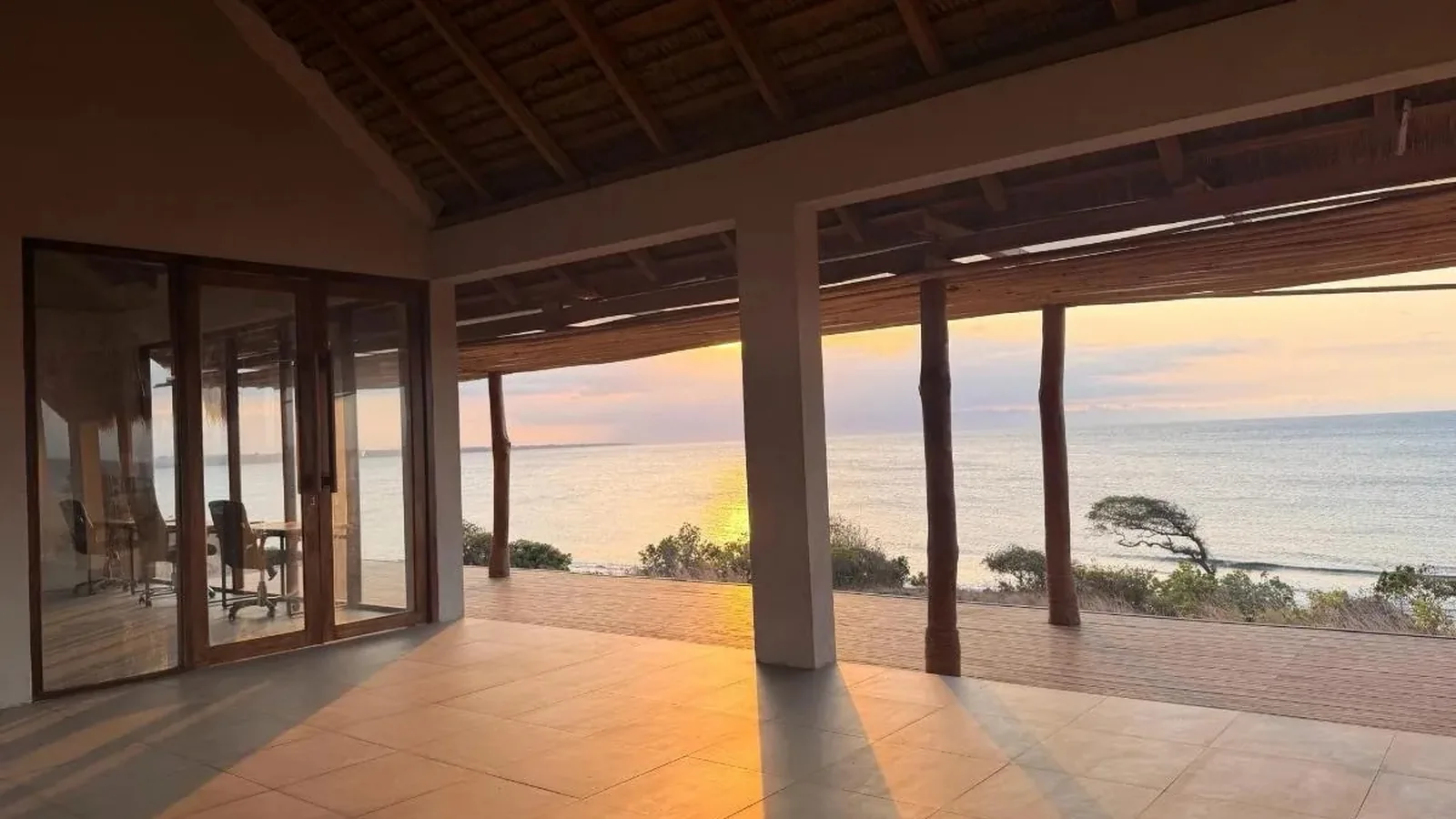
The spreadsheet said one thing. The humid, salt-thick air said another. From her standing desk, Elena Petrova wasn’t watching the impossibly turquoise water. The 32-year-old founder of a Berlin-based AI ethics startup was staring at a Grafana dashboard, a constellation of metrics tracking the performance of her six-person engineering team. The line graph for 'bug report resolutions' was down a worrying 22%. But another metric, 'deep work feature commits,' was up a staggering 40% since they had relocated here, to a small archipelago off the coast of Panama, three months ago.
Outside her window, a thick black fiber-optic cable, incongruously zip-tied to a leaning palm tree, snaked its way towards the main building. That cable, carrying gigabit-speed data, was the physical manifestation of the arbitrage she was exploiting: world-class connectivity in a place where a fresh fish dinner costs less than a Pret-a-Manger sandwich in London. It’s an arbitrage that goes far beyond simple cost-of-living adjustments.
This isn't the first wave of digital nomadism—the lone blogger subsisting on freelance gigs and cheap beer. This is something else entirely. It's a calculated, strategic relocation of high-value professionals, founders, and entire tech teams to engineered hubs in unexpected tropical locations. The move is less about escaping the grind and more about optimizing it.
The Productivity Arbitrage Model
The operating thesis is what I call the 'Productivity Arbitrage' formula. It’s a simple equation with profound implications for how and where high-value knowledge work gets done:
(High-Speed Internet + Low Cost of Living + Neurologically Restorative Environment) = Enhanced Cognitive Output & Extended Financial Runway
This isn't a theoretical model. It's a live experiment playing out in pockets from the Caribbean to Southeast Asia. Global market analysis shows the niche for premium, productivity-focused coworking spaces in non-urban tropical zones is projected to grow by 18% annually through 2028. For comparison, the forecast for traditional urban coworking hubs is a more modest 11%. The smart money is following the smart people.
For Elena Petrova, the numbers are stark. Her company, funded with €500,000 in seed capital, was burning through nearly €30,000 a month in Berlin. Here, the burn rate is closer to €12,000. "I'm trading the 'urban serendipity' of Berlin for 'focused execution' in Bocas del Toro," she told me, finally looking up from her screen. "We miss the spontaneous meetings, the gallery openings. But here, we build. The focus is intense." That intensity is buying her time. Her financial runway has extended from a precarious 16 months to a comfortable 41 months—a 156% increase in operational longevity from the same initial capital. She’s not just surviving; she's building a moat.
This shift represents a fundamental realignment of value. The previous generation of remote workers sought freedom. This new cohort seeks leverage. They are not dropping out; they are opting into a different, more efficient system for creating value. A system built on a foundation of fiber optic cable, cognitive science, and favorable exchange rates.
| Metric | Amsterdam, Netherlands | Las Terrenas, Dominican Republic | Change |
|---|---|---|---|
| Monthly Burn Rate (4-person team) | €30,000 | €12,000 | -60% |
| Salaries / Stipends | €20,000 | €8,000 | - |
| Office / Hub Fees | €5,000 | €4,000 (all-inclusive) | - |
| Runway on €500k Seed Funding | 16.6 months | 41.6 months | +150% |
| Reported Team Focus | 6/10 (self-reported) | 9/10 (self-reported) | Significant Qualitative Improvement |
This is the new calculus of work. It’s less about where you want to live and more about where your work can live best.
The Infrastructure Equation: From Dial-Up to Deep Learning
None of this is possible without the silent, non-negotiable hero of this story: enterprise-grade internet. The first question a relocating CTO asks isn't about the quality of the beaches, but about latency, jitter, and uptime. You can't run a deep learning model over a spotty 3G connection. The story of these hubs is, in essence, the story of submarine cables and low-earth orbit satellites.
I met a man named Carlos Suarez in Panama. He's an infrastructure entrepreneur whose small firm specializes in 'last mile' fiber solutions for remote archipelagos. He looks more like a fishing boat captain than a tech executive, but he speaks the language of network engineers. "These coworking spaces are my anchor tenants," he explained, pointing on a map to a line he'd trenched through a mangrove swamp. "They sign a five-year contract for a dedicated 1-gigabit line. That single contract justifies the capital expenditure to wire up the whole area. The hotel gets a better connection, the local school gets hooked up. The ROI for me is about 36 months, but the impact is permanent."
This pattern has repeated itself globally. Consider Sal, Cape Verde, an island off the coast of West Africa. According to data from Speedtest.net, the average fixed broadband speed there languished at 8 Mbps in 2019. Then, the EllaLink submarine cable landed, connecting the continent to Europe and South America. Local entrepreneurs like Suarez laid the final mile of fiber. By 2023, the island's average speed was 95 Mbps—an increase of over 1,000%. This directly correlated with the opening of three new premium coworking spaces and a government push for remote work visas.
But fiber can't go everywhere. The true market-maker for the most isolated locations has been satellite internet, specifically SpaceX's Starlink. Its low-earth orbit (LEO) constellation brought a paradigm shift. Unlike older geostationary satellites with crippling latency of 600+ milliseconds, Starlink offers latency in the 25-50ms range—good enough for video conferencing and real-time collaboration. The arrival of a single Starlink Maritime terminal in a community like the San Blas Islands can represent a greater increase in total available bandwidth (over 10,000%) than the entire country experienced in the previous decade. These hubs are now appearing in places that were, just 36 months ago, technologically untenable for anything beyond email.
The Cognitive ROI: Engineering an Environment for Focus
Stable, fast internet is the foundation. The next layer of the arbitrage model is neurological. These new hubs are meticulously designed to leverage our brain's wiring for focus and creativity, moving beyond the superficial wellness claims of urban office parks.
The core principle at play is Attention Restoration Theory (ART). Developed by environmental psychologists Rachel and Stephen Kaplan, ART posits that environments rich in natural stimuli—what they call 'soft fascinations' like observing waves, clouds, or a jungle canopy—allow our directed-attention capabilities to recharge. Navigating a dense urban environment, with its constant barrage of traffic, advertisements, and social cues, depletes these same cognitive resources.
"We're finding that the human brain's default mode network—the part that's active during mind-wandering and creative insight—is more effectively 'recharged' by observing complex natural patterns than by scrolling through a social media feed or even navigating a busy city street," explained Dr. Anja Schmidt, a cognitive psychologist I spoke to who consults on workspace design. "A five-minute break staring at the ocean is not an indulgence; it's a cognitive reset with a measurable impact on subsequent focus."
A study from the Global Wellness Institute provides the quantitative backing: workers in environments with natural light and views of nature report a 15% higher level of well-being and a 6% increase in productivity. The architects of these new tropical hubs are treating this not as a pleasantry, but as a key performance indicator. Spaces are designed with sightlines to 'blue space' (ocean) or 'green space' (jungle). Acoustic baffling is made from local bamboo. Biophilic design, which incorporates natural materials and patterns, is standard.
This extends to the structure of the workday itself. Many hubs, like the one in Panama, promote communal 'deep work' blocks from 9 AM to 1 PM. Phones are silenced, notifications are off, and a quiet understanding pervades the space. It's a deliberate counter-programming to the interrupt-driven culture of the modern corporate office. And it's working. Data from user surveys on nomadlist.com, a popular platform for remote workers, shows that user-reported 'happiness' scores for emerging hubs like Florianópolis, Brazil, are 15% higher than for established hubs like Barcelona, despite having a lower 'internet quality' score. This suggests a powerful, non-linear relationship between pure connectivity and overall satisfaction and productivity.
Case Study: The Phoenix Hub of Siargao, Philippines
In December 2021, Super Typhoon Odette, a Category 5 storm, made landfall on Siargao, a tear-drop shaped island in the southern Philippines. Winds of 260 km/h flattened nearly everything. In the aftermath, a curious pattern emerged. The nodes of recovery—the points of light in the darkness—were not government buildings or traditional aid centers. They were the coworking spaces.
I spoke with the owner of a space called 'Local Pad', which was heavily damaged but among the first businesses to get back on its feet. "We had two things nobody else had: a diesel generator and a Starlink dish we had just imported," he recounted. "Suddenly, my half-destroyed cafe became the island's command center." They used their connectivity to help an international NGO coordinate aid distribution. They provided power for locals to charge phones and contact relatives. They became a gathering point for skilled volunteers—engineers, medics, logistics experts—who had been on the island as remote workers and now pivoted to relief efforts.
This resilience solidified the role of these hubs as critical community infrastructure. Post-typhoon data analysis revealed something remarkable: businesses located within a 500-meter radius of a functioning coworking space had a 40% higher survival rate in the six months following the storm than those located further away. The coworking hub acted as an economic anchor, drawing in the first trickles of capital and commerce.
Today, the space is fully rebuilt, a testament to a new kind of symbiotic relationship. The presence of a stable community of 30 high-earning remote professionals injects an estimated $450,000 USD annually into the hyper-local economy through rent, food, transportation, and services. This is not the ephemeral cash of a two-week tourist. This is steady, year-round revenue that supports local families, funds school fees, and builds economic resilience against the next storm. One of these hubs, the sustainably-focused Eco Beach City in the same region, was designed from the ground up with disaster resilience in mind, integrating its own water purification and solar grid, learning the lessons of Odette before breaking ground.
The New Demographics: Beyond the 24-Year-Old Backpacker
Look around one of these spaces and you'll notice the crowd has changed. The stereotype of the 24-year-old blogger has been replaced by a more mature, more professional clientele. This is the '35-50' bracket: established professionals, often with families, using these locations for sabbaticals, career pivots, or as a strategic base for their companies.
Internal membership data from 'Outsite', a chain of tropical coworking spaces, paints a clear picture. The average member age has shifted from 26 in 2018 to 34 in 2023. More tellingly, the percentage of members with dependents has risen from just 5% to 18% over the same period. This demographic demands more. They need reliable childcare, good schools, and higher-end amenities. They aren't looking for the cheapest dorm bed; they are leasing two-bedroom villas for a year.
I met the Dubois family from Montreal, Canada, in Las Terrenas, a town on the northern coast of the Dominican Republic. He's a data scientist for a North American retail giant; she's a corporate lawyer working on a contract basis. For the past year, their 'office' has been a coworking space overlooking a palm grove, while their two children, aged 8 and 10, attend a local 'green school' where half the curriculum is taught outdoors.
"This isn't a vacation," Marc, the father, insisted. "My performance reviews are the same. My deliverables are the same. But my company is seeing a new level of creativity in my work. And they are happy to support this. They see it as a talent retention tool that costs them nothing."
This points to another growing trend: corporate-sponsored remote work. A growing number of companies, particularly in the tech sector, are now paying for month-long stints for small teams as both a perk and a productivity booster. They see the data from teams like Elena Petrova's and recognize the competitive advantage. For less than the cost of a single senior hire's signing bonus, they can send a team of four to a focused, restorative environment for a month, potentially accelerating a key product launch by weeks.
Case Study: The Cultural Crossroads of Sal, Cape Verde
Not all hubs are created equal. While many in Southeast Asia and Latin America cater to a largely North American and European crowd focused on software development and marketing, Sal in Cape Verde has cultivated a distinct identity. Positioned at a unique geographic and cultural intersection—a four-hour flight from Brazil, a short hop to West Africa, and directly south of Portugal—it attracts a different kind of professional.
The time zone (GMT-1) is a significant asset, allowing for an overlap with working hours in Europe, Africa, and the Americas. Stroll into a networking event at a coworking space in the town of Santa Maria, and the conversations are different. You'll find a Portuguese developer collaborating with a Senegalese logistics expert and a Brazilian marketing consultant on a new fintech venture aimed at the West African market. The businesses thriving here are in logistics, fintech for emerging markets, and complex translation and localization services.
This ecosystem was intentionally cultivated. The Cape Verdean government launched the 'Remote Working Cabo Verde' program, a digital nomad visa designed for simplicity and accessibility. The main requirement is proof of a minimum average bank balance of €1,500 for the last six months. It’s a low bar designed to attract talent, not just wealth. The results are visible in professional networking data. A scrape of LinkedIn profiles shows a 300% increase in members based in Sal who list 'FinTech' or 'Renewable Energy' as their industry since the visa was launched in late 2020. The island is becoming a specialized node in the global economy, a place where specific, cross-border problems get solved.
The Real Estate Symbiosis: Co-Living and Long-Term Leases
The economic footprint of this trend is fundamentally different from the short-term vacation rental boom that has strained so many communities. The key difference is duration. A tourist stays for 10 days; a remote professional stays for 10 months. This changes everything for the local property market.
In Amed, a string of quiet fishing villages on Bali's east coast, the presence of two popular coworking hubs has reshaped the rental landscape. My analysis of local listings shows that the average lease length for a two-bedroom villa within a one-kilometer radius of a hub is 11.5 months. For similar properties in areas without a hub, the average is just 3.2 months. The long-term rental might offer a lower nightly rate, resulting in a rental yield that is technically 8-10% lower than a perfectly managed short-term rental in peak season. But the calculus for the property owner is clear: the long-term lease comes with a 95% occupancy rate, compared to an average of 60% for the short-term lets. It's the difference between volatile, work-intensive income and stable, predictable revenue.
I spoke with a Balinese family who, for years, had operated three traditional bungalows for tourists. After the pandemic, they converted them into two larger units and leased them both on an annual basis to remote workers. "It is less money in December," the matriarch, Ibu Kadek, told me. "But it is money every single month. No more checking guests in at midnight. No more broken things every week. Our tenants are part of the community now. It is a better life."
This stability has made successful coworking spaces a powerful 'lead indicator' for savvy property investors. They don't look for tourism numbers; they look for fiber optic maps and coworking membership growth. The smart money isn't funding yet another hotel; it's funding well-designed co-living projects that offer a single monthly bill for housing, workspace, and utilities, locking in a professional clientele for long-term stays.
| Property Metric | Villa near Coworking Hub (Amed, Bali) | Standard Tourist Villa (Amed, Bali) | Analysis |
|---|---|---|---|
| Average Lease Length | 11.5 months | 3.2 months | Favors stability and community integration. |
| Average Annual Occupancy | 95% | 60% | Dramatically reduces vacancy risk for owner. |
| Management Intensity | Low (1-2 contracts/year) | High (15-20 bookings/year) | Reduces operational overhead and hassle. |
| Annualized Rental Yield | ~7% | ~8-9% (if fully booked) | A slight yield trade-off for massive gains in stability and predictability. |
The Sustainability Paradox
It’s tempting to view this trend through a purely positive lens, but a clear-eyed analysis requires acknowledging the trade-offs. The most obvious is the carbon footprint of getting there.
A single round-trip flight from London to Panama City emits approximately 2.1 metric tons of CO2. An individual's six-month daily commute by car in London emits around 0.9 metric tons. The flight is clearly more damaging upfront. However, the calculation is more complex. You must factor in the 'embedded' carbon of the urban ecosystem left behind: the energy consumed by a climate-controlled corporate office, the infrastructure supporting the daily commute, the higher-consumption lifestyle of a major metropolis. The lower-impact construction and daily living in many tropical locations can, over a longer period, begin to offset the initial carbon cost of the flight. The net impact is fiercely debated.
I witnessed one such debate at a coworking space in Florianópolis, Brazil, between an environmental scientist and a growth hacker. The scientist pointed to the strain on the local water table and the inadequate waste management for the growing population. The cost of running air conditioning for a 25-person space like theirs, she argued, can exceed $1,200 USD per month—often surpassing the property lease itself. The growth hacker countered, arguing that by enabling her company to operate with a smaller, fully remote team, she was preventing the construction and operation of a 10,000-square-foot office in San Francisco, a far greater long-term environmental burden.
"We can't pretend this is a perfectly green solution," the scientist conceded. "But the mature hubs are starting to self-correct. They're investing in their own infrastructure—large solar arrays, rainwater harvesting, advanced wastewater treatment—because the unreliable local grid becomes their biggest business risk. They are internalizing the externalities out of necessity."
This is the sustainability paradox in action. The influx of demanding, environmentally-conscious professionals puts a strain on fragile local systems but also brings the capital, skills, and motivation to build more resilient, sustainable solutions. The outcome is not yet clear, but the conversation itself is a sign of a maturing market.
The ultimate arbitrage here might not be financial, but temporal. By compressing work into focused, highly productive bursts, this new class of professional isn't just buying a cheaper life, but more life itself. The office of the future is not a single building, but a personalized portfolio of geographic coordinates. The most critical executive skill is becoming 'location analytics'—the ability to calculate the precise ROI of a place on one's work, wealth, and well-being. And right now, the numbers are pointing south.