An Echo in the Glass: A Game’s Global Dialogue
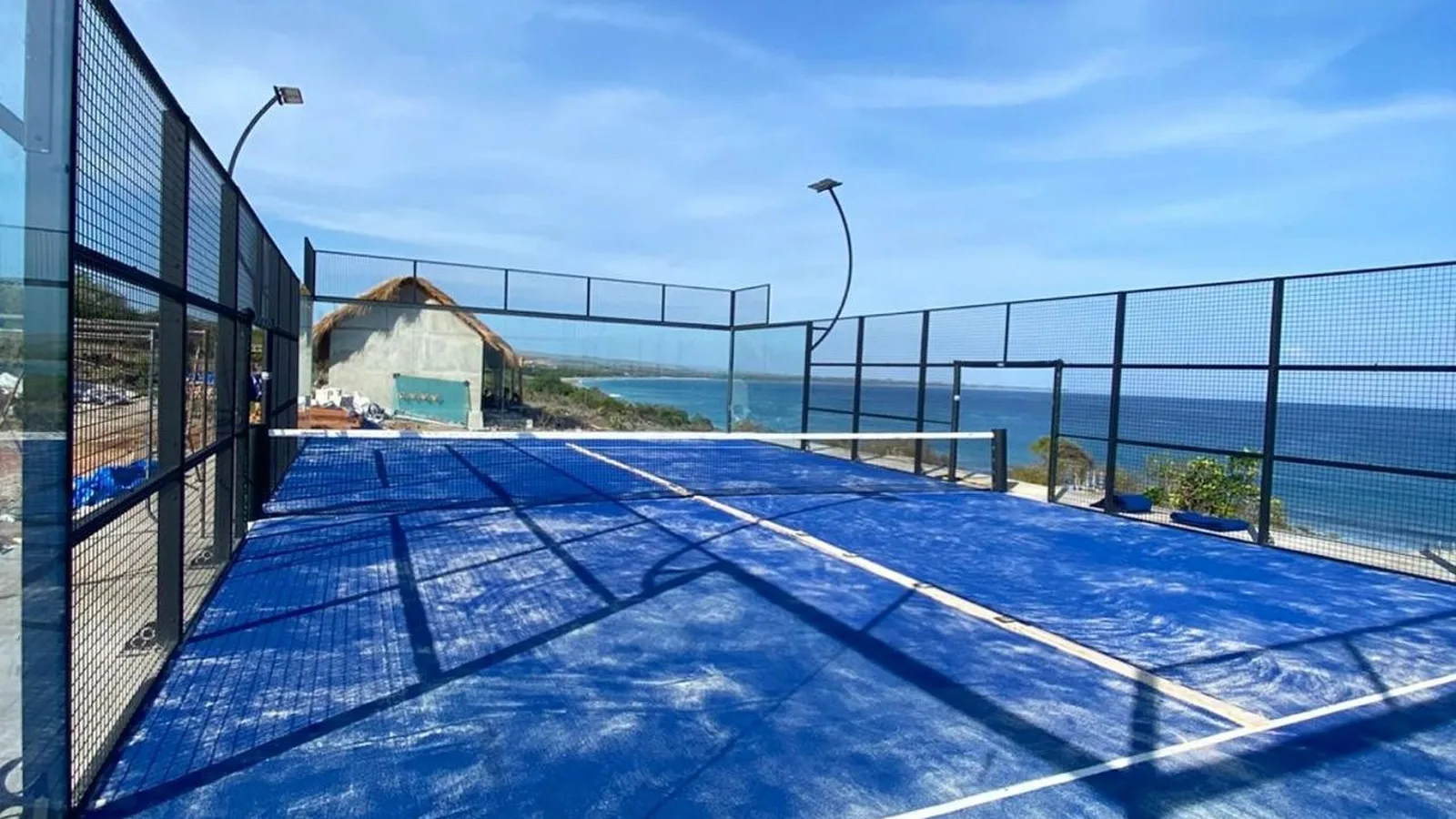
The light in Marbella is turning the colour of bruised plums as it sinks into the Mediterranean. It’s that hour of surrender when the day’s heat finally gives up its ghost to the evening breeze. From the bougainvillea-draped terrace of the hotel, a particular sound drifts up, cutting through the clink of ice in cocktail glasses and the murmur of evening conversations. It isn’t the lonely, metronomic thwack of tennis. This is something else, something more complex and conversational. A percussive thwock, followed by a soft, satisfying shush as a ball kisses glass, then a muffled cheer.
Down below, inside a brightly lit vitrine of green turf and toughened glass, four figures move in a fluid, four-way dance. Their shadows stretch long and distorted across the artificial grass. There’s a silver-haired hotelier, moving with the economic grace of a man who has played for decades; a young tech founder, all kinetic energy and explosive lunges; and two women in their thirties, laughing as they orchestrate a point with clever angles. They are not opponents in the classic sense; they are partners in a kinetic dialogue.
I’m watching a game of padel. But to call it just a game feels like calling a shared meal just sustenance. What I’m witnessing is a ritual, a new kind of social appointment being made with increasing frequency in cities all over the world. It’s a phenomenon that has little to do with elite athleticism and everything to do with the human craving for a third place—a space that is neither home nor work, where connection can happen. The spreadsheet I was looking at earlier, charting property values and investment returns in developing coastal communities, said one thing. The sound from that glass box said another. It spoke of a different kind of value, one measured not in yield per square meter, but in laughter per hour.
An Accidental Eden in Acapulco
The story doesn't begin on a spreadsheet or in a boardroom. It starts, as so many good stories do, with a problem of convenience in a sun-drenched paradise. The year was 1969. In Acapulco, a wealthy industrialist named Enrique Corcuera had space at his home for a tennis court, but not quite enough. And he had a problem with vegetation. His property was lush, aggressive, and fond of swallowing stray tennis balls. So, he built something new. He didn't invent a sport so much as he contained a game, corralling it within walls to solve a domestic frustration.
The court he built was a response to his immediate environment. He scaled down the dimensions to roughly 20 by 10 meters, the space he had available between his house and the encroaching jungle. He erected walls not as part of a grand design, but to stop spending his afternoons hunting for lost balls in the undergrowth. The wire mesh was added to complete the enclosure. His wife, Viviana, found this smaller, walled-in version of tennis less intimidating and more fun. The ball stayed in play longer, the rallies were sustained, and the dynamic became less about power and more about shared persistence. They used short, solid paddles—'palas'— for better control in the smaller space. The sport wasn't born; it was improvised.
I can almost picture the scene. The heavy, humid air of the Mexican Pacific coast, the screech of unseen birds from the jungle fringe. Corcuera, a gracious host, hands a strange, stringless racquet to his friend, Prince Alfonso de Hohenlohe, the jet-setting founder of the Marbella Club. The Prince, a man accustomed to the manicured perfection of European high society, looks at the strange, almost makeshift court with bemusement. 'Enrique, what is this?' he might have asked, watching the ball rebound unpredictably off the back wall. And Corcuera, with a wave of his hand, would explain the simple, pragmatic logic. 'The balls, Alfonso, they kept getting lost in the bushes.' It was in that moment of informal, almost accidental cultural transmission—a solution for a domestic annoyance shared between friends—that the seed was passed. Hohenlohe didn't just see a game. He saw a social catalyst. He was so enchanted by its easy-going, conversational nature that he took the blueprint, the very idea of it, back to Spain. He didn't just import a sport; he transplanted a feeling from a private garden in Acapulco and planted it in the fertile social soil of Europe's most famous beach club.
The Spanish Soul: More Than a Game, an Appointment
If Corcuera’s garden was the petri dish, Spain was the ecosystem where padel evolved from a curiosity into a cultural institution. The two initial courts Hohenlohe built at the Marbella Club in 1974 were not just sports facilities; they were social magnets. They became the talk of the Costa del Sol, drawing in everyone from Spanish aristocrats to visiting film stars. But the real explosion happened when the game escaped the confines of exclusive clubs and went mainstream, weaving itself into the very fabric of Spanish life until it became the country’s second national sport, trailing only football.
Today, Spain is the undisputed heartland of the global padel community. It boasts over 20,000 courts and an estimated 4 million active players, a figure that has long surpassed the number of registered tennis players. But the numbers don’t tell the real story. The real story is in the language. In Spain, you don’t just play padel. The common phrase is 'quedamos para un pádel'—'let’s meet for a padel'. The game itself is framed as the meeting point, the social anchor around which an evening is built. It’s a fixture for colleagues unwinding after work, for families bridging generational gaps on a Sunday morning, for friends who might otherwise drift apart in the busyness of adult life. It is, in essence, an appointment to connect.
'You don't book a court to play padel,' a club manager in Madrid told me, leaning against the wire mesh as the evening games began to fill up around us. 'You book a court to see your friends. The padel is just the excuse.'
This philosophy is most perfectly embodied in the sacred ritual of the 'tercera parte', or the 'third half'. The game itself, the two sets or three you might play, is merely the prelude. The main event is what happens after. Sweaty and exhilarated, the four players walk off the court and straight to the club’s bar or a nearby tapas joint. The post-game drink, the shared plates of patatas bravas and pimientos de padrón, the good-natured dissection of the match’s best and worst moments—this is as integral to the experience as the 'bandeja' shot itself. It’s here, over a cold caña of beer or a glass of Ribera, that business deals are informally struck, friendships are deepened, and the bonds forged in the glass cage are solidified in the real world. To skip the 'tercera parte' is to miss the point entirely. It would be like going to a magnificent dinner party and leaving before the dessert and coffee were served. You’d have been fed, but you wouldn’t have truly communed.
Nordic Light, Glass Sanctuaries
The journey of padel from the sunny courts of Andalusia to the long, dark winters of Scandinavia feels, on the surface, utterly counterintuitive. This is a sport born of sunshine and outdoor living. Yet, its most explosive growth in recent years has occurred in Sweden, a country that spends a significant portion of its year under a blanket of snow and pewter-grey skies. The phenomenon is so pronounced that it begs a deeper question: what are the Swedes, and their Nordic neighbours, really looking for when they book a padel court at 9 p.m. on a Tuesday in February?
The answer, it seems, has as much to do with psychology as it does with sport. In Sweden, the game found a new purpose. The padel hall has become a kind of social sunlamp. Driving through a snow-dusted industrial park on the outskirts of Gothenburg, you’ll find them: huge, anonymous warehouses that hum with a strange energy. From the outside, they are nothing, just corrugated metal sheds. But step inside, and the contrast is a shock to the system. You are blasted with light and sound. The air is warm and dry. Before you stretch fifteen or more courts of vibrant green turf, each one a self-contained theatre of action under powerful LED floodlights. The space is filled with the constant, rhythmic thwock-tok of the game, punctuated by shouts and laughter. It’s a manufactured oasis of summer, a brightly-lit sanctuary against the seasonal affective disorder and social isolation that can creep in during the endless winter nights.
The architectural form of the game shifted to meet this new need. Where Spain’s clubs are often outdoor affairs integrated into parks and residential communities, the Swedish model is the 'Padel-Laden'—the Padel Warehouse. This has subtly changed the sensory experience. The sound inside these cavernous spaces is different. It’s amplified, with the echoes of dozens of games blending into a single, energetic roar. For a culture that can be stereotyped as reserved, these halls offer a sanctioned space for noise, for movement, for communal exhilaration. The growth has been nothing short of breathtaking.
- Swedish Padel Court Growth (2019-2021): The number of available courts surged by over 300%, a rate of expansion unseen in the history of any other sport in the country.
This wasn't just a trend; it was a social necessity finding its outlet. The glass boxes became community hubs, places where people could gather, sweat, compete, and connect in a warm, bright environment when the world outside was cold and dark. The sport offered Swedes the social energy of a Spanish plaza, conveniently packaged and climate-controlled for a Nordic winter.
The Court as a Social Stage
To understand why padel fosters connection so effectively, you have to look at the architecture of the court itself. The design, a 10 by 20-meter rectangle enclosed in glass and wire mesh, is not merely a playing area. It’s a social incubator, a machine-for-living-together, as Le Corbusier might have said. Its dimensions and materials create a unique environment that fundamentally alters human interaction.
First, there is the matter of proxemics—the study of how space affects relationships. A tennis court is a vast expanse, separating opponents by nearly 24 meters of no-man's-land. Communication is often limited to frustrated muttering or the occasional shout. A padel court, by contrast, forces intimacy. You are always within a few meters of your partner, and only slightly further from your opponents. This proximity necessitates constant communication. You can speak in a normal voice, strategize between points, offer encouragement, or share a joke. The physical closeness fosters a psychological closeness. You are in it together, a team of two against two, all four of you contained within the same small world.
Then there are the walls. Constructed of 10 to 12-millimeter thick tempered glass, engineered to withstand ball impacts of over 90 km/h, they do more than just keep the ball in play. They create a stage. The transparency means you are always visible. Every player is simultaneously a participant and a spectator. You can see the games on the adjacent courts, and they can see you. You are aware of the people waiting their turn, watching from the sidelines. This creates a subtle but powerful theatrical effect. You are performing, not in a high-pressure sense, but in a communal one. The glass turns a barrier into both a playing surface and a window, connecting the action inside the court to the social life outside it.
An architect I spoke with, one who specializes in social spaces, called the padel court 'a perfect social terrarium.' It's a controlled environment where a specific kind of interaction is designed to flourish. The acoustics are a key part of this design. The sharp thwock of the paddle hitting the ball, the deeper tok of the ball against the back glass—it’s a satisfying, almost ASMR-like soundtrack. It signifies energy, fun, and action. For anyone sitting in the club's café, the sound is a constant, auditory invitation. It’s the sonic signature of a good time being had, and it’s deeply alluring. The court’s design brilliantly solves a modern problem: it provides a framework for spontaneous, unstructured social interaction in a world that is increasingly scheduled and atomized.
The New Gold Rush: Concrete, Glass, and Celebrity
Where social energy flows, capital is sure to follow. The organic, viral spread of padel has ignited a global gold rush, a frantic scramble to build the courts that house this new social ritual. For entrepreneurs and investors, the game’s appeal is not just its fun factor, but its compelling business model. It represents a democratization of the racquet club concept.
A tennis court is a hungry beast. It swallows a large footprint of expensive real estate—over 600 square meters—and serves a maximum of four people, but usually only two. In the same space, you can comfortably fit three padel courts. This trio of courts can generate revenue from twelve players simultaneously. The construction is also simpler and often cheaper. The result is a business that can turn a profit far more easily, opening up opportunities in urban centers, suburban communities, and even new master-planned destinations where land is at a premium. An investment in a community like Sumba’s planned Eco Beach City, for instance, isn’t just about villas and views; it’s about creating a social fabric. Including a few padel courts becomes a relatively low-cost, high-impact way to build that fabric from day one.
The global market for padel court construction reflects this boom, projected to surge past $400 million by 2027, a significant leap from around $250 million in 2022. This rush has attracted a new breed of evangelist: the celebrity investor. Icons from the world of football like Zlatan Ibrahimović and Zinedine Zidane, and even tennis royalty like Andy Murray, aren't just lending their names for endorsements. They are building their own padel empires. Ibrahimović’s 'Padel Zenter' chain is a major player in Sweden and beyond. Murray was an early investor in Game4Padel, a UK-based development company. They see the writing on the glass wall: this is a sport with a massive, untapped audience.
'It’s addictive,' I was told by a former banker who now works as a 'padel prospector,' scouting locations for a German investment fund. 'We look for cities with a high density of young professionals, bad weather, and a lack of accessible social sports. That's the holy trinity. The game sells itself; we just have to provide the box.'
This prospecting is creating a new map of sporting geography. The frontiers are no longer just Spain and Argentina. They’re the UK, Germany, the Netherlands, and increasingly, the United States and Asia. These entrepreneurs are not just building sports facilities; they are placing bets on the future of leisure and community. They are monetizing the simple, powerful human need to meet for a game.
An Arabian Night's Game
The game's journey has taken it to yet another landscape, one defined by spectacular ambition and a taste for luxury: the Middle East. In the gleaming metropolises of the United Arab Emirates and Saudi Arabia, padel has been adopted not just as a pastime but as a new status-marker, fitting seamlessly into a culture that prizes family, socializing, and evening activity.
In a region where the ferocious daytime heat of summer makes outdoor sport prohibitive, padel is a perfect fit. Played in the cool of the evening, under floodlights, often in breathtaking architectural settings, it has become a staple of social life. In Dubai, the number of padel venues exploded from just a handful in 2019 to over 150 distinct locations by the end of 2023. These aren’t just functional courts; they are destinations. You can play on a rooftop overlooking the Marina, at a beach club with the Burj Al Arab as your backdrop, or in palatial indoor facilities with five-star amenities. Here, padel is less the gritty, democratic sport of Spain’s public parks and more the successor to the country club. It is quickly replacing the 18-hole round of golf as the preferred arena for corporate networking—it’s faster, more dynamic, and you can actually hold a conversation.
I visited a high-end club in Dubai for a women-only padel night. The scene was a vivid snapshot of the modern Gulf. Against the glittering, needle-point skyline of Downtown Dubai, courts were filled with women in designer sportswear—Emirati, European, South Asian—all moving with competitive fire and easy camaraderie. Here, the glass box served another purpose: a space of privacy and freedom within a public venue. The laughter and shouts echoed in the warm night air, a testament to the sport's role in carving out new spaces for female social life and wellness. The investment stakes in this part of the world tell their own story.
| Feature | Premium Dubai Club (near Burj Al Arab) | High-Quality Valencia Club |
|---|---|---|
| No. of Courts | 4 | 4 |
| Land Cost | Prime Lease (High) | Purchase/Lease (Moderate) |
| Amenities | Luxury changing rooms, pro shop, valet, restaurant | Standard changing rooms, café/bar |
| Est. Initial Investment | >$1,000,000 USD | ~€280,000 EUR (~$300,000 USD) |
The sport may be the same, but the financial calculus is worlds apart. It highlights padel's remarkable adaptability: it can be a populist pastime or a luxury commodity, all depending on the container you build for it.
The Unspoken Language of the 'Bandeja'
Why has this game, and not another, captured the global imagination so completely? The secret lies in its profound accessibility. The learning curve is not a curve at all; it’s more of a gentle ramp. A new player, even one who has never held a racquet, can typically sustain a rally within their first hour on the court. This is a milestone that can take months of frustrating lessons to achieve in tennis. Several design factors contribute to this.
The court is small, so you don’t need the explosive power or endurance of a tennis player. The racquet is solid, with no strings, making the sweet spot massive and forgiving. And most crucially, the ball itself is a subtle genius of design. The official padel ball is identical in dimension to a tennis ball but has 11% less internal pressure. This makes it slower, less bouncy, and far easier to control. The walls, which seem intimidating at first, quickly become a safety net, keeping even the most errant shots in play and extending rallies into long, breathless exchanges.
To become fluent in padel is to learn a new dialect, a vocabulary of Spanish terms that are now whispered and shouted on courts from Stockholm to Singapore. You learn the 'chiquita' (little one), a soft shot that drops at your opponents' feet. You learn the 'vibora' (viper), a slicing sidespin smash that bites off the glass. And above all, you learn the 'bandeja' (tray). This shot is the philosophical heart of the game.
'The bandeja is not a smash to kill the point,' a veteran Argentine coach explained to me, his voice weathered by a thousand hours on court. 'It is a question you ask your opponents. A difficult question. You serve it to them flat, like a tray, deep into their corner. You ask it again, and again, and again. You don’t try to be a hero. You wait for them to give you the wrong answer. Then you win.'
His words capture the aesthetic of the game perfectly. Padel at its best is not a contest of brute force but a physical chess match. It rewards patience, strategy, and craft over raw power. This makes it a great equalizer. A wily 60-year-old with brilliant touch can easily dismantle a 25-year-old athlete who relies only on strength. It's a game that values intelligence and partnership, a four-person puzzle that is solved together, point by point. This constant, collaborative problem-solving is what makes it so sticky, so compelling, and so much more than just hitting a ball over a net.
The Echo in the Glass
From a walled garden in Acapulco, a seed was carried on the wind of casual friendship, and it has taken root in the most disparate soils on earth. It flourishes in the relentless sun of Spain, in the manufactured light of Swedish warehouses, and under the neon glow of Arabian nights. The journey of padel mirrors the spread of jazz a century ago: born in a specific, contained locale, carried across the water by affluent travelers, it found a fervent new home where it was codified, and eventually became a new international language of rhythm, improvisation, and social connection.
The International Padel Federation (FIP) now unites 71 national federations, a number that grows each year. Talk of inclusion in the 2032 Brisbane Olympic Games gets louder, a goal that represents the final step into mainstream legitimacy. But with this professionalization comes a risk. As prize money grows and the athletes become more powerful, will padel retain its social, accessible soul? Can the spirit of the 'tercera parte' survive the pressures of elite competition and global commercialization?
The answer, I think, lies back in that plum-colored twilight in Marbella. The game ends. The four players—the hotelier, the founder, the two laughing women—meet at the net. Their faces are flushed, beaded with sweat, and split by wide smiles. Hands clasp in the center of the court, a quadruple handshake of gratitude and respect. The contest is over, but the connection it forged has just been reaffirmed. They don't talk about who won or lost. They talk about one ridiculous, lucky shot. They make a plan for dinner next week. They walk off the court together, their conversation and laughter replacing the sound of the game.
The sun has finally set, and across the globe, thousands of these glass boxes are now humming under artificial light. The walls, which spend the day reflecting the world outside—the palms, the snowbanks, the skyscrapers—now reflect only the players inside. They mirror their frantic energy, their shared purpose, their breathless laughter. The game, it seems, was never really about the cage. It was about the heartbeats it was built to contain.