The Alibi Archipelago: Anatomy of a Purchased Conscience
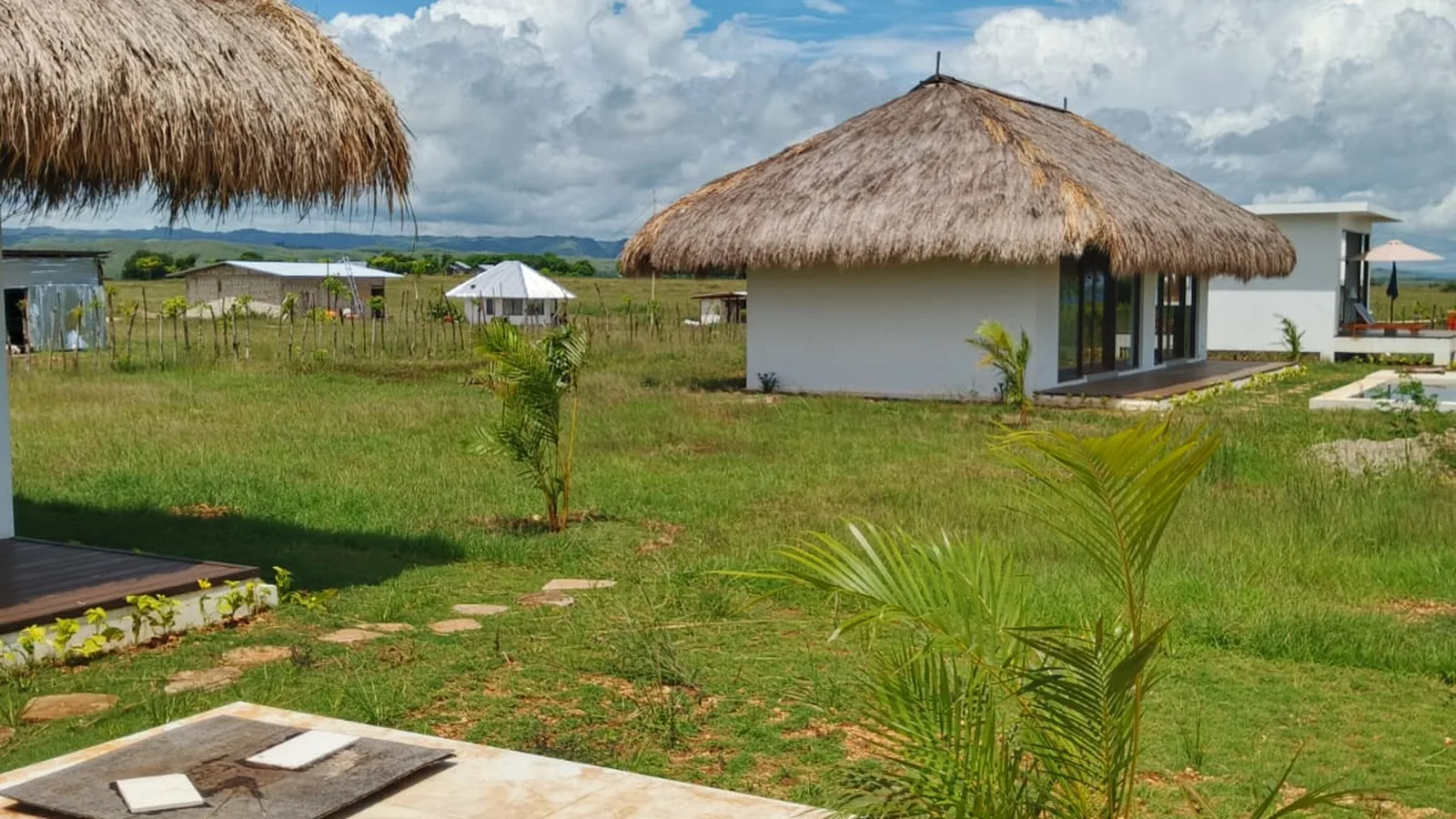
The air is thick with the promise of Pura Vida and the scent of wet cement. I’m standing on the unfinished teak deck of what will soon be a $2.8 million “bio-villa,” a term that seems to get thrown around here with the same casual frequency as “kombucha” or “sound bath.” We are in a corner of Costa Rica that has become a global laboratory for a certain kind of tropical modernism. The sales agent, a man named Gabriel whose crisp linen shirt seems immune to the oppressive humidity, is explaining the “indigenous-inspired rainwater harvesting system.” His arms move in graceful arcs, sketching invisible aqueducts in the heavy air.
Behind the skeletal frame of the infinity pool, a wall of freshly planted heliconias—trucked in just last week—does a poor job of hiding the source of our comfort. It’s the low, persistent growl of a diesel generator, the throbbing, carbon-belching heart powering this entire off-grid fantasy. The irony is so thick you could bottle it and sell it as an artisanal tincture at the local farmers’ market. This single, sputtering machine is the dirty little secret of a dozen similar construction sites dotting the hillsides, each one a monument to a new and profoundly seductive idea: salvation through real estate.
For the past eight years, living and writing from my own perch in Southeast Asia, I’ve watched this phenomenon metastasize. It’s a migration driven not just by the search for sun or a lower cost of living, but by a deeper, more complex yearning. It’s a quest for a clean slate, for a way to reconcile a life of immense privilege with a growing awareness of its ecological cost. What I’m seeing here, and in similar pockets from Portugal to Indonesia, isn’t just a property boom. It’s the rise of the Alibi Estate—a physical asset that doubles as a moral one, a home that is also a story, a beautifully constructed narrative that whispers to its owner: you are one of the good ones.
I. The Architecture of Absolution
Gabriel doesn’t sell houses; he sells absolution. His vocabulary is a masterclass in the language of secular redemption. The villas aren’t just built, they are “birthed from the landscape.” The design isn’t modern, it’s “biophilic,” a term coined to describe our innate connection to nature, now repurposed to justify an outdoor bathtub with a jungle view. The goal isn’t sustainability, a word that now sounds tragically unambitious, but a state of being “regenerative” or “net-positive.”
He gestures towards the valley, a lush canopy of green that will soon be punctuated by the glint of more solar panels and saltwater pools. “It’s not about off-setting your footprint; it’s about creating a positive one,” he says, his voice earnest, his eyes locking onto mine. “You’re not a consumer here; you’re a custodian.”
This is the siren song for a very specific demographic: the Conscious Capitalist. This is the tech founder who sold his data-mining company and now invests exclusively in plant-based startups. The private equity partner who flies to Davos to discuss ESG metrics before hopping on a helicopter to Verbier. They suffer from a genuine, often acute, case of climate anxiety, yet they are entirely unwilling to sacrifice the comforts their success has afforded them. They want the private chef and the organic vegetable garden, the private jet and the carbon credits, the sprawling villa and the clear conscience. The Alibi Estate offers a solution, a tangible way to have it all.
This is not a niche market. The global demand for the materials that build these narratives is exploding. The market for green building materials—bamboo flooring, recycled steel, low-VOC paints—is projected to reach $425.4 billion by 2027, growing at a compound annual growth rate of nearly ten percent. Every reclaimed teak beam and locally-sourced stone is another line in the story, another brick in the architecture of absolution. The problem, as the generator behind the heliconias reminds me, is that stories, no matter how beautifully told, can’t defy the laws of physics.
II. The Blueprint of the Tribe
To understand the appeal, you have to look beyond the architecture to the social engineering that underpins it. A few months after my Costa Rican epiphany, I found myself in Comporta, a stretch of windswept coastline an hour south of Lisbon that has become the European ground zero for this movement. Here, among the cork oaks and rice paddies, a consortium of developers is crafting a series of low-density, high-design communities that have attracted a clientele of French bankers, Belgian designers, and the occasional Hollywood actor.
I was there, ostensibly, to look at a property for a friend. What I found was that you aren’t just buying a house; you’re buying a tribe. The product is the community itself, a meticulously curated social life designed to reinforce the narrative of simple, authentic living. There are communal farm-to-table dinners where residents compare notes on their latest foraging expedition. There are private surf lessons with a local legend, a members-only beach club, and a co-working space with an artist-in-residence. One development even boasts an on-site “thought leader” who hosts fireside chats on topics like “The Future of Capitalism.”
This access comes at a steep price. On top of standard HOA dues that can run into the thousands per month, many of these communities require a mandatory “Regeneration Fee” of €15,000 to €25,000 annually. The fee, I was told, funds the on-site organic farm, a rewilding project, and the salary of the staff ecologist. It’s a tax on virtue, payable in quarterly installments.
Over a glass of eye-wateringly expensive biodynamic wine at one of these communal dinners, a woman from Amsterdam, radiant in a linen caftan, told me about her transformative experience learning to harvest organic kale. “It just connects you to the earth in such a profound way,” she said, her eyes shining. “To feel the soil on your hands… it’s what’s missing from our lives.” Later, I saw her slip away and took a walk towards the impressive organic farm. In the twilight, I could see a team of four full-time local gardeners methodically weeding, irrigating, and harvesting the produce for the residents’ farm boxes and the on-site restaurant. Her profound connection to the earth, it seemed, was managed by a payroll. The architecture itself—all minimalist lines, local timber, and vast panes of glass that blur the line between inside and out—is the stage set for this performance. It’s designed to make a life of extreme luxury feel simple, elemental, and, above all, deserved.
III. The Carbon Calculus: Auditing the Dream
The central premise of the Alibi Estate is that it represents a lighter way of living, a solution to the excesses of modern life. But when you start to audit the dream, the math doesn’t add up. The most significant sleight of hand is the near-total omission of “embodied carbon.” This is the colossal carbon footprint generated during the manufacturing and transportation of building materials—the CO2 released to produce the cement, forge the steel, and ship the ‘sustainable’ Balinese lava stone halfway across the world.
A single solar panel array might offset the operational energy of the home in 15 years, but the carbon cost of building the home in a remote location creates a deficit it can never repay.
To get a clearer picture, I had a crackly Zoom call with a London-based sustainability engineer, a man who has spent his career consulting on large-scale green projects. He asked for anonymity, citing NDAs with several high-profile “eco-developments.” His cheerful cynicism was a welcome antidote to the sales pitches. “Look, everyone loves to talk about operational carbon—solar panels, geothermal, all that sexy stuff,” he explained. “It’s easy to measure and it looks great in a brochure. What they don’t want you to talk about is the carbon bomb that goes off just to get the thing built.”
He broke it down for me. A typical 4,000-square-foot luxury villa, even one designed with ‘green’ principles, requires between 100 and 150 cubic meters of concrete for its foundation, columns, and pool shell. The production of cement, the key ingredient in concrete, is responsible for an estimated 8% of all global CO2 emissions. “You’re starting in a massive carbon hole,” he said. “For many of these remote, globally-sourced projects, the embodied carbon can easily exceed the lifetime operational savings. You’re building a beautiful, energy-efficient monument to a carbon catastrophe.”
This is the modern equivalent of the 18th-century English landscape gardens designed by Capability Brown. The wealthy aristocracy of the day would reshape entire countrysides, moving hills and re-routing rivers to create an idealized, picturesque, and entirely artificial version of ‘wilderness.’ It was a status symbol of man’s harmonious—and total—control over his environment. The Alibi Estate is its 21st-century incarnation, a hyper-engineered illusion of natural living that requires an industrial-scale effort to create and maintain.
| Carbon Cost Component | Conventional Luxury Build | 'Eco-Luxury' Alibi Estate |
|---|---|---|
| Foundation | High (Concrete) | Very High (Deeper, larger footprint) |
| Materials Sourcing | Global/Regional | Hyper-Global (Exotic 'sustainable' woods, stones) |
| Transportation | Standard Freight | High (Remote location, specialized materials) |
| Construction | High Energy Use | Very High (Years of generator use, clearing land) |
| Operational Carbon | High | Low (Solar, efficiency) - the selling point |
| Total Embodied Carbon | ~400-600 tonnes CO2e | ~500-800 tonnes CO2e |
Estimates for a 400 sq. meter villa. Source: Composite data from engineering reports and academic studies.
IV. The Town Next Door: A Barometer of Impact
For every gated eco-paradise, there is a town next door. This is where the gardeners, the housekeepers, the security guards, and the construction workers live. And in these towns, the narrative of “positive impact” and “regeneration” begins to fray. In the region around Melides, Portugal, one of the hotbeds for this kind of development, the story is particularly stark.
I spent an afternoon in the old village, a cluster of whitewashed houses that for generations was home to fishermen and farmhands. Now, the old tavernas are being converted into chic bistros, and real estate offices with glossy renderings in their windows have replaced the butcher and the baker. The creation of low-wage service jobs is undeniable, but it has come at a cost. The influx of foreign capital has sent property values into the stratosphere. According to local housing advocates, rental prices in the area have increased by over 200% in the last five years. Local wages, meanwhile, have risen by just 12%.
I found a man named João mending his nets by the small lagoon. His family has been fishing here for five generations. His face was a roadmap of sun and sea, his hands gnarled and powerful. He spoke in a slow, deliberate Portuguese, his gaze fixed on the luxury villas shimmering on the far hillside. “They say they bring jobs. Okay, my niece, she cleans the houses. My nephew works in the garden. But we can’t live here anymore,” he told me. His son had to move 30 kilometers inland to find an apartment he could afford. “They come for the peace, for the quiet, for the view. But they build a wall. They buy the view, but they don’t see us.”
They buy the view, but they don’t see us.
Nowhere is this tension more palpable than in the battle over the most critical resource: water. The new developments, with their infinity pools, lush non-native landscaping, and daily laundry service, are colossal consumers of water in a region increasingly prone to drought. While the brochures speak of rainwater harvesting and greywater recycling, the reality is that for much of the dry season, they are drawing heavily from a local water table that is already under stress. I saw the contrast with my own eyes: the emerald green, automatically-irrigated lawns of a new villa standing in defiant opposition to the dusty, fallow fields of a local farmer just across the road. The regeneration of one person’s lifestyle was contributing to the degeneration of another’s livelihood.
V. The Psychology of the Purchase
If the financial return on investment is debatable and the ecological ROI is a negative, what is the real driver behind these multi-million-dollar purchases? The answer lies less in spreadsheets and more in the murky depths of human psychology. An Alibi Estate isn’t just an asset; it’s a form of personal branding at the highest level. In an age of pervasive social media and heightened ecological awareness, the home has become the ultimate signal of one’s values. It’s a story you tell to the world, and more importantly, to yourself.
“I spend my life in the digital world, optimizing systems for user engagement,” a tech executive told me over drinks at a hotel bar in Singapore. He had recently bought into a development on the Indonesian coast, and asked to remain anonymous. “This is my way of optimizing my soul. It’s an analog investment. It’s something real, something I can touch. And yes,” he admitted with a wry smile, “it’s a hell of a story to tell at a dinner party.”
A recent Knight Frank survey found that 82% of Ultra-High-Net-Worth Individuals are “actively adjusting their portfolios for sustainability,” with property being a primary vehicle for this shift. But a conversation with a behavioral psychologist suggests it’s about more than just portfolio management. It’s about managing cognitive dissonance. “These are often highly intelligent, analytical people,” she explained. “They understand the data on climate change. They know their frequent flying, their consumption patterns, are part of the problem. A purchase like this isn’t a logical act; it’s a therapeutic one.”
The Alibi Estate, she argued, serves three profound psychological needs. First, it provides a sense of control in a world that feels increasingly chaotic. You can’t solve global warming, but you can build a net-zero home. Second, it fulfills a need for legacy. It’s a beautiful, tangible monument that will outlive you, a testament to your good taste and good intentions. Finally, it offers powerful moral justification. The purchase acts as a kind of indulgence, absolving the buyer of their other, less-sustainable sins. “It’s a psychological offset, not just a carbon one,” she concluded. “It allows them to continue their lifestyle, not because they are ignoring the problem, but because they feel they are actively contributing to the solution.”
VI. The New Nomadic Charter
This trend doesn’t exist in a vacuum. It’s inextricably linked to a broader sea change in global mobility. The rise of the digital nomad, the proliferation of “Golden Visa” programs, and the anxious search for Plan B jurisdictions among the global elite have created a new class of hyper-mobile residents. These are not immigrants in the traditional sense; they are not seeking to integrate into a new society. They are global citizens, and they are looking for secure, comfortable, high-speed-internet-equipped bubbles from which to operate.
These eco-luxury developments are the apotheosis of the bubble. They offer the turnkey solution: built-in community, security, wellness facilities, and, crucially, international schools. Portugal’s Golden Visa program, before its recent restructuring, was a primary engine of this movement, attracting over €6.7 billion in investment, much of it funneled directly into real estate projects like the ones in Comporta. It created a frictionless path to EU residency for anyone with the capital to buy in.
As an expat who has spent years navigating the bureaucratic and cultural complexities of making a life in a foreign country, I find this new model both fascinating and unsettling. There's a fundamental difference between being an immigrant who integrates and a global citizen who simply relocates their bubble. I once visited the campus of an international school inside one of these compounds. The children, from twenty different nationalities, were learning about global cultures in an air-conditioned classroom. They could probably name the capital of Bhutan, but few had ever set foot in the local Portuguese village just two kilometers outside the security gate. They were being raised as a caste apart, their curated globalism a shield against the messy, complicated realities of the nation that hosted them.
Projects across Southeast Asia, from Thailand to the shores of Sumba, are wrestling with this same dynamic. Some, like the ambitious Eco Beach City, are making genuine, if difficult, efforts to integrate community development and local employment into their master plans from day one. But the gravitational pull of the bubble is strong. It’s easier, cleaner, and ultimately more profitable to sell a self-contained dream than to engage in the hard work of building a truly integrated community. The new nomadic charter isn’t about finding a new home; it’s about finding the perfect, hermetically-sealed base of operations.
VII. The 20-Year Horizon: Bubble or Bedrock?
For the investor, the ultimate question remains: is this a durable asset class or a trend-driven bubble? Is buying an Alibi Estate today the equivalent of buying a Manhattan loft in the 1980s, or a time-share in the 1990s?
A cynical real estate analyst I know, who specializes in high-value coastal properties, calls them “prime-location assets with an expiration date.” He sees a profound, and potentially fatal, irony at the heart of the investment.
The ultimate luxury is not the infinity pool or the sustainable wood, but a compelling, cohesive story that justifies one’s place in a turbulent world.
“Their entire marketing pitch is built around climate awareness,” he told me, “but their balance sheets completely ignore climate risk.” Many of these coastal paradises are located in what will be the front lines of climate change. They are in future flood zones, fire corridors, and drought-stricken regions. The European Environment Agency, for example, projects a 40% increase in the length and frequency of severe droughts in Southern Europe by 2050, directly threatening the viability of the water-guzzling communities in Portugal and Spain.
The real test will be the resale market. Who is the next buyer in ten or twenty years? Will the “regenerative” narrative still hold value, or will it be seen as a naive and self-serving relic of the 2020s? When the sea levels have risen measurably and the “100-year storm” happens every three years, the buyer pool for a multi-million-dollar beach house, no matter how “green,” may shrink dramatically.
The financial trade-offs are also staggering when viewed through a pure impact lens. The €2.5 million spent on a single “regenerative” villa in Comporta could, as an alternative investment, be used to purchase and rewild over 250 hectares of degraded farmland in the very same region. Such a project could sequester an estimated 6,000 tonnes of CO2 over 30 years and create a genuine biodiversity corridor. The choice is stark: a personal alibi or a planetary asset. For now, the personal alibi is winning.
VIII. The Curated Wilderness
I’m back on the deck of the half-finished villa in Costa Rica. The sun, a fiery orange ball, is sinking into the Pacific. The construction crew has packed up for the day. And then, it happens. The diesel generator, its fuel spent, sputters, coughs, and dies.
Into the vacuum rushes a sound so profound and complex it’s almost overwhelming. It’s the real sound of the jungle. A billion insects thrumming in a dozen different registers. The guttural call of a howler monkey miles away. The rustle of something unseen in the undergrowth. It is chaotic, untamed, and utterly indifferent to the architectural plans laid out on the table beside me. This is the authentic, biophilic experience that the development’s prospectus could never hope to capture, because its very existence depends on silencing it.
The data shows that the average new-build luxury “eco-villa” of this type consumes four to five times more energy and water per square foot than the average existing local home it displaces. It’s a staggering statistic that exposes the entire enterprise for what it is: an exercise in high-end displacement, cloaked in the language of ecological virtue. We have become so disconnected that we now need to purchase a curated, managed, and highly-serviced version of nature to feel any connection at all.
As the last light fades, the distinction becomes devastatingly clear. We came seeking to reconnect with the wild, to find a more authentic way of living. But perhaps, in the end, we only succeeded in building ourselves a more beautiful, sustainable, and expensive cage.